
The Tool Desk
Outbyte PC Repair FREEClear out junk files and repair common Windows errorsFree Scan →Outbyte Driver Updater FREEFix the driver behind crashes, sound loss and screen glitchesFind Drivers →Improve photocatalyst stability by identifying what is degrading first, then choosing an intervention that addresses that failure without blocking the charge transfer needed to make hydrogen. Photocorrosion, dissolution, interface damage and cocatalyst loss are different problems; a protective coating, electrolyte change or surface modification is not a universal fix. Confirm any improvement with sustained hydrogen-production data and post-test analysis of the recovered material.
What “stable” should mean
A high initial hydrogen-production rate does not establish durability. For solar water splitting, stability should describe both sustained operation and retention of the photocatalyst’s composition and structure. A material can keep producing gas while its surface changes, or its output can decline even if the bulk structure appears intact.
Evaluate the time course of hydrogen production alongside repeat runs and post-test characterization. The Royal Society of Chemistry chapter on photocatalytic water splitting recommends prolonged testing, reuse of recovered photocatalyst, and examination after testing; it does not prescribe one duration that applies to every material and reactor.
Diagnose the degradation before choosing a fix
Start with the operating conditions and the material’s changes, rather than selecting a stabilization treatment by category alone. The likely cause determines what evidence to collect and which intervention is plausible.
#1 Best Overall

- Defined material identity: XFI02 nano titanium dioxide (TiO2) supplied as a white fluffy powder in a 100 g package, with a stated purity of 99%.
- Nanoscale specification: The supplied technical data sheet lists a particle-size range of 20-40 nm and a BET surface area of 77.37 m2/g.
- Formulation-aware handling: Nanopowders may form agglomerates. Evaluate wetting, dispersion method, loading level, binder compatibility and process conditions in the intended matrix.
- Research application scope: Suitable for evaluation in photocatalytic test coatings, functional coatings and inks, solar photoelectrodes, gas-sensing layers and ceramic or materials-formulation studies.
- Storage guidance: Keep sealed in a clean, dry environment at room temperature and protect from direct light. The supplied TDS declares a shelf life of one year.
Thermodynamic instability and photocorrosion
Check whether the semiconductor can drive the required water-reduction and water-oxidation reactions under the actual conditions while resisting its own reductive or oxidative decomposition. A material may have suitable redox energetics for water splitting yet still be vulnerable to decomposition. Compare post-test composition and structure with the fresh material and examine whether the loss is associated with illumination and reaction conditions.
Electrolyte-driven dissolution
Consider the electrolyte and pH when performance falls or the recovered catalyst has changed. Look for evidence that material has entered the solution, and compare the catalyst’s post-test composition with its initial state. Electrolyte optimization may help, but a change in solution conditions can also affect reaction rates and interfaces, so judge it by both hydrogen output and material retention.
Rank #2

- Product name:Nano Titanium dioxide
- Appearance: white fluffy powder
- Purity: 99%
- Particle size: 100/200nm /1μm
- Specific surface area: 77.37 m2/g
Interface damage or unwanted surface oxidation
Charges must reach the surface reactions before recombination or unwanted self-oxidation undermines performance. If the interface is implicated, assess whether its transport and reaction behavior changed during operation. Interface engineering may improve carrier delivery, but an added interface is not automatically durable or beneficial.
Cocatalyst deterioration or leaching
Cocatalysts can support charge separation and surface reactions, including in Z-scheme systems. They can also deteriorate or leach during prolonged illumination. Track their retention and the post-test surface composition; a rate decline alone cannot distinguish cocatalyst loss from degradation of the semiconductor or another component.
Rank #3
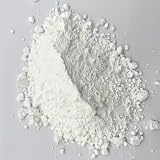
- 💖Product name: Titanium dioxide powder
- 💖Material: Titanium dioxide
- 💖Product specifications: (1 micron /5 nm /20 nm /30 nm /50 nm /100 nm /500 nm)100g
- 💖Product packaging: 100g vacuum packaging/bottle/barrel
- 💖Application: Used in plastic, photocatalyst, rubber, functional fiber, sunscreen, ink, paint, textile, metallurgy, aerospace industry, etc.
Surface or bulk defects
Defects can affect recombination as well as chemical durability. Passivation and defect engineering are possible design approaches, but a treatment that improves initial activity does not necessarily improve stability. Check both sustained gas production and post-test material condition.
Match the intervention to the failure mode
The strategies below address different risks. Their effects depend on the photocatalyst, electrolyte, cocatalyst and reactor; the literature does not establish a controlled, universal ranking of them.
Rank #4

- Premium 5nm Anatase TiO2 Nano Powder (JR05 Grade) Adopts high-purity anatase type titanium dioxide with an average 5nm ultra-fine particle size and uniform particle distribution. Featured with large specific surface area and excellent surface activity, this professional-grade photocatalyst powder delivers stable and reliable performance, perfectly meeting the fine production requirements of handmade soap and various DIY craft projects
- Excellent Whitening & Color Brightening Effect for DIY Crafts Serves as a high-quality white pigment additive for handmade soap making. The ultra-fine powder features great dispersion, which can be evenly blended into soap base without agglomeration. It effectively brightens and whitens finished soap products, enhances texture fineness, and creates smooth, pure white craft works with stable coloring effect
- Safe, Stable & Eco-Friendly Material Made of non-toxic, skin-friendly and environmentally friendly titanium dioxide material (CAS: 13463-67-7). It features high thermal stability, no decomposition or discoloration during soap making heating process, no secondary pollution. Harmless to human body and skin, fully compliant with daily DIY craft safety standards
- Versatile DIY Craft Additive & Easy to Use Professionally customized for handmade soap DIY, also widely applicable for bath bombs, craft candles, resin crafts and other handmade projects. The powder has good self-dispersion performance, easy to mix and operate, ideal for personal DIY creation and small-batch handmade craft production
| Approach | What it is intended to address | What to verify |
|---|---|---|
| Protective coating or passivation | Limits contact between a vulnerable absorber and a corrosive environment. | Whether the layer remains intact and adherent, and whether it still allows the charge transfer needed for hydrogen and oxygen evolution. |
| Interface engineering | Improves charge delivery to surface reactions or reduces losses associated with an unsuitable interface. | Whether transport and reaction kinetics remain effective during prolonged operation, and whether the modified interface itself changes or fails. |
| Electrolyte optimization | Addresses degradation associated with solution conditions, including dissolution. | Whether the catalyst retains its composition and whether the changed electrolyte supports sustained hydrogen production. |
| Cocatalyst or surface modification | Changes surface reaction behavior and, in some systems, supports charge separation. | Whether the cocatalyst or modified surface is retained and whether the gain persists beyond the initial rate. |
| Defect engineering | Tunes material properties that may contribute to recombination or chemical degradation. | Whether the treatment improves durability as well as activity, rather than optimizing only the starting performance. |
| Self-healing design | Attempts to regenerate damaged material during operation. | Whether the specific material and reaction design can actually restore the relevant function over repeated operation. |
Design protective layers around charge transfer
A coating has to do two jobs that can conflict: shield the absorber from conditions that cause corrosion, yet preserve access for the charges and surface reactions that produce hydrogen and oxygen. Assess its thickness, continuity and adhesion for the chosen system, as well as its charge-transfer behavior. Reviews of protected interfaces flag long-term persistence as a concern, so initial protection is not enough evidence of durable operation.
Do not treat surface modification as a universal recipe
Cocatalyst loading and surface modification are established research approaches, but a successful treatment for one material or configuration cannot be assumed to work in another. Compare modified and unmodified systems under the same operating conditions and follow both gas production and post-test surface composition.
Quick wins for a faster PC:
Scan for outdated or missing drivers - takes under a minuteDriver Scan →Repair Windows errors before they cause bigger problemsFix Now →Best Value

- Small-particle anatase TiO2 supplied as a fine white powder, with a nominal particle size of 5-10 nm and a specified purity of 99.3 wt%.
- The accompanying technical report includes XRD characterization of the crystal phase and TEM imaging of the nanoscale particle morphology.
- Anatase titanium dioxide interacts strongly with ultraviolet light, making it a practical material for photocatalysis, UV-resistant coatings and light-responsive surface research.
- Suitable for developing paints, inks, polymers, self-cleaning coatings, solar materials and other TiO2-containing formulations. Dispersion method and loading level will influence the finished material.
- Supplied in a sealed 100 g package for laboratory and industrial R&D. Store tightly closed, dry and protected from light at room temperature.
How to test whether stability actually improved
Use a documented, prolonged irradiation test and connect the hydrogen-production record to analysis of the recovered catalyst. The RSC chapter recommends extended testing, repeat use of recovered material, and post-test characterization. The following details let readers interpret and reproduce a result:
- Describe the system: identify the photocatalyst, reactor, electrolyte and pH, any sacrificial reagent, catalyst loading, and cocatalyst.
- Report operating conditions: state the light source and intensity, temperature, and run duration. Record the conditions that could affect degradation rather than reporting only a headline rate.
- Track gas production over time: report hydrogen production as a time series or sustained rate, with the gas-analysis method. A single early measurement cannot show whether performance persists.
- Repeat with recovered catalyst: explain the recovery procedure and test whether the reused material retains its performance. Distinguish repeat runs from a single continuous run.
- Characterize the material after operation: examine whether composition, structure, surface state or cocatalyst loading changed, and interpret those findings together with the gas data.
A stable output trace is useful evidence of operational stability, but it does not prove by itself that the active material remained chemically unchanged. Conversely, post-test characterization without sustained production data does not establish that the catalyst remained functional through operation.
How to interpret lifetime claims
There is no single stability duration or threshold established for every photocatalytic solar-hydrogen configuration. A 2021 review in ACS Energy Letters discusses observations beyond 1,000 hours for certain systems; that is a system-specific report, not a general lifetime expectation for photocatalysts. Compare claims only when material, electrolyte, illumination, reactor, measurement and reuse conditions are sufficiently clear.
Broad efficiency or commercial-durability statements spanning solar water-splitting technologies should not be treated as direct benchmarks for every particulate photocatalyst. For an individual stability claim, the meaningful evidence is the operating record under stated conditions, repeatability, gas-production behavior and evidence that the material or its functional components were retained.
What’s actually slowing this PC down?
Pick the symptom - the matching free tool is one click away.
Quick Recap
Product prices and availability are accurate as of the date/time indicated and are subject to change. Any price and availability information displayed on Amazon at the time of purchase will apply.

