
What’s actually slowing this PC down?
Pick the symptom - the matching free tool is one click away.
iTechGuides is reader-supported. When you buy through links on our site, we may earn an affiliate commission. As an Amazon Associate I earn from qualifying purchases. Learn more
To find indie games made without generative AI, begin with platform disclosures, then verify every candidate against a dated statement from the developer. Use itch.io’s disclosure and No AI route to build a pool, inspect Steam’s AI information for player-facing content, and use curator pages only as leads to primary evidence. Decide what “without generative AI” means for you before searching: a game may have no generated art, sound, writing, voice, or localization in the shipped build while still leaving code, brainstorming, testing, contractors, or marketing unanswered. Treat missing, vague, or outdated evidence as unknown, not as proof of an AI-free production process.
What does “made without generative AI” mean?
There is no single industry-wide definition. A useful search starts by choosing the boundary you want to enforce, because a developer can honestly satisfy one boundary while not answering another.

| Standard | What it rules out | Evidence you need |
|---|---|---|
| Player-facing content | Generative artwork, music, sound effects, writing, dialogue, voices, translations, or other generated material delivered in the current game build. | A dated developer statement identifying the shipped content and the edition or build it covers. |
| Player-facing plus live generation | Everything above, plus systems that generate material while the player is playing. | The statement must address both pre-generated assets and runtime generation. |
| Store and marketing assets | Generated screenshots, key art, trailers, capsule images, store copy, or other promotional material. | A statement that explicitly includes marketing and store materials, not only the game files. |
| Production-wide | Generative tools used for code, brainstorming, design, testing, localization, contractors, commissioned work, or internal prototypes, as well as shipped content. | A broad policy or detailed statement covering the production process and outside contributors. |
For most players, the player-facing standard is the practical starting point: it answers whether generated material appears in the game they will download. If you are supporting a production-wide standard, label a title as partly answered unless the developer addresses every relevant production area.
Do not confuse generative AI with ordinary game AI. NPC pathfinding, behavior trees, dynamic difficulty, procedural level rules, and other deterministic or simulation systems may be conventional software. Identify what system produced the disputed material before deciding whether it falls within your standard.
#1 Best Overall
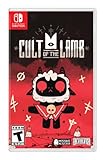
- Start your own cult in a land of false prophets
- Venture out into diverse and mysterious regions to build a loyal community of woodland Followers
- Repay your debt by building a loyal following
- Spread your Word to become the one true cult!
How can itch.io help me find candidates?
itch.io is the broadest discovery starting point in this workflow. The platform said it hosted over 1 million projects in 2026, so its disclosure tools can narrow a very large pool, but the labels are creator-provided signals rather than independent audits.
Use the Generative AI disclosure
itch.io’s administrator announcement of November 20, 2024, describes a project-level “Generative AI disclosure” field. A creator can indicate whether a project contains generative-AI results. When the answer is yes, the form can classify use in Graphics, Sound, Text & Dialog, and Code. When the answer is no, itch.io can apply the No AI tag.
Search with the No AI tag or with the disclosure information visible on a project page, then open each candidate rather than copying the label into your own list. Read the project description, frequently asked questions, development logs, changelog, and update history. Look for the exact scope: a creator may be saying “no generated assets in the game” rather than “no generative tools anywhere in development.”
The Tool Desk
Outbyte PC Repair FREERepair Windows errors before they cause bigger problemsFix Now →Outbyte Driver Updater FREEScan for outdated or missing drivers - takes under a minuteDriver Scan →What the itch.io tag can and cannot prove
- It can: give you a repeatable way to discover projects whose creators selected “no” in the disclosure field.
- It cannot: independently verify the creator’s answer, establish that contractors used no tools, or prove that later updates still follow the same policy.
- It may not answer: whether generated marketing material was used, whether an assistant helped write code, or whether a commissioned asset came from a generative workflow.
Save the project URL, the date you checked it, the current version or build information, and the wording of any first-party statement. A tag without a dated explanation should remain a discovery lead until you complete that check.
How does Steam’s AI disclosure differ?
Steam’s disclosure is useful for a different question: what AI-generated content is shipped with the game and consumed by players. It is not a certification that no generative tool was used during development.
“Efficiency gains through the use of these tools is not the focus of this section. Instead, it is concerned with the use of AI in creating content that is shipped with your game, and is consumed by players.”
This wording, reported by GamesRadar+ in 2025, means Steam is focused on player-facing content. Check the game’s store page for the AI information, note whether the disclosure addresses pre-generated assets, live generation, or both, and copy the developer’s wording exactly. Then compare it with the game’s own FAQ, news posts, patch notes, or official site.
Windows Errors? Fix Them Before They Spread
Repair common Windows errors and clear accumulated junk for a smoother, more stable PC - no reinstall needed.Free scan · no reinstallOutdated Drivers Are Slowing You Down
One free scan finds every outdated or missing driver and matches the right update for your exact hardware.Free scan · exact hardware matchWhy an empty Steam field is not an “AI-free” result
A blank, missing, or unchanged field does not establish that the team avoided generative tools. It may mean the developer has not supplied information, the information is outside the field’s scope, or the page has not been updated for a later build. Record an empty field as unknown and seek a dated first-party statement.
Steam can also change as a game receives downloadable content, new voice lines, generated environments, or a live feature. Recheck the disclosure after substantial updates instead of treating the launch-page wording as permanent.
Can curator directories verify a game’s no-AI status?
Independent curators are valuable for finding statements you might miss, but their pages should guide you back to primary evidence. Open Credits describes an evidence order that puts a verified developer claim first, followed by a store disclosure, a public developer statement, and then credible press coverage.
Open Credits records credits by areas such as art, audio, writing, code, play, and store materials. That separation helps you avoid treating an art-only claim as an answer about code or marketing. Its methodology makes the limitation explicit: “Not stated” means no source says anything about that part. It doesn’t mean the part was made without AI.
When a game has no disclosure, Open Credits reports it as The developer hasn’t disclosed any AI use.
That is a useful status, not a verdict. Open the curator’s links, check the dates, and replace a community summary with the developer’s exact statement wherever possible.
Rank #3
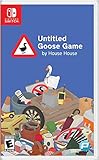
- In collaboration with Panic and House House, iam8bit is proud to release Untitled Goose Game "in a box," packed with exclusive collectible goodies:
- Physical Edition of the Game
- The Spring/Summer Plaza Catalog, a 24-page mail-order style circular
- 11" x 17" Village Map Poster
- Premium “No Goose" Sticker
What is the step-by-step way to verify a candidate?
Use the same worksheet for every title. Consistent records make two games with similarly worded claims comparable and expose gaps that a simple “AI/no AI” label hides.
- Identify the exact release. Record the title, platform, edition, current build number if shown, and the date you accessed it. A PC launch build and a later console edition may not contain identical material.
- Capture the platform disclosure. Copy the complete itch.io or Steam wording, including the categories it names. Do not paraphrase a limited disclosure into a universal claim.
- Find a first-party statement. Check the store description, FAQ, dated development update, official website, or a verified developer account. Prefer a statement tied to a date, release, or build.
- Describe the scope in plain language. Write whether the statement covers shipped assets, live generation, store and marketing material, code, brainstorming, testing, contractors, localization, or commissioned work.
- Compare the scopes. A platform field may cover shipped content while a developer post discusses only artwork. Keep both entries and identify the unanswered areas.
- Check later material. Read patch notes, downloadable-content announcements, and live-feature updates published after the statement. New dialogue, music, portraits, or generated events can change the answer.
- Trace curator evidence. Follow every curator link to its original source and record the curator’s review date. An uncited community verdict is a lead, not certification.
- Assign one status. Choose meets my standard, does not meet, partly answered, or unknown. Add one sentence explaining exactly why.
Example worksheet entry
Imagine a game whose developer writes on March 3, 2026, “All art, music, dialogue, and voices in the 1.2 build were created by our team; no generated assets are shipped.” Steam has no AI information, and the developer says nothing about code or marketing. Under a player-facing-content standard, you could mark it meets my standard for build 1.2. Under a production-wide standard, mark it partly answered because code, internal tools, and promotional material remain unaddressed. The date and build keep the conclusion from being broader than the evidence.
How should I compare games on a shortlist?
A useful shortlist ranks more than the presence of a badge. Compare each title on scope, evidence, timing, and later changes.
Quick wins for a faster PC:
Repair Windows errors before they cause bigger problemsFix Now →Scan for outdated or missing drivers - takes under a minuteDriver Scan →Clear out junk files and repair common Windows errorsFree Scan →| Comparison axis | Questions to record | Why it matters |
|---|---|---|
| Scope of the claim | Does it cover only shipped art, or also sound, writing, voice, localization, runtime generation, marketing, code, and outside work? | Two “no AI” statements can answer very different questions. |
| Evidence strength | Is there a verified developer claim, a store disclosure, a dated public statement, or only press or community commentary? | Primary statements are easier to interpret and audit. |
| Date and build | When was the statement made, and which edition or build did it cover? | Updates can add content after the original claim. |
| Later changes | Do patch notes, downloadable content, or live features introduce new assets or generation systems? | A launch statement may not cover the current version. |
| Unanswered production areas | Are live generation, marketing, code, contractors, commissioned assets, and localization addressed? | Unanswered areas determine whether your chosen standard is actually met. |
You can sort your personal list by the strictest status first, or keep separate lists for player-facing and production-wide standards. Do not collapse “partly answered” and “unknown”: the former identifies a specific limitation in an otherwise relevant statement, while the latter means no source has answered that area.
What common mistakes lead to false “AI-free” conclusions?
Reading a blank Steam field as a denial
Silence is not confirmation. Keep the status unknown until a dated source describes what was or was not used.
Treating itch.io’s No AI tag as an audit
The tag reflects a creator disclosure intended for discovery. It does not independently test files, contractors, commissioned work, or later updates.
Rank #4

- Play 2 beloved and critically acclaimed masterpieces
- Experience the complete journey of Ori
- Master new skills and face larger-than-life bosses
- Get bonus physical items: set of art cards and digital soundtracks
Accepting “made by humans” without a scope
That phrase may refer to the final art team and say nothing about code assistants, generated marketing images, localization, or a vendor’s contribution. Ask what content, process, and build the statement covers.
Assuming an art statement answers every category
“No AI assets” is narrower than “no generated art, sound, text, voices, or code.” Keep a category-by-category record so a strong art claim does not become an unsupported whole-game claim.
Confusing procedural systems with generative-AI content
A hand-authored rules engine can create varied levels or encounters without using a generative model. Conversely, a model can generate material offline and leave no runtime system. Ask what produced the disputed content and whether it was shipped to players.
Relying on silence or a non-response
A developer who does not answer a question has not confirmed your preferred standard. Record the date of the unanswered request if it is relevant, then label the title unknown rather than inferring intent.
Independent reader supportYour contribution helps us test, update, and keep practical guides available for everyone.How can I keep a no-generative-AI list current?
Make your list a dated record, not a permanent seal of approval. Store the title, platform, edition, build, access date, platform disclosure, first-party statement, scope, source dates, and status in one entry. Preserve the exact wording so you can detect when a later statement narrows or expands the claim.
Do these 3 things before closing this tab:
1Fix the driver behind crashes, sound loss and screen glitches2Clear out junk files and repair common Windows errors3Scan for outdated or missing drivers - takes under a minute- Recheck after major patches: especially updates that add characters, dialogue, music, portraits, localization, or live events.
- Recheck downloadable content: an original claim may cover the base game only.
- Separate editions: console, PC, demo, early-access, and definitive editions can contain different assets.
- Keep review dates: a curator page can be accurate when written but stale after a new release.
- Show uncertainty: publish “partly answered” or “unknown” with the missing category instead of forcing a binary label.
If you share the list, explain your chosen standard at the top. Readers can then tell whether “no generative AI” means no generated player-facing content or a complete prohibition on tools throughout production.
Best Value

- Explore a captivating universe, full of wonder and artistic curiosities. Interact with the Vessel’s environments to learn more about its past and memories.
- Earn game-changer abilities to help MIO progress through this twisted and interconnected space. Climb walls like a spider or float through the air with your Glide power. Master precision, rhythm, and timing to find the perfect flow!
- Face off a diverse array of over 30 enemy units and 15 formidable guardian bosses. Use your arsenal of powers to adapt to every encounter. Evade foes using your Hook, unleash orbs as powerful projectiles, and even create decoy clones to strike from unexpected angles. It’s always your choice!
- Enhance and customize MIO abilities by scavenging components. Spice up your fighting skills with many Modifiers and transform MIO into a formidable force tailored to your playstyle.
Is there a universal list or audited count of indie games made without generative AI?
No universal, independently audited count establishes how many indie games avoided generative AI at every production stage. Platform disclosures are self-reported, curator methodologies distinguish “not stated” from “made without AI,” and developers describe different scopes. A reliable list therefore needs a source, date, build, and definition for every entry rather than a single market-wide number.
You can still build a useful directory by publishing the evidence fields openly. Readers should be able to see which titles meet a player-facing rule, which have production-wide statements, and which remain unresolved. That transparency is more informative than an apparently complete list that treats missing information as proof.
What should a trustworthy result look like?
A defensible result names the exact game edition and build, quotes the platform disclosure, links the conclusion to a dated developer statement, and says which categories remain unanswered. It uses meets my standard only when the evidence matches the standard you declared; otherwise it uses partly answered or unknown. This approach will produce a shorter list than a badge-only search, but every entry will tell readers what they can actually rely on.
Frequently Asked Questions
Does procedural generation mean a game used generative AI?
Not necessarily. Traditional procedural generation uses authored rules, random seeds, or simulation code, while generative AI uses a trained model to produce material; ask the developer which system created the disputed asset or event. A procedural game can still require a separate check for generated marketing or development tools.
How often should I re-check a game’s no-AI claim?
Revisit it after a major patch, downloadable-content release, or new live feature, and whenever the store page shows a new build or edition. Those changes can add player-facing material outside the original statement even when the launch version matched your standard.
Can I rely on a curator’s green check or recommendation?
Use it to discover evidence, not as a certification by itself. Confirm the curator’s review date, open the linked developer or store source, and downgrade the entry if the original statement does not cover your chosen categories.
What should I do when a developer never answers my question?
Record the unanswered area and the date you checked, then mark the title unknown for that standard. Non-response cannot establish either AI use or an AI-free process.
Free tools Windows power users keep installed
One-click scans. No signup required.
Quick Recap
Product prices and availability are accurate as of the date/time indicated and are subject to change. Any price and availability information displayed on Amazon at the time of purchase will apply.

