
Choose RAM for your exact PC, not for Windows 11 in the abstract. Check the computer’s supported memory generation, physical module type, capacity, speed and slot configuration before ordering. Windows 11’s 4 GB minimum is an eligibility requirement, not a recommendation for your workload.
What RAM does Windows 11 require?
Microsoft lists 4 GB of RAM as the minimum for Windows 11. That is the operating-system requirement, not a guarantee that 4 GB will feel adequate for your applications or a recommendation for every upgrade. Microsoft also notes that some PCs with less than 4 GB may have options to add memory. See Microsoft’s Windows 11 specifications.
Copilot+ PCs have a separate minimum hardware requirement: Microsoft lists 16 GB of DDR5 or LPDDR5 memory for that PC class. This is not the RAM minimum for all Windows 11 computers. A RAM change alone also does not establish Windows 11 eligibility; processor, storage, firmware, TPM and graphics requirements apply. Use Microsoft’s requirements page and PC Health Check app to review eligibility and any reported reasons a device does not qualify.
How to check which RAM fits your PC
1. Identify the exact computer or motherboard
For a prebuilt PC or laptop, find the manufacturer and full model name. For a custom desktop, identify the motherboard model and processor. Then check the computer maker’s support page or manual for memory specifications. On Intel systems, Intel advises checking the motherboard manual or asking the motherboard vendor whether a particular memory model is supported.
Recommended Free Tools
#1 Best Overall

- Requires overclocking/BIOS adjustments. Maximum speed and performance depends on system components, including motherboard and CPU.
- G.SKILL Flare X5 Series DDR5 U-DIMM Memory Kit, Model: F5-6000J3636F16GX2-FX5
- Non-ECC, DDR5 U-DIMM, 288-pin, for Desktop PC & Gaming
- Includes JEDEC default profile, and AMD EXPO & Intel XMP 3.0 memory overclock profile
- Do not mix memory kits. Memory kits are sold in matched kits that are designed to run together as a set. Mixing memory kits will result in stability issues or system failure.
2. Match the memory generation and form factor
Confirm the supported DDR generation—such as DDR4 or DDR5—before comparing products. DDR generations are not interchangeable: a DDR4 system does not accept DDR5 modules. Also match the physical form factor. Desktops commonly use DIMMs and laptops often use smaller SO-DIMMs, but mini PCs and small-form-factor systems mean that the computer’s documentation, not its general category, is decisive. See Crucial’s compatibility guide and Intel’s memory guidance.
3. Check maximum capacity, sockets and upgradeability
Look up the maximum total memory, supported module sizes and supported configurations for the exact PC or motherboard. Find out whether any memory is soldered, how many sockets exist, which are occupied and how many are free. Depending on the design, reaching a target capacity may require replacing existing modules rather than adding another one. Intel lists maximum memory size and channel information among processor specifications, while the motherboard manual provides system-specific module support.
Rank #2

- Capacity: 16GB(2 x 8GB)
- Tested Frequency Profile 1: PC5-48000 (6000MT/s)
- Tested Timings: 36-46-46-110
- Feature Overclock: XMP 3.0 & EXPO overclocking supported
- On-Die ECC
4. Compare supported speed, not just the label on the kit
Check the memory speed supported by both the processor and motherboard. A faster-rated module may work, but Intel notes that compatible higher-speed memory can run at the maximum speed supported by the installed processor. Do not assume the advertised rating will be reached without checking the system’s limits.
5. Follow the slot and module configuration rules
If adding more than one module, check the manual for the correct sockets and supported configurations. A matched kit is generally the straightforward choice for a multi-module upgrade. Mixing modules or kits does not always cause a problem, but results depend on the platform and memory type; Kingston warns that combining overclockable kits with different densities or specifications can cause instability or prevent overclocking. See Kingston’s memory guidance and configurator.
Rank #3

- Boosts System Performance: 32GB DDR5 RAM laptop memory kit (2x16GB) that operates at 5600MHz, 5200MHz, or 4800MHz to improve multitasking and system responsiveness for smoother performance
- Accelerated gaming performance: Every millisecond gained in fast-paced gameplay counts—power through heavy workloads and benefit from versatile downclocking and higher frame rates
- Optimized DDR5 compatibility: Best for 12th Gen Intel Core and AMD Ryzen 7000 Series processors — Intel XMP 3.0 and AMD EXPO also supported on the same RAM module
- Trusted Micron Quality: Backed by 42 years of memory expertise, this DDR5 RAM is rigorously tested at both component and module levels, ensuring top performance and reliability
- ECC Type = Non-ECC, Form Factor = SODIMM, Pin Count = 262-Pin, PC Speed = PC5-44800, Voltage = 1.1V, Rank And Configuration = 1Rx8
Can a RAM compatibility finder choose for you?
Compatibility tools can narrow the options, but use them as a shortlist and verify the result against the exact PC’s official specifications. Crucial’s System Scanner analyzes a system configuration and lists compatible upgrades. Kingston’s configurator searches compatible memory for desktop PCs, laptops and servers. Start with Crucial System Scanner or Kingston’s configurator, then confirm generation, form factor, capacity, speed and slot configuration in the system documentation. Manufacturer limits or BIOS details may affect what a system supports.
Independent reader supportYour contribution helps us test, update, and keep practical guides available for everyone.Pre-purchase checklist
- Exact PC model, or motherboard model for a custom build.
- Supported DDR generation and module form factor.
- Maximum total capacity and supported module sizes.
- Number of sockets, occupied sockets and any soldered memory.
- Supported speed for the processor and motherboard.
- Manual’s slot-population guidance and supported multi-module configurations.
- Whether your plan adds modules or replaces existing ones.
Only compare specific kits or prices after these checks: Windows 11 alone does not determine which RAM kit is compatible.
Quick Recap
Rank #4
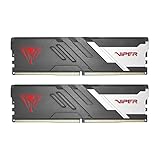
- Capacity: 32GB (2 x 16GB) 6000MHz
- Tested Timings: 30-40-40-76
- Feature Overclock: XMP 3.0 / EXPO overclocking supported
- Compatibility: Tested across latest DDR5 platforms for reliability on high performance
- Limited lifetime warranty
Product prices and availability are accurate as of the date/time indicated and are subject to change. Any price and availability information displayed on Amazon at the time of purchase will apply.

