
iTechGuides is reader-supported. When you buy through links on our site, we may earn an affiliate commission. As an Amazon Associate I earn from qualifying purchases. Learn more
The best dinner-party music is warm, steady and quiet enough that guests can speak normally. Start with moderate energy for arrivals, lower both volume and tempo once everyone sits down, and increase energy gradually after dessert only when the room begins socializing. Match the style to the menu, setting and guest mix rather than treating one genre or a particular beat as universally correct. A simple sound check from the farthest seat, followed by a staged playlist, prevents music from overpowering conversation while still giving the evening a sense of movement.
How loud should dinner-party music be?
Set the system just below the threshold of conversation: guests should be able to talk at normal volume without leaning toward one another or raising their voices. Mood Media notes that evening diners often prefer a lower level that preserves easy conversation, while MONACOR describes restaurant background music as soft and unobtrusive. Those principles transfer well to a home dining room.
Use conversation as the practical meter
Play the music, sit in the least favorable listening position and have someone speak to you at ordinary volume. If you have to ask for repetition, cup a hand around your ear or increase your own volume, the music is too loud. Lower the master level before guests arrive; people tend to perceive a room as louder once it fills with bodies, dishes and kitchen activity.
Check the quietest and loudest seats
Walk to the farthest chair, a seat beside a hard wall and any place separated by an open doorway. A level that sounds gentle beside the speaker may be excessive at the table, while a speaker hidden behind furniture can leave one end of the room inaudible. EMG recommends judging volume from the room rather than from the DJ or speaker position, and Droc advises positioning speakers so sound fills the room evenly.
#1 Best Overall

- Outdoor-Proof Speaker: Portable design with IPX7 waterproof protection to safeguard against splashes, waves, and water vapor. Get incredible sounds at home, on camping trips, or for outdoor adventures.
- 24H Non-Stop Music: With Anker's world-renowned power management technology and a 5,200mAh Li-ion battery, the soundcore 2 speaker delivers a full day of great sound.
- Powerful Sound: The speaker features 12W power with enhanced bass from dual neodymium drivers. An advanced digital signal processor ensures pounding bass and zero distortion at any volume.
- Intense Bass: Our exclusive BassUp technology and a patented spiral bass port boost low-end frequencies to make the beats hit even harder. The soundcore 2 speaker delivers vibrant audio for home theater nights, beach parties, and sitting around a campfire.
- Grab, Go, Listen: A classic design refined with simple controls and effortless portability. Easy to use and take anywhere, and supports wireless stereo pairing.
Adjust for the evening’s phases
Guests can tolerate slightly more energy while they are standing, greeting one another and collecting drinks. Once plates are served, reduce the level enough that every person at the table can follow a story without competing with the soundtrack. Do not compensate for a quiet recording by turning the whole system up; choose a better-balanced track instead.
What tempo works best for dinner?
A slower-to-mid tempo generally helps the meal feel relaxed, while faster music adds activity and encourages a livelier pace. JN Event Entertainment gives approximately 85–110 BPM as a practical range for dinner music; it is undated event guidance, not a universal scientific threshold or a guarantee of a particular dining outcome.
Use tempo as a pacing tool
At the table, favor a steady pulse and moderate dynamics. Songs that surge suddenly, stop for long dramatic breaks or carry a heavy dance beat can pull attention away from conversation. A track just outside the suggested range can still work when its arrangement is gentle; perceived energy depends on instrumentation, vocal intensity and volume as well as BPM.
Recommended Free Tools
Reserve faster material for a clear transition
Higher-energy songs fit arrivals, a standing cocktail period or an after-dinner move to another room. Introduce them after plates are cleared, coffee is served or guests begin standing. Move upward over several songs instead of jumping from a quiet ballad to a club track.
Should the playlist change between drinks, dinner and dessert?
Yes. A staged playlist gives the gathering a natural arc: moderate energy for arrivals, restrained sound during the seated meal, then a gradual lift after dessert if the room signals that it wants one. AtYourTable recommends moderation while the playlist evolves, and JN Event Entertainment recommends raising energy after dessert or when guests begin standing.
Arrival and drinks
Use a little more rhythmic motion while people circulate and greet each other. Choose familiar, welcoming tracks with enough space for introductions. Keep the level below normal conversation even if the room is not yet full; late arrivals should not walk into a sudden volume spike.
Seated dinner
Drop both tempo and volume when the first course is served. Instrumentals, acoustic arrangements, smooth jazz, soul, bossa nova and understated contemporary songs can provide color without demanding attention. If you use vocals, avoid a run of highly dramatic or densely worded tracks.
Do these 3 things before closing this tab:
1Clear out junk files and repair common Windows errors2Scan for outdated or missing drivers - takes under a minute3Repair Windows errors before they cause bigger problemsDessert and after-dinner conversation
Watch behavior rather than the clock. When plates are cleared, coffee appears or several guests stand, bring in more rhythmic or familiar selections over a few transitions. If people remain engaged in a quiet conversation, leave the dinner setting intact instead of forcing a party phase.
Rank #2

- [Immersive Sound & TWS Dual Pairing] Two full-range drivers deliver powerful, well-balanced sound with minimal distortion for music, movies and gaming. Pair two speakers together for true wireless stereo (TWS) - instant left and right channels that fill any room or backyard party.
- [IPX5 Waterproof & Built for Outdoors] Durable shell rated IPX5 against water splashes and spills - poolside, beach, shower steam and light rain are no problem (not for submersion). Rugged enough for camping, hiking and tailgates; just 13 oz to toss in any bag.
- [24-Hour Playtime & Bluetooth 5.3] Up to 24 hours per charge at 50% volume with lights off (expect less at full volume) plus a 100 ft wireless range on Bluetooth 5.3, stable through walls and outdoors. One press turns off the lights to stretch battery even further.
- [A Gift That Actually Gets Used] A dynamic LED light show pulses to the beat of the music and switches off with one button - party mode when you want it, invisible when you do not. A go-to white elephant gift, stocking stuffer, and Christmas or birthday gift for men, women, dads and moms.
- [Everything in the Box] 1 portable Bluetooth speaker, 1 Type-C charging cable, quick start guide and lifetime technical support. Built-in microphone for hands-free calls; 3.5mm AUX supported for non-Bluetooth devices (AUX cable not included).
Build transitions, not hard resets
Order neighboring tracks by energy, texture and mood. A sudden genre change can feel louder even when the meter has not moved. Use a bridge song with a similar tempo or instrumentation before introducing a new style.
How do I match music to the menu and mood?
Genre, tempo, volume, dynamics, cuisine, concept, acoustics and daypart should support one another. Restaurant Association guidance treats those elements as a combined design decision, which is more useful than assigning one “correct” genre to every dinner.
Refined or intimate meals
For a small, formal or candlelit dinner, smooth jazz, bossa nova, soul, acoustic music and restrained contemporary tracks usually leave room for conversation. Favor polished arrangements and moderate dynamics. Avoid stacking songs with showy solos or forceful choruses.
Quick wins for a faster PC:
Scan for outdated or missing drivers - takes under a minuteDriver Scan →Clear out junk files and repair common Windows errorsFree Scan →Fix the driver behind crashes, sound loss and screen glitchesFind Drivers →Casual gatherings
For a relaxed meal with friends, familiar material and variety can make the room feel welcoming. Mix recognizable songs with a few discoveries, but keep neighboring tracks compatible in energy. Familiarity is useful when guests are still learning one another’s names; discovery works better once conversation is established.
Let the food suggest texture, not a stereotype
A menu can guide color and pacing without dictating a national soundtrack. Light acoustic textures may suit a delicate first course, while warmer soul or groove-oriented tracks can support a hearty main course. Treat these as starting points and adjust for the actual guest mix, room and occasion.
Account for age and musical familiarity
Mixed-age groups rarely share one complete catalog. Alternate eras or use broadly recognizable arrangements rather than concentrating on obscure tracks from one decade. Keep the most experimental choices short and place them between songs with a familiar pulse.
Which playlist approach is best for my guests?
Compare a playlist by how safely it protects conversation, how smoothly it changes energy and how well it fits the people in the room. The table below separates the decisions that are often confused.
The Tool Desk
Outbyte PC Repair FREEClear out junk files and repair common Windows errorsFree Scan →Outbyte Driver Updater FREEFix the driver behind crashes, sound loss and screen glitchesFind Drivers →| Playlist approach | Conversation safety | Energy and tempo | Familiarity versus discovery | Vocal intensity | Best use |
|---|---|---|---|---|---|
| Instrumental-forward | High when mixed quietly | Easy to keep steady | Allows more unfamiliar selections | None or minimal | Formal meals, close conversation and acoustically lively rooms |
| Familiar vocal mix | Good if choruses are not overpowering | Moderate and flexible | Recognizable anchors with occasional discoveries | Moderate; screen for dramatic peaks | Mixed-age casual dinners |
| Genre-focused set | Depends on arrangement and volume | Consistent identity, narrower range | Strong fit for knowledgeable guests; less accessible for others | Varies by genre | Themed menus or groups with a shared taste |
| High-energy party set | Low during the meal | Fast and activity-oriented | Often familiar and singable | Frequently prominent | After dinner, dancing or a move to a separate room |
Before committing, evaluate each option on seven axes: conversation safety, tempo and energy, fit with cuisine and guest age, familiarity, vocal intensity, transition smoothness and coverage across the room. A playlist that scores well on only one axis can still fail at the table.
Rank #3

- Wireless Bluetooth streaming
- 12 hours of playtime
- IPX7 waterproof
- Pair multiple speakers with party boost
- Premium JBL sound quality
How do I build a staged dinner-party playlist?
Build the sequence before the event, then leave enough flexibility to respond to the room. The following workflow keeps creative choices tied to practical checks.
- Define the setting. Note the number of guests, dining room size, whether people will stand during drinks, the menu’s formality and when you expect dessert. These details determine how much energy the soundtrack can carry.
- Create three or four crates. Make separate groups for arrival, seated dinner, dessert and after-dinner. Tag songs by approximate energy, vocal prominence and transition options so you can substitute without searching during service.
- Anchor each phase. Start arrivals with welcoming moderate-energy tracks, place the most restrained material in the middle of dinner and reserve the liveliest selections for the point at which guests naturally stand or move.
- Sequence by neighboring characteristics. Check the handoff between songs. Similar pulse, instrumentation or vocal density makes a change feel intentional; abrupt jumps in all three can sound like a volume error.
- Remove attention magnets. Exclude songs whose sudden bass hit, long silence, shouted chorus or extreme loudness would make guests look toward the speaker. Keep a few alternatives ready for a track that feels wrong in the room.
- Set a conservative starting level. Begin quieter than your private listening preference. You can raise the system slightly during arrivals, but recovering from an intrusive opening is harder once conversation has started.
- Run the full sound check. Walk to the farthest seat and speak normally. Listen from the kitchen, doorway and any outdoor connection. Reposition speakers or lower the level until the quietest seat remains audible without making the nearest seat uncomfortable.
- Monitor transitions while hosting. Use the next phase only when behavior supports it. If guests are still eating, stay with the dinner crate; if they are standing and talking across the room, begin the gradual lift.
How should I place speakers for even sound?
Place speakers so the room receives a consistent, low-level field rather than a loud hot spot beside one device. Droc emphasizes filling the room evenly, and EMG recommends checking from the audience area rather than trusting the control position.
Prefer distributed coverage
If one portable speaker must serve the room, aim it across the seating area instead of directly at the nearest chair. For two speakers, separate them so each covers a different part of the room and keep their levels matched. Multiple low-level sources are usually easier on conversation than one source pushed hard to reach a distant seat.
Account for reflective surfaces
Glass, bare walls and hard floors reflect sound and can make vocals or cymbals feel sharp. Soft furnishings absorb more energy and may require a small level adjustment. Make changes from the dining position, not by standing beside the speaker.
Keep controls accessible
Put the volume control where the host can reach it without walking through the meal. Disable notification sounds on the playback device and keep calls from interrupting the sequence. If the system has separate channels, adjust them together so one side of the table does not become dominant.
What are the most common dinner-party music mistakes?
Most failures come from treating the playlist as a static background instead of a room-management tool. Use the symptom and fix pairs below during setup.
| Symptom | Likely cause | Fix |
|---|---|---|
| Guests lean in or raise their voices | Overall level is above the conversation threshold | Lower the master volume and retest from the farthest seat. |
| One chair is much louder than another | Speaker placement creates a hot spot or a blocked area | Reposition for broader coverage or add a second low-level source. |
| Dinner feels rushed | Tempo or rhythmic density is too high | Move to slower, steadier tracks and reduce the level during courses. |
| The playlist feels disjointed | Adjacent songs change genre, energy and texture at once | Insert a bridge track and sequence by neighboring characteristics. |
| Guests stop listening to one another | Vocals, bass hits or dramatic dynamics demand attention | Choose restrained vocals or instrumentals and remove attention magnets. |
| The after-dinner lift feels forced | Energy rose before guests were ready | Wait for plates to clear or guests to stand, then increase energy over several songs. |
| Music disappears in the kitchen | Coverage is uneven or the speaker is aimed at the table only | Walk the whole space and redirect or distribute the sound. |
How can I keep conversation safe while still making the evening feel special?
Design around attention, not silence. A quiet but well-sequenced soundtrack can make arrivals feel intentional, mark the meal’s phases and support a later change of pace without becoming the subject of the evening.
What’s actually slowing this PC down?
Pick the symptom - the matching free tool is one click away.
Use dynamics as decoration
Choose recordings with stable loudness and avoid a run of tracks that alternate between whisper-quiet verses and explosive choruses. If a favorite song has an unavoidable peak, place it during drinks or after dinner rather than beside a delicate course.
Rank #4
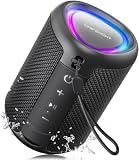
- Compact and Powerful Design: Engineered with premium craftsmanship, this portable speaker features a space-saving form measuring a mere 2.99 inches (7.6 cm) in width and length, and 4.25 inches (10.8 cm) in height. Ultra-lightweight at just 0.582 lbs (264g), it slips effortlessly into any bag. Driven by a robust 20W peak power, it delivers immersive audio with punchy bass and crisp highs, while its 15W continuous output ensures crystal-clear sound for indoor relaxation or outdoor adventures
- 【IPX5 Waterproof – Beach, Pool & Outdoor Adventures】Built for everyday outdoor fun, this portable Bluetooth speaker features IPX5 waterproof protection to handle splashes, light rain, and wet environments. Take it to the beach, pool, campsite, backyard, patio, or shower for music wherever you go. A reliable companion for travel, camping, outdoor gatherings, and weekend adventures
- 【Portable Companion – Travel, Camping & Everyday Use】At just 0.58 lbs, this compact wireless speaker easily fits into a backpack, tote, suitcase, or travel bag. The built-in lanyard makes it easy to carry or hang from a backpack, bike, hook, or shower caddy. Great for road trips, beach days, camping trips, dorm rooms, home offices, and relaxing at home
- 【Dynamic Lights – Create the Right Mood Anywhere】Dynamic LED lights add colorful visual effects to your favorite music, bringing extra energy to parties, gatherings, and everyday listening. Use it in the bedroom, dorm, backyard, patio, campsite, or party space. A fun choice for Halloween music, movie nights, sleepovers, game nights, and outdoor hangouts
- 【15W HD Sound & 15H Playtime – Music for Every Moment】Powerful 15W HD sound delivers clear, enjoyable audio for music, podcasts, games, and more. With up to 15 hours of playtime, enjoy your playlist during travel, beach trips, camping, pool days, backyard gatherings, or a relaxing night at home. Keep the music going without frequent recharging
Protect the host’s attention
Prepare the queue so you are not browsing while carrying plates. Keep a short fallback set of neutral instrumentals or familiar mid-tempo songs for an unexpected delay between courses. A host who can adjust quickly is less likely to make a dramatic, distracting change.
Respect requests without losing the arc
Accept requests that fit the current phase and save incompatible choices for later. If a guest asks for a high-energy favorite during the main course, acknowledge it and place it in the after-dinner queue rather than breaking the meal’s pacing.
What should a sample evening timeline look like?
The exact clock times depend on your menu, but the sequence below shows how tempo, volume and social activity can move together.
| Phase | Room behavior | Music direction | Host check |
|---|---|---|---|
| Arrival and first drinks | Guests stand, greet and circulate | Moderate energy, welcoming familiarity, slightly higher level than seated dinner | Confirm every arrival area has sound without creating a loud spot. |
| First course | Guests settle and begin eating | Lower volume; steady, slower-to-mid tempo; restrained vocals or instrumentals | Test whether a person at the farthest seat can speak normally. |
| Main course | Conversation is concentrated at the table | Keep the most unobtrusive material and avoid abrupt dynamic peaks | Do not raise volume to compensate for kitchen noise; adjust placement or choose a calmer track. |
| Dessert and coffee | Plates clear and conversation broadens | Begin a gentle energy lift only if the room signals readiness | Move upward over several songs rather than switching styles suddenly. |
| After dinner | Guests may stand, move rooms or dance | More rhythmic, familiar or genre-specific choices can take over | Recheck volume after people relocate; the best level in the dining room may be wrong elsewhere. |
Is there one perfect genre or BPM for every dinner party?
No. The evidence supports matching style, tempo, volume and dynamics to the meal, acoustics and guests, not prescribing one genre. The 85–110 BPM dinner range is a useful starting point from JN Event Entertainment, but arrangement and perceived loudness can make a track inside that range feel too active or a track outside it feel comfortable.
Use the conversation test as the non-negotiable constraint, then make creative decisions within it. A playlist that sounds less impressive in isolation may work better because it leaves guests free to talk, eat and notice one another.
Frequently Asked Questions
Can I use a streaming service for a private dinner party?
Check the service’s current terms for personal, public-performance and regional use before the event. Commercial or event settings may require a different license from an individual household account, even when the party is invitation-only.
How many songs should I prepare for the evening?
Prepare enough music to cover the planned gathering with a buffer for delayed courses, late arrivals and requests. Separate the buffer into the same arrival, dinner and after-dinner groups so extra playing time does not force an unwanted change in mood.
Free tools Windows power users keep installed
One-click scans. No signup required.
What should I do if guests have very different music tastes?
Ask for broad preferences rather than collecting a long list of mandatory songs. Use familiar anchor tracks, rotate eras or styles gradually, and keep strongly polarizing choices for an optional after-dinner segment.
How do I handle a room with an open kitchen and separate dining area?
Treat the kitchen, doorway and table as separate listening positions during the sound check. Aim for consistent low-level coverage and make sure cooking equipment or conversation near the kitchen does not tempt you to turn the entire system up.
Quick Recap
Product prices and availability are accurate as of the date/time indicated and are subject to change. Any price and availability information displayed on Amazon at the time of purchase will apply.

