
Choose by comparing the exact configurations you would deploy—not by brand name or a single headline throughput figure. Match the security features, traffic load, interfaces, redundancy, management, subscriptions, support term, compatibility, and migration work on both sides. Cisco’s current documentation uses the Secure Firewall name, while “Firepower” remains common shorthand; supported Cisco appliances may run either Secure Firewall Threat Defense (FTD) or ASA software, so the appliance name alone does not define the solution.
The available vendor documentation does not establish a universal winner or a like-for-like Fortinet-versus-Cisco performance or value ranking. Use it to shortlist candidates, then validate equivalent bills of materials and workloads.
Start with the network you need to protect
Write down the requirements before selecting an appliance. Record current and expected traffic, the inspection services you intend to enable, VPN demand, interfaces, high-availability design, management workflow, and the support period. Ask both vendors or their integrators to size proposals against the same assumptions.
- Security workload: List the inspection and security services that must run together, rather than sizing on basic firewalling alone.
- Traffic and growth: Estimate normal and peak traffic, concurrent sessions, VPN use, and expected growth. Include headroom appropriate to your deployment.
- Connectivity: Specify port count and speed, WAN and LAN roles, uplinks, and any required FortiLink connectivity on the Fortinet side.
- Resilience: Describe device high availability, power redundancy, WAN failover, and VPN continuity requirements.
- Operations: Identify central policy management, role-based access, backups, logging, existing tools, and the administrators who will run the system.
Fortinet’s NGFW ordering guide explicitly frames model selection around security requirements, throughput, connectivity, and redundancy. Apply the same checklist to Cisco rather than assuming an appliance in a similarly named category is equivalent.
#1 Best Overall

- Compact and Efficient Design: The FortiGate 40F is designed for small to mid-sized businesses and enterprise branch offices, featuring a compact, fanless desktop form factor that ensures quiet operation and minimizes space usage.
- Robust Connectivity Options: Equipped with 5 GE RJ45 ports, including 1 WAN port and 4 internal ports, this model provides essential connectivity and flexibility for various network configurations in a small-scale environment.
- High-Performance Security: Offers up to 1 Gbps IPS throughput and 600 Mbps threat protection throughput, using Fortinet’s purpose-built security processor technology to deliver industry-leading performance and protection for SSL encrypted traffic.
- Advanced Threat Protection: Integrated with Fortinet’s AI-powered FortiGuard Labs, the FortiGate 40F offers comprehensive cybersecurity, identifying and mitigating both known and unknown threats to maintain robust security across your network.
- Simplified Management and Deployment: Features a user-friendly management console that provides comprehensive network automation and visibility, coupled with Zero Touch Integration with Fortinet’s Security Fabric for easy deployment.
Size for enabled inspection, not the biggest throughput number
Throughput figures describe different workloads. A basic firewall figure is not interchangeable with threat-protection or SSL-inspection throughput. Fortinet publishes model-specific figures for these measures; Cisco’s ordering material identifies platform families, but the reviewed sources do not provide a matched cross-vendor benchmark. Request Cisco figures for the chosen appliance and software with the required services enabled, and compare only figures measured under comparable conditions.
| Example FortiGate | Firewall throughput | Threat-protection throughput | SSL-inspection throughput |
|---|---|---|---|
| FortiGate 30G | 4 Gbps (1518-byte measure) | 500 Mbps | 400 Mbps |
| FortiGate 50G | 5 Gbps (1518-byte measure) | 1.1 Gbps | 1.3 Gbps |
These are Fortinet’s model-specific figures in its NGFW ordering guide, indexed approximately ten months before October 4, 2026; they are vendor specifications, not results of an independent matched test. Confirm the latest model datasheet and test definitions before procurement. Do not compare them directly with Cisco figures unless the measurement conditions and enabled features match.
Rank #2
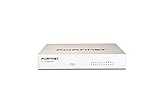
- Extensive Connectivity Options: The FortiGate 60F is designed with 10 GE RJ45 ports, including 2 WAN ports, 1 DMZ port, and 7 internal ports, offering broad flexibility and high-density connections for diverse enterprise networking needs.
- Superior Performance for Secure Networks: Features powerful system-on-a-chip acceleration to deliver top-tier security with 1.4 Gbps IPS throughput and 700 Mbps threat protection throughput, ensuring effective defense against advanced threats.
- Enhanced SSL Inspection and SD-WAN Capabilities: Utilizes purpose-built security processor technology to provide the industry's highest SSL inspection performance and robust SD-WAN functionality for secure, high-speed network operations.
- Simple and Effective Management: Comes equipped with a user-friendly management console that supports comprehensive network automation and visibility, alongside Zero Touch Integration with Fortinet's Security Fabric for streamlined deployment.
- Advanced Security Features: Leverages continuous threat intelligence from AI-powered FortiGuard Labs, identifying and mitigating both known and unknown threats, enhancing security across all network traffic, whether encrypted or not.
The guide places the 30G and 50G in small retail, home-office, and branch contexts, and includes 70G, 90G, 120G, and 200G in larger branch/SMB or 10G uplink/downlink categories. These groupings are shortlist cues, not a guarantee of suitability: verify current regional availability, supported features, lifecycle status, and the throughput your workload requires.
Compare connectivity and resilience model by model
For each finalist, confirm the exact SKU and proposed topology. Match port types, port counts and speeds, uplinks, VPN capacity, and high-availability behavior to the same network design. Fortinet’s guide calls out WAN, power, IPsec VPN tunnels, and device redundancy as selection considerations. On Cisco, check the exact hardware and software configuration against the deployment topology; the ordering guide covers platform families and configurations, but exact SKU details still need confirmation.
Rank #3
- INTEGRATED FIREWALL APPLIANCE AND SECURITY SERVICES: Comes with FortiGate-40F Firewall Appliance, 1 year of FortiCare Premium, and FortiGuard Unified Threat Protection.
- UTP SECURITY FEATURES: Offers protection from advanced threats with DNS filtering, URL filtering, video filtering, and controls against botnets.
- IDEAL FOR SMALLER SETTINGS: Best suited for small to mid-sized businesses needing reliable security without the complexity of larger systems.
- CONTINUOUS SUPPORT AND MAINTENANCE: FortiCare Premium ensures that technical help is readily available to manage and troubleshoot issues.
- COMPACT AND EFFECTIVE: Provides a powerful, yet compact security solution that effectively protects against a wide range of cyber threats.
A proposal that meets throughput needs but lacks the required uplinks or redundancy is not a comparable alternative. Include growth needs in this check so that capacity is not judged in isolation from the interfaces and failover design needed to use it.
Choose the software and management model deliberately
Cisco appliance families may be configured with FTD or ASA images. For FTD, Cisco documents local management with Firewall Device Manager (FDM) on supported deployments and centralized management with Firewall Management Center (FMC). The supported combinations depend on appliance and software release; consult Cisco’s FTD compatibility guide and Management Center compatibility guide for the intended versions.
Rank #4

- Single appliance with integrated firewalling, SD-WAN and Wi-Fi controller reduces complexity of WLAN management. Its zero-touch deployment helps optimize your onboarding experience.
- Built on a patented secure processor, this compact network firewall delivers the highest level of security and performance in its class – 800 Mbps IPS | 500 Mbps threat protection.
- User-friendly management console gives you centralized visibility and simplifies policy enforcement across your network. Its zero-touch deployment helps you optimize your onboarding experience.
- Compact and fanless design equipped with 4 GE RJ45 ports (1 WAN port and 3 internal ports) provide essential connectivity and flexibility for various network configurations in a small-scale environment.
- Fortinet is the most deployed and trusted firewall from businesses worldwide with 99.98% security effectiveness, surpassing competition. Fortinet is the only vendor recognized as a firewall leader 13 consecutive years by Gartner.
FortiManager is Fortinet’s centralized policy, provisioning, automation, and device-management option for FortiGate and the wider Fortinet environment. Fortinet describes appliance, virtual, and cloud forms; it is an option to evaluate, not a requirement for every FortiGate installation. See the FortiManager product information and FortiManager data sheet.
Compare how each option handles the work your team actually performs: policy changes, provisioning, access controls, backups, upgrades, logging, and troubleshooting. Include migration effort and staff familiarity. Existing Cisco or Fortinet tools and administrator experience can affect operational fit, but should not substitute for checking required features and compatibility.
Best Value

- HARDWARE PLUS SECURITY SERVICES: FortiGate-60F Firewall Appliance bundled with 1 year of FortiCare Premium and FortiGuard Unified Threat Protection.
- UNIFIED THREAT PROTECTION (UTP): Secures against advanced online threats with comprehensive web filtering and anti-botnet technologies.
- OPTIMIZED FOR MEDIUM-SIZED BUSINESSES: Tailored for businesses needing robust security without the infrastructure of larger enterprises.
- RELIABLE CUSTOMER SUPPORT: FortiCare Premium ensures high-quality support and service continuity.
- EFFECTIVE PROTECTION: Employs advanced filtering technologies to safeguard against sophisticated threats.
Price the full term, not just the appliance
Subscription and license needs depend on software and enabled capabilities. Cisco’s licensing guidance identifies categories including Essentials, IPS, Malware Defense, URL Filtering, and Cisco Secure Client; FTD uses Smart Licensing. Cisco states that “the license type depends on the software components, not the hardware.” Confirm the precise requirements for the selected release and purchase configuration in the Cisco license overview and Smart Licensing guidance.
Fortinet’s ordering guide lists recommended FortiGuard bundle categories for its model groupings. Ask for an itemized quote that aligns services and terms with the Cisco proposal. For either platform, include hardware, security subscriptions, support, management components, and migration costs over the intended ownership term; verify renewal pricing, region, and what is included rather than comparing appliance prices alone.
Verify lifecycle and compatibility before procurement
Check the exact appliance, software release, management component, and security services you plan to operate. Cisco’s compatibility pages enumerate supported FTD and FMC combinations, and its documentation recommends eligible upgrades to suggested releases and latest patches. Verify the relevant release guidance at procurement time because Cisco pages are versioned and may change.
For Fortinet, confirm that the proposed FortiOS, appliance, management components, and services remain suitable for the deployment and migration plan. The Fortinet ordering guide describes models that were latest for their series at its publication; that statement is not a substitute for checking current availability and lifecycle status.
Quick wins for a faster PC:
Clear out junk files and repair common Windows errorsFree Scan →Fix the driver behind crashes, sound loss and screen glitchesFind Drivers →Run a fair final evaluation
- Build one requirements sheet. Define traffic mix, packet sizes, required security services, VPN load, HA, logging, management, interfaces, growth, region, and support term.
- Request complete proposals. Ask for the specific appliance SKUs, software choices, subscriptions, management components, support, and migration work on both sides.
- Validate comparable performance. Request testing or documented figures using the same traffic mix and enabled features. Include packet sizes, VPN, HA, logging, and management assumptions, and record what differs.
- Check operability and compatibility. Confirm exact hardware/software/manager support combinations, policy workflow, role controls, backups, upgrade approach, and who will administer the system.
- Compare total cost over the same period. Align service scope, subscription duration, support, management, and migration; include renewal costs and regional terms in the comparison.
If vendors cannot provide equivalent performance conditions, treat the numbers as non-comparable instead of declaring a winner from unmatched specifications. The primary materials cited here do not establish an independent, matched FortiGate-versus-Cisco performance statistic.
Quick Recap
Product prices and availability are accurate as of the date/time indicated and are subject to change. Any price and availability information displayed on Amazon at the time of purchase will apply.

