
Choose a CPU for an RTX 2080 Ti by matching it to your games, target resolution and frame rate, then checking the motherboard and memory it needs. There is no single processor that avoids a bottleneck in every game: CPU and GPU limits change with the title, settings and rest of the system. If you already own a PC, start with its motherboard model and CPU-support list; if you are building new, compare the cost of the complete CPU platform, not just the processor.
What matters most when pairing a CPU with an RTX 2080 Ti?
Think in terms of the games and performance you want rather than a universal CPU-to-GPU ratio. At lower resolutions and very high frame rates, the processor can become the limiting factor sooner. At 4K, the graphics card often has more work to do and may limit performance instead. These are tendencies, not rules: individual games can behave differently.
TechSpot’s RTX 2080 Ti testing illustrates why a single “bottleneck percentage” is not dependable. In its 2020 comparison of an Intel Core i9-10900K and AMD Ryzen 9 3950X, the 10900K was up to 8% faster in Metro Exodus at 1080p and 5% faster at 1440p; the tested systems were equal at 4K in that game. In F1 2020, TechSpot reported an 8% advantage at 1080p and 5% at 1440p, while both averaged 95 fps at 4K. Other games in the same review showed smaller differences or different winners. These are results from those CPUs, games and test conditions—not predictions for every current game or processor. See TechSpot’s 2020 CPU comparison.
Resolution alone does not tell you whether a game is CPU-limited. In its 2020 resolution study, TechSpot found different scaling behavior across titles; for example, it identified a CPU limit in World War Z at 1440p using 1% low results, while several other tested cases did not show a CPU bottleneck. Its 2018 RTX 2080 Ti launch review also said the card was often CPU-bound at 1440p under that review’s test conditions. Neither result should be generalized to every later game or system. See TechSpot’s resolution study and TechSpot’s RTX 2080 Ti launch-era review.
Quick wins for a faster PC:
Repair Windows errors before they cause bigger problemsFix Now →Scan for outdated or missing drivers - takes under a minuteDriver Scan →Clear out junk files and repair common Windows errorsFree Scan →#1 Best Overall

- Get ultra-efficient with Intel Core Ultra desktop processors that improve both performance and efficiency so your PC can run cooler, quieter, and quicker.
- Core and Threads 24 cores (8 P-cores plus 16 E-cores) and 24 threads. Integrated Intel Graphics included
- Performance Hybrid Architecture Integrates two core microarchitectures, prioritizing and distributing workloads to optimize performance
- Performance Unlocked Up to 5.7 GHz unlocked. 40MB Cache
- Compatibility Compatible with Intel 800 series chipset-based motherboards
How to choose for your games, resolution and frame-rate target
Lower resolutions and high refresh rates
If you play at 1080p or 1440p and want very high frame rates, CPU performance may matter more because the graphics card has fewer pixels to render than at 4K. Check benchmarks for the games you actually play, paying attention to average frame rates and 1% lows where available. A result in one title is not a reliable substitute for testing your own game mix.
4K and GPU-heavy games
At 4K, the RTX 2080 Ti is more likely to be the limiting component in many games, so paying extra for a much faster CPU may produce less gaming benefit than it would at a lower resolution. “More likely” is not a guarantee: game engine, settings and frame-rate target still matter.
Rank #2

- Intel Core i9-14900KF CPU, B760 chipset motherboard, 32GB DDR5 6000MT/s RGB Memory, 1TB NVMe M.2, WiFi, Windows 11
- NVIDIA GeForce RTX 5070, Display Port/HDMI
- Closed Loop Liquid Cooling with 240mm Radiator
- 2x USB 3.0, 1x Headphone, 1x Mic
- PSU Power cover with Filtered Ventilated Vertical Side mount Radiator support
CPU-sensitive games and other workloads
Simulation, strategy, multiplayer and other high-frame-rate titles can place different demands on the processor than GPU-heavy games. If you also stream or create content, or plan to install a faster graphics card later, CPU headroom may be useful for your broader workload or upgrade horizon. Those are individual priorities, not conclusions established by the cited RTX 2080 Ti gaming tests.
Check platform compatibility before buying
For an existing computer, identify the exact motherboard model and consult its CPU-support list before choosing a processor. A matching socket alone does not guarantee support: the required BIOS version may matter, and a platform change can also require new memory or a cooler. For a new build, compare the CPU together with the motherboard, memory and cooling it requires.
The Tool Desk
Outbyte PC Repair FREEClear out junk files and repair common Windows errorsFree Scan →Outbyte Driver Updater FREEScan for outdated or missing drivers - takes under a minuteDriver Scan →Rank #3
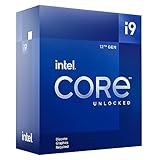
- Built for the Next Generation of Gaming. Game and multitask without compromise powered by Intel’s performance hybrid architecture on an unlocked processor.
- Discrete graphics required
- Compatible with Intel 600 series and 700 series chipset-based motherboards
- The processor features Socket LGA-1700 socket for installation on the PCB
- 30 MB of L3 cache memory provides excellent hit rate in short access time enabling improved system performance
- Motherboard: Confirm the board model, socket, supported-CPU list and minimum BIOS version for the processor.
- Memory: Check whether the CPU and motherboard use the memory type you already own or require a replacement.
- Cooling: Confirm cooler compatibility and whether the processor package includes a cooler.
- Total cost: Add the motherboard, memory and any required cooler when comparing a platform upgrade with a CPU-only replacement.
A concrete new-platform example: Ryzen 5 7600
AMD lists the desktop Ryzen 5 7600 with six cores, 12 threads, boost speeds up to 5.1 GHz, a 65 W default TDP, an AM5 socket and DDR5 memory support. AMD also lists a Wraith Stealth thermal solution with the boxed package. These are manufacturer specifications, not evidence that it is the best CPU for every RTX 2080 Ti owner. It is an example of a new AM5/DDR5 platform, not an automatic drop-in upgrade for an older motherboard. Check the board, BIOS, memory, cooling and local price before buying. AMD Ryzen 5 7600 specifications.
Independent reader supportYour contribution helps us test, update, and keep practical guides available for everyone.Check the RTX 2080 Ti’s system requirements separately
CPU selection does not replace checking the graphics card’s own requirements. NVIDIA’s user guide describes the RTX 2080 Ti as a PCI Express 3.0 ×16 card and recommends a primary PCI Express x16 slot. It lists a minimum system power supply of 650 W with two 8-pin PCI Express supplementary power connectors, and recommends 16 GB of system memory. These are GPU/system checks, not a CPU recommendation. Consult NVIDIA’s GeForce RTX 2080 Ti User Guide.
Quick Recap
Rank #4

- Game without compromise. Play harder and work smarter with Intel Core 14th Gen processors
- 24 cores (8 P-cores plus 16 E-cores) and 32 threads. Integrated Intel UHD Graphics 770 included
- Leading max clock speed of up to 6.0 GHz gives you smoother game play, higher frame rates, and rapid responsiveness
- Compatible with Intel 600-series (with potential BIOS update) or 700-series chipset-based motherboards
- DDR4 and DDR5 platform support cuts your load times and gives you the space to run the most demanding games
A practical decision checklist
- Set your target: Write down the games you play, resolution, refresh rate and frame-rate goal.
- Check relevant benchmarks: Prefer tests that include your games and target settings; treat results from older CPU generations as guidance about variability, not a current ranking.
- Identify your platform: Find the motherboard model and verify processor support, socket and BIOS requirements.
- Price the complete upgrade: Include motherboard, memory and cooler costs if the new CPU requires a platform change.
- Check the rest of the PC: Verify the GPU slot, power supply and memory against NVIDIA’s guide.
- Choose for your actual use: Spend on extra CPU capability when your games, high-frame-rate target, other workloads or planned GPU upgrade justify it—not because a calculator promises a universal bottleneck-free pairing.
Product prices and availability are accurate as of the date/time indicated and are subject to change. Any price and availability information displayed on Amazon at the time of purchase will apply.

