
Quick wins for a faster PC:
Clear out junk files and repair common Windows errorsFree Scan →Fix the driver behind crashes, sound loss and screen glitchesFind Drivers →iTechGuides is reader-supported. When you buy through links on our site, we may earn an affiliate commission. As an Amazon Associate I earn from qualifying purchases. Learn more
Open-weight coding models give you access to model weights that may be run locally, on rented infrastructure, or through a hosted inference provider. Hosted AI coding assistants are provider-operated services that combine a model with an interface, repository context, tools, and an agent workflow. They are different layers, not mutually exclusive choices: a hosted assistant can use an open-weight model. The practical comparison is between the complete workflows you could use—not simply between a model and a product.
There is no evidence-backed universal winner. Compare the exact model and assistant setup on representative coding tasks, then weigh task success against deployment control, operating effort, privacy requirements, and total cost.
What is the difference between an open-weight model and a hosted coding assistant?
An open-weight model is a model whose learned weights are made available under specific terms. A hosted coding assistant is a service that operates a model for you and typically adds the surrounding workflow: an interface, repository context, tool access, and agent behavior. One is primarily a model and deployment option; the other is a user-facing product and workflow.
That distinction matters because the labels can overlap. An open-weight model can be deployed by its owner, run on infrastructure you control, or accessed through a hosted inference service. Conversely, a hosted assistant may use an open-weight model. To make a useful comparison, identify what you are actually choosing: a checkpoint, an inference service, an assistant product, or an end-to-end coding workflow.
#1 Best Overall
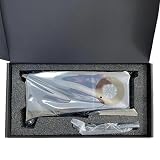
- Network Cards
- 32GB Large Memory AI Pro R9700 Graphics Card Professional GPU Accelerator for Local AI Inference Computing
Compare like with like
- Model versus model: compare exact model versions, settings, and benchmark results. This does not establish which assistant will work better in your repository.
- Assistant versus assistant: compare the models and tools each product makes available, along with repository context, review flow, and approval controls.
- Workflow versus workflow: compare the complete setup you would use, including the model, agent or IDE integration, tools, deployment, and human review.
A benchmark result is not a property of weights alone. Agent scaffolding and tool access can affect whether a system completes a task, so a score should be read alongside the tested setup. CodeSOTA specifically notes that its SWE-bench Verified figures reflect agent scaffolding as well as model performance; that is a useful caution, not a controlled comparison of every current assistant and open model.
What do the published coding benchmark results show?
A May 2026 evaluation by the National Institute of Standards and Technology’s Center for AI Standards and Innovation (CAISI) reported different relative results on SWE-bench Verified and PortBench. The figures describe CAISI’s evaluation configurations; they do not establish a general ranking for all coding work or every product built around those models.
| Model named in CAISI’s May 2026 evaluation | SWE-bench Verified | PortBench |
|---|---|---|
| GPT-5.5 | 81% | 78% |
| Claude Opus 4.6 | 79% | 60% |
| DeepSeek V4 Pro | 74% | 44% |
The change in scores across the two benchmarks is a reason not to collapse them into one leaderboard. Different evaluations probe different tasks and conditions; a result on one does not promise the same outcome on another, much less on your team’s codebase. The published figures are attributed to CAISI’s May 2026 evaluation, rather than presented as a live market ranking.
Recommended Free Tools
How to interpret a score before using it
- Check the benchmark and date. A result is tied to a particular evaluation at a particular time.
- Check the model version and configuration. Results for a named model do not automatically apply to another release, quantization, or inference setup.
- Check the agent harness and tools. Repository access, tool use, and agent scaffolding can influence task completion.
- Check whether the task resembles yours. Benchmark success is informative, but it is not a substitute for evaluating your own development work.
For a fair internal comparison, keep the task set, instructions, tools, and evaluation criteria as consistent as possible. Record which model version and workflow produced each result. That gives you evidence about your intended use instead of asking a benchmark to answer a broader question than it can.
How do the two options compare in control, privacy, and licensing?
An open-weight deployment can give an organization more choice about where inference runs, but the degree of control depends on how it is deployed and operated. A hosted assistant removes much of the infrastructure work, while its data handling and organizational controls depend on the named provider and service terms.
| Decision area | Open-weight deployment | Hosted coding assistant |
|---|---|---|
| Deployment control | You can choose local or rented infrastructure, subject to the model’s terms and the capabilities of your serving setup. | The provider operates the service. The available controls depend on the product. |
| Privacy and data handling | Running inference within an organization’s chosen boundary may support its control requirements, but the organization still needs to manage access, logging, and the surrounding tools. | Review the named service’s data handling, retention, and access-control terms. Those provider-specific terms are not established here. |
| License | Check the exact checkpoint license and any usage conditions. Licenses are model-specific. | Review the service terms and any organizational controls for the specific provider. |
| Operational ownership | Your team or infrastructure provider must supply an operational path for model serving and maintenance. | The provider operates the service, but product capabilities and limits still need checking. |
For a concrete example of why license claims should stay model-specific, Qwen’s project documentation states that its Qwen3 open-weight models are licensed under Apache 2.0. That statement applies to those models as documented; it is not a license conclusion for other providers, checkpoints, or third-party tools. Qwen3 project documentation
Likewise, availability of weights does not by itself establish that a particular deployment meets a privacy or compliance requirement. Decide what data may leave your environment, who can access prompts and outputs, what is logged, and which components process repository contents. For a hosted service, answer those questions from its current terms; for a self-managed setup, include the serving layer and any connected agent tools in the review.
Can I run an open-weight coding model locally?
Yes, if you have a compatible model, serving software, and sufficient hardware for that model and the way you intend to use it. The term open-weight does not mean that a model will run comfortably on an ordinary computer, or that local operation has no cost.
What hardware do the documented Qwen examples use?
Qwen’s documentation lists an NVIDIA H20 with 96 GB of memory as the GPU environment for its speed benchmarks. That is a reported test environment, not a minimum requirement or a universal recommendation. Requirements vary with model size, quantization, context length, and serving software.
For its Qwen3-235B serving example, Qwen’s documentation sets NUM_GPUS=8 and says to adjust tensor parallelism to the available GPU setup. This illustrates the scale of one large-model example; it should not be treated as the requirement for every Qwen model or every open-weight coding model. Smaller or quantized models can have different needs. Qwen3 deployment documentation
The repository lists a 256K context length for the Qwen3-Coder variants covered in that documentation. Check the exact variant and its current model card before relying on that figure for a deployment. A listed context length is not, on its own, evidence that every hardware configuration can serve that amount efficiently.
What’s actually slowing this PC down?
Pick the symptom - the matching free tool is one click away.
What operating work comes with local deployment?
Local or self-managed inference shifts work from a service provider to the person or organization running the system. Plan for the model weights and their terms, a serving engine, any quantization choices, updates, monitoring, and an agent or IDE integration that can use the model. You also need enough infrastructure capacity for your expected workload, rather than merely a setup that can load the model once.
If you rent infrastructure instead of buying it, weights may still be open, but the inference is not happening on your local machine. The organization must still account for infrastructure charges and decide what data is sent to the rental provider. “Open-weight” describes access to weights under terms; it does not specify where execution happens.
Are open-weight coding models cheaper than hosted assistants?
Not necessarily. The available evidence does not establish a comparable total-cost calculation, so a blanket claim that open-weight models are cheaper would be unsupported. Compare the costs of the complete workflows you would actually run.
Rank #3

- [3352 AI TOPS, 5th Gen Tensor Cores, AI Content Creation] Accelerate AI-powered photo and video workflows like upscaling, denoise, background removal, masking, and generative AI creation for faster creator productivity.
- [32GB GDDR7 VRAM, Local LLM Inference, Larger Models] Run local LLM inference and on-device AI tools with massive VRAM headroom for larger models, longer context, and heavier multitasking across AI and creator apps.
- [28 Gbps, 512-bit, 1792 GB/s Bandwidth] High-throughput next-gen memory for demanding creator projects, complex timelines, 8K assets, and GPU-accelerated workloads that benefit from extreme bandwidth.
- [DLSS 4, Reflex 2, 4th Gen Ray Tracing Cores] Smooth modern gaming with AI-enhanced performance and responsiveness in supported titles, plus advanced ray-traced visuals for immersive experiences.
- [DP 2.1b UHBR20 x3, HDMI 2.1b, Bundle GPU Holder] Multi-display ready with up to 4 displays and support for 4K 480Hz or 8K 165Hz with DSC (display and cable dependent), plus an included GPU Holder to help reduce GPU sag and improve build stability.
| Cost category | Open-weight deployment | Hosted assistant |
|---|---|---|
| Infrastructure | Include GPU purchase or rental, electricity, and the utilization level you expect. | Include any subscription or API charges that apply to the named service. |
| Operations | Include engineering and ongoing serving, update, and monitoring work. | Include the team’s time to configure and manage the product, as well as any product limits that affect use. |
| Usage and capacity | Estimate cost against actual workload and how intensively the infrastructure will be used. | Check how the service charges and any usage limits against your expected workload. |
| Current prices | Depend on the hardware, rental arrangement, and operating setup. | Depend on the current provider and plan; current prices have not been verified here. |
A useful comparison is cost per useful completed task, not simply a token price or a hardware purchase price in isolation. A server that is lightly used can have a different cost profile from one kept busy; a service charge can also be hard to compare without accounting for its limits and the work it includes. Estimate with your own workload and include both direct spending and the effort required to keep the workflow usable.
The Tool Desk
Outbyte Driver Updater FREEFix the driver behind crashes, sound loss and screen glitchesFind Drivers →Outbyte PC Repair FREEClear out junk files and repair common Windows errorsFree Scan →Which option fits my coding workflow?
Choose according to the constraint that matters most: control and customization, reduced operational burden, or the ability to combine both. These are decision patterns, not test-backed recommendations for any one model or service.
Consider open-weight deployment when control is central
If you need to choose where inference runs or want to configure a model-serving path around organizational requirements, an open-weight model can offer that deployment choice. The trade-off is that your team must validate the exact model, license, infrastructure, serving path, and workflow integration. Weight access alone does not supply an IDE integration or an agent that can safely make changes in a repository.
Consider a hosted assistant when you want a provider-operated workflow
A hosted assistant can reduce the need for your organization to operate model-serving infrastructure. Compare the actual product experience, including repository context, terminal or IDE tools, review flow, and approval controls—not just the model name. Verify current service limits and data-handling terms for the specific provider before using it with sensitive code.
Consider a hybrid approach when model access and convenience are both useful
Because a hosted service can expose an open model, you may be able to combine open weights with provider-operated inference or a product workflow. That does not automatically give you local control: identify where the model runs, which service handles requests, and what terms govern both the model and the service.
PC Slower Than It Used to Be?
A free scan shows the junk files, broken settings and background clutter dragging Windows down - then fixes them in one click.Free scan · Windows 10 & 11Outdated Drivers Are Slowing You Down
One free scan finds every outdated or missing driver and matches the right update for your exact hardware.Free scan · exact hardware matchHow should I evaluate a model or assistant before adopting it?
Run a small, repeatable evaluation against work that reflects your repositories and team practices. A benchmark can help narrow the field, but your adoption decision should be based on the complete workflow and the requirements it must satisfy.
- Define the work. Select representative tasks, such as the kinds of coding changes, debugging, or repository questions your team expects the system to handle. Keep the scope manageable and make the success criteria explicit.
- Name the complete setup. Record the exact model or assistant version, deployment method, agent harness, tools, and relevant settings. For an open-weight deployment, note the checkpoint and quantization; for a hosted product, note which tools and repository access were enabled.
- Set boundaries before testing. Decide what code and data may be used, what actions require approval, and how changes will be reviewed. These rules should be part of the test rather than added after an agent has already been given access.
- Use a fixed budget. Set a consistent time, usage, or infrastructure budget for the evaluation. This makes results easier to compare and prevents one setup from receiving unbounded retries while another does not.
- Assess outcomes and workflow costs. Track whether tasks were completed to your criteria, how much review or correction was required, and whether the setup stayed within its budget. Do not treat a benchmark percentage as a substitute for these observations.
- Check ongoing fit. Before adoption, verify current licensing or service terms, operational requirements, and product limits for the exact setup. Recheck these details when the model, deployment, or provider service changes.
This process keeps the comparison anchored to a decision you can act on: whether a named system, in the configuration you can actually operate, helps with your team’s work under its constraints.
Rank #4

- 【YOUR PRIVATE TOKENS POWERED BY LOCAL LLM】 Driven by NIMO OS and local AI computing power, allocation optimizes local model inference for fast global search, custom AI agent workflows, and multimodal knowledge bases. It delivers secure storage, smart photo organizing, audio processing, and isolated multi-user privacy—offering a seamless, safe environment to handle your documents, photos, audio and videos without subscription fees.
- 【5080 GPU FOR AI CREATION & CREATIVE WORK】A BALANCED CHOICE FOR CREATORS AND AI USERS – Equipped with a 5080 GPU for local AI inference, image generation, video processing, 3D rendering and GPU-accelerated creative workflows, making it a strong fit for creators, AI enthusiasts and advanced home users.
- 【RUN LOCAL AI WHERE YOUR DATA LIVES】KEEP MODELS, DOCUMENTS AND DATA CLOSE – Build local workflows for AI inference, RAG, AI agents, image generation and development without separating your storage server from your compute workstation.
- 【UP TO 204TB HYBRID STORAGE】ARCHIVE BIG, WORK FAST – Combine six SATA bays and three M.2 NVMe slots for up to 168TB of flexible hybrid storage. Store media libraries, backups and large datasets on high-capacity HDDs, while high-speed NVMe SSDs accelerate AI models, applications, VMs and active project files.
- 【BUILT FOR CREATORS WITH LARGE PROJECT FILES】STORE, EDIT, PROCESS AND ARCHIVE – Video editors, photographers and digital creators can centralize project libraries, keep active files on NVMe and use dedicated GPU compute for rendering and AI-assisted production.
What is the fairest way to reach a decision?
There is no single overall winner supported by these comparisons. Qwen’s evaluation documentation cautions that results are nondeterministic and that compute needs, query cost, and availability affect model choice; its conclusion is that there is no perfect overall model for every use case. Treat that as a reminder to define the job and constraints first, then evaluate the complete workflow.
Before choosing, confirm that you can answer these questions:
- Which exact task or workflow are you trying to improve?
- Which model version, assistant product, and tools will be tested?
- Does the evaluation resemble your code and success criteria?
- Where will inference run, and what data-handling terms apply?
- What license or service terms govern the setup?
- What are the expected infrastructure, service, and operational costs?
- Who reviews outputs and approves actions that change code or systems?
Frequently Asked Questions
Does an open-weight model mean the code is open source?
Not by itself. The term refers to access to model weights under particular terms; it does not establish that training data, training code, serving software, or every component in an assistant is open source. Check the license and terms for each component you plan to use.
Can an open-weight model be used through a hosted service?
Yes. A provider can host inference for an open-weight model, so the model’s licensing category does not tell you where it runs. To understand control and privacy, establish which party operates inference and what service terms apply.
What does a 256K context window let a coding model do?
It describes a listed context capacity, not a guarantee that an entire repository will fit or that every prompt will be processed at that length efficiently. The Qwen3-Coder documentation lists 256K for the variants it covers; verify the exact model and deployment behavior before planning around it.
Do benchmark percentages mean the model will solve that share of my coding tickets?
No. The percentages refer to results on named benchmarks under particular evaluation configurations, not a prediction for an individual team’s backlog. Task mix, tooling, repository context, and review criteria can differ substantially.
Quick Recap
Product prices and availability are accurate as of the date/time indicated and are subject to change. Any price and availability information displayed on Amazon at the time of purchase will apply.

