
What’s actually slowing this PC down?
Pick the symptom - the matching free tool is one click away.
NVIDIA’s LoRA and TensorRT-LLM workflow can make a language model more useful for a particular task, but it does not make every model universally “better.” LoRA adapts a pretrained model by training small low-rank matrices while keeping its original weights frozen; TensorRT-LLM provides an NVIDIA GPU inference path for running the resulting model and adapters. With Triton, documented inflight batching can serve requests using different adapters in a shared batch. The practical result depends on the task, model, hardware, and workload—not on the software combination alone.
What LoRA and TensorRT-LLM each do
LoRA adapts a model without updating all its weights
Low-Rank Adaptation (LoRA) is a parameter-efficient fine-tuning method. Instead of training every parameter in a pretrained model, it trains smaller matrices that represent updates to selected weights while the original weights remain frozen. This reduces the number of trainable parameters compared with full-model fine-tuning, but it does not eliminate the need for suitable task data, evaluation, or a compatible deployment setup.
| # | Preview | Product | Price | |
|---|---|---|---|---|
| 1 |

|
NVD RTX PRO 6000 Blackwell Professional Workstation Edition Graphics Card for AI, Design,... | $19,999.99 | Buy on Amazon |
| 2 |
|
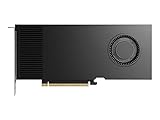
NVIDIA RTX PRO 4000 Blackwell Graphics Card - 24GB GDDR7 ECC Memory, PCIe 5.0 x16, 4X DisplayPort... | $3,134.14 | Buy on Amazon |
| 3 |

|
PNY NVIDIA RTX A6000 | $6,169.96 | Buy on Amazon |
Adapter rank is one of the choices that affects the result. NVIDIA’s tutorial explains that a lower rank can reduce parameter and memory requirements while capturing less task-specific information; a higher rank can represent more information but may overfit. The useful setting must be evaluated for the target task rather than assumed in advance.
TensorRT-LLM handles inference, not the quality claim by itself
TensorRT-LLM is the inference optimization and execution component in this workflow. NVIDIA’s April 2, 2024 tutorial demonstrates building an engine with LoRA support and using adapters during inference. The tutorial uses Llama 2 examples and TensorRT-LLM v0.7.1, so it is a dated implementation walkthrough, not a guarantee that its exact commands or interfaces match an installed release.
#1 Best Overall
- PLEASE NOTE: Exporting an NVIDIA RTX Pro 6000 GPU outside the US requires strict adherence to the U.S. Export Administration Regulations (EAR) and issuance of an export license from the Bureau of Industry and Security (BIS). Compliance and Know Your Customer (KYC) screening may be required as a condition of order acceptance. [NVIDIA Blackwell Streaming Multiprocessor] The new SM features increased processing throughput, and new neural shaders that integrate neural networks inside of programmable shaders | DLSS 4: Multi Frame Generation ensures ultra-smooth frame pacing for lifelike simulations.
- [Double-Flow-Through Design] The RTX PRO 6000 Blackwell features a double-flow-through cooling design, optimizing efficiency and airflow to sustain peak performance under 600W power loads. | [5th Gen Tensor Cores] Deliver up to 3X the performance of the previous generation and support for FP4 precision for faster AI model processing times with reduced memory usage, enabling local fine-tuning of LLMs and generative AI | [4th Gen Ray Tracing Cores] Double the ray-triangle intersection rate of the previous generation to create photoreal, physically accurate scenes and immersive 3D designs with RTX Mega Geometry, which enables up to 100X more ray-traced triangles.
- [PCIe Gen 5] Support for PCIe Gen 5 provides double the bandwidth of PCIe Gen 4, improving data-transfer speeds from CPU memory and unlocking faster performance for data-intensive tasks like AI, data science, and 3D modeling. | [GDDR7 Memory] With 96 GB of GPU memory and 1.8 TB ps bandwidth, it can tackle massive 3D and AI projects, fine-tune AI models locally, explore large-scale VR environments, and drive larger multi-app workflows.
- [DisplayPort 2.1] Achieve unparalleled visual clarity and performance, driving high resolution displays at up to 8K at 240 Hz and 16K at 60 Hz. Increased bandwidth enables seamless multi-monitor setups while HDR and higher color depth support ensures superior color accuracy for precision work, such as video editing, 3D design, and live broadcasting.
- [Universal MIG] Divide a single RTX PRO 6000 Blackwell into multiple isolated instances, each with dedicated resources, allowing for concurrent execution of multiple workloads, optimized GPU utilization, and secure isolation of different applications or users. [WARRANTY] 3 YR Manufacturer's Warranty. Bulk OEM Packaging. Retail Packaging is NOT included.
How to deploy LoRA adapters with TensorRT-LLM and Triton
NVIDIA’s Triton TensorRT-LLM backend guide describes a serving path that converts adapter weights, configures an engine and LoRA cache, then routes inference requests to adapters. The precise setup depends on the supported model, backend, release, and hardware combination.
- Check compatibility first. Consult the support matrix for the TensorRT-LLM release you plan to use, including its supported GPUs, models, and related software versions. Confirm the corresponding Triton backend, CUDA, model architecture, and adapter combination as well.
- Build an engine with LoRA support. Configure and build the TensorRT-LLM engine for adapters using instructions that match your installed release. NVIDIA’s 2024 tutorial shows the concept using v0.7.1; do not assume its commands are current.
- Convert and provide the adapter weights. The Triton guide documents converting Hugging Face adapter weights with
hf_lora_convert.pyand placing or passing the converted weights as required by the serving configuration. - Configure adapter caching and request routing. Set up the LoRA cache, then use the documented task IDs to identify cached adapters in inference requests. Cache behavior and configuration should be checked against the installed backend version.
- Evaluate mixed-adapter serving under your workload. Triton documents inflight batching of concurrent requests that use different LoRAs. This allows task-specific variants to share a base model serving setup, subject to supported configuration and available resources; it is not itself a throughput guarantee.
The Triton instructions use release placeholders for container tags. Treat runnable examples as version-specific and verify them against the exact software and hardware stack you intend to deploy.
Rank #2
- Professional GPU with Blackwell Architecture
- Blackwell Architecture
- 24GB GDDR7 with PCIe 5.0 & Ray Tracing
- AI Workstation
When this approach is useful—and what to compare
LoRA is one customization option among prompt engineering, parameter-efficient fine-tuning, and full supervised fine-tuning. NVIDIA’s tutorial presents prompt engineering as relatively data-light, full supervised fine-tuning as more data- and compute-intensive, and PEFT such as LoRA as an intermediate option. These are broad tendencies, not guarantees for every model or task.
| Approach | What changes | General trade-off described by NVIDIA | What to validate |
|---|---|---|---|
| Prompt engineering | Instructions and examples in the prompt; model weights are not fine-tuned. | Can be data-light compared with training approaches. | Task quality, prompt length, and behavior across representative inputs. |
| LoRA / PEFT | Small adapter matrices are trained while pretrained base weights remain frozen. | An intermediate option in data and compute demands compared with prompting and full fine-tuning. | Held-out task quality, adapter rank, memory, serving behavior, and adapter management. |
| Full supervised fine-tuning | The model is trained on task examples; the tutorial discusses this as a more extensive training approach. | Generally more data- and compute-intensive than prompt engineering or PEFT. | Held-out quality, training cost, memory, deployment cost, and whether full-model updates are necessary. |
For a real deployment decision, compare the alternatives on the same task and representative inputs. Measure quality on held-out examples, latency and throughput under expected concurrency, memory use, and operational complexity. For an inference stack comparison, also assess supported model and GPU combinations, adapter lifecycle, batching behavior, and the effort required to maintain the service. The cited documentation does not provide a controlled cross-stack benchmark to rank these options.
Rank #3
- NVIDIA Ampere Architecture-based CUDA Cores - Double-speed processing for single-precision floating point (FP32) operations and improved power efficiency provide significant performance improvements for graphics and simulation workflows, such as complex 3D computer-aided design (CAD) and computer-aided engineering (CAE), on the desktop.
- Second-Generation RT Cores - With up to 2X the throughput over the previous generation and the ability to concurrently run ray tracing with either shading or denoising capabilities, second-generation RT Cores deliver massive speedups for workloads like photorealistic rendering of movie content, architectural design evaluations, and virtual prototyping of product designs. This technology also speeds up the rendering of ray-traced motion blur for faster results with greater visual accuracy.
- Third-Generation Tensor Cores - New Tensor Float 32 (TF32) precision provides up to 5X the training throughput over the previous generation to accelerate AI and data science model training without requiring any code changes. Hardware support for structural sparsity doubles the throughput for inferencing. Tensor Cores also bring AI to graphics with capabilities like DLSS, AI denoising, and enhanced editing for select applications.
- Third-Generation NVIDIA NVLink - Increased GPU-to-GPU interconnect bandwidth provides a single scalable memory to accelerate graphics and compute workloads and tackle larger datasets.
- 48 Gigabytes (GB) of GPU Memory - Ultra-fast GDDR6 memory, scalable up to 96 GB with NVLink, gives data scientists, engineers, and creative professionals the large memory necessary to work with massive datasets and workloads like data science and simulation.
What “better” means—and what the evidence does not establish
A LoRA adapter may improve a model’s performance on the task it was trained for, but that is a task-specific claim that needs evaluation. The sources cited here do not establish an independently verified, workload-specific result showing that LoRA plus TensorRT-LLM improves quality, speed, or cost for every LLM deployment. NVIDIA’s tutorial includes illustrative parameter-count arithmetic and configuration examples; these are not measured benchmark results.
NVIDIA’s TensorRT-LLM product overview advertises an “8X AI inference performance improvement.” That is a vendor claim, not a general expected outcome: without the relevant comparison and test conditions, it should not be used to predict performance for a different model, GPU, or workload.
Related deployment route: NVIDIA NIM
NVIDIA NIM documentation for version 1.7.0 describes deployment of custom fine-tuned models from Hugging Face or NeMo formats and identifies profiles with LoRA support. NIM is a related packaged deployment route, not evidence that every profile, model, or system supports every adapter. Check the documentation for the specific profile and model you intend to deploy.
Quick Recap
Sources and version context
- NVIDIA Technical Blog: “Tune and Deploy LoRA LLMs with NVIDIA TensorRT-LLM”, by Amit Bleiweiss, published April 2, 2024; examples use TensorRT-LLM v0.7.1.
- NVIDIA Triton Inference Server: “Running LoRA inference with inflight batching”, current user guide accessed October 4, 2026.
- NVIDIA TensorRT-LLM documentation index, including a release support-matrix reference; accessed October 4, 2026.
- NVIDIA NIM for LLMs 1.7.0: “Fine-tuned model support.”
- NVIDIA Developer: TensorRT-LLM product overview, accessed October 4, 2026.
Product prices and availability are accurate as of the date/time indicated and are subject to change. Any price and availability information displayed on Amazon at the time of purchase will apply.
Free tools Windows power users keep installed
One-click scans. No signup required.

