
iTechGuides is reader-supported. When you buy through links on our site, we may earn an affiliate commission. As an Amazon Associate I earn from qualifying purchases. Learn more
AI wearables do not all record speech in the same way. Some listen for an activation phrase, some start listening after a button or touch, and some keep the microphone ready briefly after a request. Speech may be processed on the device, sent to a cloud service, or handled through either route depending on the feature. To judge privacy, check the whole path: what activates the microphone, what is captured, where audio or transcripts go, whether anything is retained or reviewed by people, and what controls you have.
What does “listening” mean on an AI wearable?
“Listening” can describe several different states, and they do not all mean that a device is saving everything you say. A microphone might monitor for a wake phrase, activate after a button or touch, remain ready for a short follow-up window, or capture speech during an active interaction. The distinction matters because a device can be ready to recognize a trigger without saving a continuous audio file—and a brief interaction can still capture nearby voices or create a transcript.
The Federal Trade Commission (FTC) describes wake-word systems as listening for sound patterns. A system can mistake other speech or sounds for its activation phrase and activate unexpectedly. That is a general risk for voice assistants, not evidence that any particular wearable has a specific defect.
Outdated Drivers Are Slowing You Down
One free scan finds every outdated or missing driver and matches the right update for your exact hardware.Free scan · exact hardware matchWindows Errors? Fix Them Before They Spread
Repair common Windows errors and clear accumulated junk for a smoother, more stable PC - no reinstall needed.Free scan · no reinstallWake-word monitoring
A wake-word system monitors for a phrase that should begin an interaction. The FTC’s explanation is useful here: listening for the pattern is not the same as a person continuously listening to the microphone feed, but a misheard phrase can trigger an interaction. Ask the manufacturer what is monitored locally, what happens after activation, and whether an indicator appears.
#1 Best Overall

- #1 SELLING AI GLASSES* – Tap into iconic style and advanced technology with Ray-Ban Meta, the #1 selling AI glasses*. Capture photos and videos, listen to music, make hands-free calls or ask Meta AI questions on the go. *Based on IDC historical sales data up to Q3’25, released December 2025.
- META AI – Get more done and stay connected without reaching for your phone with AI glasses powered by Meta AI. Capture video recordings, translate languages while traveling and manage nutrition, wellness and everyday tasks hands-free.
- OPEN-EAR AUDIO – Listen to music and more with discreet open-ear speakers that deliver rich, quality audio and Bluetooth connectivity without blocking out conversations or the ambient noises around you.
- BATTERY LIFE – On a full charge, AI glasses can last up to 8 hours with moderate use for everyday activities like listening to audio, video recording and using Meta AI. Plus, the charging case provides an additional 48 hours of charging on the go.
- LENS OPTIONS – Choose from a wide range of lenses for men and women designed to match your style with options ranging from fully tinted sunglasses, fully clear, blue light or Transitions lenses. Experience ultimate adaptability with Transitions lenses on Ray-Ban Meta. Enjoy continuous visual performance in changing light environments, with lenses that darken with sunlight and fade to clear indoors, you'll be ready for whatever your day brings.
Button, touch, or follow-up activation
A button or touch interaction can make the start of a voice request more deliberate. A separate possibility is a follow-up window after a request, during which the device remains ready for another command without requiring the wake phrase again. Ray-Ban’s UK FAQ says its “Respond without ‘Hey Meta’” feature keeps the microphone on briefly after a request, then switches it off after a few seconds without another request. It says the wearer can end the conversation by saying “Stop” or “Cancel.” This is a product-specific description, not a standard behavior across AI wearables.
Does an AI wearable record everything I say?
You cannot answer that from the word “listening” alone. A particular feature may capture a bounded interaction rather than continuously save audio, but whether it saves audio, generates a transcript, or retains either depends on the device, service, feature, and settings.
Ray-Ban says its glasses record and process audio if the wearer starts speaking during the follow-up window described above. Its FAQ also says the notification LED indicates when audio is being processed. That statement tells you what the company says about the named glasses and interaction; it does not establish that all wearables show an indicator or use the same capture window. An indicator is useful only if you know what it signals and when it is active.
Quick wins for a faster PC:
Fix the driver behind crashes, sound loss and screen glitchesFind Drivers →Clear out junk files and repair common Windows errorsFree Scan →Scan for outdated or missing drivers - takes under a minuteDriver Scan →Even when a product does not retain a continuous recording, the interaction may still have privacy consequences. Speech recognition can turn audio into text, and the text may be handled or retained separately from raw audio. Check the product’s explanation of both data types rather than treating “no saved recording” as a complete answer about speech privacy.
Where does speech recognition happen: on the device or in the cloud?
Speech recognition can happen locally, through an online service, or by a combination of the two. The path can vary by feature on the same product, so a broad statement such as “the wearable processes speech on-device” should be checked against the exact feature being used.
Rank #2

- #1 SELLING AI GLASSES* – Tap into iconic style and advanced technology with Ray-Ban Meta, the #1 selling AI glasses*. Capture photos and videos, listen to music, make hands-free calls or ask Meta AI questions on the go. *Based on IDC historical sales data up to Q3’25, released December 2025.
- META AI – Get more done and stay connected without reaching for your phone with AI glasses powered by Meta AI. Capture video recordings, translate languages while traveling and manage nutrition, wellness and everyday tasks hands-free.
- OPEN-EAR AUDIO – Listen to music and more with discreet open-ear speakers that deliver rich, quality audio and Bluetooth connectivity without blocking out conversations or the ambient noises around you.
- BATTERY LIFE – On a full charge, AI glasses can last up to 8 hours with moderate use for everyday activities like listening to audio, video recording and using Meta AI. Plus, the charging case provides an additional 48 hours of charging on the go.
- LENS OPTIONS – Choose from a wide range of lenses for men and women designed to match your style with options ranging from fully tinted sunglasses, fully clear, blue light or Transitions lenses. Experience ultimate adaptability with Transitions lenses on Ray-Ban Meta. Enjoy continuous visual performance in changing light environments, with lenses that darken with sunlight and fade to clear indoors, you'll be ready for whatever your day brings.
Microsoft’s documentation describes both device-based and cloud-based speech recognition. It says cloud-based use collects voice recordings and creates a text transcription. Microsoft also says online speech recognition can be turned off, although features that depend on it may stop working; device-based features may continue. This describes Microsoft’s speech-recognition options and settings, not the default behavior of every wearable or AI assistant.
Apple says its Audio Intelligence features on Apple Watch Series 12 and Apple Watch Ultra 4 do not create or store audio recordings. Apple describes raw audio as being processed in a protected buffer in the S11 chip’s Secure Exclave and immediately deleted after processing. Keep that claim within its stated scope: it concerns those named features and models, and does not establish that every Apple Watch feature or Siri interaction follows the same path.
| Documented example | What the source describes | Scope to keep in mind |
|---|---|---|
| Ray-Ban Meta glasses | A short post-request microphone window for “Respond without ‘Hey Meta’”; a processing LED; “Stop” and “Cancel” voice commands. | Ray-Ban’s UK FAQ describes this product behavior. It is not a universal wearable standard. |
| Microsoft speech recognition | Device-based and cloud-based recognition; cloud use collects voice recordings and creates a transcription. Online recognition can be switched off, with possible feature loss. | Microsoft’s documentation describes its services and settings, not every wearable’s processing path. |
| Apple Watch Series 12 and Apple Watch Ultra 4 | Apple says specified Audio Intelligence features process raw audio in a protected on-device buffer and do not create or store audio recordings. | Apple’s description applies to the named features and models, not all Apple Watch or Siri use. |
Can someone listen to my wearable recordings?
That depends on the service’s data practices and your choices. A cloud service may collect audio and create a transcript, while a separate setting may govern whether clips can be contributed for product improvement or sampled for review. Check the current policy and controls for the feature you use; do not assume that cloud processing automatically means a person listens to every request, or that a transcript is never retained.
Microsoft Support describes an optional process for contributing voice clips to improve speech recognition. Microsoft says contributed clips are stored for up to two years, and sampled clips may be retained longer for continued model improvement. This is a Microsoft policy duration, not a general retention period for AI wearables. The opt-in contribution process is distinct from the fact that cloud speech recognition can collect voice recordings and create a transcription.
Useful questions for a manufacturer or service include whether human review is possible, whether it is optional, how to opt out, and whether deletion controls cover raw audio, transcripts, or both. The FTC likewise advises consumers to check settings for deleting recordings and opting out of human review. The answer may differ between a device’s microphone feature and the cloud service that interprets its speech.
Rank #3
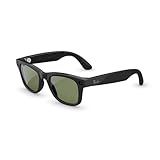
- #1 SELLING AI GLASSES* – Tap into iconic style and advanced technology with Ray-Ban Meta, the #1 selling AI glasses*. Capture photos and videos, listen to music, make hands-free calls or ask Meta AI questions on the go. *Based on IDC historical sales data up to Q3’25, released December 2025.
- META AI – Get more done and stay connected without reaching for your phone with AI glasses powered by Meta AI. Capture video recordings, translate languages while traveling and manage nutrition, wellness and everyday tasks hands-free.
- OPEN-EAR AUDIO – Listen to music and more with discreet open-ear speakers that deliver rich, quality audio and Bluetooth connectivity without blocking out conversations or the ambient noises around you.
- BATTERY LIFE – On a full charge, AI glasses can last up to 8 hours with moderate use for everyday activities like listening to audio, video recording and using Meta AI. Plus, the charging case provides an additional 48 hours of charging on the go.
- LENS OPTIONS – Choose from a wide range of lenses for men and women designed to match your style with options ranging from fully tinted sunglasses, fully clear, blue light or Transitions lenses. Experience ultimate adaptability with Transitions lenses on Ray-Ban Meta. Enjoy continuous visual performance in changing light environments, with lenses that darken with sunlight and fade to clear indoors, you'll be ready for whatever your day brings.
What settings and signals should I check before using voice features?
Start with the specific feature, not a general privacy label. Compare the activation method, capture window, processing route, indicator, retention, and review settings. If a feature’s documentation does not answer one of these questions, treat that as uncertainty rather than assuming the most privacy-preserving option.
The Tool Desk
Outbyte Driver Updater FREEFix the driver behind crashes, sound loss and screen glitchesFind Drivers →Outbyte PC Repair FREERepair Windows errors before they cause bigger problemsFix Now →- Activation: Does the microphone respond to a wake phrase, a physical button, touch, or another trigger? Does it remain ready after the first request?
- Capture indication: Is there a light, sound, or operating-system alert during capture or processing? What state does that signal represent?
- Recognition route: Is speech handled on-device, in the cloud, or by a selectable combination? Which functions stop working if online recognition is disabled?
- Data created: Does the interaction create raw audio, a transcript, or both? Are those treated as separate data in the settings and policy?
- Retention and deletion: How long can audio or text be kept, and does the deletion control cover each one?
- Human review: Can employees or contractors review clips? Is improvement-related contribution optional, and how do you withdraw it?
On devices with a documented stop command or microphone control, learn it before relying on voice interaction. For example, Ray-Ban says users can say “Stop” or “Cancel” to end the follow-up conversation. The FTC also recommends checking whether a voice assistant has a physical mute control or listening alerts, reviewing privacy settings, and looking for deletion and human-review options. These are questions to verify on the actual device, not features to presume it has.
What are the main privacy risks in shared spaces?
A wearable microphone can capture surrounding speech as well as the wearer’s command when it is active. People nearby may not know when a voice feature has been triggered, and an indicator may not be obvious to them. Consider the setting and other people’s expectations before using voice features in a conversation, workplace, classroom, or other shared space.
The available guidance here establishes general microphone and voice-assistant behavior, not a jurisdiction-specific legal rule about recording. If you need to know what is lawful in a particular place or situation, consult the relevant local rules rather than treating a device’s recording indicator or manufacturer policy as a substitute.
Independent reader supportYour contribution helps us test, update, and keep practical guides available for everyone.How should I compare the privacy of two AI wearables?
Compare specific features and settings, not brand-level promises. The same device may use different paths for different tasks, and a manufacturer’s explanation is not an independent audit of the actual audio path.
Recommended Free Tools
Rank #4

- #1 SELLING AI GLASSES* – Tap into iconic style and advanced technology with Ray-Ban Meta, the #1 selling AI glasses*. Capture photos and videos, listen to music, make hands-free calls or ask Meta AI questions on the go. *Based on IDC historical sales data up to Q3’25, released December 2025.
- META AI – Get more done and stay connected without reaching for your phone with AI glasses powered by Meta AI. Capture video recordings, translate languages while traveling and manage nutrition, wellness and everyday tasks hands-free.
- OPEN-EAR AUDIO – Listen to music and more with discreet open-ear speakers that deliver rich, quality audio and Bluetooth connectivity without blocking out conversations or the ambient noises around you.
- BATTERY LIFE – On a full charge, AI glasses can last up to 8 hours with moderate use for everyday activities like listening to audio, video recording and using Meta AI. Plus, the charging case provides an additional 48 hours of charging on the go.
- LENS OPTIONS – Choose from a wide range of lenses for men and women designed to match your style with options ranging from fully tinted sunglasses, fully clear, blue light or Transitions lenses. Experience ultimate adaptability with Transitions lenses on Ray-Ban Meta. Enjoy continuous visual performance in changing light environments, with lenses that darken with sunlight and fade to clear indoors, you'll be ready for whatever your day brings.
- Choose the exact feature. Identify whether you mean voice questions, dictation, a wake phrase, or another speech interaction. Avoid applying a claim about one feature to every microphone use.
- Map activation and capture. Find what starts the interaction, whether there is a follow-up window, how it ends, and what the indicator signals.
- Trace the speech data. Establish whether recognition is local, cloud-based, or selectable. Check whether audio and transcripts are created or retained separately.
- Inspect the controls. Look for online recognition toggles, deletion options, microphone mute or stop controls, and any separate opt-in for contributing clips to improve the service.
- Check the current product documentation. Features, settings, and retention terms can change. Use current instructions for your model, region, and software version rather than assuming another product’s behavior applies.
Official product pages establish what the company says about its own feature. For example, the Apple and Ray-Ban descriptions above are manufacturer statements; the cited descriptions do not amount to independent testing. The Bipartisan Policy Center’s May 2026 AI Wearables Fact Sheet identifies transparency, data control, and accountability as open issues. There is no universal wearable microphone indicator or single privacy behavior established by these examples.
What is the practical takeaway for everyday use?
Use the voice feature with a clear idea of its activation and data path. If the device’s current documentation does not say whether speech stays local, what gets retained, or how to disable review or cloud recognition, do not infer those answers from a privacy slogan or from another model’s behavior. For sensitive conversations, a physical mute or avoiding voice activation may be a more reliable choice than assuming the device is idle.
Frequently Asked Questions
Does turning off cloud speech recognition disable every voice feature?
Not necessarily. Microsoft says device-based speech-recognition features may continue when online speech recognition is off, while features that rely on the online service may stop working. A different wearable may handle offline operation differently, so check its feature-specific documentation.
Does a microphone light prove that no audio was captured when it is off?
No universal indicator behavior is established for wearables. A light’s meaning and timing are product-specific, so consult the manufacturer’s explanation rather than treating an unlit indicator as proof about storage or earlier capture.
Can a wearable capture other people’s voices?
Yes, an active microphone may capture nearby speech along with the wearer’s command. The sources described here do not establish a single legal rule for recording others; requirements depend on the place and situation.
Are manufacturer privacy claims independently verified?
Not by the product descriptions cited here. They explain what the manufacturers say their features do, but they are not independent audits of the audio path.
Quick Recap
Product prices and availability are accurate as of the date/time indicated and are subject to change. Any price and availability information displayed on Amazon at the time of purchase will apply.

