
Crashes, No Sound, or Screen Glitches?
Random freezes, missing sound and display glitches usually trace back to one bad driver. Find and replace yours safely.Free scan · under a minuteWindows Errors? Fix Them Before They Spread
Repair common Windows errors and clear accumulated junk for a smoother, more stable PC - no reinstall needed.Free scan · no reinstalliTechGuides is reader-supported. When you buy through links on our site, we may earn an affiliate commission. As an Amazon Associate I earn from qualifying purchases. Learn more
Yes—AI can make existing roads work better without adding lanes. Adaptive traffic systems watch vehicles, pedestrians and incidents as they happen, then revise signal phases to serve the demand that is actually present. Los Angeles and Pittsburgh evaluations recorded less waiting, fewer stops and lower emissions, but neither system created new capacity. A bridge, lane bottleneck or demand surge still limits the network. The practical question is therefore not whether AI “fixes” traffic, but whether a city has the detection, communications, signal hardware and operating discipline needed to manage its scarce green time more productively.
What does an AI traffic signal system do?
A conventional signal follows a schedule designed from historical traffic counts. An adaptive system measures current arrivals, estimates what will reach neighboring intersections, and changes the timing plan repeatedly. The objective is to move more people through the existing junction with less idle time, stopping and wasted fuel.


The term “AI” covers several control techniques. A detector may be a pavement loop, camera, radar unit or another sensor. Software turns those observations into traffic streams, queues and arrival estimates. A controller then assigns green time, offsets and phase order subject to safety rules, minimum pedestrian intervals and hardware limits. Some networks calculate decisions in a central system; others let each intersection plan locally and exchange forecasts with its neighbors.
Quick wins for a faster PC:
Repair Windows errors before they cause bigger problemsFix Now →Scan for outdated or missing drivers - takes under a minuteDriver Scan →This is an optimization layer on top of a signal controller, not a replacement for road engineering. It cannot widen a lane, remove a bottleneck at a tunnel or make a heavily over-saturated approach carry more vehicles than its geometry allows.
#1 Best Overall

- ⭐ Traffic Light Controller Contains 39+ Sequences
- ⭐ Traffic Light Controller More Safer - Isolated Power 80-260V
- ⭐ Solid State Relay Output - Longer Life
- ⭐ Traffic Light Controller Visual Settings, Settings are More Concise.
- ⭐ Red, Yellow, Green Light Delay Time is 0-250s
How do smart traffic lights know when to change?
They combine continuous detection with timing software and communications. The exact configuration differs by agency, but a functioning deployment usually has these elements:
Detection at the stop line and between intersections
Inductive loops can register vehicles as they pass over wire embedded in pavement. Cameras can classify and count movements, while radar can detect speed and presence without cutting into the road. Sensors between junctions reveal whether a platoon is approaching, whether a queue is spilling back, and whether a turn movement is growing.
Short-horizon forecasting
The controller does not merely react to the car currently at the line. It estimates arrivals over the next few cycles, accounting for vehicles released by an upstream signal. That lets it decide whether to extend a green, end a phase early, or preserve an offset so a platoon can progress.
What’s actually slowing this PC down?
Pick the symptom - the matching free tool is one click away.
Local timing plans and neighbor messages
In a decentralized design, every intersection builds a feasible plan from its own observations. It sends expected outflows to downstream intersections, which can prepare for those arrivals. The U.S. Department of Transportation describes this as decentralized online planning: “Every few seconds each intersection constructs and begins to execute a signal-timing plan that optimizes the movement of locally sensed traffic through the intersection.”
Safety and operator oversight
Adaptive logic operates inside the agency’s approved phase sequence, clearance intervals and pedestrian requirements. Operators retain a dashboard for alarms, detector health and manual strategies. In Los Angeles, cameras also help staff identify abnormal events such as crashes or emergency incidents, allowing a response plan rather than blind optimization around a blocked lane.
Do adaptive traffic signals actually reduce travel time?
Evaluations show meaningful improvements in particular networks, but the percentages are not universal guarantees. Results depend on intersection spacing, demand variability, detector accuracy, communications and how the comparison was designed.
Rank #2
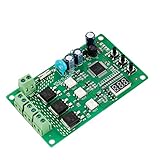
- 36 LIGHTING PATTERNS – Enjoy up to 36 selectable light sequences, including 12 authentic traffic modes. Programming is as simple as pressing a button, allowing you to switch freely between patterns and recreate the feel of real traffic lights for a relaxing and immersive experience
- USER-FRIENDLY OPERATION – Features realistic wait intervals and customizable yellow light delays. You can set traffic delays from 1–120s and yellow light delays from 1–8s via independent button controls. The digital display shows real-time delay times clearly, making operation effortless for everyday leisure use
- 3 OUTPUT CHANNELS – Equipped with three independent output channels, supporting loads from 4W up to 662W per channel. Built with solid-state relays for quiet, reliable, and maintenance-free performance that won’t disturb your daily environment
- RELIABLE PROTECTION – Constructed with FR-4 flame-retardant PCB for enhanced safety. Integrated MOV surge protection shields against voltage spikes and inductive kickback. Both MOV and fuse components comply with UL standards. Wide input voltage range: 85–265VAC
- WIDE COMPATIBILITY – Works seamlessly with all types of traffic light bulbs, including incandescent, fluorescent, and LED (even non-dimmable). A great replacement solution for older traffic lights
| Deployment and evidence | Measured result | How to interpret it |
|---|---|---|
| Los Angeles ATCS evaluation, published 2007; data collected from 1999–2001 | 12.7% lower travel time, 31.0% fewer average stops, and 21.4% lower average delay | Historical evaluation of the city’s coordinated system, not a forecast for every city |
| Pittsburgh routes, USDOT pilot data from 2012 and reported in 2013 | More than 25% improvement in average travel time, vehicle speed, stops and wait time across twelve routes | Results from selected routes during a pilot period |
| Pittsburgh SURTRAC deployment summary, USDOT 2018 | 40% lower vehicle wait time and 20% lower emissions | A later account of deployment performance; conditions and measurement methods matter |
These measures are related but not interchangeable. A corridor can reduce stops while average trip time changes little, or lower delay for cars while a poorly timed pedestrian crossing creates a new constraint. Agencies should publish the baseline period, weather and incident exclusions, travel-demand changes, and whether the result is observed or modeled.
What is Los Angeles ATSAC, and what did it prove?
Los Angeles’ Automated Traffic Surveillance and Control (ATSAC) traces to technology developed around the 1984 Olympics. The system uses detector loops at and between intersections, with cameras supporting incident awareness. LADOT summarizes its operating principle this way: “The ATSAC Center uses real-time detector loops between and at intersections, and changes the signal timing as traffic conditions change.”
A 2007 LADOT evaluation covered 375 intersections and analyzed data gathered between 1999 and 2001. It found the reductions listed above in travel time, stops and delay. Because the evaluation is historical, readers should treat it as evidence that adaptive coordination can work at city scale, not as a promise that a new installation will reproduce the same percentages.
ATSAC also illustrates why operations matter. Detection must remain calibrated, communications must reach field cabinets, and staff must recognize when a crash or construction has invalidated the normal timing assumptions. A technically sophisticated controller with failed loops or stale maps can perform worse than a well-maintained fixed plan.
What is Pittsburgh’s SURTRAC system?
SURTRAC (Scalable Urban Traffic Control) is a decentralized adaptive approach developed and piloted in Pittsburgh. The first deployment covered nine intersections in the East Liberty neighborhood. Instead of waiting for a central server to compute one citywide schedule, each intersection plans around locally observed traffic and communicates projected outflows to its neighbors.
USDOT’s 2013 account reported improvements greater than 25% in average travel time, speed, stops and wait time across twelve Pittsburgh routes during pilot data collection in 2012. A 2018 USDOT summary described a 40% reduction in vehicle wait time and a 20% reduction in emissions as the system expanded beyond the original pilot.
Those results demonstrate the value of coordinating adjacent junctions when demand arrives in uneven platoons. They do not mean every approach receives more green time. The controller still has to respect competing movements, pedestrian service and downstream storage; it reallocates time toward the combination that produces the best network outcome under current conditions.
How do centralized and decentralized systems differ?
Both architectures can be adaptive. The choice affects resilience, communications, staffing and how quickly a decision can be made.
| Decision axis | Centralized control | Decentralized or distributed control |
|---|---|---|
| Where plans are computed | A central traffic-management platform coordinates many intersections | Each intersection computes a local plan and shares forecasts with neighbors |
| Communications dependency | Wide-area connectivity is important for ongoing optimization; local fallback is essential | Neighbor-to-neighbor links and local processing can keep decisions close to the field |
| Response to a local incident | Can apply a network-wide strategy if the center receives reliable data | Can react quickly at affected junctions, then propagate expected outflows |
| Scaling challenge | More intersections increase central data, computing and configuration demands | Coordination rules and interfaces must remain consistent as nodes are added |
| Best fit | Agencies with mature control centers and uniform communications | Networks that need resilient local decisions across varied corridors |
Many real deployments are hybrids: local controllers execute safety-critical timing, while a center supervises, updates parameters and manages incidents. The architecture should follow the agency’s maintenance and communications capability rather than a preference for a particular label.
What does adaptive signal control cost, and what infrastructure is required?
Equipment prices vary widely because an “intersection” may mean a cabinet upgrade, new detection, fiber work, software, design and several years of support. USDOT’s cost database lists Florida adaptive-signal examples of approximately $30,000 to $96,400 per intersection. Those figures are examples, not a universal installed price or a complete program budget.
| Requirement | Why it matters | Typical failure if omitted |
|---|---|---|
| Reliable vehicle and pedestrian detection | Supplies the demand measurements that drive every timing decision | False queues, missed arrivals or unsafe assumptions about crossing demand |
| Compatible signal cabinets and controllers | Executes adaptive plans while preserving approved safety intervals | Software cannot issue the required phase or falls back to a fixed schedule |
| Communications links | Moves detector data, timing updates, health alarms and neighbor forecasts | Intersections optimize in isolation or operate on stale information |
| Accurate geometry and phase data | Defines lanes, turn movements, storage limits and pedestrian timing | Plans favor movements that cannot physically discharge or block a downstream junction |
| Staff and maintenance contracts | Keeps detectors calibrated, firmware current and incidents correctly handled | Performance decays after installation even though the dashboard appears online |
Before procurement, an agency should inventory cabinet age, detector condition, backhaul availability, accessibility requirements and the number of jurisdictions that share a corridor. A low equipment quote can become expensive if it excludes pavement restoration, utility work, cybersecurity controls, integration testing or ongoing field visits.
Can AI traffic lights help buses, pedestrians and emergency vehicles?
Yes, if those users are represented in the control rules and detected reliably. Transit priority can extend a green or shorten a conflicting phase when a late bus approaches, while still enforcing minimum service for other movements. Pedestrian calls and minimum walk-plus-clearance intervals must remain hard constraints; an algorithm should not trade away a safe crossing to improve a vehicle score.
Emergency pre-emption is a separate, higher-priority action that can interrupt normal coordination when an authorized vehicle is detected. Agencies need clear rules for restoring coordination afterward, because a long pre-emption can create a queue that adaptive logic must dissipate without blocking an intersection.
The Tool Desk
Outbyte Driver Updater FREEScan for outdated or missing drivers - takes under a minuteDriver Scan →Outbyte PC Repair FREEClear out junk files and repair common Windows errorsFree Scan →Performance dashboards should therefore report person movement, bus reliability, pedestrian service and emergency response—not only automobile speed. A faster car trip is not a successful outcome if it increases risk or strands transit riders.
What can adaptive control not fix?
Adaptive signals manage capacity; they do not create it. A bridge with one lane in each direction, a freeway ramp that meters traffic, or a district whose demand exceeds every available approach will remain constrained. Giving one direction more green simply moves the queue or delays another movement.
- Physical bottlenecks: Lane drops, narrow bridges and short turn pockets limit discharge regardless of software.
- Demand driven by land use: New housing, events or freight activity can outgrow any timing plan.
- Bad detection: Occluded cameras, worn loops, snow, glare or blocked radar produce incorrect inputs.
- Spillback: If downstream storage is full, releasing more vehicles upstream worsens gridlock; the controller needs queue and blockage awareness.
- Institutional boundaries: Different agencies may control adjacent signals, transit priority or work zones, preventing a single coherent objective.
When these conditions dominate, complementary measures—turn restrictions, curb management, transit investment, freight scheduling, demand management or physical redesign—address the cause more directly.
Independent reader supportYour contribution helps us test, update, and keep practical guides available for everyone.How should a city deploy and evaluate an adaptive system?
A staged program reduces technical and political risk. The following sequence keeps the performance claim tied to evidence rather than a vendor demonstration.
Recommended Free Tools
- Define the problem and baseline. Select corridors with recurring variability or measurable delay. Record travel time, stops, queues, pedestrian delay, transit reliability and emissions proxies for comparable weeks.
- Audit the field. Test every detector, map lane geometry, inspect cabinets and document communications coverage. Correcting bad inputs is often more valuable than changing the optimization algorithm.
- Set policy constraints. Specify pedestrian minimums, maximum cycle changes, transit or emergency priorities, coordination boundaries and fallback behavior when data or communications fail.
- Pilot a bounded corridor. Include enough adjacent intersections to observe platoons and spillback, but keep the area small enough for operators to troubleshoot. Run the adaptive plan beside a well-tuned baseline.
- Validate safety and equity. Review crossing service, accessible signal features, neighborhood side-street delay and impacts on freight and transit—not just the headline automobile metric.
- Publish an evaluation. Explain the dates, weather, incidents, demand changes, sample size and statistical method. Label observed results separately from modeled benefits.
- Scale with maintenance funding. Add intersections only when staffing, detector replacement, cybersecurity updates and communications support are funded for the system’s full life.
How can operators tell when the system is failing?
A sudden rise in delay does not automatically mean the algorithm is wrong. Operators should check the input and the physical network in a fixed order:
Best Value
- Compare detector counts with camera footage or a field check to find missed or duplicated vehicles.
- Look for communications dropouts, stale timestamps or controllers running a fallback plan.
- Check for crashes, construction, special events, weather and blocked turn pockets that invalidate normal forecasts.
- Inspect downstream queues before increasing upstream green time; releasing traffic into a full link can worsen spillback.
- Compare several days and movement-specific measures rather than reacting to one peak-period average.
A mature agency keeps a safe fixed-time or coordinated fallback and records each intervention. That log helps distinguish a software issue from a detector, cabinet, communications or geometry problem.
Is AI traffic control worth it for your city?
It is most defensible where demand changes rapidly, intersections are close enough to influence one another, and the agency can maintain detection and communications. The Los Angeles and Pittsburgh results show that existing pavement can deliver more useful capacity when timing follows actual arrivals. They also show why percentages must remain tied to a named network, date and evaluation method.
For a city facing a structural bottleneck or demand growth that overwhelms every approach, adaptive signals are a management tool, not a substitute for transit, street redesign or demand policy. A good business case combines a measured pilot, a realistic lifecycle budget and explicit limits on what the system is expected to accomplish.
Frequently Asked Questions
Do drivers need a phone app or connected car for adaptive signals to work?
No. Municipal systems described here use roadside detectors, signal controllers and agency communications; an individual driver does not have to install software or share a vehicle feed. Connected-vehicle data can be an additional input in some programs, but it is not required for loop-, camera- or radar-based control.
Will adaptive signals eliminate every red light on a coordinated corridor?
No. The controller balances conflicting approaches, pedestrian crossings, transit and downstream storage. A vehicle may still stop when another movement has priority or when the network must prevent a queue from blocking a side street.
How are privacy concerns handled when cameras are used?
Cities can configure cameras to produce counts, classifications and occupancy without retaining identifiable imagery, but retention and access rules are local policy choices. Procurement should specify data minimization, security, audit logs and public disclosure rather than assuming that every camera system has the same privacy practice.
Can a small town use adaptive control without a large traffic-management center?
Possibly. Distributed controllers can make local decisions, but the town still needs compatible cabinets, dependable detection, communications, trained staff and a fallback timing plan. A small pilot on a corridor with clear operational ownership is usually easier to support than a citywide installation.
Quick Recap
Product prices and availability are accurate as of the date/time indicated and are subject to change. Any price and availability information displayed on Amazon at the time of purchase will apply.

