
iTechGuides is reader-supported. When you buy through links on our site, we may earn an affiliate commission. As an Amazon Associate I earn from qualifying purchases. Learn more
AI robot locomotion is learned through a repeated simulation–validation–deployment loop. A physics simulator models the robot, terrain, contacts, motors and sensors; a learning algorithm tries actions; and a reward function favors commanded motion, balance, efficiency and task completion. After training, engineers validate the policy in another simulator, adapt it to the sensors available on the physical robot, and deploy it inside a fast safety-controlled loop. The robot is not reasoning in natural language: it is evaluating a numerical mapping from sensor observations and movement commands to joint actions.
Simulation makes millions of falls, pushes and actuator faults affordable. Real-world transfer remains difficult because friction, impacts, backlash, compliance, latency, battery voltage and calibration never match the model perfectly. Reliable systems therefore combine accurate modeling, deliberate randomization, real-robot measurements and cautious hardware testing.
What does AI robot locomotion mean?
AI locomotion is the control of walking, running, turning and recovering from disturbances with a policy learned from data rather than a completely hand-written gait. The policy observes the robot’s state and a task command, then produces targets for a lower-level controller.
Free tools Windows power users keep installed
One-click scans. No signup required.
A typical observation can include body orientation and velocity, joint positions and velocities, inertial-measurement-unit (IMU) readings, recent observation history and a desired forward or turning velocity. The action may be a vector of target joint positions, torques or set points for a motor controller. A fixed-rate loop repeats this process while safety limits constrain the resulting commands.
#1 Best Overall

- AGX Orin 64GB Development Kit makes it easy to get started with AGX Orin. Its compact size, rich interfaces, and AI performance of up to 275 TOPS make it ideal for building advanced AI robots and other autonomous machine prototypes.
- The development kit includes AGX Orin 64GB module and can emulate all Orin modules. It utilizes the Ampere GPU architecture, next-generation deep learning and vision accelerators, high-speed I/O, and fast memory bandwidth. You can leverage the largest and most complex AI models to develop solutions for problems such as natural language understanding, 3D perception, and multi-sensor fusion.
- Jetson runs AI software and provides application frameworks for specific use cases, such as Isaac for robotics, DeepStream for visual AI, and Riva for conversational AI. Using Omniverse Replicator for Synthetic Data Generation (SDG) can save you significant time; while fine-tuning pre-trained AI models from the NGC catalog using the TAO toolkit can further enhance your results.
- Yahboom offers four kits for users to choose from. The AIlarge model voice module utilizes examples of AI large models and multimodal models; it provides 1TB/2TB SSDs with pre-flashed driver image files; and an 8MP USB industrial camera for image processing.
- It offers various online and offline mainstream AI large model development materials. The system is pre-configured with AI vision examples, ROS case studies, and AI large models. It supports offline/online deployment of large models for voice interaction, real-time video analysis, and visual positioning, helping you quickly get started with localized AI agent development.
Why learning is useful
Hand-designed controllers can be excellent for a known floor and gait, but they become cumbersome when the robot must handle uneven terrain, pushes, payload changes or actuator faults. Reinforcement learning can discover coordinated behavior by evaluating many alternatives in parallel. Imitation learning can add a demonstrated motion or a reference trajectory when a humanoid must satisfy whole-body constraints.
How does a robot learn to walk in simulation?
The training process is an optimization loop. Thousands of virtual robots execute a policy, receive rewards and penalties, and update the policy so future trials are more successful.
- Build the virtual robot. Engineers define rigid bodies, joint limits, masses, inertias, actuators, contact surfaces and collision geometry. They add terrain, command inputs and simulated sensors.
- Choose observations and actions. The policy receives only information that can be measured or reconstructed on the target hardware. A deployment policy that relies on a perfect simulated state will not transfer directly.
- Roll out actions. The policy emits joint targets or torques. A low-level controller converts those targets into motor commands while enforcing limits.
- Score each rollout. Rewards commonly combine velocity tracking, upright posture, smooth or energy-efficient motion, foot placement, progress toward a goal and completion of the task. Falling, excessive torque or unsafe joint angles receive penalties.
- Update the policy. The learner uses the collected trajectories to change the neural-network weights, then starts another batch of rollouts.
- Validate outside the training setup. A policy is checked on new terrain, disturbances and parameter combinations before anyone connects it to hardware.
What algorithm is commonly used?
Proximal Policy Optimization (PPO) is a common model-free reinforcement-learning method for locomotion. In NVIDIA’s Spot example, a three-layer multilayer perceptron outputs 12 joint-position actions that are passed to a low-level controller. The exact network size and action representation are implementation choices, not requirements for every robot.
Humanoid projects often combine methods. Berkeley’s Digit work uses a teacher policy with privileged state information and a student policy restricted to deployable observations. Teacher imitation gives the student a useful motion prior, while reinforcement learning lets it improve balance and task performance under realistic disturbances.
What does a robot simulator have to model?
Physics fidelity is more than making a virtual robot look correct. Locomotion depends on how the simulator handles contact impulses, friction, joint limits, motor saturation and numerical integration.
Rank #2

- AGX Orin 64GB Development Kit makes it easy to get started with AGX Orin. Its compact size, rich interfaces, and AI performance of up to 275 TOPS make it ideal for building advanced AI robots and other autonomous machine prototypes.
- The development kit includes AGX Orin 64GB module and can emulate all Orin modules. It utilizes the Ampere GPU architecture, next-generation deep learning and vision accelerators, high-speed I/O, and fast memory bandwidth. You can leverage the largest and most complex AI models to develop solutions for problems such as natural language understanding, 3D perception, and multi-sensor fusion.
- Jetson runs AI software and provides application frameworks for specific use cases, such as Isaac for robotics, DeepStream for visual AI, and Riva for conversational AI. Using Omniverse Replicator for Synthetic Data Generation (SDG) can save you significant time; while fine-tuning pre-trained AI models from the NGC catalog using the TAO toolkit can further enhance your results.
- Yahboom offers four kits for users to choose from. The AIlarge model voice module utilizes examples of AI large models and multimodal models; it provides 1TB/2TB SSDs with pre-flashed driver image files; and an 8MP USB industrial camera for image processing.
- It offers various online and offline mainstream AI large model development materials. The system is pre-configured with AI vision examples, ROS case studies, and AI large models. It supports offline/online deployment of large models for voice interaction, real-time video analysis, and visual positioning, helping you quickly get started with localized AI agent development.
- Rigid-body dynamics: link masses, inertias, gravity and joint constraints determine how the body reacts to each motor command.
- Contact and terrain: foot-ground collision, friction, compliance, slopes, stairs and gaps shape whether a step sticks or slips.
- Actuators: torque limits, gearing, motor strength, backlash, transmission elasticity and thermal or battery effects influence achievable motion.
- Sensors: IMU bias and noise, encoder quantization, dropped readings and camera or lidar delay affect what the policy actually knows.
- Timing: command latency, control frequency and observation history can turn a stable simulated gait into an unstable real one.
- Disturbances: pushes, unexpected loads, rough ground and partial actuator failures test recovery instead of memorized choreography.
Why is domain randomization important?
Domain randomization deliberately changes uncertain parameters during training. Each episode may use different masses, friction coefficients, motor strengths, sensor noise, latency, pushes or terrain. The policy is rewarded for a behavior that works across the distribution rather than for exploiting one exact simulator.
Randomization is not a substitute for measurement. If every parameter is randomized over an unrealistic range, training can become inefficient or produce overly cautious motion. Engineers first measure the real robot where possible, then choose ranges that cover plausible error.
Outdated Drivers Are Slowing You Down
One free scan finds every outdated or missing driver and matches the right update for your exact hardware.Free scan · exact hardware matchPC Slower Than It Used to Be?
A free scan shows the junk files, broken settings and background clutter dragging Windows down - then fixes them in one click.Free scan · Windows 10 & 11How system identification narrows the gap
System identification measures how the physical robot responds and uses those measurements to improve the model. Useful targets include actuator torque response, gearbox friction, latency, joint damping and sensor timing. Google’s quadruped work combines actuator modeling, latency simulation, randomized environments and external perturbations. This combination helps the policy learn behavior that remains stable when the real robot differs from its nominal model.
How does sim-to-real transfer work?
Sim-to-real transfer is a staged handoff, not a single export button. The policy is trained in one environment, tested under held-out conditions, replayed in a second simulator when available, and then run on hardware with only deployable observations.
- Freeze the interface. Define the exact observation order, units, normalization, action scaling and command semantics that the robot software will use.
- Stress-test in simulation. Sweep terrain, friction, payload, battery-related limits, sensor noise, delays and disturbances. Record both success and unsafe behaviors.
- Perform sim-to-sim validation. Replay the policy in a higher-fidelity or manufacturer simulator. NVIDIA’s ANYmal example includes this cross-simulator check before deployment.
- Connect the real-time stack. Read joint encoders and IMU data, construct the same observation history, run inference, and send actions to the joint-level controller.
- Start with restricted tests. Use a support rig, low speeds, conservative torque limits and an emergency stop. Expand the operating envelope only after repeatable recovery from small disturbances.
- Log every trial. Store observations, actions, timing, motor limits, battery state and contacts so failures can be reproduced in simulation.
NVIDIA reports direct deployment of an ANYmal locomotion policy after training when the observations were limited to sensor data available on the robot, together with cross-simulator validation. That qualification matters: a policy trained with privileged simulator state would require a different transfer strategy.
Rank #3

- Provide online user manual, please check the manual carefully before using
- The NV Jetson AGX Orin Developer Kit includes a high-performance, power-efficient Jetson AGX Orin module with options for 32GB/64GB memory, up to 275 TOPS and 8X the performance of the last generation for multiple concurrent AI inference pipelines, for running the NV AI software stack.
- This developer kit lets you create advanced robotics and edge AI applications for manufacturing, logistics, retail, service, agriculture, smart city, healthcare, and life sciences.
- The Jetson AGX Orin provides 8X the performance of Jetson AGX Xavier with the same compact form factor and compatible pinouts, integrating NV Ampere architecture GPU, Arm Cortex-A78AE CPU, next-generation deep learning and vision accelerator.
- High-speed interface, faster memory bandwidth, and multi-mode sensor support, for supporting multiple concurrent AI application channels.
What happens inside the robot while it is walking?
At runtime, a command such as forward speed, lateral speed or yaw rate is combined with recent sensor history. The neural policy evaluates that numerical input and predicts an action. A joint-level controller then converts the action into motor currents or positions while enforcing torque, speed, posture and joint-range limits.
Recommended Free Tools
The loop runs at a fixed control rate. IMU and encoder readings reveal body tilt and leg motion; the policy adjusts foot placement and joint targets when the body is pushed or the ground changes. A separate safety layer can stop motion, transition to a recovery posture or cut power when limits are exceeded. This architecture separates learned adaptation from hard constraints that should not be left to a neural network.
Edge hardware example
In NVIDIA’s Spot workflow, inference runs on an NVIDIA Jetson AGX Orin payload and receives robot observations through the Boston Dynamics State API. The computer, carrier and memory configuration must be matched to the deployment software; the name alone does not establish a universal hardware setup.
Which simulators and frameworks are used for locomotion?
There is no universally best simulator. Selection depends on contact behavior, model availability, training throughput, sensor and actuator modeling, randomization support and the safety tooling around hardware tests.
| Approach | Where it fits | Important trade-off |
|---|---|---|
| Isaac Lab | GPU-accelerated reinforcement learning, imitation learning and motion-planning workflows with multiple physics engines and parallel environments | Its value is scale and an integrated learning workflow; results still depend on the chosen physics and robot model. |
| MuJoCo | Lightweight locomotion prototyping and controlled physics experiments | It is often convenient for iteration, but a prototype still needs actuator, sensor and timing validation for a target robot. |
| Newton integrated with Isaac Lab | High-throughput locomotion training on supported configurations | NVIDIA’s speed claims are implementation- and hardware-specific benchmarks, not a universal ranking. |
Isaac Lab is described by NVIDIA as an open-source framework built on Isaac Sim and optimized for robot-learning workflows. The relevant comparison is not merely the simulator brand: report the physics engine, robot model, observation and action spaces, randomization, validation procedure and hardware safeguards.
Rank #4
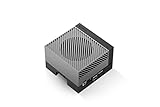
- The NVIDIA Jetson AGX Orin 64GB Developer Kit makes it easy to get started with Jetson Orin. Compact size, lots of connectors, and up to 275 TOPS of AI performance make this developer kit perfect for prototyping advanced AI-powered robots and other autonomous machines.
- The developer kit includes a Jetson AGX Orin 64GB module, and can emulate all the Jetson Orin modules. It supports multiple concurrent AI application pipelines with the NVIDIA Ampere GPU architecture, next-generation deep learning and vision accelerators, high-speed IO and fast memory bandwidth. Now you can develop solutions using your largest and most complex AI models to solve problems such as natural language understanding, 3D perception, and multi-sensor fusion.
- Jetson runs the NVIDIA AI software stack, and use-case specific application frameworks are available, including Isaac for robotics, DeepStream for vision AI, and Riva for conversational AI. You can save significant time with NVIDIA Omniverse Replicator for synthetic data generation (SDG), and by using NVIDIA TAO toolkit to fine-tune pretrained AI models from the NGC catalog.
- Jetson ecosystem partners offer additional AI and system software, developer tools, and custom software development. They can also help with cameras and other sensors, as well as carrier boards and design services for your product.
- With the computing capability of more than 8 Jetson AGX Xavier systems in a developer kit that integrates the latest NVIDIA GPU technology with the world’s most advanced deep learning software stack, you’ll have the flexibility to create tomorrow’s AI solution as well as today’s.
How fast can locomotion training be?
Parallel simulation can generate enormous experience, but throughput numbers are tied to a particular robot, task, software build and GPU.
| Reported figure | Context and qualification |
|---|---|
| 85,000–95,000 frames per second | NVIDIA’s 2024 Spot locomotion training report on an NVIDIA RTX 4090 using Isaac Lab. |
| Approximately four hours | NVIDIA’s 2024 report for the cited Spot setup, using 4,096 environments and 15,000 iterations on an RTX 4090. |
| About 10 billion samples in one day | The Humanoid Transformer project’s reported collection scale from GPU-parallel simulation across thousands of environments. |
| Up to 152× faster locomotion than MJX | NVIDIA’s 2025 Newton beta comparison on an RTX 4090; this measures that implementation and hardware, not all Newton or MJX workloads. |
These figures describe data generation, not guaranteed walking quality. A faster simulator can expose more failures and shorten experiments, but it cannot correct an inaccurate actuator model or an unsafe deployment process.
Independent reader supportYour contribution helps us test, update, and keep practical guides available for everyone.Why can a robot walk in simulation but fall in the real world?
The most common reason is model mismatch: the policy learned a strategy that depends on details the real robot does not share.
- Contact mismatch: real floors have changing friction, compliance, dust and small height errors that alter foot impacts.
- Actuator mismatch: backlash, cable or gearbox elasticity, saturation, heating and battery voltage change the response to the same command.
- Timing mismatch: communication, sensor and motor delays shift the phase of a gait; even a small delay can destabilize a fast controller.
- Observation mismatch: real IMUs drift, encoders have quantization and calibration errors, and unavailable simulator state may have leaked into training.
- Unseen operating conditions: slopes, stairs, wet surfaces, payloads or damaged actuators may lie outside the training distribution.
- Humanoid complexity: closed kinematic chains, underactuation, whole-body balance and severe fall consequences leave less margin than a simple flat-ground task.
Carnegie Mellon’s ASAP method addresses mismatch by pretraining in simulation, collecting real-world data, learning a residual action model and fine-tuning the simulator-aligned policy. The residual lets the deployed controller account for systematic errors without discarding the useful structure learned in simulation.
How should a locomotion system be tested safely?
Safety is part of the control design, not an afterthought. Before free walking, verify that every action is bounded, the emergency stop works, the robot can detect a fall, and a human can remove power without entering the leg workspace.
Best Value
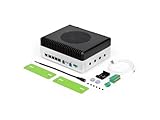
- Powerful embodied AI Platform Compatible with the Jetson AGX Orin 32GB module, offering computing capability of 200 TOPS. Perfect platform for embodied AI and AMR
- Multi-Connectivity Featuring 2x M.2 Key M slots for SSD, M.2 Key E slot for Wi-Fi and M.2 Key B slot for 4G/5G
- Wide Voltage Input Range Can be used in 48V battery power system
- Rich IO capabilities Includes most common IOs used in robotics and AMR prototyping, such as USB, 10G Ethernet, CAN, RS-232/422/485, I2C, SPI and I2S
- Vision AI Support Features 4x 4-lane CSI output, and can be connected up to 8x GMSL2 cameras, making it ideal for vision AI applications such as BEV, Occupancy Grid, SLAM etc
- Limit torque, speed, joint angle and body tilt independently of the learned policy.
- Use a tether, gantry or support rig for initial tests and keep the command range narrow.
- Test one variable at a time: flat ground, then small pushes, then mild slopes or steps.
- Monitor timing overruns, sensor validity, motor temperature, battery state and communication loss.
- Define a recovery behavior and a controlled shutdown when confidence or state estimates become invalid.
- Reproduce every fall in simulation by replaying its logged observations and commands.
No industry-wide sim-to-real success rate has been established by the cited work. Performance claims are meaningful only when they identify the robot, terrain, policy, simulator, randomization, validation method and safety envelope.
What should you report when presenting a locomotion result?
A reproducible report names the robot model and hardware, simulator and physics engine, training algorithm, observation and action spaces, control frequency, reward terms, randomization ranges, system-identification data, held-out tests, sim-to-sim checks and hardware safeguards. State whether a number is a one-time training result, a benchmark on specified hardware or a repeated real-world measurement.
This level of detail prevents a flat-terrain demonstration from being mistaken for general-purpose mobility. A policy that succeeds on one floor may still fail on stairs, slopes, wet ground, payload changes or a weakened actuator.
Quick wins for a faster PC:
Fix the driver behind crashes, sound loss and screen glitchesFind Drivers →Repair Windows errors before they cause bigger problemsFix Now →Scan for outdated or missing drivers - takes under a minuteDriver Scan →Frequently Asked Questions
Does a robot need cameras to learn to walk?
No. Many locomotion policies use proprioception—joint encoders, an IMU and command history—without vision. Cameras or lidar become important when the robot must anticipate terrain geometry rather than react only after contact.
Can the same walking policy run on different robot models?
Usually not without adaptation. Link lengths, mass distribution, joint limits, actuator dynamics and available sensors change the observation and action interfaces, so a policy normally requires retuning or retraining for a new body.
How is a robot taught to recover after a stumble?
Recovery behavior is encouraged with disturbances, pushes, slips and partial actuator failures during training, plus rewards for remaining upright or returning to the commanded velocity. Hardware tests should still impose conservative limits because a simulated recovery may not be safe on the real machine.
What is the difference between a policy and a low-level controller?
The policy chooses desired joint targets or torques from observations and commands. The low-level controller runs at the motor interface, closes fast feedback loops and enforces limits, so the policy does not directly bypass electrical or mechanical protections.
The Tool Desk
Outbyte PC Repair FREERepair Windows errors before they cause bigger problemsFix Now →Outbyte Driver Updater FREEFix the driver behind crashes, sound loss and screen glitchesFind Drivers →Quick Recap
Product prices and availability are accurate as of the date/time indicated and are subject to change. Any price and availability information displayed on Amazon at the time of purchase will apply.

