
iTechGuides is reader-supported. When you buy through links on our site, we may earn an affiliate commission. As an Amazon Associate I earn from qualifying purchases. Learn more
AI-RAN combines a 5G radio access network with artificial-intelligence workloads on the same accelerated, cloud-native infrastructure. Radio traffic still follows a strict chain—radio unit (RU), fronthaul, distributed unit (DU), optional centralized unit (CU), and 5G core—but software assigns CPUs, GPUs, NICs or DPUs, switches, memory, and timing resources to each job. GPUs accelerate selected, highly parallel physical-layer and MAC operations; orchestration keeps those workloads deterministic while spare capacity runs inference, analytics, or other network functions.
The term covers three related ideas: AI-and-RAN (shared infrastructure), AI-for-RAN (models that improve radio operation), and AI-on-RAN (hosting AI services near mobile users). It is not a promise that every base-station task moves to a GPU, nor is it synonymous with Open RAN.
| # | Preview | Product | Price | |
|---|---|---|---|---|
| 1 |
|
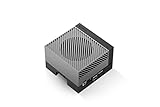
NVIDIA Jetson AGX Orin 64GB Developer Kit with Ethernet, USB, Display Port | $3,349.99 | Buy on Amazon |
| 2 |

|
Official Jetson AGX Orin 64GB Developer Kit 275 Tops, with 1TB SSD AI Embodied Intelligence... | $5,249.00 | Buy on Amazon |
What is AI-RAN in simple terms?
AI-RAN is a 5G architecture in which cellular software and AI applications share a distributed pool of accelerated, cloud-native servers. Instead of installing a fixed appliance for each radio function, an operator packages network functions in software and places them on servers equipped with CPUs, GPUs, high-speed networking, and precise timing.
The Tool Desk
Outbyte PC Repair FREERepair Windows errors before they cause bigger problemsFix Now →Outbyte Driver Updater FREEScan for outdated or missing drivers - takes under a minuteDriver Scan →NVIDIA’s glossary defines the concept as deploying 5G/6G RAN and AI workloads on “a shared, distributed, and accelerated cloud infrastructure.” In practical terms, the radio network gets predictable latency and throughput, while otherwise idle compute can serve machine-learning inference, analytics, or customer applications.
#1 Best Overall
- The NVIDIA Jetson AGX Orin 64GB Developer Kit makes it easy to get started with Jetson Orin. Compact size, lots of connectors, and up to 275 TOPS of AI performance make this developer kit perfect for prototyping advanced AI-powered robots and other autonomous machines.
- The developer kit includes a Jetson AGX Orin 64GB module, and can emulate all the Jetson Orin modules. It supports multiple concurrent AI application pipelines with the NVIDIA Ampere GPU architecture, next-generation deep learning and vision accelerators, high-speed IO and fast memory bandwidth. Now you can develop solutions using your largest and most complex AI models to solve problems such as natural language understanding, 3D perception, and multi-sensor fusion.
- Jetson runs the NVIDIA AI software stack, and use-case specific application frameworks are available, including Isaac for robotics, DeepStream for vision AI, and Riva for conversational AI. You can save significant time with NVIDIA Omniverse Replicator for synthetic data generation (SDG), and by using NVIDIA TAO toolkit to fine-tune pretrained AI models from the NGC catalog.
- Jetson ecosystem partners offer additional AI and system software, developer tools, and custom software development. They can also help with cameras and other sensors, as well as carrier boards and design services for your product.
- With the computing capability of more than 8 Jetson AGX Xavier systems in a developer kit that integrates the latest NVIDIA GPU technology with the world’s most advanced deep learning software stack, you’ll have the flexibility to create tomorrow’s AI solution as well as today’s.
The three meanings of AI-RAN
- AI-and-RAN: cellular processing and AI jobs run concurrently on one infrastructure pool. The goal is higher utilization and the ability to offer hosted AI services.
- AI-for-RAN: machine-learning models assist signal processing, scheduling, beam management, traffic prediction, energy control, or other radio decisions to target coverage, capacity, spectral efficiency, and energy efficiency.
- AI-on-RAN: the edge sites that host RAN software also host inference and other AI services close to users, reducing the distance to the workload and potentially creating an operator revenue stream.
These are goals and architectural patterns, not universal performance guarantees. Results depend on radio conditions, software maturity, hardware configuration, power limits, and how strictly workloads are isolated.
How does an AI-RAN 5G signal flow from the antenna to the core?
A typical path is RU → O-RAN fronthaul → DU → optional CU → 5G core and user-plane functions. Each stage has a different timing and processing role, so cloud-native deployment does not remove the physical and protocol constraints.
- Radio unit (RU/O-RU): At the cell site, the RU converts between radio-frequency signals and digital baseband data. It performs RF-facing work and part of the lower physical layer.
- O-RAN fronthaul: A high-bandwidth, low-latency link carries split-RAN data and control between the RU and DU. The chosen split, commonly described as 7.2x for contemporary open implementations, determines which processing stays in the RU and which moves to software.
- Distributed unit (DU/O-DU): Usually located close enough to the RU for strict timing, the DU handles latency-sensitive lower-layer and MAC/RLC functions. NVIDIA’s CUDA-Accelerated RAN SDK provides O-DU lower-layer and some MAC functionality for an O-RAN 7.2x split, with FAPI upward and open fronthaul downward.
- Centralized unit (CU): Higher-layer RAN functions can be centralized or distributed separately from the DU. A CU is optional in a simplified deployment description because some designs combine or place functions differently.
- 5G core: Control-plane and user-plane network functions authenticate devices, establish sessions, apply policy, and connect users to services and external networks. These functions may also run as cloud-native network functions on the shared infrastructure.
Packets travel in both directions. Downlink data goes from the core toward the CU and DU, through the fronthaul to the RU, and over the air. Uplink radio samples follow the reverse path. Timing budgets, synchronization, packet loss, and jitter must remain within the limits of the selected split.
What’s actually slowing this PC down?
Pick the symptom - the matching free tool is one click away.
What does the GPU do in a 5G RAN?
The GPU accelerates the parts of 5G baseband processing that contain many independent mathematical operations. The physical layer (PHY) performs channel estimation, modulation and demodulation, forward-error-correction coding, signal transforms, and related matrix or vector work. These operations map well to thousands of parallel CUDA threads.
cuPHY, cuMAC, and the acceleration boundary
NVIDIA’s cuPHY is a GPU-based 5G Layer 1 library implemented with CUDA kernels. The associated Aerial and CUDA-Accelerated RAN software exposes cuMAC and other components for selected MAC and RAN functions. The libraries are intended for commercial-grade 3GPP and O-RAN software, but the exact functions accelerated depend on the release, deployment split, and integrator implementation.
A GPU is not the entire base station. CPUs handle control logic, operating-system work, orchestration agents, and tasks that do not benefit from massive parallelism. NICs or DPUs move fronthaul packets, offload networking, and assist with timing. Ethernet switches provide fronthaul and backhaul connectivity. Hardware and software timing systems maintain synchronization, including IEEE 1588 support in the BlueField-3-based design described for cuPHY.
Why selective acceleration matters
Sending every function to a GPU can add data movement, memory pressure, or scheduling overhead. A practical design accelerates compute-heavy kernels while leaving control-plane and irregular work on CPUs or DPUs. The orchestrator must reserve GPU, CPU, memory, network, and timing capacity so an AI inference spike cannot violate a radio deadline.
Free tools Windows power users keep installed
One-click scans. No signup required.
Can one server run both AI and a 5G base station?
Yes, a suitably designed server pool can run RAN software and AI workloads concurrently. The phrase “one server” should not be read as a small, unconstrained box: a production node may include a high-end GPU, multiple CPUs, large memory, a BlueField-class NIC or DPU, high-speed Ethernet, and hardware-assisted timing.
How co-location is made safe
- Partitioning: Reserve GPU slices, CPU cores, memory bandwidth, and network queues for the DU and other real-time functions.
- Priority and admission control: Permit an AI job to use only capacity that can be withdrawn before a radio deadline is missed.
- Data-path isolation: Keep fronthaul traffic on dedicated queues, interfaces, or virtual functions, separate from bulk model traffic.
- Timing protection: Maintain synchronization and bounded jitter through NIC, switch, and host configuration rather than relying on a general-purpose scheduler alone.
- Failure handling: Restart or migrate an AI container without interrupting a cell, and provide a recovery path for a failed RAN process.
The payoff is utilization: a server that would be lightly loaded outside busy radio periods can run inference or analytics. The cost is more demanding capacity planning and operations than either a traditional appliance or an ordinary AI cluster.
What network functions belong in an AI-RAN stack?
“Network function” means a software component that performs a defined networking job; it does not mean that all functions have identical latency or availability requirements.
| Function | Primary responsibility | Typical AI-RAN placement concern |
|---|---|---|
| RU/O-RU | RF conversion and radio-facing lower-PHY work | Cell-site power, synchronization, and fronthaul interoperability |
| DU/O-DU | Latency-sensitive lower layers plus MAC/RLC functions | Strict deadlines, accelerator access, and proximity to the RU |
| CU | Higher-layer RAN processing | Centralized versus distributed placement and transport latency |
| 5G core CNFs | Control-plane sessions, policy, authentication, and user-plane forwarding | Scale, resiliency, service chaining, and connection to external networks |
| RIC applications | Policy, optimization, and operational control | Keeping non-real-time decisions outside hard real-time loops |
| AI services | Inference, analytics, or customer applications | Multi-tenant isolation and protection from RAN resource contention |
Containers and Kubernetes-style orchestration can package these functions, but packaging does not erase their requirements. A DU still needs bounded latency; a user-plane function still needs throughput; a timing service still needs synchronization; and a control-plane function still needs high availability.
Quick wins for a faster PC:
Repair Windows errors before they cause bigger problemsFix Now →Scan for outdated or missing drivers - takes under a minuteDriver Scan →Is AI-RAN the same thing as Open RAN?
No. Open RAN describes open, interoperable interfaces and disaggregated components, especially the relationship among the O-RU, O-DU, O-CU, and RIC. AI-RAN describes the convergence of RAN processing with AI workloads and accelerated cloud infrastructure. They can be deployed together, but either concept can exist without the other.
An AI-RAN system may use O-RAN fronthaul and open interfaces, as in an O-RAN 7.2x implementation, while still depending on a particular accelerator library or systems integrator. Conversely, an Open RAN deployment can run on conventional CPUs without hosting AI services. Evaluate interface compliance, timing, and software portability separately from the AI acceleration strategy.
How does AI improve the radio network itself?
AI-for-RAN uses models to support decisions that are difficult to optimize with fixed rules alone. Candidate applications include predicting traffic and handovers, selecting beams, detecting interference, tuning scheduler policies, estimating channels, and reducing energy use during low demand.
Real-time versus non-real-time decisions
- Hard real-time: PHY and immediate scheduling loops have microsecond- or millisecond-scale deadlines. Any model inserted here must have bounded execution time and a validated fallback.
- Near-real-time: A controller can adjust policies over longer windows, using measurements from several cells or users.
- Non-real-time: Planning, model training, capacity forecasting, and maintenance analytics can run in a centralized cloud or during periods of spare capacity.
The objective is better coverage, capacity, spectral efficiency, or energy efficiency. Public material describes these as targets and demonstrations; there is no neutral, independently verified percentage for cost, spectrum, or energy improvement that applies to all AI-RAN deployments.
Do these 3 things before closing this tab:
1Scan for outdated or missing drivers - takes under a minute2Clear out junk files and repair common Windows errors3Fix the driver behind crashes, sound loss and screen glitchesRank #2
- AGX Orin 64GB Development Kit makes it easy to get started with AGX Orin. Its compact size, rich interfaces, and AI performance of up to 275 TOPS make it ideal for building advanced AI robots and other autonomous machine prototypes.
- The development kit includes AGX Orin 64GB module and can emulate all Orin modules. It utilizes the Ampere GPU architecture, next-generation deep learning and vision accelerators, high-speed I/O, and fast memory bandwidth. You can leverage the largest and most complex AI models to develop solutions for problems such as natural language understanding, 3D perception, and multi-sensor fusion.
- Jetson runs AI software and provides application frameworks for specific use cases, such as Isaac for robotics, DeepStream for visual AI, and Riva for conversational AI. Using Omniverse Replicator for Synthetic Data Generation (SDG) can save you significant time; while fine-tuning pre-trained AI models from the NGC catalog using the TAO toolkit can further enhance your results.
- Yahboom offers four kits for users to choose from. The AIlarge model voice module utilizes examples of AI large models and multimodal models; it provides 1TB/2TB SSDs with pre-flashed driver image files; and an 8MP USB industrial camera for image processing.
- It offers various online and offline mainstream AI large model development materials. The system is pre-configured with AI vision examples, ROS case studies, and AI large models. It supports offline/online deployment of large models for voice interaction, real-time video analysis, and visual positioning, helping you quickly get started with localized AI agent development.
How does AI-on-RAN create an edge-computing service?
In AI-on-RAN, the same distributed sites that process mobile traffic host inference or other applications. A video-analytics, industrial-vision, or generative-AI request can be served near the user instead of traversing a distant data center. Lower network distance can reduce response time and backhaul use, although application latency still depends on model size, device access, transport, and queueing.
Operators may expose this capacity to enterprises or developers. That creates a possible revenue stream, but it also introduces tenant isolation, data governance, model lifecycle, and capacity-reservation requirements. A radio outage cannot be allowed because an external tenant consumed memory or power that had been reserved for the DU.
What hardware and software does a practical AI-RAN deployment need?
Start with the end-to-end chain rather than choosing a GPU by raw specifications. A workable design normally includes:
- O-RU radios compatible with the selected band, split, and fronthaul profile.
- Accelerated servers with enough GPU memory, host memory, CPU cores, and PCIe or equivalent bandwidth for the DU and AI models.
- NICs or DPUs that support high-rate packet movement, virtualization, and precise timing; NVIDIA’s cuPHY documentation describes BlueField-3 fronthaul connectivity and IEEE 1588 timing.
- Programmable Ethernet switches for fronthaul and backhaul; NVIDIA identifies Spectrum switching as part of its AI-RAN product architecture.
- Container images for DU, CU, core, RIC, and AI services, plus an orchestrator that understands real-time placement and resource reservations.
- Observability for packet loss, jitter, synchronization, GPU utilization, thermal state, model latency, and radio KPIs.
- Power, cooling, and physical space sized for sustained accelerator load rather than average CPU load.
Validate 3GPP and O-RAN software compliance, supported bands and numerologies, fronthaul bandwidth, timing profiles, and the vendor’s support lifecycle before comparing accelerator models.
How should an operator compare AI-RAN designs?
Use a scorecard that reflects the radio’s constraints and the site’s operating conditions.
| Decision axis | Questions to ask |
|---|---|
| RU-to-DU timing and fronthaul | Does the design meet the selected split’s latency, jitter, bandwidth, and synchronization limits? |
| Compute capacity | Are GPU, CPU, memory, and NIC resources sufficient at busy-hour load with failover headroom? |
| Compliance | Which 3GPP and O-RAN functions and interfaces are implemented, and at what software version? |
| Isolation and orchestration | Can AI tenants be throttled or evicted without affecting cells? |
| Placement | Which functions stay at the edge, and which can be centralized without violating transport budgets? |
| Power and cooling | Can the site sustain accelerator thermal design power and backup runtime? |
| Operational maturity | Who patches the host, accelerator libraries, containers, timing stack, and radio software? |
| Upgrade path | Can the platform adopt new 5G releases and provide a credible route toward 6G research or migration? |
Compare measured busy-hour behavior and failure recovery, not just peak TOPS or theoretical throughput. A lower-specification system with predictable timing and mature software can be safer than a faster GPU that lacks validated fronthaul and orchestration support.
What are the main benefits and limitations?
Potential benefits
- Higher infrastructure utilization by sharing capacity between RAN and AI workloads.
- Software-upgradable infrastructure instead of a separate appliance for every function.
- New edge-AI services and possible operator revenue.
- AI-assisted improvements in radio planning, efficiency, and operations.
- One platform for selected RAN, core, analytics, and inference workloads.
Practical limits
- Deterministic timing remains mandatory even when software is cloud-native.
- Fronthaul can consume substantial bandwidth and impose strict distance and jitter limits.
- Accelerators increase power, cooling, memory, and facility requirements.
- Multi-tenant isolation and failure recovery are harder than in a single-purpose appliance.
- O-RAN interoperability and AI-RAN software are still dependent on specific versions and integrations.
- Replacing purpose-built hardware with a flexible platform can raise capital and operational complexity before utilization improves.
What has been demonstrated in real deployments?
NVIDIA’s SoftBank case reports a software-defined 5G virtual RAN using GH200, BlueField-3, and Spectrum-X, integrated with 20 radio units, a 5G core, and 100 mobile user equipments. Those figures describe that reported configuration; they are not a general capacity benchmark for every AI-RAN system.
NVIDIA Research also describes a GH200 proof of concept that concurrently processed RAN and AI workloads. Treat it as a reported demonstration rather than evidence of a universal cost or energy result. The public material does not establish a neutral percentage reduction in total cost, a guaranteed spectral-efficiency gain, or a fixed energy saving.
Recommended Free Tools
How can a team build an AI-RAN learning lab?
A lab should prove the software and timing chain on a small scale before attempting a carrier-grade cell.
- Define the experiment: Choose a PHY algorithm, neural receiver, scheduler study, or edge-inference workload and state the latency and throughput target.
- Select a supported platform: NVIDIA describes the Sionna Research Kit as a GPU-accelerated AI-RAN research platform powered by Jetson AGX Orin and built on OpenAirInterface.
- Install the RAN software: Follow the platform’s OpenAirInterface and accelerator documentation, then verify that the radio, host, and software versions are compatible.
- Connect test equipment: Use an approved radio or channel emulator, synchronized clocks, and commercial user equipment where the experiment requires over-the-air validation.
- Measure the complete path: Record PHY latency, packet loss, GPU and CPU utilization, fronthaul timing, thermal behavior, and application inference time.
- Introduce contention deliberately: Add an AI workload, then confirm that RAN KPIs remain within their limits when the model is throttled, paused, or restarted.
The Sionna Research Kit documentation reports a real-time neural receiver demonstration with commercial user equipment. A developer kit is appropriate for research and education; it is not a substitute for the redundant, timed, carrier-grade hardware required in a public network.
What should be checked before production?
- Confirm the RU, DU, CU, core, accelerator, NIC, switch, and timing versions have a supported interoperability matrix.
- Budget fronthaul bandwidth for peak radio configuration, not average traffic.
- Test synchronization loss, packet drops, GPU reset, host failure, and container restart.
- Set hard resource reservations for the DU and user-plane functions before admitting AI tenants.
- Measure power and cooling at sustained load in the actual site enclosure.
- Establish who owns model updates, security patches, 3GPP releases, and rollback procedures.
- Define data-handling rules for subscriber information and enterprise inference workloads.
Frequently Asked Questions
Does AI-RAN require 5G standalone core?
No. The acceleration and shared-infrastructure concepts can be studied with different RAN and core arrangements. A standalone 5G core is useful when you need native 5G control, slicing, or user-plane experiments, but it is not a prerequisite for every AI-RAN lab.
Can AI-RAN run at a cell site with unreliable backhaul?
Only functions that fit the site’s local timing and availability budget should be placed there. A design can keep the DU and critical user-plane processing local while sending training, analytics, or non-real-time inference to a more central site, provided the application tolerates the added delay.
What is the difference between training and inference in AI-RAN?
Training updates model parameters and is usually bursty, data-hungry, and less time-critical. Inference applies a trained model to live measurements, so its latency, determinism, and isolation must be engineered around the radio function it assists.
Does using a GPU automatically lower a 5G network’s energy use?
No. A GPU may process parallel workloads efficiently, but its board power, cooling, memory movement, and utilization determine the result. Energy efficiency must be measured for the complete RU-to-core system under a stated traffic and radio configuration.
Quick Recap
Product prices and availability are accurate as of the date/time indicated and are subject to change. Any price and availability information displayed on Amazon at the time of purchase will apply.

