
What’s actually slowing this PC down?
Pick the symptom - the matching free tool is one click away.
iTechGuides is reader-supported. When you buy through links on our site, we may earn an affiliate commission. As an Amazon Associate I earn from qualifying purchases. Learn more
3D printing can make a ceramic component stronger in use, but it does not inherently strengthen the ceramic material. Its advantage is that it can produce dense, lightweight lattices, internal channels, graded structures and custom shapes that conventional molding or machining cannot make economically. The final strength still depends on powder or slurry quality, layer bonding, orientation, porosity, debinding, sintering and inspection.
Most printed ceramic parts leave the printer as fragile green bodies. They need binder removal and a controlled firing or other densification step before service. If pores, warped layers or cracks remain, the finished part can be weaker than a conventionally manufactured one.
Can 3D printing make ceramics stronger?
It can improve the performance of a ceramic part, especially when the printed geometry reduces stress or weight, but printing alone does not raise the intrinsic strength of a ceramic composition. Ceramics already have high melting temperatures and low tolerance for flaws because they are brittle. Additive manufacturing therefore has to be matched to both the material and the geometry.
The Tool Desk
Outbyte Driver Updater FREEScan for outdated or missing drivers - takes under a minuteDriver Scan →Outbyte PC Repair FREEClear out junk files and repair common Windows errorsFree Scan →The useful gain usually comes from design and processing. A printed lattice can carry a required load with less mass; a conformal cooling channel can keep a component within its safe temperature; a patient-specific implant can fit without extensive machining. Printing also permits controlled composition and microstructure. Those benefits matter only if the final part is sufficiently dense and free of critical defects.
#1 Best Overall

- 【99% Pre-Installed and Print right out of the box】Liquid deposition Molding Ceramic 3D Printer,Building Size: 250*250*260mm;Materials: Clay, Ceramics Slurry, Red Porcelain and various liquid flowing materials.Contain 2 packs of clay for you to print happily.
- 【FOLDING STYLE 】Newly Designed Screw Feeding Device,and Replaceable Adjustable Synchronous Feeding System.
- 【NO NEED AIR COMPRESSOR】We developed electric putter instead of compressed air to guarantee outstanding printing quality and stability for prints. More easy to use for beginner.
- Rapid prototyping, high-speed printing-The maximum printing speed can reach 40mm/s, and the layer thickness can be set to 0.3-3mm.
- Dual axis metal guide rail, smooth and stable running, strong and durable
Why are freshly printed ceramic parts weak?
A printer normally creates a shaped but porous intermediate rather than a finished ceramic. Binders hold particles together during printing, and the resulting green body has limited strength. It must be dried, debound and sintered, or subjected to another densification route, before it develops the intended ceramic microstructure.
The National Institute of Standards and Technology describes this as a defining issue: “A distinct feature of ceramic AM is that it yields non-dense parts requiring a post-build sintering step, which adds cost and complexity.” During firing, the binder leaves, particles neck together and the body shrinks. Any uneven temperature, binder removal or particle packing can create pores, distortion or cracks that become permanent flaws.
How does the process turn ceramic feedstock into a strong part?
A reliable workflow treats printing, thermal processing and inspection as one process rather than separate steps.
- Select and prepare the feedstock. Ceramic powder needs a controlled particle-size distribution, suitable surface chemistry and enough solids loading for the chosen process. A photopolymer slurry, extrusion ink, filament or binder-jet powder must flow or cure consistently without agglomerates.
- Set the build parameters. Layer thickness, exposure or deposition rate, print speed, nozzle size, solids loading and binder chemistry determine how well neighboring layers contact one another. Keep these settings within a validated process window instead of optimizing only for speed.
- Print with an orientation plan. The load direction should be considered before slicing. Layer interfaces can become planes of weakness, so orienting a critical tensile or bending direction across, rather than along, those interfaces may change the measured result.
- Dry or cure uniformly. Water or solvent gradients can pull on the part and cause warping. Controlled drying, adequate support and gradual curing reduce differential shrinkage in the green body.
- Debind slowly enough for the chemistry. Thermal debinding must remove organic material without building gas pressure inside the part. A schedule that is too fast can cause blisters, delamination and internal cracks even when the printed shape looked perfect.
- Sinter and densify. The firing schedule determines shrinkage, grain growth and residual porosity. For selected materials, hot pressing, spark-plasma sintering or infiltration can supplement conventional sintering, but each adds equipment, cost and qualification work.
- Measure the result. Check dimensions after shrinkage, density, surface and internal defects, and strength in the orientations that represent service. A visually sound part can still contain hidden pores or weak interlayers.
Which 3D-printing method gives the highest ceramic strength?
There is no universal strongest method. The highest result depends on the ceramic, solids loading, geometry, thermal cycle, defect population and test direction. Methods that can produce very dense material may have narrow process windows or high equipment costs, while more accessible methods can be effective for smaller, less demanding parts.
| Method | How it shapes ceramic | Strength-related advantages | Typical risks and trade-offs |
|---|---|---|---|
| Vat photopolymerization or stereolithography | A ceramic-loaded photopolymer is selectively cured layer by layer. | Fine resolution and complex features; smooth surfaces can reduce machining. | Feedstock must cure reliably at high ceramic loading. Debinding and sintering can cause substantial shrinkage, warping or cracking. |
| Binder jetting | A liquid binder selectively joins powder in a powder bed. | Scales to complex shapes and avoids a thermal melt during the build. | Green strength, binder penetration, powder packing and sintering uniformity control density and dimensional accuracy. |
| Material extrusion or direct ink writing | A ceramic-loaded filament or ink is deposited through a nozzle. | Comparatively accessible equipment and the ability to place material along designed paths. | Rheology, drying, layer bonding, debinding and anisotropy can limit strength; visible roads do not guarantee dense internal contact. |
| Powder-bed fusion | A focused thermal source selectively consolidates powder. | Can make dense structures in selected material systems and supports geometric complexity. | Thermal gradients, cracking, residual stress and expensive equipment make the process window difficult to control for ceramics. |
| Directed-energy deposition | Powder or feedstock is delivered into a focused energy zone. | Useful for large or repaired structures where deposited volume matters. | Surface finish, thermal gradients, porosity and cracking often require substantial post-processing and inspection. |
When comparing methods, ask for final density and test conditions rather than accepting a method label as a strength guarantee. Resolution, maximum part size, shrinkage, surface finish, compatible materials, throughput, post-processing burden, equipment cost and certification maturity can be just as important as a headline strength value.
What controls the strength of a 3D-printed ceramic?
Particle size and solids loading
Fine, well-dispersed particles can pack more efficiently and leave fewer large pores, but they also raise viscosity and can make printing difficult. Solids loading must balance flow or cure behavior with the density required after firing. Agglomerates become flaw origins, so mixing and filtration matter.
Rank #2

- Foldable Ceramic 3D Printer: Building Size: 250*250*260mm. Loosen the bottom retainer, pull up the frame, and tighten the 4 screws to complete the installation.
- Adapted Materials: Clay, Ceramics Slurry, Red Porcelain and various liquid flowing materials. A household microwave can serve as a kiln, can be glazed in 35 minutes
- Major Equip: Dual axis metal guide rail, runs smoothly and stably, easy maintenance. TMC2209, 32 Bit Silent Main board, LDM Extruder for clay 3D printing, resume printing after power outage
- Fast Printing: Replaceable, adjustable synchronous feeding system, faster than the previous 3d printer series with a maximum print speed of 40mm/s.
- No need air compressor: Developed electric putter instead of compressed air to make sure outstanding printing quality and stability for prints.
Layer bonding and orientation
Each layer introduces a potential interface. In extrusion, the deposited road must still be soft or chemically active enough to bond to the previous road. In photopolymerization, exposure and cure depth determine whether adjacent layers overlap. In binder jetting, binder penetration and powder rearrangement affect the same interface.
Do these 3 things before closing this tab:
1Scan for outdated or missing drivers - takes under a minute2Repair Windows errors before they cause bigger problems3Fix the driver behind crashes, sound loss and screen glitchesPorosity and densification
Residual pores reduce the load-bearing area and concentrate stress. Sintering closes some pores, but isolated or poorly connected pores may remain. Higher density is generally helpful, yet excessive grain growth or thermal damage during an aggressive cycle can offset the benefit.
Thermal schedule and shrinkage
Debinding and sintering produce dimensional change in all directions. If one region loses binder or heats faster than another, the resulting differential shrinkage can warp the part or open cracks. Supports, setters, ramp rates, hold times and furnace atmosphere must be chosen for the specific feedstock.
Defect detection and repeatability
Strength is often controlled by the single largest flaw, not by the average microstructure. Density measurements, microscopy, dimensional checks and non-destructive inspection can reveal voids or delamination before a destructive test. Production also needs repeatable powder batches, print parameters and furnace conditions; a strong prototype does not by itself establish a reliable process.
How strong are 3D-printed ceramic parts in published examples?
Reported values span a wide range because materials and tests differ. A 2024 Journal of the American Ceramic Society review cites a tricalcium-phosphate example with a compressive strength of 19 MPa in the y direction and 14.4 MPa in the z direction. The difference demonstrates why orientation and test direction must accompany any number.
Free tools Windows power users keep installed
One-click scans. No signup required.
A 2026 review in MDPI Ceramics summarizes strengths from 500 to 800 MPa for selected advanced ceramic additive-manufacturing systems. That range is not a general benchmark for every printed ceramic. It may involve different compositions, density levels, specimen geometries, loading modes and thermal treatments, so it should not be compared directly with the tricalcium-phosphate result or with a conventional part tested under different conditions.
Rank #3

- Liquid deposition Molding Ceramic 3D Printer,Building Size: 250*250*260mm;Materials: Clay, Ceramics Slurry, Red Porcelain and various liquid flowing materials.
- Newly Designed Screw Feeding Device,And Replaceable Adjustable Synchronous Feeding System
- NO NEED AIR COMPRESSOR-We developed electric putter instead of compressed air to guarantee outstanding printing quality and stability for prints. More easy to use for beginner.
- Rapid prototyping, high-speed printing-The maximum printing speed can reach 40mm/s, and the layer thickness can be set to 0.3-3mm
- Dual axis metal guide rail, smooth and stable running, strong and durable
For an engineering decision, request the material grade, final density, specimen standard, loading mode, build orientation, number of specimens, thermal schedule and whether the reported value is average, minimum or a single best result.
Why do 3D-printed ceramics crack after firing?
Cracking usually reflects stresses generated during drying, binder removal or shrinkage rather than a mysterious failure of the ceramic itself.
- Uneven drying: The exterior dries first and pulls against a wetter core. Reduce gradients with controlled humidity, slower drying and uniform wall thickness.
- Trapped binder or solvent: Rapid heating can generate internal pressure. Use a debinding schedule matched to the binder chemistry, with slow ramps through decomposition ranges and adequate ventilation.
- Nonuniform packing: Density differences shrink by different amounts. Improve powder dispersion, deposition consistency and slurry or filament preparation.
- Sharp corners and abrupt sections: Stress concentrates where walls change thickness. Add fillets, avoid sudden transitions and design sacrificial supports where necessary.
- Excessive thermal gradients: A hot surface around a cooler core can crack a brittle body. Control furnace loading, ramp rates and cooling rather than treating the furnace as a simple on/off tool.
- Weak interlayers: Poor wetting, insufficient cure overlap or dried roads can leave delamination planes. Adjust exposure, layer height, deposition temperature or ink rheology and verify with cross-sections.
- Over-firing: Excessive temperature or hold time can cause grain growth, distortion or reactions with supports. Follow the material supplier’s validated cycle and confirm the actual furnace temperature.
What equipment and materials are required?
The printer is only one part of a ceramic additive-manufacturing setup. Depending on the method, you may need ceramic powder or a ceramic-loaded filament, resin or ink; mixing and de-airing equipment; drying controls; a debinding furnace; a sintering kiln with the correct atmosphere; setters and supports; dimensional and density measurement; and, for qualification, microscopy or non-destructive inspection.
Crashes, No Sound, or Screen Glitches?
Random freezes, missing sound and display glitches usually trace back to one bad driver. Find and replace yours safely.Free scan · under a minutePC Slower Than It Used to Be?
A free scan shows the junk files, broken settings and background clutter dragging Windows down - then fixes them in one click.Free scan · Windows 10 & 11Consumer-style extrusion hardware can deposit some ceramic-loaded filaments, but the printed object is not automatically a kiln-ready component. The filament’s binder system, recommended nozzle and build temperature, debinding procedure and firing shrinkage must be compatible with the final ceramic. A feedstock designed for one furnace cycle can fail if fired using a generic schedule.
Industrial systems add environmental controls, calibrated motion and energy delivery, powder handling, furnace uniformity and traceability. These requirements explain why certification and scale-up remain harder than producing a one-off decorative object.
Independent reader supportYour contribution helps us test, update, and keep practical guides available for everyone.Where does stronger ceramic 3D printing provide the most value?
The technology is most compelling when geometry, customization or internal architecture matters more than low-cost mass production.
Rank #4
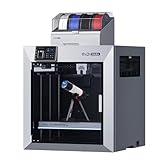
- Ultra-Large Build Volume: QIDI Max4 Combo has a 390×390×340mm printing area, 55% larger than its predecessor MAX3, enables you to print large industrial parts, complex molds and custom prototypes in one go without splitting; full-surface silicone heated bed ensures even temperature distribution and strong first-layer adhesion to avoid warping.
- High Precision & Stability: QIDI Max4 Combo 3D Printer equipped with closed-loop motors on X/Y axes, Achieve a maximum printing speed of 800mm/s and an acceleration of 30,000mm/s²; 2mm lead screw and anti-backlash nut on Z-axis reduce vertical gaps, ensuring smooth and precise printing with excellent surface quality.
- Wide Material Compatibility: 40mm³/s high-flow hotend with hardened steel nozzle supports standard materials (PLA/ABS) and industrial-grade abrasive materials (carbon fiber-reinforced nylon); 65℃ active heated chamber and self-developed Polar Cooler system create ideal printing conditions for high-temperature materials like ABS-CF, PC, PPS-CF.
- Smart Monitoring & User-Friendly Design: Built-in AI camera automatically detects printing abnormalities (e.g., spaghetti-like failures) and pauses printing instantly to save materials and time; large touch screen with optimized interface offers smooth operation, QIDI Max4 Combo suitable for both professionals and enthusiasts.
- Expandable Multi-Color Printing: Seamlessly connect with QIDI BOX to achieve 16-color and multi-material printing and enjoy intelligent filament management (e.g., real-time filament level monitoring, automatic pause when filament runs out); providing you with a worry-free 3D printing experience.
- Aerospace: Lightweight lattices, thermal-management channels and high-temperature components can reduce mass or integrate functions that would require multiple machined pieces.
- Biomedical: Patient-specific shapes and porous architectures can be tailored to tissue integration, provided the material, sterilization route and mechanical qualification are appropriate.
- Energy: Complex flow paths, insulating structures and high-temperature parts benefit from near-net-shape fabrication.
- Electronics: Ceramic substrates, insulators and packages can use fine features or integrated channels that are difficult to drill after firing.
- Thermal and chemical processing: Customized heat exchangers, burners and reaction supports can exploit internal surfaces and graded structures.
For a simple block or a very high-volume component with established tooling, conventional forming may still deliver lower cost, better repeatability and easier certification.
How should an engineer qualify a printed ceramic part?
Start with the service failure that matters: fracture, compression, thermal shock, wear, dielectric breakdown or chemical attack. Then qualify the complete process, not only the printer.
- Define the material composition, allowable porosity, dimensions and service environment.
- Design witness coupons in the same orientation, layer thickness, support condition and furnace load as production parts.
- Record feedstock batch, solids loading, binder or resin formulation, print parameters, debinding cycle and sintering schedule.
- Measure green and fired dimensions to establish shrinkage in all relevant directions.
- Measure density and inspect for surface and internal defects before destructive testing.
- Test multiple specimens in the directions and loading modes expected in service; report scatter, not only the highest value.
- Repeat the build across batches and furnace runs to establish process capability and a defensible inspection plan.
What are the main limitations of ceramic additive manufacturing?
Performance can remain below traditional manufacturing when porosity, interlayer flaws or nonuniform microstructure dominate. Shrinkage and warping complicate tolerances, cracking reduces yield, and repeatability can deteriorate as parts become larger or geometries more intricate. NIST identifies performance, cost and certification as commercialization barriers, while technical reviews also point to industrial scalability and process control.
These limits do not make the technology impractical. They define where it should be used: parts whose geometry, customization or functional integration creates enough value to justify thermal processing, inspection and qualification. The strongest design is often the one that uses printing to eliminate joints, reduce mass or add a controlled internal architecture, then treats densification and defect control as part of the design itself.
Frequently Asked Questions
Can ceramic-filled filament be fired in any kiln?
No. The binder formulation and ceramic composition determine the required debinding atmosphere, ramp rates, peak temperature and cooling schedule. Use the feedstock maker’s validated cycle and confirm furnace uniformity; a generic pottery firing profile can leave binder, distort the part or cause cracking.
Quick wins for a faster PC:
Clear out junk files and repair common Windows errorsFree Scan →Fix the driver behind crashes, sound loss and screen glitchesFind Drivers →Repair Windows errors before they cause bigger problemsFix Now →Does higher density always mean a tougher ceramic part?
Not necessarily. Removing pores usually improves strength, but toughness also depends on composition, grain size, residual stresses and crack-arresting mechanisms. An aggressive densification cycle can enlarge grains or create new defects, so density should be evaluated together with fracture behavior.
Why can two parts printed from the same file have different strength?
Powder-batch variation, slurry age, humidity, layer bonding, furnace loading and small changes in debinding can alter the defect population. Ceramic strength is flaw-sensitive, so process records and repeated specimens are needed to distinguish a real improvement from normal scatter.
What should a supplier include in a ceramic AM strength claim?
Ask for composition, final density, specimen standard, loading mode, build orientation, thermal treatment and the number and spread of test results. Without those details, a value such as 500 MPa cannot be compared fairly with another material or process.
Quick Recap
Product prices and availability are accurate as of the date/time indicated and are subject to change. Any price and availability information displayed on Amazon at the time of purchase will apply.
Recommended Free Tools

