
Quick wins for a faster PC:
Repair Windows errors before they cause bigger problemsFix Now →Fix the driver behind crashes, sound loss and screen glitchesFind Drivers →Clear out junk files and repair common Windows errorsFree Scan →iTechGuides is reader-supported. When you buy through links on our site, we may earn an affiliate commission. As an Amazon Associate I earn from qualifying purchases. Learn more
A GST invoice must contain the information required by the invoice rules, even though there is no single prescribed layout. For a small business, that means capturing the supplier and recipient details that apply, a financial-year-unique serial number, the goods or services supplied, values and applicable tax, and other details such as place of supply when relevant. The right document also depends on the transaction: taxable registered suppliers issue tax invoices, while exempt suppliers and composition taxpayers issue bills of supply.
What details must be on a GST invoice?
Rule 46 sets out the required invoice particulars. The CBIC says there is no prescribed invoice format, but the applicable required fields must be present. In practice, that means you can design your own document, but you should not treat layout flexibility as permission to omit required information.
Use this checklist when creating or reviewing an invoice. Some fields apply only in particular situations, so include them when relevant to the supply and recipient.
- Supplier: legal name, address and GSTIN.
- Invoice number: a consecutive serial number that is unique for the financial year. It may include letters, numerals, hyphens and slashes.
- Issue date: the date the invoice is issued.
- Registered recipient: recipient name, address and GSTIN or UIN.
- Unregistered recipient for a taxable supply of ₹50,000 or more: recipient name and address, delivery address, State name and State code.
- Supply details: HSN code for goods or Accounting Code of Services, plus a clear description of the goods or services.
- Goods quantity: quantity and unit or Unique Quantity Code.
- Values: total value and taxable value after discount or abatement.
- Tax: applicable CGST, SGST, IGST, UTGST or cess rate and amount.
- Inter-State supply: place of supply, including the State name.
- Different delivery address: show it when it differs from the place of supply.
- Reverse charge: state whether tax is payable under reverse charge.
- Authentication: supplier’s signature or digital signature, or that of an authorised representative.
The checklist is not a demand to fill every field on every invoice. For example, the special recipient particulars apply to an unregistered recipient in the stated ₹50,000-or-more case, and place-of-supply details are specifically relevant to inter-State supplies. Build a template that makes conditional fields easy to add rather than leaving them out by default.
#1 Best Overall

- Two-Part Carbonless Invoice Book: Each invoice book has 50 sets of invoices, each with a white/light yellow section, with the yellow section retained in the invoice book to maintain detailed records.
- Consecutively Numbered: Enlarged red 6-digit numbers in the upper right corner of each invoice receipt book help you quickly navigate through your orders.
- Wraparound Divider Flap: A thick folded cardboard divider is integrated into the back of each invoice book for use between each two-part sales order to prevent the written content from rubbing off on subsequent copies of the invoice, resulting in wasted invoices.
- 2 Packs/50 Sets (100 Sets Total): Each invoice book provides 50 sequentially numbered carbonless sets of 2 invoice books for long-term use.
- Customizable Space: Each invoice book for small business has space at the top to add a company seal or sticker.
What “no prescribed format” does—and does not—mean
The CBIC flier’s statement that there is no prescribed format concerns the document’s layout. A business can arrange the information in its own way, but the invoice still needs all particulars that apply under the rules. A neatly designed receipt that omits a required tax rate, serial number or recipient detail is not made compliant by its appearance.
For a small business, a practical format groups information by task: supplier and recipient at the top, invoice number and date nearby, then item or service lines, values and tax, and the applicable place-of-supply, reverse-charge and signature details. This is an organizational suggestion, not a government-mandated layout.
When do I issue a GST invoice for goods or services?
The deadline differs by type of supply. For taxable goods, issue the invoice on or before removal or delivery, depending on whether the goods are moved; for taxable services, the usual period is within 30 days of supply.
Recommended Free Tools
| Supply | When to issue |
|---|---|
| Taxable goods involving movement | Before or at the time of removal. |
| Taxable goods where there is no movement | Before or at delivery, or when the goods are made available to the recipient. |
| Taxable services | Within 30 days from the date of supply. |
| Services supplied by specified insurers, banking companies, financial institutions or NBFCs | Within 45 days under the stated rule. |
The 45-day period is for the specified categories, not a general extension for any small business that provides a service. If your business is not one of those listed types, use the 30-day period for taxable services.
Can I use my own invoice format?
Yes. The CBIC states that there is no prescribed invoice format, provided the invoice includes the fields that apply. You can use a paper form, spreadsheet or accounting system; the choice is about workflow, not an exemption from invoice particulars.
Rank #2

- QUALITY INVOICES: Adams Order books provide a professional invoice or customer receipt; a great way to create and maintain a professional image for small businesses and service providers
- 50 TWO-PART CARBONLESS FORMS: Customers get the perforated white top copy; retain the canary and pink copies for your records
- WRAP-AROUND COVER: Fold the back cover between sets to keep invoices neat and legible
- ROOM FOR CUSTOMIZATION: A blank space at top leaves room for your company stamp; a big savings over custom-printed forms
- CONSECUTIVELY NUMBERED: Large 6-digit numbers in the upper right hand corner help you thumb through orders quickly
Before adopting a format, check that it can handle the required details for your transactions. A goods seller needs quantity and unit fields; a service provider needs a way to record the Accounting Code of Services. A business making inter-State supplies needs to capture place of supply, and either type of business may need to show whether reverse charge applies. If the recipient or delivery circumstances trigger additional details, the format must make room for them.
Choosing a workflow
Each workflow can be made to work if it produces complete records. The trade-offs below are operational considerations drawn from the invoice and return requirements, not approvals or endorsements of any product.
| Workflow | What to check | Likely operational trade-off |
|---|---|---|
| Paper invoices | Required fields are printed or written clearly; numbers remain consecutive and unique for the financial year; copies and supporting records are retained. | Simple to start, but maintaining a controlled number series and preparing return data may require manual tracking. |
| Spreadsheet | Templates include conditional fields, tax calculations and a financial-year numbering control; records can be retained and used to prepare GSTR-1 data. | Flexible and easy to adapt, but formulas, numbering and edits need oversight to prevent inconsistencies. |
| Invoicing or accounting software | Confirm it supports the fields your supplies require, bills of supply, credit and debit notes, GSTR-1 data export, record retention and an audit trail. | Can reduce repeated data entry, but setup and cost vary; software output still needs checking against the rules that apply to your business. |
These are checks to make before choosing a process, not claims that any workflow automatically satisfies every requirement. A system that calculates tax correctly but cannot show place of supply or preserve a numbering series may still leave a compliance gap.
Do I need an invoice for a sale under ₹200?
Not always. The individual-invoice exception applies only when the recipient is unregistered and does not ask for an invoice. If either condition is not met, do not rely on the exception.
For qualifying supplies below ₹200, a registered person may omit an individual invoice and instead issue one consolidated invoice at the close of the day for those supplies. If an unregistered recipient requests an invoice, issue it regardless of the amount. The ₹200 figure and this guidance come from CBIC’s 2017 FAQ; it is not a general exemption for all small transactions.
Rank #3

- QUALITY INVOICES: Adams Invoice books provide a professional invoice or customer receipt; easily customize by using the extra space at the top and your company stamp
- 50-TWO PART CARBONLESS FORMS: Customers get the perforated white top copy; retain the yellow copy for your records
- WRAP-AROUND COVER: Fold the back cover between sets to keep invoices neat and legible
- CONSECUTIVELY NUMBERED: Large 6-digit numbers help you thumb through invoices quickly
- STOCK UP: Each book includes 50 white/canary sets; order several to keep your favorite forms on hand
Apply both conditions before omitting an individual invoice
- Check whether the individual supply is below ₹200.
- Check whether the recipient is unregistered.
- Ask whether the recipient requested an invoice. If so, issue one.
- If the exception applies, include the qualifying supplies in the consolidated invoice at the close of the day.
Do not confuse the exception with permission to leave the day’s supplies undocumented: the rule described here calls for a consolidated invoice for qualifying supplies.
What’s actually slowing this PC down?
Pick the symptom - the matching free tool is one click away.
When do I issue a bill of supply instead of a tax invoice?
A taxable registered supplier issues a tax invoice. A supplier of exempt goods or services, and a person paying tax under the Composition Scheme, issues a bill of supply instead.
A bill of supply does not show a tax rate or tax amount because GST cannot be collected on it. This is not simply a different name for a tax invoice: the type of document follows the supplier’s tax position and the nature of the supply. Do not add a GST tax line to a bill of supply as if tax were being collected.
Can an unregistered business issue a GST tax invoice?
No. An unregistered person cannot issue a GST tax invoice or collect an amount as GST. A customer’s request for a GST line does not change that boundary.
Do not label a document as a GST tax invoice or show a GST amount as tax collected if the business is unregistered. If registration status is unclear, resolve that question before creating an invoice format that presents the business as charging GST.
Windows Errors? Fix Them Before They Spread
Repair common Windows errors and clear accumulated junk for a smoother, more stable PC - no reinstall needed.Free scan · no reinstallCrashes, No Sound, or Screen Glitches?
Random freezes, missing sound and display glitches usually trace back to one bad driver. Find and replace yours safely.Free scan · under a minuteRank #4
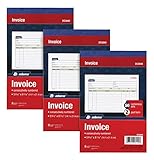
- This value 3 pack of Adams Invoice Books give you 150 two part carbonless invoices with a perforated white customer receipt and yellow duplicates for your records; 3 50-invoice books per pack
- Unique horizontal invoice sheets capture the purchased by and shipped to addresses; a compact 5-9/16 x 8-7/16 page still leaves plenty of room for details on up to 12 items sold
- Wraparound back cover prevents write-through between sets; pull out the perforated white customer receipt and the yellow carbonless duplicates stay behind for your records
- Unique 6 digit invoice numbers help you thumb through orders quickly; blank space up top gives you room for a company stamp—an affordable custom touch
- In value packs with three 50-invoice books for your small business; buy ahead to keep on site or take on the road for pop-up shop sales
How should I number invoices and keep records?
Use a consecutive numbering series that is unique for each financial year. The serial number may contain letters, numerals, hyphens and slashes, so a business can choose a readable pattern, as long as numbers remain consecutive and unique for that year.
The rules also require invoice serial numbers issued during a tax period to be furnished electronically through the Common Portal in FORM GSTR-1. That makes numbering more than a cosmetic choice: a controlled series helps the business reconcile issued invoices with the serial numbers it furnishes.
A simple control routine
- Choose a numbering pattern and document when its financial-year series resets.
- Assign each invoice number once; avoid informal parallel lists that can create duplicate or skipped numbers.
- Retain the underlying invoices and records in a way that lets you trace a reported serial number back to the transaction.
- Before furnishing GSTR-1, reconcile the invoice serial numbers for the tax period against the records your business actually issued.
The routine is a practical way to support the stated numbering and reporting requirements; it does not replace the applicable return instructions.
Independent reader supportYour contribution helps us test, update, and keep practical guides available for everyone.Does my small business need e-invoicing?
There is a dated threshold reference, but it should not be treated as a complete statement of the rules in 2026. CBIC Notification 17/2022-Central Tax, dated 1 August 2022, implemented e-invoicing for taxpayers with aggregate turnover exceeding ₹10 crore from 1 October 2022.
The Tool Desk
Outbyte PC Repair FREERepair Windows errors before they cause bigger problemsFix Now →Outbyte Driver Updater FREEScan for outdated or missing drivers - takes under a minuteDriver Scan →Later notifications may change thresholds, exclusions or reporting timelines. Before deciding whether your business is covered for a particular financial year, verify the current GST and e-invoice portal requirements and any subsequent notifications. The 2022 threshold alone cannot establish that a business is inside or outside the current mandate.
Best Value

- 2 part carbonless forms (White originals, Canary duplicates) for invoicing customers
- Wraparound cover attached to back to place between sets
- Consecutively numbered within each book
- 50 sets per book
- Space at top for company stamp
What should I check before sending an invoice?
A short review catches common omissions without turning invoice preparation into a separate project. Check the transaction type first, then verify the fields that follow from it.
- Choose the document: tax invoice for a taxable supply by a registered supplier; bill of supply for exempt supplies or a composition taxpayer.
- Check timing: use the goods deadline or service deadline that applies.
- Check recipient status: include registered recipient particulars, or the special details for an unregistered recipient where the taxable supply is ₹50,000 or more.
- Check the line details: use HSN or Accounting Code of Services, a clear description, and quantity and unit for goods.
- Check tax and location: verify taxable value, applicable tax rate and amount, inter-State place of supply, and any different delivery address.
- Check the controls: confirm the invoice number belongs to the financial year’s consecutive series, indicate reverse charge where applicable, and include the required signature.
- Check reporting readiness: retain the invoice record and ensure its serial number can be reconciled with the tax-period data furnished through GSTR-1.
Frequently Asked Questions
What is the difference between HSN and SAC on a GST invoice?
The invoice particulars distinguish the HSN code for goods from the Accounting Code of Services for services. Use the code category appropriate to what you supplied rather than treating the two labels as interchangeable.
Can I add a GST amount if my customer insists, even though I am not registered?
No. A customer’s preference does not authorize an unregistered person to collect an amount as GST. Resolve registration status before representing any charge as GST.
Does the ₹50,000 recipient-detail rule mean I can skip all details for smaller sales to unregistered customers?
No. That threshold concerns specified recipient particulars for an unregistered recipient; it does not erase the other invoice requirements that apply. Check each invoice against the applicable fields rather than using the threshold as a blanket exemption.
Quick Recap
Product prices and availability are accurate as of the date/time indicated and are subject to change. Any price and availability information displayed on Amazon at the time of purchase will apply.

