
Do these 3 things before closing this tab:
1Scan for outdated or missing drivers - takes under a minute2Clear out junk files and repair common Windows errors3Fix the driver behind crashes, sound loss and screen glitchesGoogle Cloud G4 virtual machines, powered by NVIDIA RTX PRO 6000 Blackwell Server Edition GPUs, became generally available on October 20, 2025. They offer configurations from fractional GPU allocations to eight GPUs, targeting both AI workloads and graphics-intensive simulation and rendering. Google’s headline performance figures are vendor-reported, not independent benchmarks.
What are Google Cloud G4 VMs?
G4 is a Google Cloud VM family built around NVIDIA RTX PRO 6000 Blackwell Server Edition GPUs. Google first announced G4 in preview on June 11, 2025, then announced general availability on October 20, 2025. That means G4 is no longer preview-only, although the availability of a particular machine type still depends on region and capacity.
| # | Preview | Product | Price | |
|---|---|---|---|---|
| 1 |

|
NVD RTX PRO 6000 Blackwell Professional Workstation Edition Graphics Card for AI, Design,... | $19,999.99 | Buy on Amazon |
| 2 |
|
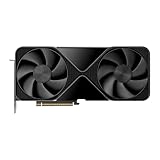
PNY VCNRTXPRO6000B-PB RTX PRO 6000 96GB GDDR7 Graphic Card | $17,986.96 | Buy on Amazon |
| 3 |

|
NVD RTX 6000 Pro Blackwell Edition | Buy on Amazon |
The platform combines the GPUs with AMD EPYC Turin CPUs and Google Titanium networking. Google lists integration with Google Kubernetes Engine (GKE), Cloud Storage, Vertex AI, Hyperdisk, and AI Hypercomputer, making G4 usable within a broader Google Cloud workflow rather than only as a standalone GPU server.
How much GPU memory does each G4 have?
NVIDIA specifies 96 GB of GDDR7 memory and 1,597 GB/s of memory bandwidth per RTX PRO 6000 Blackwell Server Edition GPU. A full-GPU G4 machine therefore exposes 96 GB per GPU; an eight-GPU configuration has 768 GB of aggregate GPU memory, as stated by Google.
Outdated Drivers Are Slowing You Down
One free scan finds every outdated or missing driver and matches the right update for your exact hardware.Free scan · exact hardware matchPC Slower Than It Used to Be?
A free scan shows the junk files, broken settings and background clutter dragging Windows down - then fixes them in one click.Free scan · Windows 10 & 11#1 Best Overall
- PLEASE NOTE: Exporting an NVIDIA RTX Pro 6000 GPU outside the US requires strict adherence to the U.S. Export Administration Regulations (EAR) and issuance of an export license from the Bureau of Industry and Security (BIS). Compliance and Know Your Customer (KYC) screening may be required as a condition of order acceptance. [NVIDIA Blackwell Streaming Multiprocessor] The new SM features increased processing throughput, and new neural shaders that integrate neural networks inside of programmable shaders | DLSS 4: Multi Frame Generation ensures ultra-smooth frame pacing for lifelike simulations.
- [Double-Flow-Through Design] The RTX PRO 6000 Blackwell features a double-flow-through cooling design, optimizing efficiency and airflow to sustain peak performance under 600W power loads. | [5th Gen Tensor Cores] Deliver up to 3X the performance of the previous generation and support for FP4 precision for faster AI model processing times with reduced memory usage, enabling local fine-tuning of LLMs and generative AI | [4th Gen Ray Tracing Cores] Double the ray-triangle intersection rate of the previous generation to create photoreal, physically accurate scenes and immersive 3D designs with RTX Mega Geometry, which enables up to 100X more ray-traced triangles.
- [PCIe Gen 5] Support for PCIe Gen 5 provides double the bandwidth of PCIe Gen 4, improving data-transfer speeds from CPU memory and unlocking faster performance for data-intensive tasks like AI, data science, and 3D modeling. | [GDDR7 Memory] With 96 GB of GPU memory and 1.8 TB ps bandwidth, it can tackle massive 3D and AI projects, fine-tune AI models locally, explore large-scale VR environments, and drive larger multi-app workflows.
- [DisplayPort 2.1] Achieve unparalleled visual clarity and performance, driving high resolution displays at up to 8K at 240 Hz and 16K at 60 Hz. Increased bandwidth enables seamless multi-monitor setups while HDR and higher color depth support ensures superior color accuracy for precision work, such as video editing, 3D design, and live broadcasting.
- [Universal MIG] Divide a single RTX PRO 6000 Blackwell into multiple isolated instances, each with dedicated resources, allowing for concurrent execution of multiple workloads, optimized GPU utilization, and secure isolation of different applications or users. [WARRANTY] 3 YR Manufacturer's Warranty. Bulk OEM Packaging. Retail Packaging is NOT included.
Google’s announced eight-GPU configuration also offers up to 384 vCPUs, 1.4 TB of host memory, and 12 TB of local SSD. Those are upper-end figures for that configuration, not amounts available on every G4 machine.
Which G4 configurations can you choose?
Google Cloud documentation lists full-GPU configurations with 1, 2, 4, or 8 GPUs, as well as fractional machine types allocating 1/8, 1/4, or 1/2 of a GPU. Fractional options can suit workloads that need GPU acceleration without a full GPU allocation; they should not be assumed to provide the same GPU memory as a full-GPU instance.
For full-GPU machines, the 96 GB-per-GPU figure gives a simple way to estimate aggregate GPU memory by GPU count. Host memory, CPU allocation, local SSD, and regional availability depend on the selected machine type and should be checked in the configuration picker before deployment.
Rank #2
- Blackwell Streaming Multiprocessor
- 5th Gen Tensor Cores
- 4th Gen Ray Tracing Cores
- Next-Gen Video Engines
- PCIe Gen 5 Interface
What workloads are G4 VMs designed for?
AI inference and fine-tuning
Google positions G4 for multimodal AI inference, generative AI, and fine-tuning. The large per-GPU memory capacity may help with memory-intensive workloads, but actual throughput depends on the model, software stack, batch size, and how the workload is distributed across GPUs.
Simulation, design, and rendering
Google also names physical AI, robotics simulation, industrial digital twins, photorealistic design and visualization, game rendering, video transcoding, and virtual desktops. Its listed third-party applications include Altair HyperWorks, Ansys Fluent, Autodesk AutoCAD, Blender, Dassault SolidWorks, and Unity. Listing an application does not establish that every feature or configuration is certified or performs identically across regions; verify software requirements and licensing with the relevant vendor.
Can you run NVIDIA Omniverse or Isaac Sim on G4?
Google announced NVIDIA Omniverse as a generally available virtual machine image on Google Cloud Marketplace. The announced pairing is aimed at industrial digital twins and physically accurate robotics simulation, using G4’s GPU memory, Tensor Cores, and fourth-generation RT Cores.
Rank #3
- RTX Pro 6000 Blackwell Edition
That announcement supports Omniverse as an option on Google Cloud, but it does not by itself establish that a particular Isaac Sim version is included, preconfigured, or supported on every G4 machine type. Check the current Marketplace image details and the application’s own system requirements before planning an Isaac Sim deployment.
Independent reader supportYour contribution helps us test, update, and keep practical guides available for everyone.How does G4 compare with G2 and A-series instances?
G4 is a newer Blackwell-based option with full and fractional GPU allocations. The figures below separate Google’s reported comparison from details that are not established in the available product information; they are not a complete performance or price comparison.
Free tools Windows power users keep installed
One-click scans. No signup required.
| Comparison point | G4 | G2 | A-series |
|---|---|---|---|
| GPU generation or model | NVIDIA RTX PRO 6000 Blackwell Server Edition | Not stated in the available Google Cloud comparison | Not stated in the available Google Cloud comparison |
| GPU count and allocation | Full-GPU options with 1, 2, 4, or 8 GPUs; documentation also lists 1/8, 1/4, and 1/2 GPU types | Not stated in the available Google Cloud comparison | Not stated in the available Google Cloud comparison |
| Memory | 96 GB per full GPU; up to 768 GB aggregate on the announced eight-GPU configuration | Not stated in the available Google Cloud comparison | Not stated in the available Google Cloud comparison |
| Performance comparison | Google reported up to 9× G2 throughput in its stated workload comparison | Baseline for that Google comparison; workload-specific result, not a universal ratio | Not stated |
| Pricing and regional capacity | Varies by region and configuration; check at purchase time | Not stated | Not stated |
Google’s “up to 9×” figure is a vendor-reported result from its stated workload comparison, not an independent benchmark or a promise that every G4 job will run nine times faster. The available information does not provide a like-for-like specification, capacity, or cost comparison with A-series machines. To choose between families, compare the exact GPU allocation, CPU and host-memory needs, storage, region, quota, software compatibility, and total cost for your workload.
What does G4’s P2P interconnect claim mean?
Google says its custom peer-to-peer (P2P) interconnect can unlock up to 168% more throughput from the underlying RTX PRO 6000 GPUs. This is a Google-reported maximum, not a general performance guarantee. The available claim does not establish a result for every model, application, or deployment, so treat it as a potential advantage to validate against your own multi-GPU workload.
Quick Recap
What should you check before deploying G4?
- Region and capacity: Confirm the desired machine type is available where your data and users need it; general availability does not mean every size is available in every region.
- Quota: Check that your project has sufficient GPU quota for the planned allocation before attempting to create instances.
- GPU allocation: Decide whether a fractional type meets the workload’s needs or whether it requires one or more full GPUs.
- Storage: Distinguish the local SSD on the selected machine from network storage such as Hyperdisk or Cloud Storage; plan for the data capacity and persistence your workload requires.
- Total cost: Check current regional pricing for the precise machine, GPU allocation, storage, and any attached cloud services. The published product information does not establish a single G4 price.
- Software and licensing: Confirm application compatibility, drivers, support status, and licensing terms with Google Cloud and the software publisher.
Product prices and availability are accurate as of the date/time indicated and are subject to change. Any price and availability information displayed on Amazon at the time of purchase will apply.

