
Google announced Gemini 4 Argon on September 30, 2026, positioning it as a frontier model for complex, multi-step work. The launch is limited at first to trusted cyber defenders and testers through Google’s Fairwind Program; Google says broader access will begin with paid API customers and Google AI Ultra subscribers, but has not announced a general public release date.
What is Gemini 4 Argon?
Gemini 4 Argon is Google’s new model for long-horizon professional workflows, including software engineering, research, legal and finance work, cybersecurity defense, and creative writing. Google describes it as a model intended to handle tasks that require multiple steps rather than only short, isolated prompts. In an interview with Axios, Tulsee Doshi, head of Gemini products at Google DeepMind, called Argon “a well-rounded model that has frontier capabilities across several domains.”

Google also says Argon supports an output limit of 1 million tokens. That is the company’s stated output limit; it should not be confused with a guarantee that every task, interface, or integration will accept or return that much text in practice. Google’s announcement does not establish independent performance results across these workloads.
When can I use Gemini 4 Argon?
At launch, access is restricted to trusted cyber defenders and testers participating in the Fairwind Program. Google says it plans to extend access first to paid API customers and Google AI Ultra subscribers. The announcement gives no date for either expansion or for general public availability, so Argon is not yet described as an unrestricted consumer release.
#1 Best Overall
How much does Gemini 4 Argon cost?
Google’s announced API rates start at $2 per million input tokens and $10 per million output tokens. Cached input tokens are priced 95% below the input rate. Google says those introductory rates will later increase to $4 per million input tokens and $20 per million output tokens. The announcement does not specify when the introductory period ends.
These are API token prices; they do not state the subscription price of Google AI Ultra or establish that every Argon capability will be included in that subscription. For developers comparing integration options, the API is the explicit usage-priced route in Google’s announcement, while AI Ultra is named as a planned access channel.
Rank #2
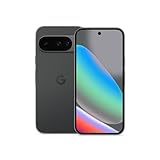
- Google Pixel 10 is the everyday phone unlike anything else; it has Google Tensor G5, Pixel’s most powerful chip, an incredible camera, and advanced AI - Gemini built in[1]
- Unlocked Android phone gives you the flexibility to change carriers and choose your own data plan[2]; it works with Google Fi, Verizon, T-Mobile, AT&T, and other major carriers
- Unlocked Android phone gives you the flexibility to change carriers and choose your own data plan[2]; it works - Google Fi, Verizon, T-Mobile, AT&T, and other major carriers
- The upgraded triple rear camera system has a new 5x telephoto lens - up to 20x Super Res Zoom for stunning detail from far away; Night Sight takes crisp, clear photos in low-light settings; and Camera Coach helps you snap your best pics[3]
- Pixel 10 is designed - scratch-resistant Corning Gorilla Glass Victus 2 and has an IP68 rating for water and dust protection[21]; plus, the Actua display - 3,000-nit peak brightness is easy on the eyes, even in direct sunlight[4]
What does Google say Argon can do?
Google’s announcement points to internal-use examples involving several demanding tasks. The company reports a 40% improvement over a published baseline in one quantum-optimization example, more than 300 TiB of memory freed—with estimated total savings of 500 TiB to 1 PiB—and a libgav1 decoder rewrite that was 2.7 times faster than an earlier Rust port.
Those figures are Google-reported results, not independent benchmarks. The announcement does not provide independent benchmark methodology for the examples, so they should be treated as illustrations of Google’s reported use of Argon, not as a forecast of results on a different codebase, workload, or business process.
Do these 3 things before closing this tab:
1Clear out junk files and repair common Windows errors2Fix the driver behind crashes, sound loss and screen glitches3Repair Windows errors before they cause bigger problemsHow is Google addressing safety?
Google says Argon’s rollout includes safeguards intended to reduce cyber and chemical, biological, radiological, and nuclear (CBRN) misuse, as well as risks from prompt injection and insecure agent environments. The company also reports internal and external red-team testing. The limited initial release places the model with selected defenders and testers before the planned expansion, but the announcement does not provide detailed evaluation results or establish that safeguards eliminate misuse risk.
Is Gemini 4 Argon available to developers yet?
Google has announced paid API customers as an upcoming access group, but the launch information does not say that the API is generally available now or give a date for opening it. Developers should distinguish the announced future route from present eligibility: initial access is limited to Fairwind participants, and Google has not stated when wider API access begins.
For a practical assessment once access is offered, compare Argon on the work that matters to your team: output and context needs, code or research quality, latency and cost at your usage volume, integration requirements, and the controls needed for agentic or sensitive workflows. The announcement’s 1 million-token output claim and Google’s internal examples do not substitute for workload-specific testing.
Quick Recap
Product prices and availability are accurate as of the date/time indicated and are subject to change. Any price and availability information displayed on Amazon at the time of purchase will apply.

