
Do these 3 things before closing this tab:
1Fix the driver behind crashes, sound loss and screen glitches2Clear out junk files and repair common Windows errors3Scan for outdated or missing drivers - takes under a minuteFTP server software for Windows is not one product or protocol. Choose IIS FTP for integrated Windows Server FTP/FTPS, Cerberus for a supported Windows-centric server with SFTP and HTTPS, Serv-U for broader managed file transfer, and FileZilla Server for basic hosting after checking its current edition. Avoid unencrypted FTP on the public internet.
The right choice depends first on what the other system actually requires. FTP, FTPS, SFTP, and HTTPS are different technologies, and a product that supports one does not necessarily support the others. A reliable selection also has to account for authentication, folder isolation, passive-mode networking, logging, automation, support, and total operating cost.
Key takeaways
- IIS FTP is the natural starting point for an organization that already runs Windows Server and mainly needs integrated FTP or FTPS publishing.
- FTPS encrypts FTP with TLS, while SFTP is a separate file-transfer protocol that runs over SSH; the two are not interchangeable.
- Cerberus is a strong commercial Windows-focused choice when SFTP, FTPS, HTTPS, directory integration, web administration, or vendor support is required.
- Serv-U is better suited to managed file-transfer requirements involving browser access, automation, partner workflows, and governance.
- FTP requires a control connection plus a passive data-port range, so opening only TCP 21 commonly produces a server that works locally but fails for external users.
- Traditional plain FTP normally sends credentials and file data without transport encryption and should not be exposed directly to the public internet.
What is FTP server software for Windows?
FTP server software accepts connections from FTP clients and exposes selected folders to authenticated or anonymous users. A Windows FTP server may run on a desktop edition of Windows, Windows Server, a virtual machine, or a cloud-hosted Windows instance, depending on the product’s support matrix.
The term FTP server is now often used loosely for a secure file-transfer server. A modern product may support several protocols, web access, directory services, workflow automation, auditing, and replication in addition to traditional FTP. Those features should be evaluated separately rather than condensed into a single “secure FTP” label.
#1 Best Overall

- 【 Multifunction Network Cable Tester LT-600S】Ethernet cable tester with 4-inch IPS touchscreen with 800×480 resolution. Multifunction network tester support UTP cable test, RJ45 TDR cable test, cable search, Network tools, POE++ detect, Optical power meter, VFL, length meter, FTP server and more.
- 【POE++ Detection & Network Tools】The PoE tester supports IEEE 802.3at/af/bt and non-standard PoE protocols. It displays supply voltage, power pins, and pin polarity. Of coursed, The network tester is features a built-in 1000M network port and a range of tools, support IP discovery, IP address scan, PING test, LLDP/CDP detection, Port flashing, PPPOE dial-up.
- 【UTP & Tracer & RJ45 TDR】Advanced UTP cable test can easily test UTP cable's sequence, type and remote kit. Ethernet cable tracer can quickly find out the target cable from the mess cables. Accurately locate the cables to avoid misjudgment. Inductive NCV scan function, supporting the distinction between live and neutral wires. RJ45 TDR test can easily test pair status,length,attenuation,reflectivity,impedance, skew, and other parameters,max 180 meters (590 feet).
- 【OPM/VFL/ Length Meter】 Optical power meter--It is used for signal power test and insertion loss test of various equipment and photoelectric components. Cable length meter Measure opens of network cables, max measurement length up to 3000 meters. Accuracy: Cable length x 3% ± 1m(only for Cable’s open test).
- 【Rechargeable Battery & FTP Server】 The transmitter has a built-in rechargeable 3.7V 4000mAh battery and the receiver has a built-in 3.7V 2000mAh battery, providing excellent battery life. The FTP function enables users to copy test reports and data via network FTP. Rsrteng will do our best to resolve any technical support issues as soon as possible.
What is the difference between FTP, FTPS, SFTP, and HTTPS?
FTP, FTPS, SFTP, and HTTPS are different protocols with different firewall, authentication, and client requirements. Ask the sender or recipient for the exact protocol, port, authentication method, and certificate or host-key requirements before selecting software.
| Protocol | How it works | Typical reason to choose it | Main implementation issue |
|---|---|---|---|
| FTP | Traditional File Transfer Protocol, normally without transport encryption | Legacy equipment or a controlled private network | Credentials and data are not confidential on the connection |
| FTPS | FTP protected with TLS certificates | An existing FTP workflow requires encrypted transport | Passive data ports, NAT, firewall rules, and certificates must all be configured |
| SFTP | File transfer over SSH; technically separate from FTP | A partner requires SFTP or SSH-key authentication is preferred | The client and server must support SSH/SFTP, commonly through a separate SSH listener |
| HTTPS file transfer | File uploads and downloads through HTTPS, often with a browser or API | Nontechnical users need links, a portal, or browser-based uploads | The selected product must provide the required portal, sharing, and access controls |
| SCP | Secure copy over SSH | Simple scripted copy operations where SCP is specifically required | SCP is not equivalent to SFTP and may provide fewer file-management capabilities |
| MFT | Managed File Transfer with governance, workflows, reporting, and automation | Recurring partner exchanges, compliance processes, and operational oversight | Licensing and administration are usually more involved than for a basic server |
Use SFTP when the counterparty explicitly requires SFTP, SSH keys are preferred, or firewall simplicity is important. SFTP normally needs one SSH service port rather than FTP’s separate command and data channels.
Use FTPS when an existing FTP client or partner requires FTP over TLS. Explicit FTPS starts as FTP and negotiates TLS; implicit FTPS expects encryption from the beginning. Legacy compatibility may determine which mode the other party supports.
Use HTTPS when users need browser access, upload links, a customer portal, or an API. HTTPS is often easier for users and corporate networks than FTP, but the server product must actually include the required web-sharing features.
Retain plain FTP only as a documented exception. A legacy device or partner may be unable to encrypt traffic, but the service should then be isolated, risk-assessed, and protected by another trusted network layer. Plain FTP should not be treated as a secure internet-facing option.
Which FTP server software is best for Windows?
There is no universally best FTP server for Windows. IIS is usually the best fit for integrated Windows administration, Cerberus is a strong commercial Windows-centric secure-transfer choice, Serv-U is aimed at broader MFT requirements, and FileZilla Server may suit basic hosting after the exact edition and protocol support are verified.
| Product | Protocol and access position | Directory and administration fit | Best for | Main drawback |
|---|---|---|---|---|
| Microsoft IIS FTP | FTP and FTPS; do not assume SFTP or a browser portal | Windows Server role, IIS configuration, Windows and NTFS permissions | Existing Windows Server environments and straightforward publishing | More configuration-heavy and limited as a complete MFT platform |
| Cerberus FTP Server | Vendor advertises FTP, FTPS, SFTP, HTTP/S, and SCP | Windows-native administration, Active Directory and LDAP integration, web administration | Supported commercial secure transfer with broad protocol coverage | Professional and Enterprise pricing is substantial for a basic endpoint |
| Serv-U FTP/MFT Server | Official datasheet lists FTP, FTPS, SFTP, HTTP, and HTTPS | Browser-based management and MFT-oriented administration | Partner workflows, web access, automation, and governance | Product packaging and current pricing require careful edition comparison |
| FileZilla Server | Basic FTP/FTPS hosting should be verified against the current edition | Familiar FileZilla ecosystem; commercial editions may add enterprise features | Basic transfer hosting and users familiar with FileZilla | Client/server and free/commercial edition confusion |
| CrushFTP | Multi-protocol and browser-oriented positioning; verify current matrix | Cross-platform and automation-focused evaluation | Feature-rich, multi-protocol deployments | More complexity than a narrowly focused Windows setup |
| CompleteFTP | Investigate current FTP, secure-transfer, and web-access editions | Advanced permissions and event-trigger positioning | Commercial workflows and browser access | May be excessive for basic FTP/FTPS |
| Wing FTP Server | Commercial cross-platform file-transfer positioning; verify current protocols | Web administration and automation-oriented positioning | Smaller organizations needing commercial administration | Support and compliance posture require careful evaluation |
The product links above describe capabilities, not independent performance tests. Vendor claims about security, compliance, user counts, ratings, or deployment compatibility should be checked against current documentation and contracts before procurement.
When should you choose Microsoft IIS FTP?
Choose IIS FTP when Windows Server is already deployed, administrators are comfortable with IIS, and the requirement is primarily controlled FTP or FTPS publishing rather than a full MFT platform.
The Tool Desk
Outbyte PC Repair FREEClear out junk files and repair common Windows errorsFree Scan →Outbyte Driver Updater FREEScan for outdated or missing drivers - takes under a minuteDriver Scan →Microsoft documents FTP as an installable service under the Web Server (IIS) role. Microsoft’s IIS configuration documentation also identifies FTP Extensibility as relevant to certain authentication providers, including IIS Manager authentication; the exact role-service selection should be checked against the Windows Server release being installed. See Microsoft’s IIS FTP configuration documentation and its FTP security and authentication documentation.
IIS FTP integrates naturally with site-level configuration, IIS certificates, Windows authentication, NTFS permissions, user isolation, virtual hosting, and existing Windows administration. Microsoft’s FTP deployment guide documents FTP publishing and user-isolation concepts.
IIS is a weaker fit when users need SFTP, a polished customer portal, simple remote administration outside IIS tooling, high-availability replication, extensive APIs, or event-driven partner workflows. IIS should not be presented as an SFTP server without specific verification for the deployed product and version.
What does Cerberus FTP Server offer on Windows?
Cerberus is a strong commercial choice when a Windows-first organization needs several secure-transfer protocols and supported administration rather than only a minimal FTP endpoint.
Cerberus advertises FTP, FTPS, SFTP, HTTP/S, SCP, public file sharing, web administration, directory integration, TLS 1.3, and cloud-deployment compatibility on its Windows FTP Server product page. Cerberus identifies version 2026.2 on its SFTP page and lists native 64-bit software optimized for Windows Server 2012, 2016, 2019, and 2022 plus Windows 10 and 11; those are vendor-supplied signals, so verify the current support matrix before installation at the Cerberus SFTP for Windows page.
Rank #2

- Value NAS with RAID for centralized storage and backup for all your devices. Check out the LS 700 for enhanced features, cloud capabilities, macOS 26, and up to 7x faster performance than the LS 200.
- Connect the LinkStation to your router and enjoy shared network storage for your devices. The NAS is compatible with Windows and macOS*, and Buffalo's US-based support is on-hand 24/7 for installation walkthroughs. *Only for macOS 15 (Sequoia) and earlier. For macOS 26, check out our LS 700 series.
- Subscription-Free Personal Cloud – Store, back up, and manage all your videos, music, and photos and access them anytime without paying any monthly fees.
- Storage Purpose-Built for Data Security – A NAS designed to keep your data safe, the LS200 features a closed system to reduce vulnerabilities from 3rd party apps and SSL encryption for secure file transfers.
- Back Up Multiple Computers & Devices – NAS Navigator management utility and PC backup software included. NAS Navigator 2 for macOS 15 and earlier. You can set up automated backups of data on your computers.
Cerberus’s Professional edition material advertises Active Directory and LDAP integration, public-key authentication, web administration, unlimited user accounts and connections in the listed edition, server replication, and compliance-oriented controls. These are edition-specific vendor claims, not a guarantee that an organization becomes compliant merely by installing the product. Review the Professional edition feature list before comparing plans.
Pricing observed in August 2026 lists Professional at $1,599 per year and Enterprise at $3,499 per year. The vendor describes the licenses as per-machine subscriptions that include product access, updates, and technical support; prices and included features can change, so confirm the current Cerberus pricing page and licensing explanation before purchase.
Cerberus is poor value for a personal transfer folder or a small internal endpoint that IIS or a lower-cost product can handle. Cerberus becomes easier to justify when directory integration, web management, public sharing, replication, broad protocol support, and vendor assistance have operational value.
What’s actually slowing this PC down?
Pick the symptom - the matching free tool is one click away.
When does Serv-U make more sense?
Serv-U makes more sense when secure transfer is part of a broader managed file-transfer process involving web access, administration from a browser, automation, partner exchanges, or governance.
The official Serv-U MFT datasheet lists FTP, FTPS, SFTP, HTTP, HTTPS, IPv4, and IPv6 support. Serv-U materials also position the product for Windows and Linux deployment and web-based administration. Compare the current Serv-U FTP Server and Serv-U MFT Server editions rather than assuming that every MFT feature belongs to the base product.
Serv-U may be excessive for a home user or a small office that needs one occasional file drop. The research used for this article did not verify a current Serv-U price, so no price is stated here. Use the vendor’s current buying information before creating a budget.
Is FileZilla Server the same as FileZilla Client?
FileZilla Server hosts file-transfer services; FileZilla Client connects to servers. FileZilla Client is not a replacement for server software, and a familiar FileZilla client interface does not prove that a particular FileZilla Server edition supports the protocol or directory features a business requires.
Free tools Windows power users keep installed
One-click scans. No signup required.
FileZilla’s product family also includes FileZilla Pro and Pro Enterprise Server. A FileZilla-authored comparison page describes Pro Enterprise Server as supporting Windows FTP/FTPS/SFTP, Active Directory, LDAP, two-factor authentication, virtual file systems, user isolation, and audit logging. Because that page is vendor-authored comparison material rather than independent testing, confirm each claim in the current FileZilla Pro Enterprise documentation.
FileZilla Server is worth considering for straightforward hosting and users already familiar with the ecosystem. Do not assume that the free, standard, or commercial editions have identical SFTP, web portal, directory integration, auditing, user, connection, or support limits. The current FileZilla Server page and FileZilla Pro site should be checked immediately before purchase.
What are the other Windows file-transfer alternatives?
CrushFTP, CompleteFTP, and Wing FTP Server are reasonable alternatives when browser access, automation, multi-protocol operation, or cross-platform deployment matters more than a minimal Windows-only installation.
- CrushFTP: investigate its current Windows service operation, FTP/FTPS, SFTP, HTTP/S, WebDAV, browser administration, event automation, licensing, support, and security-advisory history at the CrushFTP official site. Feature count should not replace an assessment of patch responsiveness and deployment complexity.
- CompleteFTP: investigate current edition support for advanced permissions, event triggers, and HTTP/HTTPS browser access at the CompleteFTP official site. CompleteFTP is less compelling when a basic IIS FTP/FTPS deployment already meets the requirement.
- Wing FTP Server: verify current protocol support, Windows and cross-platform support, web administration, automation, licensing, edition limits, and security-update history at the Wing FTP Server official site.
Do not choose an alternative solely because a comparison table contains more protocol names. Confirm whether the product can safely implement the required authentication, isolation, logging, automation, backup, and recovery model.
Recommended Free Tools
Do you need an FTP server at all?
You may not need FTP server software when users mainly need collaboration, browser uploads, occasional external sharing, or remote access to an existing file system.
| Requirement | Potentially better fit | Why |
|---|---|---|
| Internal document collaboration | OneDrive or SharePoint | Designed for collaboration, sharing, and permissions rather than protocol-level transfer |
| Occasional public or partner download | Object storage with presigned links | Can avoid operating an always-on FTP listener |
| Nontechnical users uploading files | HTTPS upload portal | Browser access avoids FTP client configuration |
| Private access to an existing Windows share | VPN plus SMB | Keeps SMB behind a private network boundary rather than exposing file transfer publicly |
| Recurring governed exchanges | Managed File Transfer service | May provide workflows, audit records, alerting, and operational support |
Avoid exposing SMB directly to the internet. A VPN, HTTPS portal, managed service, or object-storage workflow may be safer and easier to operate than a self-hosted public FTP service.
Rank #3

- Secure private cloud - Enjoy 100% data ownership and multi-platform access from anywhere
- Easy sharing and syncing - Safely access and share files and media from anywhere, and keep clients, colleagues and collaborators on the same page
- Automated Backup Protection - Set-and-forget backups for Macs, PCs and mobile devices to multiple destinations including cloud and external drives
- Home Security System - Record and monitor your property 24/7 with support for multiple IP cameras and remote viewing
- 2-Year Warranty - Reliable hardware backed by Synology's expert customer support team and ongoing software updates
How should you compare FTP server software?
Compare individual capabilities instead of using a single “secure FTP” column.
Protocol coverage
Record separate answers for FTP, explicit FTPS, implicit FTPS, SFTP, SCP, HTTP, HTTPS, WebDAV, browser upload/download, API access, and any AS2 or AS3 workflow that a partner requires. “Secure transfer” is not a protocol specification.
Authentication
Check for local accounts, Windows accounts, Active Directory, LDAP, SSH public keys, client certificates, two-factor authentication, anonymous access controls, single sign-on, IP allow/deny rules, geographic restrictions, account expiration, and lockout behavior.
Authorization and isolation
Check whether the product supports per-user home directories, virtual directories, chroot-like isolation, group permissions, upload-only drop boxes, automatic deletion, directory traversal prevention, and separate read, write, delete, and rename permissions. Application-level permissions do not replace correctly designed Windows NTFS permissions.
Administration and automation
Look for a local GUI, browser administration, PowerShell or command-line management, APIs, scheduled transfers, file-arrival triggers, email notifications, webhooks, scripts, database integration, retention policies, audit exports, and SIEM integration.
Compliance and operations
Separate useful product controls from a compliance guarantee. Review logging, retention, access review, incident response, encryption configuration, support terms, cryptographic validation, backups, monitoring, patch cadence, and the organization’s own procedures. A vendor’s claim that a product assists with a regulated environment does not make the customer compliant by itself.
How do you set up a Windows FTP or FTPS server?
A safe deployment starts with the protocol and trust boundary, not with clicking the installer.
- Define the protocol: obtain the counterparty’s exact requirement for FTP, explicit FTPS, implicit FTPS, SFTP, HTTPS, or SCP.
- Define exposure: decide whether the service is internal, partner-facing, or public, and place an internet-facing service in an appropriate DMZ or segmented network.
- Create storage: use a dedicated data directory rather than exposing an entire drive or a sensitive application directory.
- Design identities: create service accounts or directory groups and decide whether local accounts, Windows accounts, AD, LDAP, SSH keys, or certificates are required.
- Apply NTFS permissions: implement least privilege before adding application-level users and virtual directories.
- Install the server: add IIS FTP or install the selected third-party product using its current supported Windows version.
- Configure listeners: select the control or SSH port, bind the correct address, and enable only the protocols actually required.
- Configure encryption: bind a correctly named TLS certificate for FTPS or HTTPS, or configure SSH host keys and user public keys for SFTP.
- Configure users and isolation: create home directories, virtual folders, upload-only areas, quotas, and read/write/delete restrictions.
- Configure firewalls: open only the required listener and passive data ports in Windows Defender Firewall and the perimeter firewall.
- Test in stages: test locally, from another LAN device, and from an external network. Confirm both login and actual directory-listing and file-transfer operations.
- Enable operations: configure logs, alerts, backups, certificate renewal, software updates, and an account-removal process.
How do you install FTP Server in IIS?
Microsoft’s documented IIS workflow installs FTP as a role service under Web Server (IIS), then configures a site, authentication, authorization, SSL, and firewall support.
- Open Server Manager and select Add Roles and Features.
- Select Web Server (IIS) as the server role.
- Select FTP Server; select FTP Extensibility where the required authentication provider needs it.
- Complete installation and open IIS Manager.
- Create an FTP site and select its dedicated content directory.
- Configure the binding, IP address, port, authentication, and authorization rules.
- Enable SSL/TLS and select the appropriate certificate for FTPS.
- Configure passive-mode firewall support and the external address where NAT requires one.
- Open the control port and the chosen passive range in Windows Defender Firewall and the perimeter firewall.
Microsoft’s FTP site settings documentation covers site-level configuration. Microsoft documentation surfaced for this topic includes procedures written around older Windows Server releases, so verify current role-service labels, supported authentication providers, and certificate workflow on the Windows Server version being deployed.
Independent reader supportYour contribution helps us test, update, and keep practical guides available for everyone.Why does FTP work locally but fail from the internet?
External FTP commonly fails because the control connection works while the separate passive data connection is blocked, misrouted, or advertised with a private address.
Quick wins for a faster PC:
Scan for outdated or missing drivers - takes under a minuteDriver Scan →Clear out junk files and repair common Windows errorsFree Scan →Fix the driver behind crashes, sound loss and screen glitchesFind Drivers →For explicit FTP or FTPS, TCP 21 is commonly used for the control connection. File transfers and directory listings also require a passive data-port range. For SFTP, the SSH listener is commonly TCP 22, although administrators may choose another port. Ports are conventions, not proof of the protocol, so confirm the actual bindings.
Microsoft documents configuring the IIS passive data-channel range through the firewallSupport configuration. Microsoft documents a valid TCP range of 1025–65535, with a special 0-0 setting for the ephemeral range, in its FTP firewall-support documentation. In practice, a deliberately limited administrative range is easier to permit and monitor than an unrestricted range, provided the selected server and network design support it.
Check these failure points in order:
- TCP 21 or the configured control port is allowed through Windows Defender Firewall.
- The entire configured passive range is allowed through the Windows firewall and perimeter firewall.
- NAT forwards both the control listener and passive range to the same server or supported service tier.
- The server advertises the public address rather than an RFC1918 private address.
- The client is using passive mode when the network requires it.
- IPv4 and IPv6 behavior is intentional and consistent across DNS, firewall, NAT, and certificates.
- TLS inspection, proxying, or firewall protocol helpers are not breaking negotiation.
Test from outside the LAN. A successful test from the server itself proves very little about NAT and perimeter-firewall behavior.
Rank #4
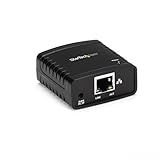
- WIRED NETWORK USB PRINT SERVER: Connect a single USB 2.0 printer to a wired Ethernet LAN (RJ45); 10Base-T, 100Base-TX auto-sensing to ensure a reliable connection, letting you print from any network computer, across the office or over the Internet
- MANUAL NETWORK SETUP REQUIRED: Configuration via web interface (static IP or DHCP) using LPR queue “LP1"; Not plug-and-play, requires intermediate network knowledge for installation; Access our online FAQs for additional helpful tips and instructions
- USB PRINTER COMPATIBILITY: Works with most USB 2.0 printers using standard drivers; Not compatible with USB hubs, multi-function printers with proprietary drivers, or printers requiring full bi-directional communication
- COMPATIBILITY: The USB to Ethernet print server is USB 2.0 compliant and works with macOS and Windows; It also supports LPR network printing and Bonjour Print Services for broad compatibility; Included software is compatible with Windows only
- PRINT FROM ANYWHERE: Print from any computer connected to the Ethernet; This print server doesn’t require a wired connection to a computer, however it must be connected to your networking device (eg. router or switch) with the included RJ45 network cable
What security settings should a Windows FTP server use?
A business-facing transfer server should use encrypted transport, least privilege, isolated directories, strong authentication, restricted exposure, useful logs, and a tested update and backup process.
Crashes, No Sound, or Screen Glitches?
Random freezes, missing sound and display glitches usually trace back to one bad driver. Find and replace yours safely.Free scan · under a minuteWindows Errors? Fix Them Before They Spread
Repair common Windows errors and clear accumulated junk for a smoother, more stable PC - no reinstall needed.Free scan · no reinstall- Disable anonymous access unless anonymous downloads are deliberately designed, non-sensitive, isolated, quota-controlled, and monitored.
- Use FTPS, SFTP, or HTTPS for internet transfers. Do not treat plain FTP as confidential.
- Use strong authentication: passwords with lockout and rate limits, SSH public keys where SFTP is used, and multi-factor authentication where the product and workflow support it.
- Apply least privilege: give each user or group only the folders and operations required.
- Isolate upload-only folders: prevent listing, downloading, renaming, deleting, and traversal into other users’ submissions.
- Restrict network access: use partner IP allowlists, VPNs, a DMZ, or a reverse proxy where practical.
- Patch the server: keep the operating system, transfer product, libraries, and endpoint protection current.
- Log and alert: record successful and failed logins, uploads, downloads, deletes, administrative changes, and suspicious activity; forward important events to monitoring or a SIEM.
- Protect uploaded content: scan files for malware and define size, type, quota, retention, and abuse controls.
- Back up configuration and data: test restoration, certificate renewal, account disablement, and recovery after a server failure.
Cerberus advertises FIPS 140-2 cryptography, Active Directory/LDAP integration, and replication-related controls in its Professional edition material. Those are vendor-described capabilities; they do not establish that every deployment satisfies HIPAA, PCI, or another regulatory framework. Review the edition documentation, configuration, contracts, and organizational controls together.
How should you handle upload-only folders?
An upload-only folder should allow submission without allowing a user to browse or retrieve other submissions.
Configure the product and NTFS permissions together. The user may need create and write permissions while being denied listing, read, delete, rename, and parent-directory traversal. Test with a real low-privilege account: upload a file, attempt to list the folder, attempt to download the file, attempt to rename or delete it, and attempt to reach a parent directory.
Automatic deletion requires additional documentation. Record whether the retention timer starts at upload or download, whether failed downloads count, whether deletion is logged, whether backups retain copies, and whether administrators can recover files. Retention settings can conflict with legal holds, backup policies, and privacy obligations.
Recommended Free Tools
What should you test before putting the server into production?
A deployment is not complete when the service starts; it is complete when authorized and unauthorized behavior has been tested from the networks that real users will use.
- Successful login with an allowed account.
- Rejection and logging of an invalid account.
- Upload to an authorized directory.
- Rejection of upload to a read-only directory.
- Download of an allowed file.
- Rejection of access outside the virtual root.
- Passive transfer from outside the LAN.
- Certificate or SSH host-key validation.
- Resume of an interrupted transfer.
- Large-file transfer and many-small-file transfer.
- Multiple simultaneous connections.
- Logging of successful and failed actions.
- Account disablement and lockout behavior.
- Certificate-expiry handling and renewal.
- Firewall behavior after a server reboot.
- Restore of configuration and data from backup.
Performance depends on disk throughput, antivirus scanning, encryption, network distance, file size, and concurrency. Do not label a product “fastest” without controlled tests that represent the real workload.
Which Windows FTP server should you choose?
| Your situation | Shortlist | Reason |
|---|---|---|
| Windows Server is already deployed and the requirement is controlled FTP/FTPS publishing | IIS FTP | Integrated role-service installation, IIS administration, Windows authentication options, and NTFS permission integration |
| A Windows-centric organization needs SFTP, FTPS, HTTPS, directory integration, and vendor support | Cerberus FTP Server | Broad vendor-advertised protocol coverage and Windows-focused administration |
| Transfers require browser access, automation, partner workflows, and governance | Serv-U MFT or another MFT product | Broader managed-transfer features are more relevant than a minimal FTP listener |
| Basic hosting is required and the organization already uses FileZilla | FileZilla Server or an appropriate Pro edition | Familiar ecosystem, subject to current edition and protocol verification |
| Multi-protocol, cross-platform, or event-driven workflows are central | CrushFTP, CompleteFTP, or Wing FTP Server | These products are candidates for broader feature requirements, but current matrices and support terms must be checked |
| Users mainly need collaboration, links, or browser uploads | SharePoint, OneDrive, object storage, HTTPS portal, or managed service | A traditional FTP server may add unnecessary network and operational complexity |
For a new public-facing deployment, first ask whether SFTP or HTTPS satisfies the requirement better than FTP/FTPS. If a partner specifically requires FTP over TLS, plan the passive-mode network design before selecting the product. If the service will exchange regulated or business-critical files, evaluate support, auditing, retention, backup, monitoring, and recovery as carefully as protocol support.
Frequently Asked Questions
Is FTP secure?
Plain FTP is normally not secure because credentials and file data are sent without transport encryption. Use FTPS, SFTP, or HTTPS for internet transfers, and isolate any unavoidable legacy plain-FTP service behind a documented risk-controlled network boundary.
Quick wins for a faster PC:
Clear out junk files and repair common Windows errorsFree Scan →Scan for outdated or missing drivers - takes under a minuteDriver Scan →Is SFTP the same as FTP?
SFTP is not the same as FTP. SFTP is a separate file-transfer protocol that runs over SSH, while FTPS is FTP protected with TLS; a client or server supporting one does not automatically support the others.
Does Windows include an FTP server?
Windows Server provides FTP Server as an installable service under the Web Server (IIS) role. Microsoft’s IIS documentation describes installing FTP Server and, where required for certain authentication providers, FTP Extensibility; desktop Windows editions and third-party product support should be checked separately.
Can IIS run an SFTP server?
IIS FTP should not be assumed to provide SFTP. IIS is a Windows FTP/FTPS service, so choose a separately supported SFTP server or a product such as a commercial multi-protocol transfer server when the counterparty explicitly requires SFTP.
What ports must a Windows FTP server open?
FTP or explicit FTPS commonly uses TCP 21 for the control connection plus a configured passive data-port range. SFTP commonly uses TCP 22 or another configured SSH port. The exact ports must be opened consistently in Windows Defender Firewall, NAT, perimeter firewalls, and any cloud security groups.
PC Slower Than It Used to Be?
A free scan shows the junk files, broken settings and background clutter dragging Windows down - then fixes them in one click.Free scan · Windows 10 & 11Crashes, No Sound, or Screen Glitches?
Random freezes, missing sound and display glitches usually trace back to one bad driver. Find and replace yours safely.Free scan · under a minuteThe Bottom Line
Bottom line: Choose IIS FTP when integrated Windows FTP/FTPS is enough, Cerberus when a supported Windows-centric server with broad secure-transfer protocols is worth the subscription, and Serv-U or another MFT product when web access, automation, partner workflows, and governance drive the requirement. Verify the exact protocol first, configure passive networking deliberately, and do not expose plain FTP to the public internet.
Quick Recap
Product prices and availability are accurate as of the date/time indicated and are subject to change. Any price and availability information displayed on Amazon at the time of purchase will apply.

