
The Tool Desk
Outbyte Driver Updater FREEFix the driver behind crashes, sound loss and screen glitchesFind Drivers →Outbyte PC Repair FREERepair Windows errors before they cause bigger problemsFix Now →Choose the path that best meets your essential requirements across the product’s full life—not simply the one with the lowest board price. Build when important needs are genuinely distinctive and your team can own design and support; buy when an available platform fits with limited changes; and evaluate a hybrid when a proven module or platform can cover established functions while you customize the parts that differentiate your product.
Start with requirements, not a board shortlist
Before comparing options, define what the embedded system must do and the conditions it must operate in. Record required functionality, performance, interfaces, physical constraints, power and thermal limits, operating environment, safety and security needs, production plans, and how long the product must be supported. Include the documentation, integration, and maintenance your organization will need.

Separate essential requirements from preferences. A commercial platform that misses a hard requirement is not a fit merely because it is inexpensive or available; a custom design is not justified simply because it offers more control than the product needs. Requirements also make it possible to compare a purchased system, a custom design, and a hybrid on equal terms.
Compare the three paths
| Path | When it tends to fit | What your team takes on |
|---|---|---|
| Build | Core requirements are distinctive, available products cannot meet them without undermining the solution, or design control and IP matter strategically. | Hardware and software development, drivers, integration, verification, production readiness, sourcing, updates, and long-term support. |
| Buy | A commercial platform meets most essential requirements as intended, supplier support is suitable, and customization can remain limited. | Selection, integration, verification and validation, licensing and maintenance review, and supplier and lifecycle management. |
| Both: hybrid | An established platform or module covers common functions, while product-specific hardware or software is needed for the application. | The purchased platform’s integration and verification plus the custom work and lifecycle responsibilities for the parts you add. |
Build when differentiation justifies ownership
A custom design can provide tighter control over performance, form factor, interfaces, functionality, and proprietary design. It is most defensible when those advantages answer a real requirement: for example, when commercial products cannot meet a critical operating constraint or when customization would compromise the purchased product.
#1 Best Overall

- ✅【High-Performance ESP32-S3 Processor】Powered by the ESP32-S3 dual-core Xtensa LX7 processor with up to 240MHz clock speed, this development board features 16MB Flash and 8MB PSRAM. It provides powerful performance for IoT devices, embedded systems, AI applications and advanced DIY projects.
- ✅【Pre-Soldered GPIO Headers for Easy Use】The board comes with pre-soldered GPIO headers, eliminating the need for manual soldering. It can be directly connected to breadboards, sensors and expansion modules, making project setup faster and more convenient for makers and developers.
- ✅【WiFi & Bluetooth 5.0 Wireless Connectivity】Built-in 2.4GHz WiFi and Bluetooth 5.0 enable stable wireless communication for smart home, automation and IoT applications. The reserved IPEX antenna connector allows optional external antenna installation for different project requirements.
- ✅【Large Memory & Flexible Development】With 16MB Flash and 8MB PSRAM, this ESP32-S3 board provides more storage and memory resources for complex firmware, graphical interfaces, OTA updates and data-intensive applications.
- ✅【Arduino IDE, ESP-IDF & MicroPython Support】Compatible with Arduino IDE, ESP-IDF and MicroPython development environments. With dual USB-C interfaces and rich expansion options, it is suitable for robotics, sensors, automation and embedded system development.
That control comes with a broad development and sustaining workload. Depending on the product, the work can include digital and analog hardware, software, mechanical design, domain expertise, drivers and board-support work, PCB layout and revisions, manufacturing engineering, and system integration. National Instruments (NI) notes in its vendor guide that custom embedded software can be the largest development expense; that is a caution about the scope of custom work, not a universal cost measurement.
Build only if the organization can staff and sustain that work. Account for the skills and capacity needed not just for the first prototype, but for verification, production, component sourcing, manufacturing tests, security and software updates, and future revisions. A design without a clear sustaining owner can become a liability when parts or support change.
Buy when an existing platform fits with limited changes
A commercial embedded platform can reduce low-level implementation and may help a team reach integration and testing sooner. The trade-off is that its purchase price can exceed the cost of its bare board components, and it may include features the product will not use. Compare the total cost and schedule impact with the actual engineering and validation work the platform avoids—not just with a bill of materials.
Assess the offer against the requirements and the supplier’s evidence. Check functionality, performance, environmental suitability, documentation, test and safety records where relevant, integration needs, licensing, maintenance, upgrade path, and support horizon. Confirm current product-specific availability, certifications, and support commitments with the supplier; they should not be assumed from a general platform category.
Buying does not transfer responsibility for confirming that the system works in its intended application. NASA’s Software Engineering Handbook, SWE-033, says that a project procuring off-the-shelf software must document a pre-procurement plan for verifying and validating it to the confidence level required for an equivalent class of developed software. This is NASA software-assurance guidance, particularly relevant to mission and safety assurance; the broader lesson is to plan verification before procurement rather than treating a supplier’s product as automatically validated for your use.
Evaluate a hybrid as a real option
A hybrid can keep established functions on a purchased platform while reserving custom effort for application-specific needs. One common pattern is a system-on-module or processor/radio module with established software support, paired with a custom carrier or application board. Other approaches include extending an existing platform, using an open-source baseline and implementing missing functions, or co-developing selected components.
Rank #3

- Powerful Processor for Embedded Systems: The Luckfox Lyra Zero W is powered by the Rockchip RK3506B SoC, featuring a 1.2GHz ARM Cortex-A7 processor, delivering smooth performance for running Linux-based applications and making it suitable for embedded and IoT projects.
- High-Quality Display Interface: The board supports MIPI DSI 2-lane, allowing easy connection to high-resolution displays, ideal for applications like digital signage, HMI systems, and embedded interfaces.
- Extensive Connectivity Options: With USB 2.0 OTG, USB Host 2.0, and GPIO pins, the Lyra Zero W allows connectivity to various peripherals, making it versatile for sensors, devices, and other embedded systems.
- Onboard Wireless Capabilities: Equipped with Wi-Fi 6 and Bluetooth 5.2, the board supports seamless wireless communication, perfect for IoT, networking, and remote control applications.
- Cost-Effective Solution for Development: Offering a budget-friendly price, the Lyra Zero W provides a feature-rich platform for developers to prototype and create advanced embedded systems without exceeding their budget.
This can reduce the amount of low-level design without giving up product-specific interfaces or behavior. It does not eliminate integration risk: module, board, software, thermal, power, and performance constraints still have to work together. Prototype the intended configuration and measure system performance and integration before committing to production. A module’s reference design or board-support package can help start application work earlier, but it does not establish suitability or guarantee future availability.
Calculate lifecycle cost, not just unit cost
Compare the alternatives over the period the product is expected to be developed, produced, maintained, and retired. Include both cash costs and the opportunity cost of tying people and schedule to the work. Relevant items include:
What’s actually slowing this PC down?
Pick the symptom - the matching free tool is one click away.
- Engineering labor, tools, training, and specialist availability.
- Prototype iterations, integration, verification, validation, and certification work that applies to the product.
- Purchase price or licensing, including unused platform features and recurring terms.
- Production engineering, manufacturing test, yield, sourcing, and inventory exposure.
- Maintenance, security fixes, upgrades, supplier support, and the work required to adapt to component end-of-life.
- Switching, replacement, and retirement costs if the platform or design can no longer be supported.
Do not assume there is a universal production-volume threshold at which building becomes cheaper. The crossover depends on the application, engineering effort, supplier terms, production plan, and support horizon. For procurement decisions in the UK public sector, government guidance specifically emphasizes full lifecycle cost and organizational capability; it is useful as a decision framework, not a rule for every private-sector project.
Rank #4
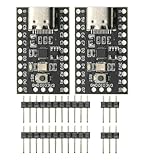
- CH32V003 Development Minimum System Board for Nano RISC-V CH32V003F4U6 Chip TYPE-C USB 22Pin
- on-board 24MHz Crystal oscillator
- Power by TYPE-C USB
Score the decision against the risks that matter
Use a trade study or cost-benefit comparison to make assumptions visible. Score each candidate against the same criteria, weighting the items that are hard requirements or most consequential to the business:
- Fit: Does it meet required functionality, performance, form factor, and environmental conditions?
- Schedule: How long to a validated product, including procurement, customization, integration, and test?
- Capability: Do you have the skills and capacity to implement and sustain it, or are you dependent on a supplier or a few key people?
- Verification, safety, and security: What evidence exists, what remains to be tested in your application, and who owns that work?
- Control and IP: Do you need ownership or control over design, software, or sensitive IP, and what do the supplier’s terms allow?
- Longevity: What are the software and component support plans, sourcing risks, upgrade paths, and end-of-life options?
- Production: Can the option meet the expected volume, manufacturing yield, and any applicable certification needs?
- Lifecycle economics: What are total costs, opportunity costs, and cash-flow demands from development through retirement?
Prefer configuration over modification when configuration meets the requirement. Custom workarounds can complicate upgrades, maintenance, supplier support, and later changes; when customization is necessary, include those consequences in the comparison.
Make the choice—and assign ownership
A useful decision is not simply “build” or “buy.” It identifies which layers to purchase, which requirements warrant customization, and who will own the result over time. Record the selected option, the key assumptions behind it, remaining verification work, supplier dependencies, and the person or team responsible for sustaining the system.
Before committing, revisit the decision if the application requirements, production volume, operating environment, support horizon, or supplier terms change. These factors can alter the trade-offs; none of the three paths is inherently best for every embedded product.
Quick Recap
Product prices and availability are accurate as of the date/time indicated and are subject to change. Any price and availability information displayed on Amazon at the time of purchase will apply.

