
iTechGuides is reader-supported. When you buy through links on our site, we may earn an affiliate commission. As an Amazon Associate I earn from qualifying purchases. Learn more
For most space missions, the best answer is a hybrid architecture. Put latency-sensitive filtering, compression, event detection and safety or autonomy functions on the spacecraft. Send selected products to Earth for storage, fleet coordination, model training and compute-intensive analysis. A predominantly onboard design is justified when links are intermittent, decisions must happen immediately or raw-data volume exceeds downlink capacity. A predominantly ground-cloud design is preferable when the mission has reliable contact windows, needs abundant compute and storage, changes algorithms frequently or depends on global analytics.
The choice is an engineering trade among response time, contact availability, data volume, spacecraft power and mass, radiation and thermal margins, verification effort, cybersecurity and lifetime operations cost. AI capability alone is not a sufficient reason to move a workload into orbit.
What “edge AI” and “cloud processing” mean in a mission
Edge AI runs inference or other machine-learning functions on a spacecraft, payload computer or nearby constellation node. Sensors produce data, an onboard processor evaluates it and the spacecraft can retain, compress, prioritize or act on the result before a ground station receives anything. Examples include detecting a transient event, selecting useful image chips, identifying a collision risk or switching to a safe operating mode.
Free tools Windows power users keep installed
One-click scans. No signup required.
Earth-based cloud processing sends raw or lightly processed data through a downlink to a ground station and then into elastic computing and storage services. Ground software can run larger models, correlate observations from many spacecraft, retrain models, reprocess an archive and distribute results to mission-control or customer systems.
#1 Best Overall
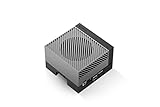
- The NVIDIA Jetson AGX Orin 64GB Developer Kit makes it easy to get started with Jetson Orin. Compact size, lots of connectors, and up to 275 TOPS of AI performance make this developer kit perfect for prototyping advanced AI-powered robots and other autonomous machines.
- The developer kit includes a Jetson AGX Orin 64GB module, and can emulate all the Jetson Orin modules. It supports multiple concurrent AI application pipelines with the NVIDIA Ampere GPU architecture, next-generation deep learning and vision accelerators, high-speed IO and fast memory bandwidth. Now you can develop solutions using your largest and most complex AI models to solve problems such as natural language understanding, 3D perception, and multi-sensor fusion.
- Jetson runs the NVIDIA AI software stack, and use-case specific application frameworks are available, including Isaac for robotics, DeepStream for vision AI, and Riva for conversational AI. You can save significant time with NVIDIA Omniverse Replicator for synthetic data generation (SDG), and by using NVIDIA TAO toolkit to fine-tune pretrained AI models from the NGC catalog.
- Jetson ecosystem partners offer additional AI and system software, developer tools, and custom software development. They can also help with cameras and other sensors, as well as carrier boards and design services for your product.
- With the computing capability of more than 8 Jetson AGX Xavier systems in a developer kit that integrates the latest NVIDIA GPU technology with the world’s most advanced deep learning software stack, you’ll have the flexibility to create tomorrow’s AI solution as well as today’s.
The boundary is not binary. A spacecraft may perform sensor calibration and first-pass detection, a ground station may perform decoding and quality checks, and cloud services may perform final classification. “Onboard” and “cloud” describe where each stage runs, not two mutually exclusive systems.
Why the split matters in space
Latency can change what is possible
An onboard classifier can respond as soon as the sensor captures an observation. It does not wait for a contact window, downlink scheduling, ground processing and a command uplink. That difference matters for collision avoidance, rapid instrument retargeting, radiation events, wildfire or storm alerts and any payload whose useful lifetime is shorter than the next pass.
For planetary missions, the delay is fundamental rather than an operations inconvenience. The European Space Agency’s 2024 AI for Space report identifies time delay, no connectivity and low bandwidth as upstream challenges. It describes possible Mars communication delays of approximately 3 to 22 minutes, depending on planetary geometry. A ground algorithm cannot provide an immediate response across that link; local autonomy is required for decisions that cannot wait.
The Tool Desk
Outbyte Driver Updater FREEFix the driver behind crashes, sound loss and screen glitchesFind Drivers →Outbyte PC Repair FREEClear out junk files and repair common Windows errorsFree Scan →Contact windows and outages interrupt ground-dependent workflows
Low-Earth-orbit spacecraft may have several contacts per day, but the exact schedule depends on ground-station visibility, network capacity, weather for some links and competing spacecraft. Deep-space missions can experience much longer gaps. During an outage, an onboard system can continue collecting, triaging and protecting the vehicle. A cloud-only design must either buffer everything until contact returns or accept that time-critical decisions will be missed.
Downlink capacity is finite
NASA’s 2026 SmallSat material describes direct-to-Earth capability of 3 Mbps or more in the cited systems, while the same page notes limitations of 9.6 kbps or less for certain current low-Earth-orbit relay hardware. Those figures are examples of the range, not a universal mission specification. A sensor can produce data far faster than a particular radio can transmit it, especially when it captures high-resolution imagery, hyperspectral cubes, radar data or continuous video.
Onboard selection and compression can turn a large stream into a smaller set of event clips, thumbnails, metadata or confidence-ranked products. Cloud processing preserves more raw information when bandwidth and storage permit, which is valuable for discovering signals that were not anticipated when an onboard model was designed.
Onboard edge AI versus Earth cloud: a practical comparison
| Decision axis | Onboard edge AI | Earth-based cloud processing |
|---|---|---|
| Response time | Can classify or act immediately after capture and avoids waiting for a ground pass. | Includes contact, downlink and ground-processing delay; appropriate when seconds or minutes are acceptable. |
| Connectivity dependence | Continues through intermittent or unavailable links. | Requires a usable downlink path and access to ground systems. |
| Data volume | Filters, compresses or selects data before transmission. | Can retain raw or near-raw data when bandwidth and storage allow. |
| Compute and storage scale | Bounded by spacecraft power, mass, radiation tolerance and thermal design. | Scales across larger pools of processors and storage and is easier to expand. |
| Autonomy | Supports local event response, fault handling and cooperation among spacecraft. | Excels at fleet-level planning, model training and cross-mission analytics. |
| Updates and maintenance | Post-launch model changes are difficult and require strict validation and governance. | Algorithms can be patched, rerun and compared quickly, but operations still depend on communications and ground cybersecurity. |
What belongs on the spacecraft
Filtering, compression and data triage
Place deterministic, well-tested reduction functions near the sensor when their main purpose is to lower downlink demand. A model might identify cloud-free image regions, crop an object of interest, remove duplicate frames or assign a priority score. The spacecraft can preserve a small amount of context around each event and discard low-value data only after a policy check.
Time-critical detection and response
Event detection belongs onboard when a response loses value during a communication delay. The output may be a command to retarget an instrument, enter a safe state, increase sampling, record a transient or notify another spacecraft over an inter-satellite link. Keep the action set bounded and fail-safe; a neural-network score should not bypass independent safety interlocks.
Rank #2

- Stability: Can be used stably for a long time
- Design: Robust design, easy to maintain
- Easy to install: simple operation, easy to install
- Application Scenario:Widely used in many industrial environments
- Correct use:Correct use can extend the service life of the product
Local autonomy and fault management
Onboard software can recognize sensor anomalies, estimate spacecraft state, schedule observations around power or thermal limits and continue a mission plan during a ground outage. These functions should degrade gracefully: if the model is unavailable, the spacecraft must fall back to a validated rule set or safe mode.
What belongs in the Earth cloud
Model training and large-scale experimentation
Training normally requires more memory, compute and historical data than a flight processor can provide. Ground systems can run many candidate models, compare versions against a fixed validation set, inspect false positives and retrain when new conditions appear. Keep the training pipeline separate from the flight inference package so an experimental model cannot be uploaded accidentally.
Fleet correlation and long-term analytics
Cloud services can combine observations from a constellation, multiple instruments and external datasets. They are the natural place for global mosaics, cross-track calibration, change detection over months or years and customer-facing dashboards. NASA’s ground-systems guidance describes streaming satellite data from AWS Ground Station to Amazon EC2 for real-time processing or directly to Amazon S3, with integration to other services through a low-latency, high-bandwidth network. NASA’s 2023 state-of-the-art report likewise presents ground-station-as-a-service as a scalable way to downlink and process data in cloud environments.
Do these 3 things before closing this tab:
1Clear out junk files and repair common Windows errors2Fix the driver behind crashes, sound loss and screen glitches3Repair Windows errors before they cause bigger problemsArchival storage and reprocessing
Retaining raw or near-raw data lets scientists apply improved algorithms later. This reversibility is a major advantage over an onboard filter that permanently discards observations. Define retention tiers, checksums, provenance and replay procedures so a future model can reproduce a published result from the original packet.
A reference hybrid data path
- Capture and calibrate: the payload records data and applies mandatory instrument calibration or packetization.
- Run a lightweight onboard model: detect events, estimate confidence and attach time, location, instrument and model-version metadata.
- Apply policy gates: preserve safety-critical records, retain a configurable context window and rank products for downlink.
- Compress and queue: use a lossless or approved lossy method, track queue age and keep a recovery copy when storage permits.
- Downlink through the available ground path: schedule high-priority products first and resume interrupted transfers with packet-level integrity checks.
- Process in the ground cloud: decode, validate, enrich and correlate data; run larger models and generate user products.
- Close the loop: send approved parameter or model updates through authenticated, rollback-capable command procedures.
This split keeps immediate decisions local while preserving Earth’s advantages in scale, storage and coordination.
How to choose the split, step by step
- Set a response-time budget for every function. Write the maximum tolerable delay, not a vague goal such as “near real time.” Separate hard deadlines from functions that can wait for the next pass.
- Measure the data budget. Record sensor output rate, observation duration, packet overhead, expected compression or selection ratio and the contact windows actually available to the spacecraft. Include worst-case scenes, not only average scenes.
- Mark communication-independent requirements. Identify functions that must operate during a gap, delayed command cycle or planetary conjunction. Those functions need onboard capability or a conservative autonomous fallback.
- Allocate only the necessary local workload. Put response-critical inference and data reduction onboard. Avoid moving training, fleet-wide correlation or archival workflows into flight hardware merely because an accelerator can run them.
- Reserve heavy analytics for the ground when the link permits. Keep computationally intensive, frequently changing or exploratory workloads in cloud services unless latency or connectivity makes that impossible.
- Evaluate spacecraft constraints before selecting hardware. Check power draw in every operating mode, mass and volume, thermal rejection, radiation tolerance, fault containment, boot behavior, watchdog recovery and interfaces to the payload computer.
- Approve the lifecycle and security plan. Define model validation, signing, upload authorization, rollback, telemetry, incident response and end-of-life procedures before committing the design.
- Revisit the allocation at major design reviews. Optical communications, inter-satellite links and new accelerators can change the bandwidth-versus-compute balance during a multiyear program.
Spacecraft constraints that make edge hardware difficult
SWaP is a system budget, not a chip specification
Spacecraft compute competes with radios, propulsion, instruments and thermal-control hardware for power, mass and volume. An accelerator’s peak performance says little about whether the spacecraft can sustain it during a hot orbit, battery-limited eclipse or simultaneous instrument operation. Include memory bandwidth, storage endurance, startup current and cooling in the budget.
Radiation and qualification
Commercial modules are not automatically radiation-qualified or mission-ready. Single-event upsets, latch-up, total ionizing dose and displacement damage can corrupt memory or stop a processor. Mitigations may include error-correcting memory, watchdogs, redundancy, checkpointing, scrubbing and a defined safe-state response. Qualification evidence must cover the actual part, board design, operating environment and mission duration.
What’s actually slowing this PC down?
Pick the symptom - the matching free tool is one click away.
ESA’s ASCEND project gives a hardware reference: its Sterna DPU targets SWaP-constrained platforms and is built around NVIDIA Jetson Orin NX, while Morus targets larger small satellites with Jetson AGX Orin and Jetson Thor platforms. These are development and product-family references; they should not be treated as proof that an off-the-shelf module is flight-qualified for a particular orbit.
Rank #3

- Brilliant AI Performance for production: on-device processing with up to 70 TOPS AI performance with low power and low latency, Due to the high thermal demands of Super mode, only the J30 Series supports upgrading to Super mode via the JetPack 6.2 update.
- Hand-size edge AI device: compact size at 130mm x120mm x 58.5mm, includes NVIDIA Jetson Orin NX production module, a heatsink, enclosure, and a power adapter. Support desktop, wall mount, fit in anywhere
- Expandable with rich I/Os: 4x USB3.2, HDMI 2.1, 2xCSI, 1xRJ45 for GbE, M.2 Key E, M.2 Key M, CAN and GPIO
- Accelerate solution to market: pre-installed JetPack with NVIDIA JetPack 5.1.1 on the included 128GB NVMe SSD, Linux OS BSP, 128GB SSD, support Jetson software and leading AI frameworks and software platforms
- Comprehensive certificates: FCC, CE, RoHS, UKCA
Thermal and fault behavior
AI workloads can create sustained heat rather than a brief processing spike. Model scheduling should account for eclipse, sunlight, instrument duty cycle and thermal limits. Test brownouts, corrupted model files, memory faults, sensor dropouts and processor resets. A useful design can continue collecting or enter a known safe state when inference is unavailable.
Model operations, verification and cybersecurity
Flight inference is software with mission consequences. Freeze the model artifact, preprocessing steps, quantization settings and confidence thresholds as a versioned package. Test representative lighting, seasonal, geographic and sensor conditions, including adversarial or ambiguous scenes. Measure false positives and false negatives for the action that follows, not just aggregate accuracy.
Use signed images and authenticated commands, separate development credentials from flight credentials and require authorization for threshold or model changes. Maintain a known-good image for rollback and telemetry that reports model version, execution health, queue depth and uncertainty. Ground cloud systems need their own controls: identity management, encryption, network segmentation, audit logs and procedures for operating when a ground service is unavailable.
Verification should demonstrate both nominal performance and bounded failure behavior. A model may recommend an observation, but independent rules should enforce power, pointing, collision and thermal constraints. For safety-critical functions, consider diverse implementations or a non-ML monitor that can veto unsafe outputs.
Independent reader supportYour contribution helps us test, update, and keep practical guides available for everyone.Mission patterns and suitable architectures
Earth-imaging constellation with routine contact
A constellation that images broad areas and can wait for scheduled passes often benefits from onboard cloud screening, compression and scene prioritization, followed by cloud-based orthorectification, mosaicking and change analysis. Keep enough raw context to support quality audits and future model improvements.
Disaster or transient-event monitoring
When the value of an observation decays within minutes, detect and rank events onboard and downlink alerts or compact products first. The cloud can perform confirmation, cross-satellite correlation and detailed analysis after the urgent notification has left the spacecraft.
Deep-space or planetary autonomy
Long delays and no-connectivity periods favor substantial onboard autonomy for navigation, fault response, instrument scheduling and scientifically meaningful data selection. Ground teams should retain authority over planning and model updates, but the vehicle cannot assume a prompt answer from Earth.
Resource-constrained technology demonstrator
A small mission may choose simple onboard rules and compression rather than a large neural model. If an accelerator is added, reserve power and thermal margin, define what happens when it is disabled and avoid making the mission dependent on an unproven module.
Rank #4

- 【Core Parameters】★AI Perf: 117/157 TOPS★GPU: 1024-core N-VI-DIA Ampere architecture GPU with 32 Tensor Cores★CPU: 8-core Arm Cortex-A78AE v8.2 64-bit CPU 2MB L2 + 4MB L3★Memory: 16GB 128-bit LPDDR5 | 102.4GB/s★Storage: Supports external NVMe 【Note: This kit does not include a SSD and pre-installed system. User need to provide your own NVMe M.2 SSD of at least 256GB and flash the operating system onto it yourself. 】
- 【Empowered by Large Al Model, Enhanced Human-Computer Interaction】Jetson Orin Super leverages three AI models and incorporates an AI voice interaction module. This multimodal visual system matches the scene being described, enabling environmental awareness and AI visual gameplay. Combined with a large-scale voice module and camera, it enables speech-to-text, semantic analysis, natural conversation, and real-time video analysis, enabling advanced embodied AI applications.
- 【Revolutionize the Industry】Jetson Orin NX modules deliver unmatched performance and efficiency for small, low-power robotics and autonomous machines, making them ideal for drones, handheld devices, and more. The module can be easily used in advanced applications in manufacturing, logistics, retail, agriculture, medical and life sciences, and comes in a highly compact and energy-efficient package.
- 【Revolutionizing AI with Unmatched Performance】The Jetson Orin NX system module adopts the Ampere architecture GPU, a new generation of deep learning and vision accelerators, high-speed I/O, and fast memory bandwidth to support multiple AI application processes. Granular structured sparsity to improve the operating throughput of Tensor Core, and can use larger and more complex AI model development solutions in natural language understanding, 3D perception and multi-sensor fusion.
- 【Tutorial materials provided】The JETSON system based on Ubuntu 22.04 provides a complete desktop Linux environment with accelerated graphics, supporting NVIDI-ACUDA 12.6, TensorRT 10.7.0, cuDNN 9.6.0, OpenCV 4.10.0, etc. The performance on AI LLM, VLM and visual Transformer is significantly improved compared with the previous generation.
Costs and lifecycle trade-offs
There is no universal percentage saving in energy, latency or operating cost from moving AI onboard. Results depend on orbit, contact schedule, payload rate, model complexity, spacecraft platform and communications design. Onboard processing can reduce transmission and ground-storage demand, but it adds hardware, integration, qualification and verification expense. Cloud processing can reduce flight complexity and make algorithms easier to change, while recurring downlink, storage, compute and ground-network costs may grow with data volume.
Compare architectures with a mission-specific total-cost model that includes development labor, launch mass and power, ground-station passes, cloud processing, storage retention, cybersecurity, anomaly response, software updates and the cost of lost or irreversibly discarded data. Use worst-case contact and data scenarios rather than an average pass.
Where the technology is heading
Higher-rate optical links, inter-satellite networks and more capable radiation-tolerant accelerators will make the boundary more flexible. A future constellation may route selected products to a neighboring spacecraft, perform distributed inference and downlink only a final result. ESA’s work on space-based data centres describes this direction: instead of sending all raw data to Earth, systems could process data in space and transmit final results to reduce transport delay.
ESA also characterizes onboard AI as a complement to the current ground system, not a replacement. Its Φ-lab, Thales Alenia Space and Microsoft initiative illustrates interest in cognitive cloud computing and onboard machine learning, but it does not establish a retail product or a universal architecture. The practical lesson is to design an interface between flight and ground workloads so improvements in either domain can be adopted without redesigning the entire mission.
Common design mistakes and fixes
- Mistake: optimizing for model accuracy alone. Fix: score the complete mission outcome, including latency, downlink reduction, false-action cost and recovery behavior.
- Mistake: assuming average bandwidth. Fix: budget for the lowest credible contact availability and highest credible sensor output.
- Mistake: treating a developer board as flight hardware. Fix: demand radiation, thermal, vibration, reliability and fault-injection evidence for the actual configuration.
- Mistake: discarding all data below a confidence threshold. Fix: retain samples, context and uncertainty metadata so ground analysts can audit and retrain.
- Mistake: uploading models like ordinary application updates. Fix: use signed artifacts, staged rollout, health checks and an immediate rollback path.
- Mistake: making the spacecraft wait for cloud confirmation. Fix: define an autonomous fallback for every operation that can occur during a communication gap.
- Mistake: overlooking ground cybersecurity. Fix: protect cloud identities, command paths, data stores and service dependencies as part of the flight system.
Decision checklist
- What is the maximum acceptable response time for each function?
- How many bytes does the sensor generate in nominal and worst-case operation?
- What contact windows, rates and outages are credible for this orbit and ground network?
- Which decisions must continue with no link?
- What data must remain recoverable for science, safety or regulatory reasons?
- Can the spacecraft support the processor’s power, thermal and radiation requirements?
- How will models be validated, signed, uploaded, monitored and rolled back?
- What cloud services are required for decoding, storage, training and fleet coordination?
- What happens if the model, accelerator, radio or cloud service fails?
- When will the architecture be reassessed as links and processors improve?
Frequently Asked Questions
Is onboard AI always better because it avoids latency?
No. It is better only for functions whose deadlines, connectivity requirements or data-reduction benefits justify the added spacecraft power, thermal, qualification and update burden. Ground cloud remains preferable for training, archival storage and large-scale analytics when the link is adequate.
Can a commercial AI module be installed directly on a satellite?
Not without mission-specific qualification. Commercial development modules such as the Jetson families referenced by ESA ASCEND may be useful for prototyping, but radiation, thermal, reliability, vibration, fault recovery and integration evidence must be established for the flight configuration.
What should happen when the spacecraft loses contact?
Time-critical detection, safety monitoring and essential autonomy should continue onboard, with bounded actions and a validated fallback. Nonurgent products can be queued for later downlink, while the ground system reconciles state after communications resume.
Crashes, No Sound, or Screen Glitches?
Random freezes, missing sound and display glitches usually trace back to one bad driver. Find and replace yours safely.Free scan · under a minutePC Slower Than It Used to Be?
A free scan shows the junk files, broken settings and background clutter dragging Windows down - then fixes them in one click.Free scan · Windows 10 & 11How do I compare a hybrid design financially?
Build a mission-specific lifecycle model covering flight hardware and qualification, power and thermal impacts, ground-station access, downlink, cloud compute and storage, software updates, cybersecurity and the cost of discarded or unrecoverable data. Published sources do not support one universal savings percentage.
Quick Recap
Product prices and availability are accurate as of the date/time indicated and are subject to change. Any price and availability information displayed on Amazon at the time of purchase will apply.

