
iTechGuides is reader-supported. When you buy through links on our site, we may earn an affiliate commission. As an Amazon Associate I earn from qualifying purchases. Learn more
Choose edge AI when a decision must happen near the data source, remain available through network interruptions, or limit how much raw data leaves a device. Choose cloud AI when the work needs large models, elastic computing, centralized data, or broad analytics. Many businesses need both: run time-critical inference locally, then use cloud services for training, monitoring, analytics, and updates.
The right choice depends on the workload—not on a blanket claim that one architecture is faster, cheaper, or safer. Set the business requirements first, then compare the full operating costs and risks of each design.
What is the difference between edge AI and cloud AI?
The difference is where a model processes data. Edge AI runs on or near the device that generates the data; cloud AI sends data over a network to centralized infrastructure for inference, storage, analytics, or training. A hybrid design divides those jobs between the two.
Recommended Free Tools
For example, a camera, industrial gateway, smartphone, vehicle, or wearable can run an edge model. A cloud service can instead process incoming data centrally, where it can draw on elastic compute and storage. As AWS puts it, “The central difference between the two is where data processing occurs.” That location affects response time, connectivity needs, data movement, hardware requirements, and operations.
#1 Best Overall
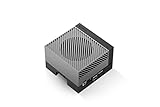
- The NVIDIA Jetson AGX Orin 64GB Developer Kit makes it easy to get started with Jetson Orin. Compact size, lots of connectors, and up to 275 TOPS of AI performance make this developer kit perfect for prototyping advanced AI-powered robots and other autonomous machines.
- The developer kit includes a Jetson AGX Orin 64GB module, and can emulate all the Jetson Orin modules. It supports multiple concurrent AI application pipelines with the NVIDIA Ampere GPU architecture, next-generation deep learning and vision accelerators, high-speed IO and fast memory bandwidth. Now you can develop solutions using your largest and most complex AI models to solve problems such as natural language understanding, 3D perception, and multi-sensor fusion.
- Jetson runs the NVIDIA AI software stack, and use-case specific application frameworks are available, including Isaac for robotics, DeepStream for vision AI, and Riva for conversational AI. You can save significant time with NVIDIA Omniverse Replicator for synthetic data generation (SDG), and by using NVIDIA TAO toolkit to fine-tune pretrained AI models from the NGC catalog.
- Jetson ecosystem partners offer additional AI and system software, developer tools, and custom software development. They can also help with cameras and other sensors, as well as carrier boards and design services for your product.
- With the computing capability of more than 8 Jetson AGX Xavier systems in a developer kit that integrates the latest NVIDIA GPU technology with the world’s most advanced deep learning software stack, you’ll have the flexibility to create tomorrow’s AI solution as well as today’s.
Edge AI
In an edge design, inference happens on the source device or a nearby system. The device may send a result, event, or summary elsewhere, rather than transmitting every raw input. Because inference does not require a remote round trip, edge processing can support immediate decisions and continue during intermittent or lost connectivity.
The trade-off is that local hardware has finite CPU or GPU capacity, memory, power, and thermal headroom. Those limits shape which models and workloads can run there. Edge deployment also means managing a fleet of devices over time, not just deploying a model once.
Cloud AI
In a cloud design, data travels over a network to centralized infrastructure. That adds network travel time and makes normal operation dependent on a path to the service. In return, centralized infrastructure can provide elastic CPUs, GPUs, and storage for demanding models, large datasets, training, and analysis.
Do these 3 things before closing this tab:
1Fix the driver behind crashes, sound loss and screen glitches2Clear out junk files and repair common Windows errors3Scan for outdated or missing drivers - takes under a minuteA cloud service can simplify centralized deployment and scaling, but it does not remove the need for governance. Teams still need to manage usage, quotas, provider dependence, service reliability, data handling, and recurring charges.
Hybrid AI
Hybrid AI keeps some inference local while using cloud infrastructure for other work. The Canadian Centre for Cyber Security notes that “Edge AI (artificial intelligence) is often hybrid.” In a common pattern, a device handles a quick first-pass decision and sends selected events or summarized features for cloud analysis, model evaluation, or updates.
Hybrid is not a compromise that automatically solves every issue. It creates two parts of a system to secure, operate, and connect. It is useful when the workload has conflicting requirements—for instance, a local action must be timely, while wider analysis benefits from centralized data and compute.
How do edge AI and cloud AI compare for a business?
Neither approach wins across every dimension. Edge shifts compute and operational responsibility toward local hardware; cloud shifts it toward centralized services and network-dependent access.
Rank #2

- Stability: Can be used stably for a long time
- Design: Robust design, easy to maintain
- Easy to install: simple operation, easy to install
- Application Scenario:Widely used in many industrial environments
- Correct use:Correct use can extend the service life of the product
| Decision area | Edge AI | Cloud AI |
|---|---|---|
| Response time | Avoids a remote round trip, but device compute can still be a bottleneck. | Network travel adds delay; centralized infrastructure can run more demanding models. |
| Connectivity | Can operate through intermittent or lost connectivity. | Normal operation depends on a network path to the service. |
| Data movement | Can keep raw inputs local or transmit summaries, features, metadata, or events. | Inputs cross networks and provider systems; high-volume or raw-data flows can increase network use and transfer costs. |
| Compute and model size | Bounded by device CPU/GPU, memory, power, and thermal limits. | Elastic CPUs/GPUs and storage support large models, datasets, and training. |
| Scaling and operations | Requires hardware procurement, provisioning, patching, monitoring, replacement, and fleet lifecycle management. | Centralized deployment and scaling are simpler, but usage, quotas, provider dependence, and service reliability need governance. |
| Cost profile | May reduce bandwidth and cloud inference spending, while adding device, energy, maintenance, and lifecycle costs. | Avoids much edge hardware, while creating recurring compute, storage, network, and observability charges. |
| Privacy considerations | Local processing can reduce exposure, but does not by itself guarantee privacy or device security. | Requires review of provider controls, access, encryption, retention, residency, and contract terms. |
The table describes trade-offs, not guaranteed outcomes. Actual latency, accuracy, bandwidth, energy use, and total cost depend on the workload and implementation. There is no universal edge-versus-cloud percentage for savings or speed that can stand in for a business-specific assessment.
Which is better for my business, edge or cloud AI?
Start with the consequences of delay or disconnection, then consider data constraints and workload size. If an action must happen immediately or remain possible during an outage, put the minimum necessary inference near the data source. If the work depends on large models, centralized information, or elastic compute, cloud is likely the stronger fit.
Use this sequence to make the decision concrete:
- Set the latency and availability requirement. Define how quickly the system must respond and what happens if the network or cloud service cannot be reached. If an immediate decision or continued operation through an outage is essential, identify the smallest local inference task that can meet that requirement.
- Classify data and map its route. Identify personal, sensitive, regulated, or residency-constrained data, and trace what leaves each device. Local inference may reduce raw-data exposure, but review device security and any cloud services or transfers that remain enabled.
- Size the model and workload. Assess what can run within the available device CPU/GPU, memory, power, and thermal limits. Compact models or first-pass detection may fit locally; training, large language models, deep analytics, and batch work are better candidates for cloud compute and storage.
- Estimate total cost of ownership. Include device hardware, energy, connectivity, cloud inference, storage, data egress, patching, monitoring, replacement, and staff time. Compare costs over the operating life of the system rather than treating either the device purchase or cloud bill as the whole cost.
- Design operations and failure handling. Decide how devices are identified and secured, who can update models, how to roll back a bad release, how to monitor drift, and when patches can be applied. Specify human override and what the system does when a device, network, or cloud service is unavailable.
- Use a hybrid pattern if requirements conflict. Keep safety-, latency-, or privacy-sensitive decisions local while sending summarized features or lower-priority requests to the cloud. Make the boundary explicit: what data moves, what decision stays local, and which service owns each lifecycle task.
When edge is the better fit
- A machine, vehicle, or other system must take an action without waiting for a network round trip.
- Operation should continue when connectivity is intermittent or lost.
- Sending every raw input would be undesirable, and the local device can run the required model.
- The workload is a compact model, first-pass detection, or another task that fits the available hardware and power envelope.
When cloud is the better fit
- The workload needs elastic compute, substantial storage, or a large model that local hardware cannot support.
- Training, batch analysis, or cross-source analytics benefits from centralized datasets and infrastructure.
- Frequent model changes and centralized deployment suit the operating model better than managing a distributed device fleet.
- Network dependence is acceptable for the decisions involved, and data-handling, residency, provider, and cost requirements can be met.
Microsoft’s AI workload guidance highlights latency, throughput limits, cost transparency, model drift, compliance, explainability, privacy, and data residency as nonfunctional requirements to consider. Google Cloud organizes AI/ML architecture concerns around operational excellence, security, reliability, cost optimization, and performance optimization. These concerns are useful regardless of where inference runs: architecture selection does not replace governance.
Is edge AI cheaper than cloud AI?
Not necessarily. Edge can lower bandwidth use and cloud inference spending, but it introduces costs for local hardware, energy, maintenance, monitoring, and device replacement. Cloud avoids much edge hardware, but creates recurring charges for compute, storage, network transfer, and observability.
Compare total cost of ownership for the same workload and service requirements. Include one-time hardware procurement as well as the recurring costs of energy, connectivity, cloud usage, storage, egress, patching, monitoring, replacement, and staff time. The cost balance can change with model size, input volume, device count, and how much processing happens locally; the available evidence does not establish a universal savings figure.
For a hybrid system, count both sides rather than assuming that local inference makes cloud use disappear. A device may still send events or summaries, receive model updates, or rely on cloud-based analytics. Estimate those flows alongside edge fleet costs to understand the actual operating model.
Does edge AI work without internet?
Edge inference can continue during intermittent or lost connectivity if the model and the needed inputs are available on the local device. That does not mean every feature of the overall system will work offline: cloud analytics, centralized services, and other network-dependent functions may be unavailable until connectivity returns.
Rank #3

- Brilliant AI Performance for production: on-device processing with up to 70 TOPS AI performance with low power and low latency, Due to the high thermal demands of Super mode, only the J30 Series supports upgrading to Super mode via the JetPack 6.2 update.
- Hand-size edge AI device: compact size at 130mm x120mm x 58.5mm, includes NVIDIA Jetson Orin NX production module, a heatsink, enclosure, and a power adapter. Support desktop, wall mount, fit in anywhere
- Expandable with rich I/Os: 4x USB3.2, HDMI 2.1, 2xCSI, 1xRJ45 for GbE, M.2 Key E, M.2 Key M, CAN and GPIO
- Accelerate solution to market: pre-installed JetPack with NVIDIA JetPack 5.1.1 on the included 128GB NVMe SSD, Linux OS BSP, 128GB SSD, support Jetson software and leading AI frameworks and software platforms
- Comprehensive certificates: FCC, CE, RoHS, UKCA
Define offline behavior before deployment. Decide which decisions the device must still make, which information can wait to be sent, and what should happen if the local model or hardware is unavailable. Test that behavior under the outages that matter to the business, rather than treating “runs on the edge” as proof that the whole workflow is independent of a network.
What’s actually slowing this PC down?
Pick the symptom - the matching free tool is one click away.
Is edge AI more private or secure?
Local processing can reduce how much raw data is exposed beyond the device, but it does not guarantee privacy or security. Devices may have cloud services enabled, and local models can be extracted or tampered with. Edge deployments also make device identity, patching, model integrity, monitoring, safety, and human control part of the organization’s responsibility.
For cloud designs, assess the provider’s controls and the full data path, including access, encryption, retention, residency, quotas, outages, and contract terms. For either design, map which data is collected, processed, retained, and transmitted; confirm that operational settings match the intended design. Healthcare and financial-services workloads may warrant local or regional processing where sensitive-data exposure or residency matters, alongside explicit governance and audit controls.
The Canadian Centre for Cyber Security’s guidance emphasizes that edge AI requires attention to device, model, identity, patching, monitoring, safety, and human-control measures. Privacy and security therefore depend on implementation and governance, not only on whether inference happens locally or in a provider’s infrastructure.
Which architecture fits common business use cases?
Choose placement based on the decision being made, rather than assigning an entire industry to one architecture. In many settings, local response and centralized analysis serve different purposes.
The Tool Desk
Outbyte Driver Updater FREEScan for outdated or missing drivers - takes under a minuteDriver Scan →Outbyte PC Repair FREEClear out junk files and repair common Windows errorsFree Scan →| Business setting | Edge role | Cloud role |
|---|---|---|
| Manufacturing and robotics | Machine-vision alarms and control loops. | Fleet analytics, retraining, and cross-site reporting. |
| Vehicles, drones, and remote equipment | Navigation and safety decisions that cannot wait for a round trip. | Mapping, historical analysis, and model updates. |
| Healthcare and financial services | Local or regional processing where residency and sensitive-data exposure matter. | Use only with explicit governance and audit controls for the relevant data and service. |
| Customer service and enterprise analytics | Use where a specific task needs local response or handling. | Often better suited to centralized data, large models, elastic capacity, and frequent updates. |
| Retail and smart buildings | Immediate camera or sensor events. | Aggregation, forecasting, and management dashboards. |
These are patterns, not mandates. For example, in a retail system an immediate event response may be local while later aggregation supports broader management. In manufacturing, machine-level alarms and control loops can be distinct from fleet-wide analysis. Keep the decision boundary tied to latency, connectivity, data, and model requirements for the actual workflow.
Independent reader supportYour contribution helps us test, update, and keep practical guides available for everyone.What should a business plan before deploying edge or hybrid AI?
Distributed inference changes the operational work: model and device lifecycle decisions must be made alongside the initial architecture. A cloud-based component does not remove those needs if local devices still make decisions.
Rank #4

- 【Core Parameters】★AI Perf: 117/157 TOPS★GPU: 1024-core N-VI-DIA Ampere architecture GPU with 32 Tensor Cores★CPU: 8-core Arm Cortex-A78AE v8.2 64-bit CPU 2MB L2 + 4MB L3★Memory: 16GB 128-bit LPDDR5 | 102.4GB/s★Storage: Supports external NVMe 【Note: This kit does not include a SSD and pre-installed system. User need to provide your own NVMe M.2 SSD of at least 256GB and flash the operating system onto it yourself. 】
- 【Empowered by Large Al Model, Enhanced Human-Computer Interaction】Jetson Orin Super leverages three AI models and incorporates an AI voice interaction module. This multimodal visual system matches the scene being described, enabling environmental awareness and AI visual gameplay. Combined with a large-scale voice module and camera, it enables speech-to-text, semantic analysis, natural conversation, and real-time video analysis, enabling advanced embodied AI applications.
- 【Revolutionize the Industry】Jetson Orin NX modules deliver unmatched performance and efficiency for small, low-power robotics and autonomous machines, making them ideal for drones, handheld devices, and more. The module can be easily used in advanced applications in manufacturing, logistics, retail, agriculture, medical and life sciences, and comes in a highly compact and energy-efficient package.
- 【Revolutionizing AI with Unmatched Performance】The Jetson Orin NX system module adopts the Ampere architecture GPU, a new generation of deep learning and vision accelerators, high-speed I/O, and fast memory bandwidth to support multiple AI application processes. Granular structured sparsity to improve the operating throughput of Tensor Core, and can use larger and more complex AI model development solutions in natural language understanding, 3D perception and multi-sensor fusion.
- 【Tutorial materials provided】The JETSON system based on Ubuntu 22.04 provides a complete desktop Linux environment with accelerated graphics, supporting NVIDI-ACUDA 12.6, TensorRT 10.7.0, cuDNN 9.6.0, OpenCV 4.10.0, etc. The performance on AI LLM, VLM and visual Transformer is significantly improved compared with the previous generation.
Model lifecycle
Establish how model versions are evaluated, released, and rolled back. Monitor for drift and set a process for addressing a model that no longer performs as intended. The model update path should account for whether devices can be reached reliably and how a faulty version is stopped from continuing to affect decisions.
Device and identity controls
Define device identity, secure boot, patch windows, monitoring, and replacement responsibilities. Protect both the device and the model it carries: a local model can be extracted or tampered with, and an unmanaged device can become a weak point in the wider system.
Free tools Windows power users keep installed
One-click scans. No signup required.
Human oversight and degraded operation
Decide when a person can override an AI-driven action and what the fallback is when the device, network, or cloud service is unavailable. The answer may differ by workflow: a local safety-related decision cannot be treated the same way as a lower-priority analytics request. Document which decisions may be deferred and which require an immediate alternate path.
Measurement before expansion
Run a workload-specific pilot before committing to a broad deployment. Measure response time, accuracy, bandwidth, energy use, and total cost under the conditions the business expects to operate in. Compare the edge, cloud, or hybrid implementation against the actual requirement; avoid relying on generalized savings or latency claims, since no primary owner-published benchmark comparing these outcomes across businesses is established here.
Frequently Asked Questions
Does choosing edge AI mean a system has to stay disconnected?
No. Edge describes where inference runs, not whether a device is prohibited from using a network. A connected edge device can still exchange selected information or receive updates; the design should make those flows intentional.
Who should own model updates for an edge deployment?
Assign a named operational owner for evaluation, release, monitoring, and rollback, with clear coordination between the team responsible for the model and the team responsible for the device fleet. Without that ownership, a technically successful local model can become difficult to maintain safely.
Can edge AI make decisions if the cloud service is unavailable?
It can for tasks whose model and required inputs are available locally. Cloud-dependent features will not necessarily remain available, so define which decisions must continue and what fallback applies to the rest.
Quick Recap
Product prices and availability are accurate as of the date/time indicated and are subject to change. Any price and availability information displayed on Amazon at the time of purchase will apply.

