
No—not automatically. A stereo system can sound balanced and satisfying without a subwoofer if its main speakers provide enough clean bass for your music, listening level, and room. Add a subwoofer when you want deeper bass or more bass output than the speakers can deliver, or when your system can redirect low frequencies away from small speakers.
Decide by listening for a specific shortfall. A subwoofer adds wiring and setup choices, and poor integration can make bass boomy or conspicuous rather than better.
When you may not need a subwoofer
If your speakers sound balanced at your usual volume and you do not miss deep bass, there is no requirement to add a subwoofer. A sub does not automatically make stereo playback more accurate; its benefit depends on the speakers, room, setup, and what you want to hear.
Published speaker specifications can help set expectations, but they do not guarantee the same bass response in your living room. Placement, room dimensions, furnishings, and the listening position all affect what you hear. REL puts the point memorably in an article quoting John Hunter: “Your living room, your listening studio is not their anechoic chamber.” REL’s setup guidance discusses how real-room conditions differ from controlled measurements.
Free tools Windows power users keep installed
One-click scans. No signup required.
#1 Best Overall

- 10" front-firing spun-copper IMG woofer
- All-digital amplifier with 300 watts peak power
- Volume low pass crossover and phase control
- Line level LFE RCA inputs for maximum receiver compatibility
- Dimensions 14 5" x 12 5" x 16 4"
When a subwoofer can help
- You want deeper bass: A subwoofer can reproduce low frequencies below the useful range of your main speakers.
- You want more bass output: If bass falls short at your normal listening level, a sub may provide additional output.
- You use compact speakers: Bookshelf or other small speakers may have limited low-frequency extension. A sub can take over some of that work if your stereo electronics support an appropriate connection and handoff.
A subwoofer is most useful when it addresses an audible limitation, not simply because the system has room for another component.
Check how your stereo can connect to a subwoofer
Two-channel stereo connections and home-theater bass management are not the same. A conventional stereo preamp may not have a dedicated subwoofer output or circuitry to redirect low bass away from the main speakers. Check your amplifier and subwoofer manuals before choosing a wiring method.
Rank #2
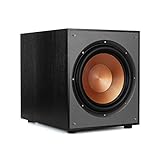
- 12" high excursion spun-copper Imp woofer
- 29 hertz – 120 hertz plus /- 3 dB
- 400 watt
- Max acoustic output 116dB
- Bass-reflex via rear firing port. Amplifier power (control/peak): 200 watts/400 watts
SVS describes one common arrangement: use separate preamp outputs to feed the power amp and subwoofer, or use Y splitters if there is one pair of preamp outputs. These are examples rather than universal instructions. Integrated amplifiers and subwoofers with high-level inputs may have other options, so follow the manuals for your equipment.
Choose a starting crossover, then tune by ear
There is no single crossover setting that suits every stereo system. Start with the main speakers’ published low-frequency extension and the subwoofer’s available controls, then adjust for a smooth transition. The frequently cited 80 Hz figure is a convention in some home-theater and THX contexts, not a blanket prescription for two-channel stereo. Audioholics explains crossover choices and why system-specific factors matter.
What’s actually slowing this PC down?
Pick the symptom - the matching free tool is one click away.
Rank #3

- POWERED SUBWOOFER FOR EXTRA BASS & PUNCH – 10-inch Dynamic Balance woofer and configured directed port provide accurate bass depth that brings music and movies alive. The perfect home theater subwoofer for small-to-mid size rooms. Waterproof : No
- LOUDER CLEARER SOUND EVEN AT HIGH VOLUME – Enjoy a thrilling balanced audio experience with rich, deep sound, even at low frequencies, when using the 10 inch subwoofer. BLENDS EASILY WITH ANY SPEAKER & plays demanding nodes without distortion
- DOUBLE THE AMPLIFIER POWER TO 100 Watts of Power with its in-built 50-watt RMS amp. Sophisticated engineering featuring best in class resonance-free driver materials makes this subwoofer with built in amp highly durable and FIT FOR EXTENDED USE
- EASY TO INTEGRATE WITH EXISTING SYSTEMS – Hook up this compact subwoofer to the receiver and upgrade your music sound instantly. Features continuously variable 80-160 Hz crossover and 40-160 Hz (-3dB) frequency response
- A sleek detachable grille on the front, speaker and line-level inputs, speaker-level outputs on the back, plus a Phase Toggle Switch for multiple subwoofers, make this home subwoofer cohesive and complete
- Find the main speakers’ low-frequency extension. Check the manufacturer’s specifications or manual. Treat the figure as a starting reference, since your room may change the audible result.
- Set the subwoofer’s low-pass filter near that extension. SVS uses the speakers’ nominal extension as a starting point in its stereo guidance. If your sub has a filter-slope control, its advice is to match the slope where possible; the right setting can differ with other equipment.
- Adjust the subwoofer level with familiar music. Aim for bass that blends with the speakers instead of drawing attention to the sub itself.
- Listen for a smooth handoff. Too much overlap or a poor phase relationship can produce boomy, one-note bass or a dip around the crossover.
A well-integrated sub should support the main speakers, not sound like a separate source playing alongside them.
Find a position that works in your room
Room modes can create bass peaks in some spots and weak bass in others, so the subwoofer’s location can substantially change what you hear. Do not assume that a corner is always best. SVS suggests testing placements, including a corner as one possible starting point; REL recommends a corner behind the main speakers for its own products, particularly for low bass. Treat that as REL-specific guidance rather than a universal rule.
Rank #4
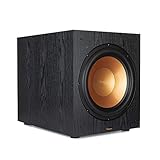
- Spun copper front-firing Cerametallic woofers
- 12-inch, front-firing driver
- 200 watts continuous, 400 watts dynamic power
- Compatible with almost any AV receiver
- Strong, flexible, removable grille
One practical method, described by SVS’s placement guide, is the subwoofer crawl:
- Temporarily place the subwoofer near your usual listening position.
- Play a familiar track with a repeating bass line.
- Listen near practical locations where the sub could go, including—but not limited to—corners.
- Choose a location that sounds relatively even and balanced, then listen again from the actual seat.
Moving the listening seat a little can also change the result. A position that sounds strong from one seat may sound weak from another, so consider the places where people actually listen.
Recommended Free Tools
Best Value
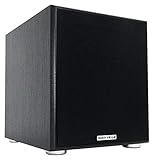
- POWERFUL BASS: 10" woofer with 600W peak/300W RMS output delivers tight, thumpy low end for movies, music, and gaming
- CLASS-D AMPLIFIER: Built-in amplifier precisely matched to the woofer and enclosure for clean, distortion-free sound
- ADJUSTABLE SETTINGS: Volume, crossover frequency, and phase controls allow you to customize your audio experience
- FLEXIBLE CONNECTIVITY: Features RCA line inputs/outputs and high-level speaker inputs/outputs to suit any setup
- DURABLE BUILD: MDF enclosure with high-grade vinyl finish and detachable foam grill for lasting performance and style
When to consider two subwoofers
A second subwoofer is an option for a particular problem, not a standard requirement. SVS notes that multiple subs may improve bass consistency across several seats or support speakers with limited extension. Whether that helps depends on room layout, available placement options, controls, and budget. One well-placed, properly integrated sub may be a better fit for a single listening position.
What to compare if you decide to buy
Match the subwoofer to your room and stereo setup rather than choosing by one specification alone. Consider:
- Useful bass extension and output: Look for performance that meets your desired listening level and the needs of your room.
- Connections and controls: Check that the inputs and filter controls work with your amplifier and main speakers.
- Size and placement: Make sure the cabinet can fit where it is likely to perform well.
- Listening coverage: Decide whether you need balanced bass at one seat or across several.
For context, SVS lists the powered SB-1000 Pro with a 12-inch driver, a 325 W RMS amplifier rating, and a stated frequency response of 20–270 Hz ±3 dB on its product page. Those are vendor-listed specifications, not independent test results or a recommendation for every living room; confirm current details with the manufacturer.
If setup by ear is not enough
If you cannot resolve a peak or dip by moving the subwoofer and adjusting its level and crossover, measuring the response around the crossover can help identify where the problem occurs. Audioholics discusses measuring subwoofer integration. Measurement is an advanced troubleshooting option, not a prerequisite for enjoying a stereo system.
The Tool Desk
Outbyte Driver Updater FREEFix the driver behind crashes, sound loss and screen glitchesFind Drivers →Outbyte PC Repair FREEClear out junk files and repair common Windows errorsFree Scan →Quick Recap
Product prices and availability are accurate as of the date/time indicated and are subject to change. Any price and availability information displayed on Amazon at the time of purchase will apply.

