
Windows Errors? Fix Them Before They Spread
Repair common Windows errors and clear accumulated junk for a smoother, more stable PC - no reinstall needed.Free scan · no reinstallCrashes, No Sound, or Screen Glitches?
Random freezes, missing sound and display glitches usually trace back to one bad driver. Find and replace yours safely.Free scan · under a minuteThe top 7 customer identity and access management tools for 2026 are Auth0, Microsoft Entra External ID, PingOne, Amazon Cognito, Descope, Frontegg, and FusionAuth—but there is no universal winner. Auth0 is the strongest broad default, while Entra, Cognito, PingOne, Descope, Frontegg, and FusionAuth fit more specific Microsoft, AWS, enterprise, startup, B2B SaaS, or deployment-control requirements.
Customer identity and access management (CIAM) is the customer-facing identity layer for registration, login, account recovery, federation, MFA, consent, sessions, APIs, and authorization. The correct shortlist depends on whether the application is B2C, B2B, B2B2C, or hybrid; how much security and customization the product needs; where it runs; and how pricing scales with active users, organizations, SSO connections, messages, tokens, and support.
This guide treats the seven products as recommended shortlist candidates rather than a market-share ranking. A proof of concept with two or three candidates is more reliable than choosing a vendor from a flat feature list.
Key takeaways
- Auth0 by Okta is the strongest broad CIAM default for teams seeking mature APIs, integrations, social login, passkeys, MFA, organizations, and extensibility.
- Microsoft Entra External ID is the natural shortlist candidate for Microsoft- and Azure-centric organizations, but Azure AD B2C migration and feature-parity questions require careful validation.
- Amazon Cognito is an infrastructure-style, usage-priced option for AWS-native teams, while Descope emphasizes fast, visual, passwordless implementation.
- PingOne is suited to large, regulated, hybrid, or highly customized environments; Frontegg specializes in B2B SaaS administration; FusionAuth emphasizes deployment flexibility and control.
- CIAM total cost can include MAUs, tenants, enterprise SSO, SCIM, MFA messages, verification, risk modules, M2M tokens, support, private cloud, data residency, and implementation services.
What is CIAM, and how is it different from IAM?
CIAM governs how external users register, authenticate, recover accounts, use MFA or passwordless login, federate identities, access applications and APIs, manage profiles and consent, and receive authorization decisions.
Recommended Free Tools
#1 Best Overall

- Card Type: EM-ID Card (Can't support HID, Cobra, APCiK etc)
- Type: EM RFID 125khz reader, Can't work alone, Normally work with Control board/Fingerprint devcie/Master controller to build completely Security Access Control System.
- Support Wiegand 26-Bit and Wiegand 34-Bit; Built-in LED (Double Color LED) and Loud Speaker (Buzzer).
- WatherProof, Water Proof, can Install outside,Small and Beautiful Reader.
- Intput Voltage: DC 9-15V, Can stable running for many years.
CIAM is not simply workforce IAM repackaged for customers. Workforce IAM manages employees and contractors; privileged access management protects elevated administrative access; identity governance manages entitlement lifecycles and access reviews; customer-data platforms manage profiles and marketing data; fraud systems detect abusive behavior; and API gateways handle broader API-management functions. CIAM can integrate with each category without replacing all of it.
Microsoft’s description of Entra External ID specifically positions the product as a customer-identity and access-management solution for external identities. Existing Microsoft Entra ID workforce licensing should not be assumed to cover customer identities automatically.
Which type of external identity does the application have?
The buyer’s user population should determine the evaluation before a vendor feature comparison begins. A consumer application, a multi-tenant SaaS product, and a partner portal may all need login, but their identity architectures are materially different.
| Identity model | Typical requirements | Questions to ask vendors |
|---|---|---|
| B2C | High-volume registration, social login, passkeys, low-friction recovery, bot and credential-stuffing defense, consent, localization, and anonymous-to-registered conversion. | Can the platform protect account creation and recovery without damaging conversion? Can policies vary by geography, risk, or product? |
| B2B | Organizations or tenants, SAML/OIDC enterprise SSO, JIT provisioning, SCIM, delegated administration, domain discovery, per-tenant branding, roles, and tenant-specific policies. | Does “B2B support” include self-service SSO, organization-level policy, SCIM, audit logs, and multiple organizations per user? |
| B2B2C or hybrid | Consumer accounts, business accounts containing multiple users, partner federation, and different authentication policies by customer, geography, risk, or product tier. | Can one identity model support both individuals and organizations without duplicate accounts or disconnected authorization logic? |
A basic email-and-password test is inadequate if the real requirement is multi-tenant B2B access. The proof of concept must test enterprise federation, organization administration, provisioning, authorization, recovery, and account movement between tenants.
What authentication methods should a CIAM platform support?
The required authentication methods should be mapped to actual customer journeys, not counted as isolated checkboxes. Depending on the application, the shortlist may need password authentication, email magic links, email or SMS OTP, TOTP authenticator apps, push authentication, passkeys/WebAuthn, social identity providers, enterprise SAML and OIDC, custom identity providers, step-up authentication, adaptive MFA, customer-managed factors, account recovery, and credential migration.
Auth0’s public plan information lists passwordless authentication, passkeys, social connections, MFA, organizations, enterprise connections, and attack protection, although availability varies by plan. Descope’s pricing information lists passkeys, magic links, OTP, authenticator apps, social login, MFA, step-up authentication, and SSO, also with tier-dependent limits.
Authentication method support must be checked in the relevant SDKs and deployment model. A feature listed on a product page may require custom development, a premium tier, a third-party service, or a separate connector.
Which are the top 7 customer identity and access management tools?
The following seven tools form a practical 2026 shortlist. “Best” in each entry means best fit for a defined buyer profile, not an objective ranking of security or market share.
1. Auth0 by Okta / Okta Customer Identity Cloud
Best for: Product-led companies, digital businesses, marketplaces, SaaS vendors, and enterprises seeking a mature developer-facing CIAM platform.
Auth0 is the strongest broad default when a team wants established APIs, extensive integrations, social and enterprise federation, passkeys, passwordless authentication, MFA, organizations, machine-to-machine authentication, and extensibility through Actions and Forms. Attack-protection capabilities and a private-cloud option are also important areas to investigate.
Auth0’s public pricing page showed a Free plan at $0 per month for up to 25,000 monthly active users (MAUs), Essentials at $35 per month for up to 500 MAUs, Professional at $240 per month for up to 500 MAUs, and Enterprise as contact sales. These are public prices observed in the research on August 16, 2026, not a complete enterprise quote. Confirm current Auth0 plan limits and pricing for B2B features, advanced MFA, M2M tokens, support, private cloud, adaptive MFA, and regulated-identity requirements.
The main caution is commercial and architectural complexity. B2B functionality, enterprise SSO, advanced security, M2M, support, and private cloud can change the economics substantially. A workforce Okta deployment should not be presumed to cover customer identity.
Proof-of-concept scenario: Build a consumer passkey and social-login journey, then add an organization with enterprise SSO, tenant-scoped roles, account recovery, and an API authorization check.
Editorial verdict: The best broad default for teams that value developer tooling and a mature CIAM ecosystem, provided pricing and B2B architecture are validated early.
2. Microsoft Entra External ID
Best for: Organizations already committed to Microsoft Azure, Entra, Microsoft security tooling, and Microsoft commercial agreements.
Entra External ID brings external identity management into the Microsoft ecosystem and uses an MAU-based billing model with premium add-ons for advanced scenarios. Microsoft’s pricing documentation warns that displayed prices are estimates and can vary by agreement, date, currency, and purchasing arrangement. Review Microsoft’s External ID pricing model and the Azure Entra External ID pricing page before creating a business case.
What’s actually slowing this PC down?
Pick the symptom - the matching free tool is one click away.
Rank #2

- [Card Support] The reader support EM/ID card.
- [Card Reader Only] The reader can’t work stand-alone,have to work with access control panel or access controller.
- [Wiegand Interface] The reader support 26/34bit Wiegand card.
- [LED Indicator] The reader have 2 color LED Indicators(Red and Green).
- [Waterproof] The reader design with IP68 waterproof grade,can be used indoor or outdoor.
Microsoft-aligned buyers may benefit from existing Azure relationships, administration, governance, and commercial alignment. The product is particularly worth shortlisting when identity is already being designed around Microsoft services.
The main caution is migration and product-architecture uncertainty for organizations coming from Azure AD B2C. Buyers should verify advanced consumer journeys, custom policies, tenant federation, branding, regional requirements, operational tooling, and migration procedures against current Microsoft documentation. Entra ID workforce tenants and Entra External ID customer tenants should not be treated as interchangeable.
Proof-of-concept scenario: Test a consumer registration flow, a partner organization with SAML or OIDC federation, tenant-specific branding and policy, account recovery, and integration with the organization’s existing Azure monitoring and security workflows.
Editorial verdict: A strong shortlist candidate for Microsoft-centric estates, but not automatically the best general-purpose CIAM platform for every application.
3. PingOne for Customers / PingOne Advanced Identity Cloud
Best for: Large enterprises, financial services, telecommunications, government, and organizations with complex hybrid, multi-brand, or highly regulated identity requirements.
PingOne is designed for deep orchestration, adaptive authentication, identity verification, API access management, enterprise federation, customer and partner identity, and advanced customization. Ping’s offering is worth serious investigation when a team needs identity journeys that span many systems or deployment environments.
Ping’s public pricing page showed Essential starting at $35,000 annually and Plus starting at $50,000 annually, with a 30-day trial. An AWS Marketplace listing showed different starting prices of $20,000 annually for Essential and $40,000 annually for Plus. Because the public figures differ by purchasing channel, treat them as channel-specific starting signals rather than universal list prices. Check Ping’s direct pricing page and the AWS Marketplace offer for the relevant buying route.
The trade-off is implementation effort. Procurement is primarily sales-led, the product is comparatively expensive for a small team, and specialist identity expertise may be required. Product names and packaging across Ping and Advanced Identity Cloud should be clarified during the evaluation.
Free tools Windows power users keep installed
One-click scans. No signup required.
Proof-of-concept scenario: Orchestrate a risk-triggered step-up flow across a customer portal, identity-verification service, partner federation, API access layer, and SIEM export.
Editorial verdict: A serious enterprise contender where orchestration, regulation, customization, or hybrid deployment outweighs simplicity and low entry cost.
4. Amazon Cognito
Best for: AWS-native teams, serverless applications, mobile backends, and organizations comfortable assembling services around a cloud identity primitive.
Cognito provides user pools for customer authentication, federation with social and enterprise identity providers, usage-based pricing, and native integration with AWS services. AWS states that Cognito has no minimum fees or upfront commitments and charges based on usage. Current documentation describes Lite, Essentials, and Plus user-pool tiers, with billing based on MAUs and the highest-priced tier used by a distinct active user during the month. Review Amazon Cognito’s current pricing rules before forecasting seasonal or tiered usage.
The Tool Desk
Outbyte PC Repair FREEClear out junk files and repair common Windows errorsFree Scan →Outbyte Driver Updater FREEScan for outdated or missing drivers - takes under a minuteDriver Scan →Cognito fits teams already using Lambda, API Gateway, CloudFront, and related AWS services. The model can be economically attractive when the application architecture is already AWS-native.
The trade-off is that Cognito is more infrastructure-like than turnkey. Complex journeys, polished customer experiences, unusual recovery flows, and advanced orchestration may require substantial custom engineering. AWS-native also means that operational complexity and platform lock-in should be assessed. Authentication does not automatically provide complete authorization; AWS’s decision guide identifies Amazon Verified Permissions as a separate service for externalized authorization.
Proof-of-concept scenario: Implement a mobile or SPA login, social federation, passkey or MFA journey, API token validation, account recovery, CloudWatch or SIEM logging, and a separate resource-level authorization decision.
Editorial verdict: The best infrastructure-style option for AWS teams, but less attractive when the priority is a polished cross-cloud CIAM experience with minimal custom work.
Rank #3
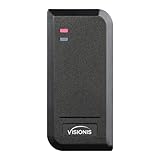
- (1) VIS-3100 Access Control Black Outdoor IP66 Card Reader
- Attention: 12V 1Amp power supply IS NOT INCLUDED, SOLD SEPARATELY .
- This reader will only work with Wiegand Protocol Access Controllers. This will not work by itself.
- You can only use EM cards with this product. Mifare cards and other type of cards from other brands may not be compatible.
- This is a hardwired reader.
5. Descope
Best for: Startups, scaleups, and product teams prioritizing visual identity flows, passwordless authentication, and fast implementation.
Descope emphasizes visual flow-based implementation, passkeys, magic links, OTP, MFA, social login, B2B tenants, SSO, CI/CD integration, and fine-grained authorization on higher plans. Its public pricing makes initial evaluation easier: the pricing page showed Free Forever at $0 for up to 7,500 MAUs, Pro starting at $249 per month billed annually with 10,000 MAUs, Growth starting at $799 per month billed annually with 25,000 MAUs, and Enterprise as contact sales. Check Descope’s current plan and overage details before relying on the headline figures.
Descope’s usage model is broader than MAUs. Published pricing signals include separate concepts for MAUs, tenants, SSO connections, M2M exchanges, active consents, and active tokens. Higher tiers may also matter for fine-grained authorization, bot protection, and multi-region data residency. SMS and voice usage can introduce practical limits or require customer-managed connectors.
The main caution is tier dependency and due diligence. Buyers should validate references, service history, regional availability, support, exit procedures, and every limit that applies to their B2B architecture.
Do these 3 things before closing this tab:
1Clear out junk files and repair common Windows errors2Scan for outdated or missing drivers - takes under a minute3Repair Windows errors before they cause bigger problemsProof-of-concept scenario: Create a visual passwordless flow, add a B2B tenant with SSO, configure step-up MFA for a sensitive action, test token and consent limits, and promote the flow through CI/CD environments.
Editorial verdict: One of the most compelling options for fast-moving teams that value implementation speed and transparent entry pricing, provided every usage meter is modeled.
6. Frontegg
Best for: B2B SaaS vendors embedding customer-facing identity, organization management, admin portals, and SaaS-specific controls into their product.
Frontegg’s positioning centers on customer IAM and B2B SaaS, including authentication, authorization, organization and tenant concepts, customer management, analytics, and customer administration. Review Frontegg’s pricing page, but obtain a quote for the actual tenant, user, SSO, provisioning, and administration requirements rather than inferring a comparable enterprise price from the public page.
Quick wins for a faster PC:
Clear out junk files and repair common Windows errorsFree Scan →Scan for outdated or missing drivers - takes under a minuteDriver Scan →Repair Windows errors before they cause bigger problemsFix Now →Frontegg is a specialist alternative for a SaaS company that needs embedded customer administration rather than only a login screen. The evaluation should test whether Frontegg’s organization model matches the product’s data model and whether delegated administration, enterprise SSO, provisioning, auditability, consumer scale, global regions, and regulatory requirements are covered.
Frontegg may be excessive for a simple high-volume B2C login-only application. A B2C team should compare the cost and complexity of its B2B abstractions against a more general-purpose platform.
Proof-of-concept scenario: Build a customer-admin portal that creates an organization, invites users, configures enterprise SSO, assigns roles, manages entitlements, and exports audit events.
Editorial verdict: A strong B2B SaaS specialist, but not the natural choice for a login-only consumer application.
7. FusionAuth
Best for: Teams seeking deployment flexibility, more infrastructure control, or an alternative to a fully managed proprietary CIAM service.
FusionAuth is a credible control-and-portability alternative for organizations with strong platform-engineering capability. The product’s public pricing information and deployment choices make it worth including in an RFP where self-hosting, managed hosting, or reduced dependence on a hyperscaler matters. Compare FusionAuth’s current plans and deployment options at the product level.
Control shifts responsibility to the buyer. Infrastructure, scaling, backups, upgrades, availability, security operations, incident response, and production support must be costed. A lower software price does not automatically produce a lower total cost of ownership.
Buyers should clarify the differences among community, paid, managed, and enterprise offerings, along with support boundaries, deployment requirements, data export, password-hash portability, and upgrade procedures.
What’s actually slowing this PC down?
Pick the symptom - the matching free tool is one click away.
Rank #4

- Access control keypad is sturdy rugged keypad; with zinc alloy electroplated technology;The circuit board is completely encapsulated in epoxy to be weatherproof; keyboard is waterproof so you can use it outdoor or indoor
- Key backlight function; the keys light will stay on in dark places or at night; indicator light; Red light stands for enter into programming mode; Yellow light for in the programming mode;Green light for operation successful mode
- Wiegand access control keypad can be as a standalone reader or keypad;0-99s adjustable door relay time; It is a relay output to open the door; so that you could connect this to a powered device without the use of some computing intermediate
- Easy to use;full programming from the keypad;support 3 access ways for card;PIN or card with PIN;you can set the public password or private password and the password can be changed which is more secure and personalized
- You can use the access control keypad to add and delete 2000 user information; set the door open delay time; it is suitable for garages; shops; homes; warehouses; laboratories; it has short circuit protection
Proof-of-concept scenario: Deploy the selected edition in a production-like environment, test high-availability and backup recovery, perform an upgrade, migrate users, rotate signing keys, export audit data, and measure the operational work required from the internal platform team.
Editorial verdict: A useful alternative for teams that value deployment control and can accept ownership of identity infrastructure operations.
How do the seven CIAM platforms compare?
The table is a screening tool, not a contract or a substitute for a proof of concept. “Plan-dependent” means the capability may exist but must be verified for the chosen tier, tenant type, region, or deployment model.
| Platform | B2C | B2B organizations | Enterprise SSO | SCIM | Passkeys | Adaptive MFA and risk | Fine-grained authorization | Public pricing signal | Deployment/control | Main drawback |
|---|---|---|---|---|---|---|---|---|---|---|
| Auth0 | Strong | Yes, plan-dependent | Yes, plan-dependent | Verify plan and direction | Yes, plan-dependent | Attack protection and advanced features are plan-dependent | RBAC and extensibility; verify resource-level needs | Public lower-tier prices; enterprise quote | Managed, with private-cloud option to verify | Pricing and advanced B2B packaging can be complex |
| Microsoft Entra External ID | Yes | Yes, verify scenario | Verify required federation model | Verify implementation and tenant type | Verify current support and plan | Verify advanced consumer and risk journeys | Verify required depth and Microsoft service integration | MAU-based with premium add-ons | Azure/Microsoft-centric | Migration and feature-parity questions matter |
| PingOne | Strong for complex deployments | Strong | Strong | Verify exact direction and package | Verify plan and journey | Adaptive MFA and risk capabilities | Verify required resource-level model | Sales-led; public starting signals differ by channel | Hybrid and advanced options to investigate | Cost and implementation expertise |
| Amazon Cognito | Strong for AWS applications | Federation possible; verify tenant model | Verify required providers and tier | Verify exact workflow | Verify current tier and SDK support | Requires careful architecture and additional controls | Often assembled with separate AWS services | Usage-based; no minimum or upfront commitment stated by AWS | AWS-native | More engineering ownership for advanced journeys |
| Descope | Strong | Yes, plan-dependent | Yes, tier-dependent | Verify scenario | Yes | Bot protection and other controls are tier-dependent | Growth and Enterprise listings include fine-grained authorization | Free, Pro, Growth, and Enterprise tiers publicly shown | Managed; verify residency and connector needs | Multiple usage meters and tier limits |
| Frontegg | Verify high-volume fit | Strong B2B SaaS orientation | Verify exact package | Verify exact package | Verify | Verify required controls | Authorization is a core area; test resource model | Public page; comparable enterprise price not verified | Embedded SaaS administration focus | Less natural for simple B2C login |
| FusionAuth | Yes, verify scale architecture | Verify exact features and edition | Verify exact package | Verify exact package | Verify current edition support | Assess operational and integrated controls | Verify required depth and external policy needs | Public pricing page; compare editions carefully | Deployment flexibility and self-hosting options | Buyer owns more operations |
How should CIAM pricing and total cost be calculated?
CIAM pricing should be modeled from the complete production architecture rather than from one advertised entry price. The most common meters are monthly active users, registered users versus active users, B2B organizations or tenants, enterprise SSO connections, SAML federation, MFA messages, identity verification, risk and fraud modules, M2M tokens, API calls or token exchanges, premium support, private cloud, dedicated environments, data residency, and nonproduction environments.
The Tool Desk
Outbyte Driver Updater FREEFix the driver behind crashes, sound loss and screen glitchesFind Drivers →Outbyte PC Repair FREERepair Windows errors before they cause bigger problemsFix Now →| Cost item | Why it changes the bill | What to include in the quote |
|---|---|---|
| MAUs and retained users | Vendors may count distinct active users differently from registered or dormant users. | Average usage, seasonal peaks, retained accounts, and overage rates. |
| Organizations and tenants | B2B platforms may meter active tenants separately from users. | Current tenants, three-year growth, trial tenants, and inactive tenants. |
| SSO and SCIM | Enterprise federation and lifecycle management may be premium features or separate meters. | SSO connections, federated applications, provisioning direction, and self-service requirements. |
| MFA, SMS, voice, and verification | Message and identity-verification volume can become significant at scale. | Challenge rate, geography, factor mix, fraud-related retries, and customer-managed connectors. |
| M2M and token usage | Machine identities, exchanges, active tokens, and API volume can be priced separately. | Service count, token lifetime, exchange volume, and production/nonproduction usage. |
| Enterprise controls | Private cloud, data residency, dedicated environments, advanced risk, support, and SLA terms affect total cost. | Regions, environments, support level, compliance scope, recovery objectives, and implementation services. |
Public pricing signals observed August 16, 2026: Auth0 showed Free at $0 per month up to 25,000 MAUs, Essentials at $35 per month for up to 500 MAUs, and Professional at $240 per month for up to 500 MAUs. Descope showed Free Forever at $0 up to 7,500 MAUs, Pro from $249 per month billed annually including 10,000 MAUs, and Growth from $799 per month billed annually including 25,000 MAUs. Ping’s direct page showed Essential from $35,000 annually and Plus from $50,000 annually, while its AWS Marketplace listing showed different starting figures. These figures are dated public signals, not universal quotes; geography, contract length, billing period, negotiated discounts, add-ons, and plan changes can alter the result.
Microsoft describes Entra External ID as MAU-based with premium add-ons, while AWS describes Cognito as usage-based without minimum fees or upfront commitments. Those models can be attractive, but the buyer still needs a month-by-month usage model. Microsoft’s pricing documentation and AWS Cognito pricing documentation should be used alongside vendor quotes.
Descope is a useful warning against headline-price comparisons because its published pricing distinguishes MAUs, tenants, SSO connections, federated applications, M2M exchanges, active consents, and active tokens. Descope’s pricing page should be checked for every meter that applies to the proposed architecture.
What security capabilities matter beyond login?
A CIAM platform should be evaluated across authentication controls, risk-based controls, fraud controls, and authorization controls. MFA proves or strengthens an authentication event; MFA alone does not equal account-takeover prevention or fraud defense.
Do these 3 things before closing this tab:
1Repair Windows errors before they cause bigger problems2Fix the driver behind crashes, sound loss and screen glitches3Clear out junk files and repair common Windows errors- Authentication controls: secure sessions, passkeys, MFA, recovery protection, refresh-token rotation, revocation, device enrollment, and signing-key rotation.
- Risk-based controls: IP and device signals, anomalous-login detection, impossible-travel indicators, adaptive MFA, step-up authentication, rate limits, and breached-password screening.
- Fraud controls: bot detection, automated-account defenses, credential-stuffing protection, promo-abuse signals, synthetic-identity detection, and integration with specialist fraud systems.
- Operational controls: administrative MFA, audit logs, SIEM export, tenant isolation, DDoS and availability architecture, incident response, and service-status transparency.
- Authorization controls: tenant-scoped roles, attributes, relationships, API scopes, entitlements, resource-level decisions, delegated administration, separation of duties, and policy-as-code.
Test the entire account lifecycle, especially recovery. Lost devices, changed email addresses, SIM-swap exposure, support overrides, social-login linking, fraudulent recovery requests, and recovery audit trails can be weaker than the initial login journey.
How much authorization should a CIAM platform include?
Authentication answers “who are you?” Authorization answers “what may you do?” A platform that offers basic RBAC may still be inadequate for resource-level permissions, nested organizations, customer-admin delegation, or relationship-based access control.
Compare RBAC, ABAC, relationship-based authorization, tenant-scoped roles, entitlements, API scopes, policy-as-code, external policy engines, resource-level decisions, and delegated administration. Descope lists fine-grained authorization on its Growth and Enterprise tiers rather than its Free or Pro tiers. The Descope plan table should therefore be checked against the required authorization design.
AWS provides a clear example of the distinction: Amazon’s identity decision guide treats Cognito as a CIAM component and Amazon Verified Permissions as a separate service for externalized authorization. Buyers should decide whether authorization belongs inside CIAM, in a dedicated policy engine, or in application services.
Free tools Windows power users keep installed
One-click scans. No signup required.
How should the platforms be scored?
A weighted scorecard is more useful than a flat feature checklist. Start with the following weights and adjust them to the application:
| Criterion | Suggested weight | When to increase the weight |
|---|---|---|
| Required user journeys and authentication methods | 20% | Consumer conversion, passwordless, complex recovery, or hybrid identity is central. |
| Security, account-takeover defense, and recovery | 15% | The application handles financial, health, regulated, or high-value accounts. |
| B2B organizations and federation | 15% | Customers need tenants, SSO, SCIM, delegated administration, or domain discovery. |
| Developer experience and integration quality | 15% | The team has limited identity engineering capacity or needs rapid delivery. |
| Authorization depth | 10% | Permissions are resource-level, relationship-based, or customer-administered. |
| Scalability, availability, and regional architecture | 10% | The product is global, seasonal, or subject to strict resilience objectives. |
| Compliance, privacy, and data residency | 5% | Specific regions, regulated data, or contractual controls are mandatory. |
| Migration and exit strategy | 5% | The application has an existing identity store or portability is strategic. |
| Three-year total cost of ownership | 5% | Usage is predictable and commercial constraints dominate the decision. |
Weights should change by buyer. A consumer retailer may increase conversion, fraud, and recovery. A B2B SaaS company may increase tenant management, SSO, SCIM, and delegated administration. A bank may increase adaptive authentication, identity proofing, auditability, resilience, and regulatory controls. An AWS startup may increase SDK quality, deployment speed, and integration with existing AWS services.
Independent reader supportYour contribution helps us test, update, and keep practical guides available for everyone.What should every CIAM proof of concept test?
Every shortlisted vendor should demonstrate the same flows using the application’s actual frameworks, identity model, regions, and downstream systems.
Core customer flows
- Register a new user.
- Sign in with a social provider.
- Sign in with a passkey or passwordless method.
- Reset a password and recover an account.
- Enroll and remove MFA.
- Trigger step-up MFA based on a sensitive action or risk signal.
- Test lockout, factor loss, and recovery.
- Update a profile and preserve the customer identifier used by downstream systems.
- Capture, update, and withdraw consent.
- Revoke sessions across multiple devices.
B2B flows
- Create an organization and invite an administrator.
- Configure SAML or OIDC SSO.
- Discover a tenant by email domain.
- Provision and deprovision users through SCIM.
- Delegate administration without granting platform-wide access.
- Assign tenant-specific roles and resource permissions.
- Export tenant audit events.
- Disconnect a broken or retired identity provider safely.
- Move a user between organizations without data loss or authorization leakage.
- Support multiple applications for the same organization.
Engineering and operations tests
- Use the SDKs for the actual SPA, server, mobile, and API stack.
- Test token handling, refresh-token rotation, revocation, key rotation, and rate limits.
- Deliver logs and webhooks to the selected SIEM and observability tools.
- Promote configurations between local, test, staging, and production environments.
- Test infrastructure-as-code, rollback, version control, automated testing, and debugging.
- Migrate a representative sample from the existing user database.
- Test service degradation, disaster recovery, and regional behavior.
Commercial tests
- Price the actual MAU curve, including seasonal peaks rather than only the average month.
- Include dormant retained users, B2B organizations, SSO connections, MFA messages, verification, fraud, M2M, support, staging, and production.
- Obtain data-residency, private-cloud, dedicated-environment, and implementation-service prices where relevant.
- Request a three-year price-protection commitment and written overage terms.
- Confirm data export, termination assistance, deletion obligations, and post-termination support.
What migration and exit risks should buyers address?
Migration should be designed before contract signature because password hashes may not be portable between identity systems. A workable strategy may involve bulk import, just-in-time migration at next login, forced password resets, passwordless conversion, account linking, duplicate-account resolution, preservation of consent and profile history, and preservation of customer IDs used by downstream systems.
Best Value

- Type: EM RFID 125khz Keypad reader, Can't work alone, Normally work with Control board to build completely Security Access Control System.
- Install working in in-door environment, can't expose to rain( If need Water Proof one, Pls contact us)
- Standard wiegand 26 and 34 bit output format for connect to a controller.
- Card Type: 125khz EM-RFID Card/Fob, (Can't support encrypted cards, such as HID, Cobra, APCiK etc)
- Reading range: 3-15 cm, Built-in LED and Loud Speaker (Buzzer)
The migration plan should include session transition, rollback, support procedures, communications, and a method for handling users who cannot complete the new authentication journey. Test changed email addresses, social-account linking, lost factors, and duplicate identities rather than limiting the migration test to a successful password login.
Exit terms should cover exportable user and organization data, audit history, custom claims and metadata, password-hash portability, token and signing-key transition, custom-domain and DNS transition, migration assistance, contractual deletion, export rate limits, and support after termination. Self-hosting does not remove exit work; it changes the operational responsibilities and portability trade-offs.
Which CIAM tool fits each buyer?
| Buyer profile | Shortlist first | Why | Validate before selecting |
|---|---|---|---|
| Startup building a new B2C application | Auth0, Descope, Cognito | Fast implementation, broad authentication options, and accessible entry models. | MAU growth, recovery, fraud controls, regional needs, and long-term pricing. |
| AWS-native product team | Amazon Cognito, Auth0 | Cognito aligns with AWS services; Auth0 offers a more managed developer-facing layer. | Custom journey effort, authorization architecture, portability, and operational ownership. |
| Microsoft enterprise | Entra External ID, Auth0 | Entra aligns with Microsoft estates; Auth0 is a broad comparison candidate. | Azure AD B2C migration, feature parity, agreements, and advanced federation. |
| B2B SaaS vendor | Frontegg, Auth0, Descope | Organization management, embedded administration, SSO, and fast product integration. | Tenant model, SCIM, delegated administration, authorization, and tenant-based pricing. |
| Regulated global enterprise | PingOne, Auth0, Entra External ID | Enterprise federation, risk controls, customization, governance, and regional architecture. | Certifications, product tier, data residency, resilience, identity proofing, and services. |
| Organization replacing homegrown authentication | Auth0, PingOne, FusionAuth | Migration, extensibility, federation, and deployment-control options. | Password-hash migration, identifiers, recovery, rollback, and exit terms. |
| Team requiring self-hosting or deployment control | FusionAuth, PingOne | Deployment flexibility and advanced enterprise deployment options. | Availability ownership, upgrades, backups, support, scaling, and total operational cost. |
What common CIAM buying mistakes should be avoided?
Choosing features instead of journeys
A capability may require a premium tier, separate product, custom code, professional services, or a third-party integration. Test complete journeys instead of awarding points for feature names.
Treating MFA as fraud prevention
MFA reduces some credential risks but does not automatically stop automated account creation, promo abuse, credential stuffing, session theft, social engineering, SIM swapping, malicious insiders, or synthetic identities. Integrate CIAM with fraud and bot defenses where the business risk requires it.
Windows Errors? Fix Them Before They Spread
Repair common Windows errors and clear accumulated junk for a smoother, more stable PC - no reinstall needed.Free scan · no reinstallOutdated Drivers Are Slowing You Down
One free scan finds every outdated or missing driver and matches the right update for your exact hardware.Free scan · exact hardware matchIgnoring authorization
A successful login does not authorize a user to view another customer’s records, access a different organization, use a premium feature, approve a regulated transaction, invoke an administrative function, or read a particular API resource.
Underestimating B2B complexity
The number of enterprise customers, SSO connections, administrators, domains, and federated applications may influence price and architecture more than MAUs. A platform with excellent consumer login may still be a poor fit for tenant administration.
Assuming low-code means low effort
Visual orchestration can accelerate initial delivery, but test version control, promotion between environments, rollback, debugging, automated testing, custom edge cases, and ownership after the original implementer leaves.
Confusing workforce IAM with CIAM
An organization may already use Microsoft Entra ID or Okta Workforce Identity, but customer identities often require a separate tenant, product, commercial agreement, or architecture. Evaluate customer scale, external federation, recovery, consent, and customer-facing administration separately.
Quick wins for a faster PC:
Repair Windows errors before they cause bigger problemsFix Now →Scan for outdated or missing drivers - takes under a minuteDriver Scan →Clear out junk files and repair common Windows errorsFree Scan →Final recommendation
Shortlist Auth0 first when the requirement is broad, developer-oriented CIAM and the team accepts plan and pricing complexity. Shortlist Entra External ID for a Microsoft- and Azure-centered estate, Cognito for an AWS-native architecture, PingOne for complex regulated or hybrid identity, Descope for fast passwordless and visual-flow delivery, Frontegg for B2B SaaS administration, and FusionAuth when deployment control is a strategic requirement.
The best buying decision is usually a two- or three-platform proof of concept. Require each vendor to implement the same registration, recovery, MFA, federation, tenant administration, authorization, migration, logging, and exit scenarios, then compare three-year cost using real MAU, tenant, SSO, token, verification, support, and environment assumptions.
Frequently Asked Questions
Is Auth0 the same as Okta Customer Identity Cloud?
Auth0 by Okta is the developer-facing CIAM product commonly referred to as Okta Customer Identity Cloud. Buyers should still confirm the product, plan, commercial agreement, and features included in a particular Okta estate rather than assuming workforce Okta licensing covers customer identities.
Can Microsoft Entra ID replace CIAM?
Microsoft Entra ID workforce tenants should not automatically be treated as a replacement for Microsoft Entra External ID or another CIAM platform. Customer identity requires external-user registration, recovery, federation, consent, customer-facing policy, and potentially different commercial and tenant architecture.
Is Amazon Cognito suitable for large consumer applications?
Amazon Cognito can suit AWS-native consumer applications, but suitability depends on the required scale, user journeys, security controls, regions, and engineering capacity. Cognito is more infrastructure-like than turnkey, so complex customer experiences and authorization may require additional AWS services and custom development.
Do CIAM platforms include authorization?
Some CIAM platforms provide RBAC, tenant roles, entitlements, or fine-grained authorization, but the depth and plan availability vary. Authentication proves identity; authorization decides access to organizations, features, records, transactions, and API resources, so buyers should test the exact policy model they need.
How are CIAM platforms priced?
CIAM platforms commonly charge according to MAUs, organizations or tenants, enterprise SSO, SCIM, MFA or verification events, risk modules, M2M tokens, API or token exchanges, support, private cloud, dedicated environments, data residency, and implementation services. A three-year usage model is more useful than comparing entry-level monthly prices.
Can a CIAM platform migrate existing users?
A CIAM platform may support bulk import, just-in-time migration, forced password resets, passwordless conversion, or account linking, but password hashes are not always portable. The migration plan must preserve customer identifiers, consent, profile history, downstream references, sessions, and recovery paths.
The Bottom Line
Bottom line: There is no objectively best CIAM platform. Auth0 is the broad default; Entra External ID fits Microsoft estates; Cognito fits AWS-native teams; PingOne fits complex enterprise environments; Descope fits fast passwordless delivery; Frontegg fits B2B SaaS administration; and FusionAuth fits teams prioritizing deployment control. Select two or three for a matched proof of concept and price the complete identity lifecycle, not just login.
Quick Recap
Product prices and availability are accurate as of the date/time indicated and are subject to change. Any price and availability information displayed on Amazon at the time of purchase will apply.

