
The Tool Desk
Outbyte PC Repair FREEClear out junk files and repair common Windows errorsFree Scan →Outbyte Driver Updater FREEScan for outdated or missing drivers - takes under a minuteDriver Scan →iTechGuides is reader-supported. When you buy through links on our site, we may earn an affiliate commission. As an Amazon Associate I earn from qualifying purchases. Learn more
Do not use a selfie-based AI app to decide whether you need cancer screening or to rule out cancer. For cancers with established screening pathways, discuss the recommended test for your age and risk with a healthcare professional: mammography for breast cancer, HPV and/or Pap testing for cervical cancer, colorectal screening, and annual low-dose CT for some people with a heavy smoking history. For a new or changing mole, use a mirror only to notice the change, then contact a clinician.
Why isn’t an AI selfie a substitute for cancer screening?
A screening test is designed for people who do not have symptoms and is used to look for signs of cancer—or, in some cases, changes that could become cancer. A phone photo app is not one of the validated screening options described by the National Cancer Institute (NCI) or the Centers for Disease Control and Prevention (CDC). NCI says evidence about the accuracy of skin-cancer apps is inadequate and that large-scale screening studies are lacking. The American Academy of Dermatology (AAD) says diagnostic skin apps have not been approved by the U.S. Food and Drug Administration (FDA).
That distinction matters even if an app gives a confident answer. A reassuring result cannot establish that a spot is harmless, and an alert cannot diagnose cancer. Do not let a selfie result replace an age- and risk-appropriate screening appointment or delay professional assessment of a concerning change. A clinician can assess whether the right next step is a screening test, a diagnostic examination, or another evaluation.
What is the difference between screening and diagnosis?
Screening is a routine check for people without symptoms who meet the relevant criteria. If a screening result is abnormal, it usually needs diagnostic follow-up; the result by itself does not prove that a person has cancer.
#1 Best Overall
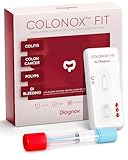
- Clinical Grade Stool Test Kit - Colonox FIT by Diagnox is an at-home stool test kit that detects hidden or occult blood in your stool, which may be a sign of GI or colorectal disorders.
- Affordable Complete Kit - Colonox FIT has everything you need. The kit includes a collection tube, antibody test, and collection apper with instructions for quick and seamless sampling & testing.
- Rapid & Easy to Read Results - Get accurate and easy-to-read results within 10 min. Look for two lines for a positive result, indicating the presence of blood, or only one line for a negative result.
- Highly Sensitive - The Colonox FIT uses antibodies to detect hemoglobin in your stool. This clinical-grade test is sensitive enough to detect hemoglobin concentrations as low as 45 ng/mL.
- Certified CLIA Waived - The Colonox FIT is a CLIA-waived test and FDA-cleared for home use. Gain reliable medical-grade insights from the comfort of your home.
Diagnosis is the process of evaluating a finding or symptom. For example, someone who has noticed a new or changing skin spot should not treat that concern as a routine screening question or wait for an app to classify an image. They should contact a healthcare professional. Screening guidance for people without symptoms does not settle what evaluation is appropriate for someone with a concerning finding.
This also explains why a negative screening result and a negative app result are not interchangeable. A validated screening pathway is linked to guidance about who should be tested and what to do with an abnormal result. The evidence cited for selfie-based skin apps does not establish them as a screening or diagnostic clearance tool.
Which cancer screening tests are established options?
In the United States, CDC identifies breast, cervical, colorectal, and lung cancer screening as programs supported by U.S. Preventive Services Task Force (USPSTF)-aligned recommendations. The appropriate test depends on cancer type, age, health history, and—in lung screening—smoking history. The ranges below summarize the supplied NCI and CDC guidance; they are not a personalized eligibility decision.
Outdated Drivers Are Slowing You Down
One free scan finds every outdated or missing driver and matches the right update for your exact hardware.Free scan · exact hardware matchPC Slower Than It Used to Be?
A free scan shows the junk files, broken settings and background clutter dragging Windows down - then fixes them in one click.Free scan · Windows 10 & 11Rank #2

- What is ColoTest? ColoTest is an at-home stool test kit that allows you to test for blood in the stool in the comfort of your own home. The test does not require a prescription and results can be read at home as soon as 1 minute of taking the test
- Why ColoTest? ColoTest detects blood in the stool, which may be an early warning for: Colorectal conditions, Diverticulitis, Gastrointestinal Disorders, Colitis & Polyps. No mail-in lab testing, no prep, and no diet restrictions required before use
- What does a positive result mean? A positive result may indicate invisible blood in the stool. This should be confirmed by your doctor with additional diagnostic procedures, likely including a colonoscopy. ColoTest is 98.8% accurate
- How often should ColoTest be used? ColoTest is recommended as an annual screening method. Bleeding in the digestive system may be intermittent. If concerned, test on three different days using new samples to increase the chances of detection
- Who is ColoTest for? Those wanting to take control of their colon health; have had a negative past experience with colonoscopy; uninsured, insurance does not cover a colonoscopy; might be expreriencing symptoms related to gastrointestinal disorders
| Cancer | Screening test | Who the cited guidance covers | What it does | Important next step or qualification |
|---|---|---|---|---|
| Breast | Mammography | NCI reports reduced breast-cancer mortality for women ages 40–74, with the clearest benefit in ages 50–69; expert groups generally start at age 40. | Looks for breast cancer early, before symptoms appear. | An abnormal result needs diagnostic follow-up. The cited summary does not establish a single schedule or interval for every individual. |
| Cervical | HPV testing and/or Pap testing | NCI describes typical screening from ages 21–65 for people with adequate prior screening and no otherwise high-risk status. | Tests for HPV or cell changes associated with cervical cancer. | Which test and schedule apply depend on screening history and risk; the cited summary does not specify a universal choice for every age. |
| Colorectal | Colorectal cancer screening | CDC identifies colorectal screening as an established screening program; the cited summary does not state an age range or individual test choices. | Some screening can find precancerous polyps that may be removed before they become cancer. | The test, preparation, interval, and follow-up depend on the selected screening approach; ask a clinician which applies. |
| Lung | Annual low-dose computed tomography (LDCT) | CDC guidance covers adults ages 50–80 with a heavy smoking history who currently smoke or quit within the past 15 years. | Uses a low-dose CT scan to screen for lung cancer. | All listed eligibility conditions matter. A clinician can help determine whether the smoking history qualifies. |
These tests are not interchangeable, and none is a general-purpose scan for every cancer. Each belongs to a particular screening pathway. Screening may lead to follow-up when a finding needs closer evaluation, and that follow-up—not a screening result alone—helps determine what the finding means.
What should you do about a suspicious mole or skin change?
Contact a clinician about a new, changing, bleeding, unusual, or otherwise worrisome spot. CDC advises people to tell their doctor about unusual moles or changes in their skin. An app score or a home photograph should not determine whether you seek care.
Use a self-check to notice changes, not to diagnose them
The American Cancer Society (ACS) describes a mirror-assisted skin self-check as a way to look for changes. Its suggested setup is a well-lit room, a full-length mirror, and a hand-held mirror. A partner can help inspect areas that are hard to see, such as the back or scalp. The purpose is observation: a mirror can help you see a spot, but it cannot establish whether that spot is cancer.
Rank #3

- Early Detection Support: This colorectal cancer screening test kit is designed to detect fecal occult blood through a simple stool sample test, providing results within minutes for timely awareness of potential digestive system concerns
- FIT Test Method: This colon test kit uses the FIT (Fecal Immunochemical Test) method, a widely recognized annual stool screening approach for colorectal health monitoring according to major health organizations
- No Preparation Required: This FOB test kit requires no special preparation or diet changes, making it a convenient and hassle-free option for at-home testing without disrupting your daily routine
- Fast and Easy-to-Use: Complete your colon cancer test at home and receive results in just 10 minutes, with no mail-in lab testing required for quick and convenient screening
- High Accuracy Rate: The colorectal cancer screening test delivers over 99% accuracy in detecting fecal occult blood in stool samples
- Choose a well-lit room and use a full-length mirror to examine the parts of your skin you can see.
- Use a hand-held mirror to view less accessible areas. Ask someone you trust to help check your back or scalp if needed.
- Pay attention to new or changing spots and anything that bleeds or otherwise worries you.
- Contact a healthcare professional about a concerning change rather than relying on an app’s interpretation or waiting for a future self-check.
ACS says many doctors recommend regular checks, often monthly, but also advises discussing frequency with your healthcare team. That is not a universal interval for every person: the USPSTF’s population recommendation addresses a different question.
Does the USPSTF recommend routine skin checks for everyone?
No. In its April 18, 2023 statement, the USPSTF issued an “I” statement for clinician visual skin examination in asymptomatic adolescents and adults. An “I” statement means the available evidence is insufficient to determine the balance of benefits and harms for that population; it is not a finding that a suspicious lesion should be ignored.
The statement is limited to people without suspicious symptoms. It does not apply to people with suspicious skin findings, a personal or family history, or high-risk surveillance needs. Those circumstances call for advice from a healthcare professional rather than a conclusion based on the population-level statement. The USPSTF statement also does not turn a consumer selfie app into a validated alternative.
Rank #4
- Clinical Grade Stool Test Kit - Colonox FIT by Diagnox is an at-home stool test kit that detects hidden or occult blood in your stool, which may be a sign of GI or colorectal disorders.
- Affordable All-In-One Kit - Colonox FIT has everything you need. The kit includes a collection tube, antibody test, and collection paper with instructions for quick and seamless sampling & testing.
- Rapid & Easy-to-Read Results - Get accurate and easy-to-read results within 10 min. Look for two lines for a positive result, indicating the presence of blood, or only one line for a negative result.
- Highly Sensitive - The Colonox FIT uses antibodies to detect hemoglobin in your stool. This clinical-grade test is sensitive enough to detect hemoglobin concentrations as low as 45 ng/mL.
- Certified CLIA Waived - The Colonox FIT is a CLIA-waived test and FDA-cleared for home use. Gain reliable medical-grade insights from the comfort of your home.
How should you compare the options?
The useful comparison is between the screening pathway that fits a cancer type and a skin concern that needs clinical attention—not between an app and a medical test as if they offered equivalent evidence. The available guidance supports the following distinctions, but does not provide numerical false-positive or false-negative rates or a complete comparison of appointment burden for every test.
- Purpose: Mammography, cervical testing, colorectal screening, and LDCT are used in defined screening pathways. A selfie app is not established by the cited evidence as a replacement for those pathways or as clearance that a skin lesion is benign.
- Prevention versus early detection: Screening often aims to find cancer earlier. Colorectal screening can also identify precancerous polyps that may be removed before they become cancer.
- Who qualifies: Eligibility is specific to the test. The cited LDCT criteria include age, heavy smoking history, and current smoking or quitting within 15 years; the cervical guidance cited is for people ages 21–65 with adequate prior screening and no otherwise high-risk status.
- Possible harms and uncertainty: Screening recommendations weigh potential benefit against harms, but the cited material does not quantify false positives, false negatives, or test burden across these options. Ask the clinician recommending a test what an abnormal result could lead to and what follow-up would involve.
- Follow-up: An abnormal screening result is a prompt for diagnostic evaluation, not a cancer diagnosis. A concerning skin change warrants clinician assessment rather than a decision based on a selfie classification.
What should you ask your healthcare professional?
Bring the question to the right kind of appointment: routine screening eligibility if you have no symptoms, or assessment of a specific concerning change if you do. Because the appropriate pathway depends on individual history, a few targeted questions can help make the next step clear.
- “Which screening tests are appropriate for my age and health history?”
- “Does my smoking history meet the criteria for annual low-dose CT?”
- “Given my prior cervical screening and risk factors, which test and schedule should I follow?”
- “I noticed this skin change. Should I have it evaluated, and how soon?”
- “If this screening result is abnormal, what diagnostic follow-up would you recommend?”
For skin checks, ask how often they make sense for your circumstances rather than assuming that a monthly schedule applies to everyone. For any screening result, ask what it means and what the next step is before treating it as either a diagnosis or an all-clear.
Best Value
- Clinical Grade Stool Test Kit - Colonox FIT by Diagnox is an at-home stool test kit that detects hidden or occult blood in your stool, which may be a sign of GI or colorectal disorders.
- Affordable Complete Kit - Colonox FIT has everything you need. The kit includes a collection tube, antibody test, and collection apper with instructions for quick and seamless sampling & testing.
- Rapid & Easy to Read Results - Get accurate and easy-to-read results within 10 min. Look for two lines for a positive result, indicating the presence of blood, or only one line for a negative result.
- Highly Sensitive - The Colonox FIT uses antibodies to detect hemoglobin in your stool. This clinical-grade test is sensitive enough to detect hemoglobin concentrations as low as 45 ng/mL.
- Certified CLIA Waived - The Colonox FIT is a CLIA-waived test and FDA-cleared for home use. Gain reliable medical-grade insights from the comfort of your home.
Frequently Asked Questions
Does family history change which cancer screening tests I need?
It can affect whether a general, average-risk recommendation fits your circumstances. The cited age ranges do not cover every elevated-risk situation, so tell your healthcare professional about relevant family and personal history when discussing a screening plan.
Can I use a phone photo to show a clinician a mole?
You can ask the clinician whether a photo is useful for documenting what you noticed, but the image is not a diagnosis. Do not let taking or sharing a photo delay contacting a professional about a concerning change.
What does an USPSTF “I” statement mean for my skin?
It means the evidence is insufficient to determine the balance of benefits and harms of clinician visual screening for the asymptomatic population covered by the statement. It does not answer whether a particular suspicious spot needs assessment.
Free tools Windows power users keep installed
One-click scans. No signup required.
Quick Recap
Product prices and availability are accurate as of the date/time indicated and are subject to change. Any price and availability information displayed on Amazon at the time of purchase will apply.

