
Yes—but through a remote API, not by running ChatGPT on the board. The Seeed Studio XIAO ESP32C3 can connect over Wi-Fi, send a question to a hosted OpenAI API, and receive a response. Seeed’s example accepts input from a local web page and prints the returned answer to the serial monitor.
What the XIAO ESP32C3 does in a ChatGPT project
The XIAO ESP32C3 is a small development board based on Espressif’s ESP32-C3. Seeed lists a single-core 32-bit RISC-V processor running at up to 160 MHz, 400 KB of SRAM, 4 MB of flash, 2.4 GHz Wi-Fi, Bluetooth Low Energy 5.0/Bluetooth Mesh, 11 GPIO, four ADC inputs, and UART, I2C, and SPI. The board measures 21 × 17.8 mm. These are Seeed’s published specifications, not independent performance measurements. Seeed Studio XIAO ESP32C3 specifications
For an AI connection, Wi-Fi and HTTP client support are the important capabilities. The board acts as a networked controller: it collects input, sends a request, and handles the response. The cited project does not show a ChatGPT model running locally on the XIAO.
How Seeed’s example connects the board to the API
Seeed’s WiFiClient and HTTPClient tutorial demonstrates this flow: a user submits a question through a web page hosted on the local network; the XIAO, configured as a Wi-Fi station, sends an HTTP request to an OpenAI service; and the answer is returned for display through serial output. For the local web-page interaction, the browser host and board need to be on the same network. Seeed’s XIAO ESP32C3 ChatGPT tutorial
#1 Best Overall

- Flexible MCU Board: Incorporate the ESP32-C3 32-bit RISC-V chip, operating up to 160 MHz, mounted multiple development ports,
- Developer Friendly: Compatible with Arduino IDE, MicroPython, CircuitPython, PlatformIO, ESP IDF, Zephyr, Matter, ESPNow, Meshtastic, WLED, ESPHome, Home Assistant, Ubidots
- Outstanding RF performance: Complete Wi-Fi functions and Bluetooth Low Energy, while supporting communication over 100m with anFL antenna
- Elaborate Power Design: 4 working modes as low as 44 μA in deep sleep mode, while supporting lithium battery charge management
- Thumb-sized Design: 21 x 17.5mm, Seeed Studio XIAO series classic form factor
- The user enters a question on the local web page.
- The XIAO receives the question over the local network.
- The board sends an outbound request over Wi-Fi to the hosted API.
- The remote service processes the request and sends a response back.
- The board prints the response through its serial connection.
This is a useful embedded networking example, but its API instructions refer to older GPT-3-era interfaces. For a new implementation, use OpenAI’s current documentation for the endpoint, model identifier, request payload, and response parsing. OpenAI’s quickstart currently demonstrates the Responses API. OpenAI API quickstart
What you need to get started
- A XIAO ESP32C3 and a computer.
- A USB Type-C cable that supports data transfer, not just charging. Seeed notes that some cables provide power without allowing firmware uploads.
- Arduino IDE and the ESP32 board support package, installed according to Seeed’s current board setup guide.
- A Wi-Fi network for the board, plus API access and a securely managed API key.
Seeed’s setup guide’s initial blink test connects an LED to D10 with an approximately 150-ohm resistor in series. That is an optional board check, not a requirement for API requests. Use Seeed’s guide for current package-source, IDE, target, and port instructions, since toolchain steps can change. Seeed XIAO ESP32C3 getting started
Rank #2

- 【ESP32-C3 RISC-V Development Board】 Built with the ESP32-C3 32-bit RISC-V chip (160MHz), featuring Arduino/CircuitPython support and multiple development ports. Ideal for IoT and edge AI projects.
- 【Outstanding RF & Long-Range Connectivity】 Equipped with U.FL antenna for stable Wi-Fi/BLE5.0 communication over 100m. Complete RF performance ensures reliable IoT connectivity.
- 【Ultra-Low Power & Battery-Friendly】 4 working modes, including deep sleep at 44μA. Onboard battery charge IC supports Li-ion/LiPo, perfect for wearables and wireless IoT.
- 【Thumb-Sized & Production-Ready】 Compact 21x17.5mm design with SMD/Breadboard-friendly layout. Single-sided component mounting ensures sleek integration into wearables.
- 【Rich I/O & Edge Computing】 11 digital I/O (PWM) + 4 analog I/O (ADC), plus UART/IIC/SPI/IIS ports. Optimized for TinyML and edge AI applications.
Choose how to protect the API key
OpenAI says API keys are secrets and should not be exposed in client-side code. A key compiled into firmware that you distribute can be extracted. OpenAI API authentication
Private learning prototype
A direct board-to-API call can be convenient while experimenting with your own board and private firmware. Treat this as a prototype arrangement: anyone who obtains the firmware may be able to recover a key embedded in it.
The Tool Desk
Outbyte Driver Updater FREEFix the driver behind crashes, sound loss and screen glitchesFind Drivers →Outbyte PC Repair FREEClear out junk files and repair common Windows errorsFree Scan →Rank #3
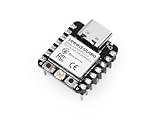
- Flexible MCU Board: Incorporate the ESP32-C3 32-bit RISC-V chip, operating up to 160 MHz, mounted multiple development ports, supported by Arduino / CircuitPython
- Outstanding RF performance: Implement complete Wi-Fi functions and Bluetooth Low Energy, while supporting communication over 100m with a U.FL antenna
- Elaborate Power Design: Provide 4 working modes as low as 44 μA in deep sleep mode, while supporting lithium battery charge management
- Thumb-sized Design: 21 x 17.5mm, Seeed Studio XIAO series classic form factor and elegant productization of single-sided components mounting, suitable for wearable devices
- Perfect for Production: Breadboard-friendly & SMD design, no components on the back
Project shared with other people
Put a small backend between the XIAO and OpenAI. Store the key on the backend, have the board send its request to that service, and let the backend call OpenAI. This adds a component to build and keep available, but avoids distributing the OpenAI secret in board firmware.
What to know about API data handling
Do not assume ordinary API use has zero data retention. OpenAI’s data-controls documentation says abuse-monitoring logs may include prompts, responses, and metadata and are generally retained for up to 30 days, subject to exceptions. Some modified monitoring or zero-data-retention controls require approval and eligibility. Check the current policy and your account’s applicable controls before sending sensitive information. OpenAI API data controls
Rank #4

- Powerful MCU Board: Incorporate the ESP32 S3 32-bit, dual-core, Xtensa processor chip operating up to 240 MHz, mounted multiple development ports, Arduino / MicroPython supported
- Advanced Functionality: Detachable OV2640 camera sensor for 1600*1200 resolution, compatible with OV3660 camera sensor, integrating additional digital microphone
- Great Memory for more Possibilities: Offer 8MB PSRAM and 8MB FLASH, supporting SD card slot for external 32GB FAT memory
- Outstanding RF performance: Support 2.4GHz Wi-Fi and BLE dual wireless communication, support 100m+ remote communication when connected with U.FL antenna
- Thumb-sized Compact Design: 21 x 17.5mm, adopting the classic form factor of XIAO, suitable for space-limited projects like wearable devices
Is this the right approach?
Use the XIAO ESP32C3 when the goal is to learn how a compact Wi-Fi microcontroller can collect input and communicate with a hosted AI service. It is not a way to run ChatGPT offline on the board. Seeed’s tutorial is a starting point for the hardware flow; current OpenAI API documentation should guide new request formats and model choices.
Quick Recap
Best Value

- Powerful MCU Board: Incorporate the ESP32S3 32-bit, dual-core, Xtensa processor running at up to 240MHz, mounted multiple development ports, Arduino / MicroPython supported
- Outstanding RF performance: Supports 2.4GHz WiFi and BLE 5.0 dual wireless communication, support 100m+ remote communication when connected with U.FL antenna
- Elaborate Power Design: Lithium battery charge management capability, offer 4 power consumption model which allows for deep sleep mode with power consumption as low as 14μA
- Thumb-sized Compact Design: 21 x 17.8mm, adopting the classic form factor of XIAO, suitable for space limited projects like wearable devices
- Perfect for Production: Breadboard-friendly & SMD design, no components on the back
Product prices and availability are accurate as of the date/time indicated and are subject to change. Any price and availability information displayed on Amazon at the time of purchase will apply.

