
Quick wins for a faster PC:
Fix the driver behind crashes, sound loss and screen glitchesFind Drivers →Repair Windows errors before they cause bigger problemsFix Now →iTechGuides is reader-supported. When you buy through links on our site, we may earn an affiliate commission. As an Amazon Associate I earn from qualifying purchases. Learn more
Not automatically. Buying a used PC gives you the computer, but it does not by itself give you ownership or transfer rights to every game or program installed on its drive. Under U.S. law, whether you may keep using a particular program depends on how its copy was acquired and whether its license or account terms allow transfer. A lawfully owned boxed copy may be transferable; an account-bound, subscription, OEM, or volume-licensed installation may not be.
Does buying the computer mean you own the software on it?
No. U.S. copyright law separates ownership of a physical object from ownership of the copyright embodied in it. Section 202 of Title 17 says that ownership of copyright is distinct from ownership of the material object in which a work is embodied. So the sale of a PC transfers the machine, not automatically the rights to install, use, or distribute every program stored on it.
That distinction matters even when the software appears to work, is already installed, or came with the computer. The seller may own the computer but only have a limited software license, or the program may be linked to an account that the seller cannot transfer. A functioning installation is evidence that files are present; it does not, by itself, establish that the buyer has permission to use them.
The answer here is limited to U.S. law. The specific agreement, how the copy was obtained, and the applicable state contract law can affect the result. Other countries may apply different rules.
#1 Best Overall

- 10 traditional card games the entire family can enjoy.
- Canasta, Gin Rummy, Hearts, Pinochle, Texas Hold’em, Euchre, Go Fish, Old Maid, Spades, Solitaire Mahjong.
- Fast animated play, all new redesigned look, play against the computer.
- Easy to learn games, includes detailed game rules.
- Soothing soundtracks
When can you transfer an old game or program?
The strongest case is a lawfully made copy that the seller owns and may transfer, together with any license terms and materials required for that transfer. The first-sale rule in 17 U.S.C. §109(a) lets the owner of a particular lawfully made copy sell or otherwise dispose of possession of that copy. It does not grant a general right to reproduce the software or override a license that does not give the seller ownership of the copy.
The U.S. Department of Justice explains that first sale does not protect unauthorized reproductions and that software is commonly distributed under licenses where the copyright holder retains ownership of distributed copies. The Copyright Office also notes that software EULAs differ and that a licensee cannot rely on owner-based first-sale or section 117 exceptions as though they owned the copy. The practical question is therefore not just “Was the game on the PC when I bought it?” but “What rights did the seller actually have, and do those rights pass to me?”
| What is on the used PC | What to establish | Why it matters |
|---|---|---|
| Boxed retail game or program | Whether the copy was lawfully acquired and the license permits transfer; retain original media, key, manual, and EULA where available. | First sale may support transfer of an owned physical copy, but the license and circumstances still matter. |
| OEM software bundled with a PC | Whether its terms permit transfer with this computer and impose other conditions. | Being installed by the manufacturer does not alone show that the buyer receives unrestricted or transferable rights. |
| Account-based or subscription software | Which account holds the entitlement and whether the service terms permit account or license transfer. | Possession of the drive does not transfer the seller’s account or subscription rights. |
| Educational or volume-licensed software | The applicable agreement and any specific transfer provisions. | These licenses can impose limits that differ from ordinary retail software. |
| Copied files with no license or proof of lawful acquisition | Whether the seller can establish a lawful, transferable copy. | The presence of files is not proof of permission to use or redistribute them. |
What does a transfer usually need to include?
For boxed software, ask for the original disc or other media, product key, manual, EULA, and available purchase or transfer records. These items can help identify the edition and terms, but none should be treated as conclusive proof on its own: a key may be invalid, already used, or subject to license restrictions.
Rank #2

- Collection includes 100 classic board games, from Chess and Checkers to Parcheesi and Ludo
- Full instructions for every game included
- The widest set of family games available
- Fun for children ages and adults alike!
- Never have another predictable game night!
Microsoft’s second-hand-PC guidance is a historical example of how vendor terms can shape a transfer: it called for the EULA, original CDs, and printed materials to accompany transferred installations and said volume licenses were transferable only in limited circumstances. That guidance illustrates why the actual agreement matters; it is not a universal rule or a statement of Microsoft’s current policy for every product.
Can you reinstall or make a backup of a game found on the PC?
Only within the applicable rights. Section 117 of Title 17 provides a narrow archival-copy allowance for a person who is the legal owner of a program copy. The Copyright Office describes three conditions: the person must legally own the copy, the additional copy must be for archival purposes, and the archival copy must be destroyed or transferred with the original when the original is transferred.
This is not a general right to make a replacement installer, keep several usable copies, or sell a backup separately. The Copyright Office states that section 117 does not authorize selling a backup copy alone and that its privilege applies to computer programs, not other kinds of works. A buyer who only acquired a computer with unexplained software files should not assume that section 117 makes those files lawful to copy.
Rank #3
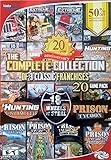
- 20th Anniversary Complete collection of 3 Classic Franchises including 20 games total!
- Includes: 18 Wheels of Steel Extreme Trucker 1 and 2, American Long Haul, Haulin', Convoy, Across America. Take the Wheel of a fast paced, high intensity trucking business. Start as one man show, bidding on jobs, then build your fleet into an unstoppable convoy and deliver the goods. Grow your business and your fleet, but beware - Your reputation is everything. Fail at your job or pass on the wrong offer and you'll find yourself haulin' manure!
- Includes Prison Tycoon 1, 2, 3, 4, Alcatraz. Take the reigns of privately run prisons. You are responsible for the care, custody, and control of the individuals who have been arrested. Begin with a low security prison and build it up to a supermax From construction to daily operations you must protect society while turning a profit.
- Includes: Hunting Unlimited Trophy Collection, 4, 2008, 2009, 2010, 2011 - Become the Ultimate Hunter. Use an Arsenal of weapons from bows to bullets, traveling around the globe to hunt big game and small prey. Hunt in over a hundred locations to bring home your virtual trophies.
Archival copy versus replacement download
- Archival copy: May fit section 117 only when the user is the legal owner of the program copy, the copy is genuinely archival, and it is handled with the original as the statute requires.
- Unofficial replacement installer: Downloading a copy from an unrelated archive or copying another person’s game files is not made lawful just because the buyer owns the PC or once possessed an installation.
- Publisher recovery media: Prefer official installers or publisher-provided recovery media where available, while checking that the license authorizes the installation and use.
If a drive is failing and you want to preserve a lawfully owned program, the purpose and handling of the copy matter. Section 117 is not permission to distribute the files to friends, upload a disk image, or separate a backup from the original when transferring the program.
Do these 3 things before closing this tab:
1Scan for outdated or missing drivers - takes under a minute2Repair Windows errors before they cause bigger problems3Fix the driver behind crashes, sound loss and screen glitchesCan you bypass activation or DRM because a game is old?
Do not assume that an obsolete activation server, a disc check, or an “abandonware” label creates permission to bypass a technical restriction. Section 1201 of Title 17 generally prohibits circumventing a technological measure that effectively controls access to a copyrighted work. The Copyright Office’s 2024 proceeding says the prohibition generally covers computer software and video games; exemptions are temporary and limited to defined classes.
That means a failed activation method and the legal right to circumvent it are separate questions. A game being out of print, unsupported, or unavailable for purchase does not by itself establish that a particular user, program, or circumvention method falls within an exemption. The 2024 proceeding is relevant because exemptions are class-specific and time-limited, not because it creates a blanket allowance for every older game.
Rank #4

- Baldurs Gate 4 In 1 Compilation.
- Features: Special 4-game DVD-ROM.
- Play the original Baldur's Gate game.
- Includes Tales of The Sword Coast Expansion.
- Explore unseen lands as you take part in an epic conflict that will define your future, and create your legend. Venture into a deadly new dungeon.
Before attempting circumvention, identify the exact software and the proposed activity, then check whether a currently applicable exemption covers that class and use. If you cannot establish that it does, the safer legal course is not to bypass the control. This article cannot determine whether a particular technical workaround qualifies.
How should you check software before using it?
Work through each installed title separately. One license may be transferable while another program on the same computer is tied to an account, institution, or subscription.
- Inventory the installation. Record each game or program’s publisher, edition, and version. Distinguish a full application from a shortcut, launcher, or leftover data folder.
- Ask the seller what accompanies it. Request original media, keys, manuals, invoices, EULAs, and any transfer documents. Ask whether an account or subscription is involved.
- Identify the license type. Determine whether it is retail, OEM, subscription, account-bound, educational, or volume-licensed. Read the relevant EULA and service terms rather than inferring transfer rights from the installation.
- Confirm the transfer conditions. Check whether the license can pass with the PC and whether the seller must remove the installation from other devices or give up an account entitlement.
- Use authorized installation sources. Prefer official installers or publisher recovery media, and make sure the license covers the new installation.
- Keep copies with the original, not in circulation. Do not upload, share, or sell copied installers, disk images, or backup copies separately from a lawfully owned original.
- Stop if rights remain unclear. If no transferable right can be shown, obtain a new license or uninstall the program instead of relying on possession of the PC.
What should you do if the seller cannot prove transfer rights?
Treat the program as unverified rather than assuming the sale included it. Ask the seller for the relevant license and supporting materials; if the software is account-based, confirm that the provider’s terms allow the entitlement to move. If the seller cannot establish transfer rights and the terms do not permit transfer, the practical options are to acquire a new license or remove the program.
Best Value
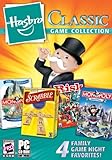
- Hasbro Classic Games Collection 2009 combines four great games in one box:
- Monopoly 2008
- Scrabble Champion Edition
- Monopoly Here & Now
Do not solve a missing license by copying files from the drive, locating an unofficial installer, or disabling activation. Those steps address access to the software, not the underlying right to use it, and may introduce separate copyright or anti-circumvention issues.
What is the difference between owning a disc and having a software license?
Owning a disc concerns possession of a particular physical copy; a license concerns the permissions and conditions under which the software may be used. Section 109 can protect an owner’s disposal of a lawfully made particular copy, while many software transactions are licenses rather than transfers of ownership. The labels and terms for a specific product matter, so a disc in the box does not automatically settle whether installation or transfer is permitted.
Frequently Asked Questions
Does a product key prove that I own the game?
No. A key can help identify or activate an edition, but it does not by itself show how the copy was acquired or whether the license can be transferred. Check the accompanying license and transfer terms as well.
The Tool Desk
Outbyte PC Repair FREERepair Windows errors before they cause bigger problemsFix Now →Outbyte Driver Updater FREEScan for outdated or missing drivers - takes under a minuteDriver Scan →Can I keep the installed game if the seller still has it on another PC?
Do not assume that one purchase or key permits multiple active installations. The license may require the seller to remove the program or give up an entitlement as part of transfer; the specific EULA controls.
Does “abandonware” mean a game is legal to download?
No general U.S. copyright exception follows from a game being old, unsupported, or no longer sold. The legality of a download depends on rights in the copy and any applicable permission or statutory exception.
Can I transfer an account that contains games along with the PC?
Only if the account provider’s terms allow it. A computer sale does not itself assign an account, and account-sharing or transfer restrictions may apply even when the games remain installed.
Quick Recap
Product prices and availability are accurate as of the date/time indicated and are subject to change. Any price and availability information displayed on Amazon at the time of purchase will apply.

