
iTechGuides is reader-supported. When you buy through links on our site, we may earn an affiliate commission. As an Amazon Associate I earn from qualifying purchases. Learn more
AI research results can be useful for finding and summarizing scientific literature, but an AI-generated answer is not evidence by itself. Treat each important claim as unverified until you have checked it against the original paper, data, or another suitable authoritative source. Verify three things separately: whether the cited source exists, whether it is appropriate for the claim, and whether it actually supports the AI’s wording.
Can AI research results be trusted?
Use AI research answers as leads, not as final authority. A fluent, confident summary may contain incorrect facts, a citation that does not exist, or a real citation that has been described inaccurately. A link that opens successfully is only the beginning of verification: the source may be real but irrelevant, or its findings may not justify the conclusion presented.
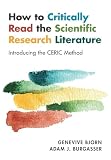


The practical test is whether you can establish the claim without relying on the AI’s account of it. Open the underlying evidence, check what it says and how it was produced, and look for independent confirmation when the claim matters. This is especially important for statistics, quotations, scientific or medical information, disputed findings, and claims that may have changed recently.
Oxford’s Bodleian Libraries guidance focuses on checking AI-generated references and summaries. The House of Commons Library puts the role succinctly: “AI should be treated as an assistant, not an authority.” The OpenAI Help Center similarly advises: “Use ChatGPT as a first draft, not a final source.” Those are usage reminders, not guarantees that any particular answer or tool is accurate.
#1 Best Overall
Why can a plausible scientific answer still be wrong?
An AI-generated research summary can fail at more than one point. It may invent or mix bibliographic details, misread a real paper, omit limitations, or express a tentative result as settled fact. These failures require different checks; confirming only that a paper exists does not verify the summary.
A citation can be fabricated or mismatched
A reference can look scholarly while being incomplete, assembled from details belonging to different works, or nonexistent. Check the author, title, journal or publisher, and publication date against a trusted library catalogue or bibliographic database. Treat a DOI or direct link as a way to begin the check, not as proof that the citation details or attached claim are correct.
A genuine paper can be misrepresented
A paper may discuss the same topic as a generated answer without supporting its specific claim. A summary can blur the difference between an association and a causal conclusion, leave out the study’s population or setting, or omit a limitation that changes how broadly the result applies. The test is not whether the paper sounds related; it is whether the evidence supports the exact wording.
Recommended Free Tools
Confidence is not a measure of evidence
A confident tone, polished explanation, or precise-looking number does not establish that an answer was checked or that its conclusion follows from the evidence. Do not infer reliability from presentation. Ask what source supports each statement and inspect that source yourself.
How do you verify an AI-generated scientific claim?
Work from the smallest factual statements to the evidence behind them. The sequence below helps distinguish a source that merely exists from one that actually supports the claim.
- Extract the claims. Break the answer into individual facts, interpretations, quotations, numbers, and references. Split compound sentences: “The treatment reduced symptoms by a certain amount in a particular group and is safe” contains separate claims about the size of an effect, the population, and safety. Record the exact wording you need to check rather than a broader topic label.
- Locate each cited work. Ask for the paper’s direct link or DOI as a starting point. Then search the author and title in a trusted library catalogue or bibliographic database. Compare the author, title, journal or publisher, and date with the record. If the record cannot be confirmed, do not cite the AI-generated reference as though it were real.
- Open the original evidence. Read the original paper or authoritative source, not only a generated summary, abstract snippet, or a second summary of the same work. Find the passage, result, or table relevant to the claim and check what it actually reports. When the full paper is available, inspect the methods, population or context, limitations, and conclusion as well.
- Test the wording against the source. Ask whether the source supports the whole claim, only part of it, or merely a related subject. Check whether the AI has changed a qualified finding into an absolute one, expanded a result beyond the people or setting studied, or turned discussion into demonstrated evidence. A source that mentions a claim is not necessarily evidence for it.
- Assess authority and currency. Identify who produced the source, what evidence it relies on, and when it was published or updated. Prefer original research, recognized scholarly publications, official statistics, regulators, or another authority suited to the question. For a claim where timing matters, check whether newer evidence or an update changes the answer; an older source can remain useful, but its date should not be hidden.
- Seek independent confirmation or contradiction. Compare the claim with another credible source that does not simply repeat the first. Look for contrary findings, missing context, or uncertainty that the generated answer omitted. Agreement among sources is more informative when they rely on different evidence than when they reproduce the same original report.
- Record a careful finding. Conclude that the claim is supported, refuted, or not established by the evidence you checked. Keep the conclusion as narrow as the evidence. If the sources do not settle the point, say so rather than forcing a yes-or-no verdict.
- Check the rules for your use. If the work is for research, review the applicable institutional, journal, and funder policies. Researchers remain responsible for reviewing AI-assisted content and following relevant requirements for use and disclosure.
How do you tell whether a paper supports the exact claim?
Read for the relationship between the question, the evidence, and the conclusion. A paper can be authentic and relevant to a broad topic while still being too limited to support the AI’s particular sentence.
Rank #2
Check the study’s question and setting
Identify what the authors set out to examine and in whom or in what context they examined it. Compare that with the AI’s claim. If the paper concerns a particular group, setting, or measure, do not silently generalize its result to a different population or a wider scientific conclusion.
Quick wins for a faster PC:
Scan for outdated or missing drivers - takes under a minuteDriver Scan →Repair Windows errors before they cause bigger problemsFix Now →Fix the driver behind crashes, sound loss and screen glitchesFind Drivers →Separate reported results from interpretation
Find the actual result and distinguish it from the authors’ interpretation or speculation about what it may mean. Then compare both with the AI’s wording. A summary should not present an interpretation as though it were a direct measurement, or imply that a paper established more than it reports.
Read the limitations alongside the conclusion
Limitations can affect how confidently and broadly a finding should be applied. Check whether the paper identifies caveats relevant to the claim, and whether the AI summary leaves them out. A concise summary need not repeat every qualification, but it should not remove a qualification that changes the meaning.
Check quotations and numbers at their source
For a quotation, compare the exact words with the source and make sure the speaker and context are correctly represented. For a statistic, verify what was measured, which population or context it describes, and the period to which it applies. A precise-looking figure is not self-verifying, and a number detached from its definition can be misleading.
What does independent confirmation actually add?
A second source is useful when it gives you another way to assess the claim, not simply when it repeats the same wording. If two summaries trace back to one paper or one report, they may share the same underlying limitation. Look for evidence that is genuinely relevant to the same claim and compare how each source defines the question, population, outcome, and time period.
Independent confirmation does not mean that every claim must be backed by several papers before it can be used. The appropriate amount of checking depends on the importance and uncertainty of the claim. A low-stakes background detail may need a different level of review from a medical statement, a consequential statistic, or a disputed conclusion. For the latter, compare credible sources and actively look for contrary evidence rather than collecting only examples that agree.
Rank #3

- 【Ideal for Laboratory】 This lab notebook is designed for professionals and students alike, Perfect for recording experiment data, research notes, and scientific observations, helping you stay organized throughout your experiments.
- 【High-Quality Paper】The laboratory notebook With 105 pages of thick, high-quality paper, this notebook prevents ink bleed-through, ensuring your notes stay neat and legible.
- 【Durable and Practical】Bound with a strong, flexible cover that can withstand daily use in any lab environment, ensuring long-lasting durability.
- 【Versatile Layout】 Features a blank grid format, providing you with plenty of space for detailed observations, sketches, and calculations.
- 【Standard size】 8.5 x 11 Inch, 5 x 5 grid ruled (5 squares per inch) , Easy to carry in backpacks or lab bags, this chemistry laboratory notebook is an ideal choice for scientists, researchers, and students.
When sources disagree, first check whether they are answering the same question. Differences in study population, method, measured outcome, date, or interpretation can explain why conclusions vary. State the scope of the evidence you reviewed; do not turn a finding in one setting into a universal rule. If the disagreement remains unresolved, the honest finding may be that the claim is not established by the evidence checked.
How do you handle a citation that is incomplete or hard to access?
Do not fill gaps in a reference by guessing. Search the author and title in a trusted library catalogue or bibliographic database, then compare the full record with the AI’s citation. A DOI or link can help locate a work, but the linked page still needs to match the claimed author, title, publisher or journal, and date. A plausible-looking combination of details is not enough to establish that the cited paper exists.
If you locate the work but cannot inspect the relevant evidence, separate what you know from what you have not checked. You may be able to confirm that a paper exists without being able to confirm that it supports the generated summary. In that case, avoid presenting the claim as verified. Look for an accessible authoritative version or another suitable source, and make clear that the evidence remains unconfirmed if you must discuss it.
What’s actually slowing this PC down?
Pick the symptom - the matching free tool is one click away.
Search results, citation lists, and AI-generated summaries are discovery aids; they are not substitutes for the source itself. A citation can be real while still being a poor fit for the claim, and a source can be authoritative in general without being authoritative for every question. Evaluate relevance as well as reputation.
How should you judge the quality of several AI research tools or sources?
Compare the evidence and inspection process, not just how polished the summaries look. These checks can help evaluate a tool or source, but they do not guarantee that it is reliable.
- Authority and relevance: Is the underlying scholarly content appropriate to the question, and is it from a source with suitable authority for that claim?
- Coverage: Does the material cover enough of the relevant literature to give a fair account, or does it rely on a narrow selection?
- Updates and corrections: Are corrections, retractions, and updates reflected in what the tool presents?
- Inspectable citations: Does the answer expose direct references that readers can open and check, rather than asking them to accept an unsupported summary?
- Faithful summaries: Does the account preserve methods, limitations, and uncertainty, or strip them away in favor of a stronger-sounding conclusion?
These are questions to ask about a tool’s process and output, not a score that proves accuracy. A tool may expose citations clearly yet still summarize one incorrectly; broad coverage does not mean that every relevant source has been included. Likewise, a tool’s handling of updates or corrections can change over time. Evaluate what you can inspect in the answer in front of you, then verify its important claims directly.
For the source behind a particular claim, repeat the verification steps even if a tool performs well on other questions. A tool’s useful features are not proof that every answer is correct.
PC Slower Than It Used to Be?
A free scan shows the junk files, broken settings and background clutter dragging Windows down - then fixes them in one click.Free scan · Windows 10 & 11Outdated Drivers Are Slowing You Down
One free scan finds every outdated or missing driver and matches the right update for your exact hardware.Free scan · exact hardware matchWhat should you do when evidence is mixed or incomplete?
Use three distinct outcomes: supported, refuted, or insufficient evidence. The OECD’s 2023 chapter on scientific claim verification provides conceptual background for treating these as different findings; it is not a current comparison of model performance.
- Supported: The evidence you checked backs the claim at the level and within the context stated. Do not broaden the conclusion beyond those limits.
- Refuted: The evidence you checked contradicts the claim. Explain what the evidence contradicts rather than making a wider claim than the sources warrant.
- Insufficient evidence: The available material does not establish whether the claim is true or false. This is not the same as showing the claim is false.
If sources disagree, identify what differs: the population, method, date, outcome, or interpretation. Do not resolve disagreement by choosing the most confident summary. When the evidence does not support a firm answer, report the uncertainty plainly.
Can an AI detector verify whether scientific claims are accurate?
No. A detector is not a substitute for checking a claim against its evidence. The House of Commons Library notes that AI-detection tools are unreliable and should not be treated as conclusive; even a judgment about how text was produced would not show whether its references or scientific statements are correct.
For accuracy, verify the source and the claim. Do not use a detector’s output to confirm, dismiss, or replace that evidence check.
The Tool Desk
Outbyte PC Repair FREEClear out junk files and repair common Windows errorsFree Scan →Outbyte Driver Updater FREEScan for outdated or missing drivers - takes under a minuteDriver Scan →What should researchers do before using AI-assisted research content?
Review factual content yourself, preserve the distinction between a generated lead and a verified source, and follow the rules that apply to the specific work. Requirements can differ among institutions, journals, and funders, so check the relevant policy rather than assuming one general disclosure rule applies everywhere.
For a scientific statement, the support should come from the paper, dataset, official source, or other evidence that has been checked—not merely from the AI’s paraphrase. The consulted guidance does not establish a single numerical error rate that applies across AI tools and scientific tasks. A rate would need to be tied to a particular model, task, dataset, and evaluation; without that, a universal percentage would create false precision.
Frequently Asked Questions
Does ChatGPT tell the truth about scientific research?
Sometimes an AI answer may be accurate, but fluency and confidence do not establish that it is. Treat each important claim as unverified until you check its source and confirm that the evidence supports the wording.
Can I use an AI-generated citation in a bibliography if it looks complete?
Only after you have located and checked the underlying work. Confirm the author, title, journal or publisher, and date against a trusted record, then inspect the source. If you cannot verify the reference and the relevant evidence, do not present it as a paper you consulted.
How can I tell whether a real paper supports the AI’s claim?
Read the relevant result, methods, population or context, limitations, and conclusion in the original paper. Check whether it supports the exact claim, not just the general topic, and whether the AI has omitted a qualification or overstated the finding.
Should I cite the AI tool or the scientific paper it found?
For a scientific claim, cite the evidence you actually reviewed, following the citation rules for your work. If a journal, institution, or funder requires disclosure of AI use, follow that policy separately.
What should I do if the evidence does not settle the claim?
Report that the claim is not established by the evidence you checked. Insufficient evidence is not the same as proof that a claim is false; avoid forcing a yes-or-no verdict when sources are inconclusive.
Can an AI detector show whether a scientific answer is accurate?
No. The House of Commons Library notes that AI-detection tools are unreliable and should not be treated as conclusive. A detector’s view of how text was produced does not verify its citations or claims.
What is useful to keep in a claim-verification log?
Keep the claim’s exact wording, the source record you checked, the relevant passage or result, the date you checked it, and your finding. That makes it easier to revisit a claim if the source is corrected or new evidence changes its context.
The Bottom Line
Bottom line: AI can help you find and summarize scientific literature, but it cannot verify its own answer. Confirm that each important citation is real, read the underlying evidence, test whether it supports the precise wording, and report uncertainty when the evidence is incomplete. Use AI as a starting point—not as the authority for a scientific claim.
Quick Recap
Product prices and availability are accurate as of the date/time indicated and are subject to change. Any price and availability information displayed on Amazon at the time of purchase will apply.

