
The Tool Desk
Outbyte Driver Updater FREEScan for outdated or missing drivers - takes under a minuteDriver Scan →Outbyte PC Repair FREEClear out junk files and repair common Windows errorsFree Scan →iTechGuides is reader-supported. When you buy through links on our site, we may earn an affiliate commission. As an Amazon Associate I earn from qualifying purchases. Learn more
To choose a cloud data warehouse, match the platform to your data’s cloud location, workload, storage architecture, cost model, team skills, governance requirements, and migration constraints. There is no universally best warehouse: Snowflake, BigQuery, Redshift, Databricks, Fabric, and open alternatives solve different combinations of those problems.
A defensible buying decision should produce a shortlist of two or three platforms, a three-year total-cost model, a representative proof of concept, and a documented migration and exit plan. Comparing headline prices or “fastest warehouse” rankings is not enough.
Key takeaways
- Cloud data warehouse selection depends more on workload, cloud affinity, governance, and operating model than on a universal vendor ranking.
- Snowflake, BigQuery, and Amazon Redshift are the closest conventional warehouse comparisons; Databricks and Microsoft Fabric are broader data platforms with warehouse capabilities.
- Total cost includes compute, storage, ingestion, orchestration, BI, networking, replication, governance, support, and idle capacity—not just the advertised query or capacity rate.
- A fair proof of concept must use representative data, realistic concurrency, cold- and warm-cache tests, security policies, incremental loads, and detailed consumption tracking.
- Open Parquet, Delta Lake, or Apache Iceberg storage can reduce compute lock-in, but catalogs, pipelines, governance policies, SQL dialects, and proprietary features can still create dependence.
How do you choose a cloud data warehouse?
Choose a cloud data warehouse by documenting the workload first, then weighting cloud integration, cost predictability, architecture, team fit, governance, migration effort, reliability, and portability. A practical initial shortlist for many organizations is Snowflake, Google BigQuery, Amazon Redshift, Databricks SQL or Lakehouse, and Microsoft Fabric—but the best shortlist changes with the organization’s cloud and data-engineering environment.
Quick wins for a faster PC:
Clear out junk files and repair common Windows errorsFree Scan →Fix the driver behind crashes, sound loss and screen glitchesFind Drivers →Repair Windows errors before they cause bigger problemsFix Now →According to CIOPages’ cloud data warehouse buyer’s guide and InfoWorld’s comparison of leading cloud data platforms, the market is converging. Traditional warehouses increasingly support lakehouse patterns, while lakehouse platforms increasingly offer warehouse-style SQL and BI. The durable decision is therefore about the combination of storage, compute, governance, and engineering capabilities—not a simplistic warehouse-versus-lakehouse label.
#1 Best Overall

- CRISP CLARITY: This 23.8″ Philips V line monitor delivers crisp Full HD 1920x1080 visuals. Enjoy movies, shows and videos with remarkable detail
- INCREDIBLE CONTRAST: The VA panel produces brighter whites and deeper blacks. You get true-to-life images and more gradients with 16.7 million colors
- THE PERFECT VIEW: The 178/178 degree extra wide viewing angle prevents the shifting of colors when viewed from an offset angle, so you always get consistent colors
- WORK SEAMLESSLY: This sleek monitor is virtually bezel-free on three sides, so the screen looks even bigger for the viewer. This minimalistic design also allows for seamless multi-monitor setups that enhance your workflow and boost productivity
- A BETTER READING EXPERIENCE: For busy office workers, EasyRead mode provides a more paper-like experience for when viewing lengthy documents
What does a cloud data warehouse do?
A cloud data warehouse consolidates data from SaaS applications, transactional databases, files, and event streams so organizations can run governed reporting, repeatable transformations, historical analysis, experimentation, forecasting, and machine-learning workloads without placing analytical load on production systems.
A warehouse commonly becomes the shared analytical foundation for curated tables, business metrics, BI dashboards, scheduled ELT, ad hoc SQL, and data products. A warehouse alone does not automatically create trustworthy metrics: ownership, data quality, lineage, semantic definitions, access policies, and operating procedures remain necessary.
Do you need a warehouse, a lakehouse, or another database?
You may not need a conventional cloud data warehouse. The correct platform depends on data scale, concurrency, latency, data types, engineering needs, and how much infrastructure the team can operate.
| Option | Best fit | Why choose it | When it may be wrong |
|---|---|---|---|
| Managed PostgreSQL, MySQL, or SQL Server | Application-adjacent reporting and modest analytical workloads | Familiar SQL, low platform overhead, and close proximity to application data | High concurrency, large scans, historical consolidation, or production-isolation requirements |
| Conventional cloud warehouse | Governed BI, repeatable ELT, shared metrics, and many analytical users | Managed SQL analytics, workload controls, and separation from transactional systems | Primarily unstructured data, open-engine requirements, or sub-second event analytics |
| Lakehouse | Raw data, data engineering, AI, ML, streaming, and multiple compute engines | Object storage, open table formats, flexible data types, and broader engineering workflows | A small SQL-only team that needs the narrowest operational surface |
| Real-time analytical database | High-volume event analytics and low-latency aggregations | Specialized performance for targeted analytical queries | Broad enterprise BI, governance, or general-purpose transformation requirements |
| Trino or Presto-based query layer | Federated access across existing systems | Queries data in place and can reduce unnecessary copying | Centralized history, consistent modeling, or highly predictable BI performance |
| Semantic or metrics layer | Inconsistent business definitions | Centralizes metric logic above an existing data platform | Storage, ingestion, query processing, or workload isolation is the actual problem |
What is the difference between a warehouse and a lakehouse?
A warehouse emphasizes governed SQL analytics and operational simplicity, while a lakehouse emphasizes object storage, open formats, flexible data types, engineering, and AI. The distinction is useful for framing trade-offs, but it is no longer an absolute product boundary.
| Question | Warehouse emphasis | Lakehouse emphasis |
|---|---|---|
| Primary users | Analysts, BI developers, and SQL users | Data engineers, data scientists, and analysts |
| Storage | Managed proprietary tables or managed storage | Object storage and open table or file formats |
| Main strength | Governed SQL analytics and simpler operations | Flexible data, engineering, AI, and storage openness |
| Typical trade-off | Potential proprietary-platform dependence and managed-service cost | More components and greater architectural responsibility |
| Best fit | Curated enterprise reporting | Mixed analytics, engineering, ML, and large-scale raw data |
Microsoft describes Fabric Data Warehouse as a relational warehouse on a data lake foundation, with data stored in Delta tables and integrated with Power BI. The Microsoft Fabric Data Warehouse architecture documentation illustrates why warehouse and lakehouse capabilities increasingly overlap.
Open storage improves portability, but open formats do not eliminate all lock-in. A future migration may still require rebuilding catalogs, governance, pipelines, SQL transformations, BI models, monitoring, and proprietary workloads.
Which workload should the warehouse support?
The buyer should characterize the workload before comparing features or prices. Record current volume, three-year growth, ingest patterns, latency targets, concurrency, data types, user groups, and recovery objectives.
Do these 3 things before closing this tab:
1Clear out junk files and repair common Windows errors2Fix the driver behind crashes, sound loss and screen glitches3Repair Windows errors before they cause bigger problems- Scheduled BI reporting: dashboard refreshes, recurring reports, and governed executive metrics.
- Interactive ad hoc analytics: unpredictable SQL, exploratory joins, and analyst-driven investigation.
- ELT and transformation: long-running models, incremental loads, merges, deletes, and late-arriving data.
- Data science and machine learning: notebooks, feature engineering, model training, batch inference, and model registries.
- Real-time analytics: streaming ingestion, event analysis, and near-real-time dashboards.
- Data applications: embedded analytics, APIs, operational decision systems, and customer-facing reports.
- Data sharing: collaboration across accounts, business units, partners, or external consumers.
- Regulated processing: sensitive data, residency constraints, auditability, retention, and strict access controls.
Also document data volume now and in three years, daily and peak ingest rates, batch-versus-streaming requirements, interactive-versus-scheduled query percentages, join complexity, data skew, semi-structured or unstructured data, number and type of users, environment count, uptime, recovery objectives, and cross-region or cross-cloud access.
What are the main cloud data warehouse options?
The main options overlap, but each has a different center of gravity. Use the following table to narrow the field, not to declare a universal winner.
| Platform | Strongest fit | Main advantages | Main cautions |
|---|---|---|---|
| Snowflake | Multi-cloud enterprise analytics and governed SQL | Storage-compute separation, workload isolation, sharing, ecosystem breadth, and AWS, Azure, and Google Cloud availability | Credit-based cost complexity, egress, proprietary features, and contract-dependent economics |
| Google BigQuery | Google Cloud, serverless analytics, and variable workloads | Minimal infrastructure administration, large-scale SQL, and on-demand or capacity options | Uncontrolled scans, reservation economics, and Google-specific architecture |
| Amazon Redshift | AWS-centered organizations | Integration with S3, IAM, Glue, VPC, and other AWS services; provisioned and Serverless modes | Capacity decisions, AWS billing complexity, storage and snapshot costs, and ecosystem dependence |
| Databricks SQL or Lakehouse | Engineering, Spark, streaming, ML, and AI-heavy teams | Unified engineering and analytics, open lakehouse storage, notebooks, and ML workflows | DBU plus cloud-cost complexity, broad platform surface, and higher expertise requirements |
| Microsoft Fabric | Microsoft and Power BI estates | OneLake, Power BI integration, T-SQL familiarity, shared Fabric capacity, Entra ID, and Microsoft governance | Capacity contention, licensing complexity, regional or edition differences, and a newer operating model |
| Open lakehouse stack | Portability and control | Open formats, object-storage economics, and engine choice | More components to operate, including catalog, security, optimization, and support |
| Specialized analytical database | Targeted, high-performance real-time analytics | Strong latency or compression for a narrow workload | May need a second platform for broad BI, governance, and ETL |
Snowflake
Snowflake is a strong candidate for a managed, general-purpose warehouse with workload isolation, cross-cloud availability, governed SQL, and data-sharing requirements. Snowflake documents supported cloud platforms and regions in its cloud platform and region documentation.
Snowflake is a weaker fit when the workload is simple and intermittent, when the organization cannot control credit consumption, or when cross-region and cross-cloud data transfer would dominate the economics. Proprietary capabilities can also increase switching costs even when data can be exported.
Rank #2

- CRISP CLARITY: This 22 inch class (21.5″ viewable) Philips V line monitor delivers crisp Full HD 1920x1080 visuals. Enjoy movies, shows and videos with remarkable detail
- 100HZ FAST REFRESH RATE: 100Hz brings your favorite movies and video games to life. Stream, binge, and play effortlessly
- SMOOTH ACTION WITH ADAPTIVE-SYNC: Adaptive-Sync technology ensures fluid action sequences and rapid response time. Every frame will be rendered smoothly with crystal clarity and without stutter
- INCREDIBLE CONTRAST: The VA panel produces brighter whites and deeper blacks. You get true-to-life images and more gradients with 16.7 million colors
- THE PERFECT VIEW: The 178/178 degree extra wide viewing angle prevents the shifting of colors when viewed from an offset angle, so you always get consistent colors
Google BigQuery
BigQuery is a strong fit for Google Cloud estates, SQL-centric teams, variable workloads, and organizations that prefer serverless operation. The BigQuery product documentation describes its serverless analytics model and available architecture.
BigQuery requires disciplined query design and cost controls. Buyers should test partitioning, clustering, caching, bytes processed versus bytes billed, reservations, concurrency, and the difference between on-demand query pricing and capacity-based editions using the official BigQuery pricing page.
Amazon Redshift
Redshift is a strong fit for organizations already centered on AWS services such as S3, IAM, Glue, VPC, and the wider AWS data ecosystem. Redshift offers provisioned clusters and Serverless, so the buyer must compare steady-state capacity with variable usage rather than assuming one mode is always cheaper.
On the cited AWS pricing page, AWS lists Redshift Provisioned from $0.543 per hour and Redshift Serverless from $1.50 per hour; those are entry list-price signals, not comparable production total costs. Region, configuration, storage, usage, discounts, snapshots, Spectrum, transfer, and commitments affect the final bill. Consult the official Redshift pricing page and AWS Pricing Calculator before making a financial comparison.
Free tools Windows power users keep installed
One-click scans. No signup required.
Redshift Serverless bills compute in RPU-hours, uses per-second billing with a 60-second minimum, and supports capacity controls and reservations according to the cited AWS pricing documentation. Provisioned environments can be paused or resized, but an environment that remains active while idle can undermine a capacity-based cost model.
Databricks SQL and Lakehouse
Databricks is a strong fit when Spark, notebooks, streaming, data engineering, machine learning, AI, and lakehouse storage are central requirements. Databricks should not be evaluated as merely another SQL warehouse: its value and complexity come from the broader platform.
Databricks pricing combines Databricks Units with underlying cloud resources and varies by workload type, cloud, region, tier, and contract. The Databricks pricing page should be used with a workload-specific cloud estimate that includes jobs, storage, networking, SQL warehouses, clusters, and platform features.
Databricks may be excessive for a small SQL-only team that needs simple reporting and has no use for engineering or ML workflows. Databricks may be compelling when consolidating separate Spark, notebook, streaming, ML, and warehouse environments would reduce duplication.
Crashes, No Sound, or Screen Glitches?
Random freezes, missing sound and display glitches usually trace back to one bad driver. Find and replace yours safely.Free scan · under a minutePC Slower Than It Used to Be?
A free scan shows the junk files, broken settings and background clutter dragging Windows down - then fixes them in one click.Free scan · Windows 10 & 11Microsoft Fabric Data Warehouse
Fabric is a strong candidate for Microsoft-heavy organizations using Power BI, Microsoft 365, Microsoft Entra ID, OneLake, and shared Microsoft governance. Fabric Data Warehouse provides T-SQL-oriented warehouse capabilities within a broader analytics platform.
Fabric economics depend principally on capacity and licensing choices. Microsoft architecture guidance explains that costs depend on the selected F capacity or Premium Per User model and that serverless capabilities consume purchased capacity; review the Microsoft Fabric architecture and cost guidance and current Fabric pricing.
Shared capacity can be an advantage, but a busy pipeline, AI task, or engineering workload may contend with BI workloads. Model capacity contention, Power BI licensing, Microsoft commitments, regional availability, and workload isolation before treating Fabric as a simple compute-price comparison.
Rank #3
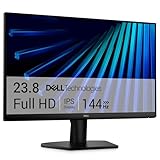
- Clear visuals. Fluid motion: A 144Hz refresh rate and 1ms MPRT deliver smooth, tear‑free motion across work, gaming, and streaming for clearer, more fluid viewing.
- Eye comfort: TÜV Rheinland 3‑star* certification reduces harmful blue light while preserving stunning color quality without compromise. *TÜV Rheinland 3-star eye comfort certification.
- Wide viewing angle: Get consistent views across a wide 178° /178° viewing angle.
- In-Plane Switching (IPS): See excellent color accuracy and consistency across wide viewing angles with In-plane Switching (IPS) technology.
- Ultra-thin bezels: Maximize your viewing experience with thin bezels.
How should you compare cloud data warehouse pricing?
Compare total cost of ownership at realistic utilization, not a single per-terabyte, per-credit, DBU, RPU, or capacity number. Model at least three scenarios: low or intermittent use, expected steady-state use, and peak or growth use.
| Cost category | Questions to include |
|---|---|
| Compute | What are the billable units, minimum charges, scaling rules, idle behavior, and workload-isolation costs? |
| Storage | What are active, historical, backup, snapshot, and external-storage costs? |
| Ingestion and transformation | Are pipelines, jobs, serverless transformations, merges, and orchestration billed separately? |
| Querying | Are charges based on bytes processed, capacity, credits, runtime, or a combination? |
| Networking | What are egress, cross-region, cross-cloud, private-connectivity, and replication costs? |
| Platform services | Are catalogs, governance, observability, sharing, AI, notebooks, and serverless features separate? |
| People and tools | What are the costs of BI, dbt, ingestion, quality, lineage, support, training, and professional services? |
| Commitments | What discounts require reservations or capacity commitments, and what utilization is needed to justify them? |
How do the major pricing models differ?
Consumption or credit-based pricing
Snowflake separates compute, storage, and data-transfer costs. Snowflake documents that virtual warehouses consume credits while running, with per-second billing and a 60-second minimum when a warehouse starts; cloud-services charges can apply when usage exceeds the documented threshold. See Snowflake’s overall cost documentation and Snowflake’s compute cost documentation.
The model supports workload isolation and flexible scaling, but idle warehouses, autoscaling, serverless features, and data transfer can create surprises. Use auto-suspend, budgets, alerts, resource monitors, and detailed chargeback where available.
Query-volume or scan-based pricing
BigQuery supports on-demand query pricing and capacity-based editions. The buyer must distinguish bytes processed from bytes billed and test partitioning, clustering, caching, reservations, and concurrency using production-like queries.
Scan-based pricing can be efficient for variable workloads when queries are well designed. Poorly governed ad hoc queries can scan large tables, while capacity commitments can be wasteful when utilization is low.
Provisioned capacity
Provisioned systems can be attractive for predictable, steady workloads, but the buyer pays for capacity that may be idle. Pausing, resizing, autoscaling, reservations, and shared-capacity controls should be included in the utilization model.
DBU plus cloud infrastructure
Databricks combines platform consumption with the underlying cloud bill. The model can consolidate several engineering and analytics products, but the buyer must track DBUs, clusters or SQL warehouses, jobs, storage, networking, and feature-specific charges separately.
Fabric capacity
Fabric capacity can make sense when BI, warehousing, engineering, and other Fabric workloads share an existing Microsoft investment. Capacity contention and licensing choices mean that the model must include all participating workloads, not just Data Warehouse queries.
What architecture and storage capabilities matter?
Evaluate whether storage and compute scale independently, whether data can remain in the organization’s object-storage account, and how much data must be copied between lake, warehouse, semantic layer, and AI systems.
- Storage model: Compare native managed tables with external tables and object-storage access.
- Formats: Check required read and write support for Parquet, Delta Lake, and Apache Iceberg.
- Table maintenance: Test compaction, clustering, partitioning, statistics, file sizing, and schema evolution.
- Recovery features: Evaluate time travel, cloning, snapshots, rollback, backup, and restore.
- Metadata: Identify the catalog, lineage model, ownership model, and interoperability with existing governance tools.
- Sharing: Test cross-account, cross-region, partner, marketplace, clean-room, and external-consumer workflows.
- Exit: Confirm whether data, metadata, transformations, permissions, and BI models can be exported and reconstructed elsewhere.
How should warehouse performance be tested?
Performance should be measured against the organization’s queries and concurrency patterns, not a single vendor benchmark. A platform that wins a large scan may lose on small selective queries, merges, dashboard concurrency, or cold-start latency.
Test dashboard refresh latency, concurrent dashboard users, small selective queries, large scans, multi-way joins, aggregations, window functions, incremental models, data loading, merges, semi-structured queries, and performance after data growth.
Rank #4

- CURVED FOR ENHANCED ENGAGEMENT: An immersive viewing experience with a curved monitor that wraps more closely around your field of vision; It creates a wider view, enhancing depth perception and minimizing peripheral distraction
- SMOOTH PERFORMANCE FOR SEAMLESS CONTENT: Stay in the action when playing games, watching videos, or working on creative projects; The 100Hz refresh rate reduces lag and motion blur so you don't miss a thing in fast-paced moments¹
- MORE GAMING POWER: Gain the edge with optimizable game settings; Color and image contrast can be adjusted to see scenes more vividly and spot enemies hiding in the dark; Game Mode adjusts any game to fill the screen so you can view every detail²
- KEEP IT EASY ON THE EYES: Care for your eyes and stay comfortable, even during long sessions; Advanced eye comfort technology certified by TÜV reduces eye strain by minimizing blue light and reducing irritating screen flicker²
- INCREASED VERSATILITY: Connect to more; Plug devices straight into your monitor for increased flexibility, making your computing environment even more convenient
Ask each vendor which optimizations are automatic, which require manual tuning, how caching affects results, whether scaling is automatic or scheduled, how performance changes under concurrency, and how much regional or edition-level variability exists.
Record median and p95 latency, dashboard refresh time, load throughput, transformation duration, concurrent-user performance, cold-start time, compute consumption, storage footprint, data transfer, administrative hours, and failure-recovery time. Run both cold-cache and warm-cache tests and report the cache state with every result.
Recommended Free Tools
What governance and security controls are required?
A production warehouse should support federated identity, role-based access control, row- and column-level security, masking, auditability, private networking, encryption, retention, lineage, residency, and recovery controls appropriate to the data.
- SSO and identity federation with the organization’s identity provider.
- Role-based access control and separation of duties.
- Row-level security, column-level security, and dynamic data masking.
- Customer-managed keys where required.
- Private endpoints, network isolation, and controlled service-to-service access.
- Audit logs for authentication, queries, permission changes, data access, and administrative actions.
- Data classification, retention, deletion, legal hold, and access-review workflows.
- Regional hosting, residency, cross-region recovery, and cross-border transfer controls.
- Lineage from source data through transformations to dashboards and data products.
- Controls for AI prompts, embeddings, model calls, outputs, and separately billed AI features.
- Secure sharing with external partners and clear consumer permissions.
Fabric documentation lists Entra ID authentication, workspace roles, SQL permissions, audit logs, row-level security, column-level security, and encryption among its capabilities in the Fabric Data Warehouse documentation. Vendor certification does not automatically make an implementation compliant: the customer remains responsible for configuration, identity, classification, retention, and operating procedures.
How important are ecosystem and team skills?
Existing skills and tools should receive more weight than feature-count comparisons. A technically capable platform can be a poor choice if it forces a new identity model, BI layer, orchestration system, data-engineering workflow, or deployment process.
Check mature support for dbt, Airflow, Fivetran, Airbyte, Matillion, Kafka, Spark, Python, notebooks, Tableau, Power BI, Looker, reverse ETL, catalogs, data quality, Terraform, Git-based development, CI/CD, JDBC, ODBC, REST, native drivers, and existing object storage.
What’s actually slowing this PC down?
Pick the symptom - the matching free tool is one click away.
Adjacent purchases may include dbt for transformation, Fivetran or Airbyte for ingestion, Monte Carlo for observability, Astronomer for managed Airflow, and Power BI, Tableau, or Looker for BI. These tools are not automatically required, and their pricing pages should be reviewed separately from warehouse pricing.
What migration risks should be checked?
Migration risk is the effort required to reproduce behavior, not merely the ability to load tables. Test SQL dialects, stored procedures, temporary tables, arrays, JSON, geospatial types, user-defined functions, sequences, identity columns, transactions, merge semantics, permissions, BI reports, CDC, and late-arriving data.
Ask whether historical data can be bulk-loaded efficiently, whether old and new systems can run in parallel, whether BI reports can be redirected without redesign, how roles and masking policies translate, and whether rollback is technically and contractually possible.
Fabric documents migration paths for SQL Server, Azure Synapse Analytics, and other SQL Database Engine platforms, including a Fabric Migration Assistant. Review the Fabric data warehousing guidance and Fabric migration documentation when Microsoft platforms are in the shortlist.
How should you run a cloud warehouse proof of concept?
A proof of concept should answer whether each finalist meets the required performance, security, migration, operational, and three-year cost criteria under representative conditions.
Best Value

- 【INTEGRATED SPEAKERS】Whether you're at work or in the midst of an intense gaming session, our built-in speakers provide rich and seamless audio, all while keeping your desk clutter-free.
- 【EASY ON THE EYES】 Protect your eyes and enhance your comfort with Blue-Light Shift technology. This feature reduces harmful blue light emissions from your screen, helping to alleviate eye strain during long hours of use and promoting healthier viewing habits.
- 【WIDEN YOUR PERSPECTIVE】Our sleek minimal bezel design ensures undivided attention. The nearly bezel-free display seamlessly connects in a dual monitor arrangement, delivering an unobstructed view that lets you focus on more at once, completely distraction-free.
1. Prepare a representative test pack
- Realistic table sizes and growth projections.
- Typical and worst-case dashboard queries.
- Incremental loads, upserts, deletes, and late-arriving data.
- Semi-structured fields and large multi-table joins.
- High-concurrency BI tests.
- Representative security policies and masked data.
- A historical migration sample and data-quality checks.
- The actual BI reports, transformation logic, and orchestration patterns where possible.
2. Make the comparison fair
- Use the same data and equivalent query logic.
- Record region, edition, configuration, table layout, and file layout.
- Run cold-cache and warm-cache tests separately.
- Disable result caching or record its effect rather than hiding it.
- Record free tiers, discounts, commitments, and negotiated pricing.
- Include idle, bursty, steady-state, and growth periods.
- Run long enough to expose autoscaling, throttling, compaction, and capacity behavior.
3. Measure the complete outcome
Measure median and p95 latency, dashboard refresh time, ingest throughput, transformation duration, concurrency, cold-start time, consumption, storage, transfer, administrative hours, failure recovery, environment reproducibility, and the work required to diagnose failures.
Do not extrapolate a one-hour benchmark directly to annual cost. Convert observed consumption into a utilization model with low, expected, and peak scenarios.
4. Set exit criteria
Select a platform only when the platform satisfies required latency and concurrency, security and residency requirements, migration feasibility, a credible three-year cost model, acceptable operational complexity, and a documented rollback or exit strategy.
What should an RFP ask vendors?
Architecture
- Is storage separated from compute?
- Can external Parquet, Delta, or Iceberg data be queried and updated?
- Which catalog is required, and can data remain in our cloud account?
- What cross-cloud and cross-region capabilities are available?
Performance
- What happens at our expected concurrency?
- How quickly can compute scale, and what is cold-start latency?
- Which optimizations are automatic?
- Which optimizations require partitioning, clustering, statistics, or compaction?
- How are BI, ELT, and data-science workloads isolated?
Cost
- What are the billable units and minimum charges?
- What happens when the system is idle?
- Which features carry separate charges?
- What are storage, egress, replication, backup, catalog, support, and AI charges?
- Which discounts require commitments, and what utilization is needed to justify them?
- Can the organization set hard usage limits and export detailed billing data?
Security and operations
- Which identity providers, private-networking options, key-management choices, and audit events are supported?
- Where is customer data processed?
- Are AI features opt-in, region-limited, separately billed, and governed against customer-data reuse?
- What SLA, recovery objectives, incident communications, cloning, Terraform, CI/CD, cost alerts, and failure-diagnosis capabilities are included?
Migration and exit
- Which SQL dialects and procedural features are supported?
- How are permissions and masking policies migrated?
- Can data and metadata be exported in open formats?
- Can the new platform run alongside the current warehouse?
- What professional services are required?
- What is the documented rollback path?
Which warehouse fits each common scenario?
| Scenario | Prioritize | Likely candidates | Watch closely |
|---|---|---|---|
| Startup choosing its first platform | Fast time to value, low administration, variable-cost control, and low minimum commitment | BigQuery, Snowflake, Redshift Serverless, or a managed database for modest workloads | Unexpected scans, minimum charges, premature commitments, and tool sprawl |
| AWS enterprise | S3, IAM, Glue, VPC, private networking, and existing commitments | Redshift, Snowflake, Databricks, or BigQuery if cross-cloud needs justify it | Egress, AWS service sprawl, and duplicated storage |
| Microsoft enterprise | Power BI, Entra ID, T-SQL, OneLake, and existing licensing | Fabric, Azure-based Snowflake, or Databricks | Shared-capacity contention and full licensing cost |
| AI and data-science organization | Spark, notebooks, ML lifecycle, streaming, open formats, and model governance | Databricks, Fabric, or a warehouse paired with a lakehouse | AI feature maturity, model-call cost, data movement, and access controls |
| Regulated organization | Residency, private connectivity, auditability, key management, recovery, and support | Any finalist that passes the region- and control-specific POC | Certification claims that do not cover customer configuration |
| Multi-cloud organization | Cross-cloud availability, sharing, egress, portability, and consistent operations | Snowflake, Databricks, or an open lakehouse architecture | Feature parity, network paths, catalog dependence, and transfer costs |
What commonly goes wrong after purchase?
- Cost: A warehouse or cluster runs overnight; a serverless query scans unpartitioned tables; capacity is bought for peak demand but lightly used; or storage, snapshots, catalogs, networking, and orchestration were omitted.
- Performance: The benchmark used small, clean, cached data; production joins contain skew; BI concurrency was ignored; or file layout, partitioning, clustering, statistics, and compaction were not managed.
- Architecture: An object-storage lake was treated as a warehouse without governance; data was duplicated across the lake, warehouse, semantic layer, and AI system; or shared capacity mixed BI, ELT, and data science without workload controls.
- Migration: SQL dialect differences, procedures, UDFs, CDC, permissions, masking policies, scheduled reports, or late-arriving data were underestimated.
- Governance: Default permissions were left in place, analysts received broad raw-data access, AI prompts and outputs were not governed, or nobody owned business definitions and lineage.
How should you score the finalists?
Use a weighted scorecard rather than an unstructured feature checklist. A reasonable starting model is workload fit 20%, realistic total cost 20%, performance and concurrency 15%, ecosystem and team fit 15%, governance and security 10%, migration effort 10%, reliability and support 5%, and portability and lock-in 5%.
| Criterion | Suggested weight | Evidence to require |
|---|---|---|
| Workload fit | 20% | Representative queries, ingestion, concurrency, streaming, BI, and ML results |
| Total cost at realistic utilization | 20% | Three-year low, expected, and peak scenarios including surrounding tools |
| Performance and concurrency | 15% | Median and p95 results under cold, warm, and concurrent workloads |
| Ecosystem and team fit | 15% | Existing cloud, identity, BI, orchestration, SQL, Python, Spark, and CI/CD skills |
| Governance and security | 10% | Access, masking, audit, keys, residency, lineage, and private-networking tests |
| Migration effort | 10% | SQL reuse, procedures, permissions, CDC, BI redirection, and parallel-run plan |
| Reliability and support | 5% | SLA, recovery, incident process, observability, and support response |
| Portability and lock-in | 5% | Open-format export, metadata preservation, transformation portability, and exit cost |
Adjust the weights by scenario. A startup may increase simplicity and variable-cost control. An AWS enterprise may emphasize S3, IAM, Glue, VPC, and commitments. A Microsoft enterprise may emphasize Power BI, Entra ID, Fabric capacity, T-SQL, and existing licensing. An AI organization may increase the weight for Spark, notebooks, ML, streaming, and open formats. A regulated organization may give residency, private connectivity, auditability, keys, recovery, and support much greater weight.
What should the exit strategy contain?
An exit strategy should explain how the organization will export data, preserve metadata, reproduce transformations, migrate permissions, redirect BI, and operate a replacement platform. The strategy should identify proprietary features that cannot be reproduced and estimate the time, network cost, and engineering effort required to leave.
Review the exit strategy annually. Recheck pricing, region availability, AI feature status, contract commitments, data growth, workload mix, utilization, recovery tests, and the cost of maintaining open-format copies. Portability is not an abstract architectural virtue: it is an option whose value depends on whether the organization preserves usable data and metadata before a migration becomes urgent.
Frequently Asked Questions
Is Snowflake better than BigQuery?
Neither Snowflake nor BigQuery is universally better. Snowflake is often a strong fit for multi-cloud governed SQL, workload isolation, and sharing, while BigQuery is often a strong fit for Google Cloud, serverless operation, and variable SQL analytics; a representative proof of concept should decide between them.
Is Databricks a data warehouse or a lakehouse?
Databricks is a broader lakehouse data platform that includes Databricks SQL warehouse capabilities. Databricks is usually a stronger candidate when Spark, data engineering, streaming, machine learning, or AI are central than when a small team needs only a narrow SQL reporting service.
How much does a cloud data warehouse cost?
Cloud data warehouse cost depends on compute utilization, storage, ingestion, query scans, networking, replication, orchestration, BI, governance, support, and commitments. Public list prices are not directly comparable without region, edition, workload, caching, and utilization assumptions.
Should a small business buy a cloud data warehouse?
A small business should buy a cloud data warehouse when it needs consolidated historical analytics, governed reporting, repeatable transformations, or more analytical concurrency than an application database can handle. A managed PostgreSQL, SQL Server, BigQuery, or serverless warehouse may be more economical for modest or intermittent workloads.
The Tool Desk
Outbyte PC Repair FREERepair Windows errors before they cause bigger problemsFix Now →Outbyte Driver Updater FREEScan for outdated or missing drivers - takes under a minuteDriver Scan →The Bottom Line
Bottom line: Shortlist platforms by workload and data gravity, then validate the shortlist with a realistic proof of concept and a three-year total-cost model. Choose the platform that meets latency, concurrency, security, migration, and recovery requirements at acceptable operational complexity—not the platform with the most impressive feature list or lowest isolated headline rate.
Quick Recap
Product prices and availability are accurate as of the date/time indicated and are subject to change. Any price and availability information displayed on Amazon at the time of purchase will apply.

