
iTechGuides is reader-supported. When you buy through links on our site, we may earn an affiliate commission. As an Amazon Associate I earn from qualifying purchases. Learn more
The best prepaid cell phone minutes plan for most light callers is Tello’s displayed 300-minute, no-data custom plan at $5 per month, with unlimited texting included; the offer is for new customers, taxes and possible cost-recovery charges may apply, and the price is valid through September 30, 2026. Frequent callers may get better value from Tello unlimited talk at a slightly higher price.
Prepaid phone service has changed: many carriers no longer sell small voice-minute buckets and instead bundle unlimited talk and text with a little data. Tello remains the clearest fit for someone who specifically wants to pay for about 100–500 minutes, while Red Pocket is more useful when network selection matters and Verizon Prepaid is a higher-cost direct-carrier alternative.
Prices and offers in this article were checked against the supplied provider pages on August 16, 2026. Prepaid prices, taxes, promotions, eligibility rules, and available networks can change.
Key takeaways
- Tello’s displayed $5-per-month custom plan provides 300 voice minutes, no cellular data, and unlimited texting; taxes and a possible cost-recovery charge may apply.
- Tello’s displayed 2GB-plus-300-minute plan costs $8 per month, while a displayed 2GB-plus-unlimited-talk configuration costs $10 per month, making unlimited talk attractive for regular callers.
- Red Pocket offers plans across Verizon, T-Mobile, and AT&T network options, but the available network, price, and terms depend on the selected plan and device.
- Verizon Prepaid’s Talk & Text plan is displayed at $30 per month and is limited to 2G data speeds, so it is mainly a calling plan.
- A 300-minute allowance equals about 10 minutes of calling per day over 30 days; callers who regularly exceed that amount should compare unlimited talk before buying.
- Taxes, fees, AutoPay conditions, promotional expiration dates, annual prepayment, coverage, and phone compatibility can matter more than the advertised monthly price.
Best prepaid cell phone minutes plans at a glance
The best prepaid cell phone minutes plan depends on whether the priority is a genuine minute allowance, smartphone data, unlimited calling, network choice, or direct-carrier support. The table separates those use cases instead of ranking every plan by its headline price.
Popular on Amazon
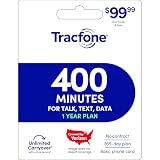
- This item is not eligible for refund, resale, or return. Available for sale within the United States only.
- This service card is only valid 365 days and is strictly compatible with Tracfone service on the dependable Verizon 5G Network.
- This card is strictly for Basic/Feature Phones only and provides 365 Service Days (1 full year) of service. Compatible only with basic phone plans.
| Provider and plan | Voice | Texts | Data | Displayed price | Network or service type | Best for | Main drawback |
|---|---|---|---|---|---|---|---|
| Tello custom plan | 300 minutes | Unlimited | None | $5/month | Tello network arrangement using T-Mobile’s network | The cheapest clearly identified limited-minute option | Promotional price; no cellular data; coverage may not fit every location |
| Tello custom plan | 300 minutes | Unlimited | 2GB | $8/month | Tello network arrangement using T-Mobile’s network | Light smartphone use with limited calling | Verify promotional terms, taxes, and coverage |
| Tello unlimited-talk configuration | Unlimited | Unlimited | 2GB configuration displayed | $10/month | Tello network arrangement using T-Mobile’s network | Callers likely to exceed 300 minutes | Costs more than the no-data minute plan and still requires coverage verification |
| Red Pocket limited plan | 100 minutes | 100 texts | 1GB | Varies by selected plan | Plans on Verizon, T-Mobile, and AT&T network options | People who need network choice | Plan, network, device, and term details must be checked during selection |
| Red Pocket highlighted plan | Unlimited | Unlimited | 3GB high-speed | $10/month | Selected major-network option | Unlimited calling at a low displayed price | Confirm the selected network and current terms |
| Verizon Prepaid Talk & Text | Unlimited talk | Unlimited text | 2G speeds | $30/month | Direct Verizon Prepaid | Customers prioritizing Verizon’s direct-carrier support and coverage | Much more expensive; data is limited to 2G speeds |
The Tello and Red Pocket prices above are displayed offers, not guaranteed final totals. Tello says location-dependent government taxes and a possible cost-recovery charge can apply; Verizon’s price and discounts can also depend on payment conditions and eligibility. Check the final checkout total before comparing plans.
What does “prepaid cell phone minutes” mean now?
“Prepaid cell phone minutes” can mean either a fixed voice allowance or any prepaid plan used mainly for calling. A minute plan supplies a set number of voice minutes, such as 100 or 300. An unlimited-talk plan removes the ordinary domestic voice-minute limit but still follows the provider’s destination and acceptable-use terms.
Other prepaid categories are easy to confuse:
- Talk-and-text plans: These may include unlimited texts even when voice minutes are limited. Tello states that unlimited texting is included with every plan, including custom minute plans.
- No-data plans: These are suitable for a basic phone or a smartphone used mainly on Wi-Fi.
- Annual plans: These require upfront payment for a longer service period and may reduce the effective monthly cost.
- Pay-as-you-go service: This charges according to use or requires periodic account replenishment rather than a conventional monthly bundle.
Industry pricing has increasingly moved toward unlimited talk and text with modest data rather than traditional small minute buckets, as reflected in the FCC Communications Marketplace Report. That shift is why a $10 unlimited-talk plan can sometimes be more practical than a cheaper 300-minute plan.
Which plan is best for each type of caller?
Best cheap minute-based plan: Tello 300 minutes with no data
Tello is the strongest current fit for a customer who specifically wants a small voice allowance. The displayed custom plan provides 300 minutes, no cellular data, unlimited texting, and a $5-per-month promotional price for new customers. The offer page says the offer is valid through September 30, 2026; taxes and a possible cost-recovery charge may apply.
The no-data configuration suits a basic phone, an emergency backup line with active service, or a smartphone that will normally use Wi-Fi. The plan is less suitable if the user needs maps, ride-hailing, app-based messaging, visual voicemail, or internet calling away from Wi-Fi.
Best for light smartphone use: Tello 2GB plus 300 minutes
Tello’s displayed 2GB-plus-300-minute configuration costs $8 per month. The extra data supports occasional maps, email, messaging, and browsing while preserving a limited voice allowance.
Two gigabytes is not unlimited smartphone service. Background synchronization, software updates, video, social media, photo backup, and streaming can use the allowance quickly. Set app updates to Wi-Fi and review the phone’s cellular-data settings if the user chooses this plan.
What’s actually slowing this PC down?
Pick the symptom - the matching free tool is one click away.
Best for frequent callers: Tello unlimited talk
Tello’s plan builder displays a 2GB-plus-unlimited-talk configuration at $10 per month. A caller who regularly exceeds 300 minutes may prefer unlimited talk for the small displayed price difference, even if the caller uses little data.
Unlimited talk does not automatically mean unlimited calls to every country, premium-rate number, conference service, or forwarded destination. Check Tello’s current terms for the destinations and usage covered before assuming every call is included.
Best for network flexibility: Red Pocket
Red Pocket is the most useful alternative when the customer needs to select among major-network options. Red Pocket’s current plan page says it offers plans on Verizon, T-Mobile, and AT&T networks. The same page lists limited options including 100 minutes, 100 texts, and 1GB of data, as well as a highlighted $10-per-month plan with unlimited talk and text plus 3GB of high-speed data.
Network choice is valuable, but Red Pocket’s plans should not be treated as interchangeable. Confirm the selected network, device compatibility, monthly or annual term, roaming, data rules, and final price during enrollment. Access to a major carrier’s network does not guarantee identical congestion priority, roaming, customer support, or international service.
Recommended Free Tools
Best direct-carrier option: Verizon Prepaid Talk & Text
Verizon Prepaid’s Talk & Text plan is displayed at $30 per month. Verizon describes the plan as limited to 2G data speeds, so the plan is aimed at calling and texting rather than normal smartphone data.
Also popular on Amazon

- Tracfone's $15 Smartphone Unlimited 30-Day Plan provides Unlimited Talk &Text
- Unlimited Carryover of unused minutes and text with active service
- This Service Plan can be used to refill your current Tracfone Service or be used to activate a new Tracfone Service.
- This plan is compatible with most TracFone prepaid phones, a lineup of the latest and greatest devices including 5G smartphones
- Physical Card
Verizon Prepaid costs substantially more than the displayed Tello and Red Pocket offers. The higher price may still make sense for someone who values direct-carrier support, Verizon retail availability, or Verizon coverage at home and work.
Best for a Lifeline-eligible household: investigate Lifeline first
Low-income consumers should check the federal Lifeline program before paying for a standard prepaid plan. Eligibility depends on household income or participation in a qualifying program, and availability and enrollment procedures vary by state and provider.
Use the official Lifeline Support resources and provider-search tools. Only one Lifeline benefit is generally allowed per household. Lifeline is distinct from temporary or discontinued broadband-benefit programs, and eligibility is not automatic for every prepaid customer.
How many prepaid minutes do you need?
Estimate monthly calling by multiplying average daily voice use by 30, then add a buffer. The following figures are planning estimates, not carrier usage limits.
| Calling pattern | Approximate monthly need | Suitable starting point | Why |
|---|---|---|---|
| Emergency or backup phone | 0–100 minutes | No-data or very small-minute plan | The line is maintained mainly for occasional calls |
| Occasional personal calls | 100–300 minutes | 300-minute plan | Enough for light calling without paying for heavy-use features |
| Regular calls | 300–800 minutes | 500-minute or unlimited-talk plan | A 300-minute allowance may be restrictive |
| Daily calling | 800+ minutes | Unlimited talk | Monitoring every call is usually impractical |
| Business, caregiving, or support calls | Highly variable | Unlimited talk, preferably with data and hotspot if needed | Hold times and unexpected calls can consume a small allowance |
| Senior who primarily calls | 100–500 minutes | 300 minutes or unlimited talk if the price difference is small | Simple service is useful, but medical-office holds require headroom |
Is 300 minutes enough?
Three hundred minutes is enough when average calling is about 10 minutes per day over 30 days. Fifteen minutes per day is approximately 450 minutes per month, while 30 minutes per day is approximately 900 minutes per month.
Those calculations should include customer-service calls, medical-office hold times, voicemail access, conference calls, and family calls. A 300-minute plan can be the cheapest choice on paper but a poor practical choice if one long call consumes a large share of the allowance.
What is the break-even point between 300 minutes and unlimited talk?
For the displayed Tello configurations, the practical break-even point is around regular use above 300 minutes, not a precise billing threshold. Tello shows 300 minutes with no data at $5, 2GB with 300 minutes at $8, and 2GB with unlimited talk at $10. A caller who expects to exceed 300 minutes should compare the $10 unlimited-talk option rather than buying a minute plan and risking an overage or forced upgrade.
Do these 3 things before closing this tab:
1Repair Windows errors before they cause bigger problems2Fix the driver behind crashes, sound loss and screen glitches3Clear out junk files and repair common Windows errors| Expected use | Displayed Tello configuration to compare | Practical verdict |
|---|---|---|
| 0–100 minutes, Wi-Fi available | $5 no-data/300-minute plan | Choose the cheaper minute plan if coverage and final taxes work |
| 100–300 minutes, little smartphone data | $5 no-data/300-minute plan | Good fit for a basic phone or Wi-Fi-first smartphone |
| 100–300 minutes plus occasional mobile data | $8 2GB/300-minute plan | Pay more for maps, email, and light app use |
| More than 300 minutes or unpredictable calling | $10 2GB/unlimited-talk configuration | Unlimited talk may be better value and less stressful |
Prices in this comparison are displayed offers checked August 16, 2026. Taxes, promotions, and renewal terms can change the final result.
How much data do you need with a minute plan?
Data is not necessary for voice calling when the phone and service support ordinary cellular calls, but data becomes important for smartphone features away from Wi-Fi.
- No data: Best for a basic phone or a Wi-Fi-only smartphone. Cellular maps, ride-hailing, app-based calling, internet messaging, and background services may not work away from Wi-Fi.
- 500MB to 2GB: Suitable for light maps, email, messaging, and occasional browsing. Tello’s displayed 2GB options fit this category.
- 5GB to 10GB: Better for regular smartphone use, provided video and large downloads are limited.
- Unlimited data: Usually unnecessary when the main purpose of the line is voice calling, though the user should evaluate hotspot and speed terms separately.
A no-data plan does not make a smartphone useless. Wi-Fi can still support apps and internet calling, but a user should not assume Wi-Fi will be available during travel, power outages, medical visits, or other backup-phone situations.
Does Wi-Fi calling use prepaid minutes?
Wi-Fi calling does not have one universal billing rule across prepaid carriers. Some providers count Wi-Fi calls against the plan’s voice allowance, while others may handle calls differently depending on the service, destination, and terms.
Check the specific provider’s current Wi-Fi-calling and voice-service terms before choosing a small-minute plan. Do not assume that a call is free merely because the phone is connected to Wi-Fi.
Also popular on Amazon

- Verizon Prepaid $40 Pin Code (not for Postpaid Verizon service)
- Pay and use as you go. No added fees, No annual Contract
Which calls count against a prepaid voice allowance?
The provider’s terms control which calls consume minutes or qualify as unlimited. Before purchasing, check treatment of domestic cellular calls, toll-free numbers, customer-service short codes, voicemail access, conference calls, forwarded calls, international calls, premium-rate numbers, and directory assistance.
Third-party calling apps can use cellular data or Wi-Fi instead of the carrier’s ordinary voice service, but app behavior, data use, emergency calling, caller ID, and reliability vary. A third-party app is not a substitute for verifying the carrier’s voice rules.
How should you compare the real prepaid price?
Compare the final cost in the customer’s ZIP code, not just the large price displayed in an advertisement. Include the advertised monthly rate, government taxes, regulatory fees, possible cost-recovery charges, AutoPay requirements, promotional expiration, SIM or activation charges, device payments, required add-ons, and annual prepayment.
PC Slower Than It Used to Be?
A free scan shows the junk files, broken settings and background clutter dragging Windows down - then fixes them in one click.Free scan · Windows 10 & 11Crashes, No Sound, or Screen Glitches?
Random freezes, missing sound and display glitches usually trace back to one bad driver. Find and replace yours safely.Free scan · under a minuteTello’s plan disclosure says government taxes vary by location and that cost recovery can be up to 30 cents. Tello’s $5 300-minute listing is a limited promotional offer for new customers and states validity through September 30, 2026. Treat the price as a checked offer, not a permanent rate.
| Price label | What it means | What to verify |
|---|---|---|
| Regular price | The stated ongoing rate | Whether taxes and fees are included |
| Introductory or promotional price | A lower rate available for a defined period or customer group | End date, renewal price, and new-customer restrictions |
| AutoPay price | A rate conditional on automatic payment | Payment method, discount loss, and cancellation timing |
| Annual effective price | Upfront annual payment divided into monthly-equivalent cost | Refunds, expiration, port-out restrictions, and total upfront payment |
| Checkout total | The amount charged after applicable fees | ZIP-code taxes, activation, SIM, device, and add-on charges |
Monthly or annual prepaid service: which is better?
Monthly plans are usually safer for uncertain users because monthly service requires less upfront money and makes it easier to test coverage, change plans, or leave. Annual plans can produce a lower effective monthly rate for stable users who are confident about their network, phone, and expected usage.
| Plan term | Advantages | Risks and trade-offs | Best for |
|---|---|---|---|
| Monthly | Lower upfront cost; easier to change or cancel; useful for testing coverage | May cost more over a year; promotions or AutoPay discounts may change | Uncertain users, movers, travelers, and first-time customers |
| Annual | Potentially lower effective monthly price; fewer renewal decisions | Large upfront payment; refunds and port-out rules may be restrictive; balances may expire | Stable, light users who expect to keep the same service |
An annual plan is not a bargain if the customer may move, lose the phone, change networks, or port out soon. Read expiration and forfeiture terms before prepaying.
How do network and coverage affect the best plan?
Network coverage is a location-specific decision. Check the customer’s home, workplace, rural routes, travel destinations, and indoor areas rather than relying on a national reputation.
The Tool Desk
Outbyte Driver Updater FREEScan for outdated or missing drivers - takes under a minuteDriver Scan →Outbyte PC Repair FREEClear out junk files and repair common Windows errorsFree Scan →Also check 5G availability, roaming arrangements, congestion priority, domestic roaming, and the provider’s phone-compatibility requirements. An MVNO can use a major carrier’s network while offering a different service experience, including different priority, roaming, support, and international options.
Tello’s plan materials identify its network arrangement with T-Mobile, while Red Pocket’s plan page says Red Pocket offers plans on Verizon, T-Mobile, and AT&T networks. Red Pocket’s available network can depend on the selected plan, device, and location, so confirm the choice during enrollment.
What should you check before bringing your own phone?
A low-cost plan is useless if the phone cannot activate. Before buying a SIM or eSIM, verify all of the following:
- The phone is unlocked.
- The phone supports the provider’s LTE and 5G bands.
- The phone supports VoLTE.
- The device is not blacklisted or reported lost.
- The device is not still tied to an unpaid carrier installment agreement.
- The provider accepts the phone’s IMEI.
- The phone supports eSIM if eSIM activation is required.
- The phone is compatible with the selected network, not merely with a different carrier that uses similar technology.
For senior use, also check hearing-aid compatibility, physical-button design, voicemail simplicity, speaker volume, charging reliability, and whether a family member can manage the account.
Quick wins for a faster PC:
Repair Windows errors before they cause bigger problemsFix Now →Scan for outdated or missing drivers - takes under a minuteDriver Scan →How do you port a number to prepaid service?
Keep the old service active until the number transfer completes. The new carrier will generally need the old account number, number-transfer or port-out PIN, billing ZIP code, and the phone number being transferred.
Also popular on Amazon

- No annual contract or credit check
- Buy airtime as you need it, good for 45 days from time of activation
- Local Calling Plan calls cost $0.50 a minute
- National Calling Plan calls cost $0.85 a minute
- Domestic long distance calls included in the price per minute
- Confirm that the new carrier accepts the number and that the phone is compatible.
- Find the old carrier’s account number and transfer PIN.
- Enter the billing ZIP code exactly as the old carrier has it recorded.
- Submit the port request through the new carrier.
- Keep the old account active while the transfer is pending.
- Test calls, texts, voicemail, caller ID, and data after activation.
- Review the old account after completion; porting may terminate the old service automatically, but unused prepaid balances may not be refundable.
Porting requirements and recovery procedures vary by provider. Follow the new carrier’s current porting instructions rather than assuming every prepaid service uses the same process.
What are the best choices for seniors, children, and backup phones?
Seniors who primarily call
A 300-minute plan can work for a senior who makes short, predictable calls, but unlimited talk may be safer if medical-office hold times, caregiver calls, or family conversations are common. Simple billing, reliable voicemail, retail access, large-print account information, hearing-aid compatibility, and a straightforward phone can matter more than a few dollars of monthly savings.
Children
A small-minute plan can limit voice costs for a child, especially when the child primarily uses Wi-Fi messaging. Parents should decide whether the child needs cellular data for maps, transportation, school communication, or emergencies. Check parental controls, location features, and the phone’s ability to make ordinary calls rather than relying only on an app.
Free tools Windows power users keep installed
One-click scans. No signup required.
Emergency or backup phones
An active prepaid line with a small voice allowance can be useful as a backup, but an expired or disconnected plan should not be treated as reliable emergency service. Emergency calling availability, location support, and behavior without ordinary service can vary by carrier, phone, and location. Keep the phone charged and verify the provider’s current emergency-service guidance.
What should low-income consumers know about Lifeline?
Lifeline is a federal benefit for eligible low-income consumers. Eligibility generally depends on income or participation in a qualifying assistance program, only one benefit is generally allowed per household, and state and provider enrollment procedures vary.
Apply or check eligibility through the official Lifeline application information and the Lifeline recertification materials. Do not assume that every carrier offers the same benefit, that approval is automatic, or that a discontinued temporary broadband benefit is the same program.
What common mistakes make a cheap prepaid plan expensive?
- Choosing by headline price alone: Taxes, fees, activation, AutoPay, and promotional renewal terms can change the final total.
- Buying no data for a data-dependent smartphone: Maps, ride-hailing, visual voicemail, app messaging, and background services may fail away from Wi-Fi.
- Assuming Wi-Fi calling is outside the minute allowance: Carrier rules differ.
- Ignoring long calls: Medical offices, customer support, and conference calls can quickly consume 300 minutes.
- Assuming unlimited talk covers international calls: International destinations, Canada, Mexico, Puerto Rico, U.S. territories, premium numbers, and forwarded calls may have separate rules.
- Cancelling the old carrier before porting: The number may become difficult or impossible to recover after prepaid service expires.
- Assuming MVNO service is identical to major-carrier service: Priority, roaming, support, and international features can differ.
- Prepaying annually without checking expiration: A lower monthly equivalent may not compensate for lost flexibility.
- Using stale pricing: Prepaid offers change frequently; verify the rate and terms at checkout.
How should you choose the best prepaid cell phone minutes plan?
- Estimate voice use: Use daily minutes multiplied by 30, then add a buffer.
- Decide whether cellular data is necessary: Choose no data for a basic or Wi-Fi-first phone; choose at least a light data allowance for mobile maps, email, and apps.
- Check coverage: Test the underlying network at home, work, indoors, and along regular travel routes.
- Compare the final price: Include taxes, fees, AutoPay, activation, SIM or eSIM charges, and the post-promotion rate.
- Verify the phone: Confirm unlocking, IMEI acceptance, VoLTE, LTE/5G bands, and eSIM support if needed.
- Review terms: Check renewal, expiration, roaming, hotspot, international calling, cancellation, refunds, and porting rules.
- Check Lifeline first: Eligible households should investigate the federal benefit before purchasing ordinary prepaid service.
For a more consistent comparison, weight network suitability at 30%, total price at 25%, voice and text fit at 20%, data usefulness at 10%, phone compatibility at 5%, flexibility at 5%, and support and extras at 5%. The weights are a decision framework, not a provider rating.
Do these 3 things before closing this tab:
1Clear out junk files and repair common Windows errors2Fix the driver behind crashes, sound loss and screen glitches3Repair Windows errors before they cause bigger problemsFrequently Asked Questions
Is Tello’s $5 prepaid minutes price permanent?
No. Tello’s displayed $5 price for 300 minutes with no data is identified as a promotional offer for new customers and is stated to be valid through September 30, 2026. Taxes and a possible cost-recovery charge may apply, so verify the renewal price and checkout total before activating service.
Can a prepaid phone plan have minutes but no data?
Yes. Tello displays a 300-minute, no-data custom plan. A no-data plan can support ordinary calls and Wi-Fi use, but cellular maps, app-based messaging, internet calling, and other online features may not work away from Wi-Fi.
Does unlimited talk include international calls?
Not necessarily. Domestic unlimited talk generally does not establish that international, premium-rate, directory-assistance, conference, or forwarded calls are included. Check the carrier’s current destinations, rates, and add-ons.
What is the cheapest prepaid plan for someone who qualifies for assistance?
A Lifeline-eligible consumer should investigate the federal Lifeline benefit before choosing a standard prepaid plan. Eligibility depends on income or qualifying-program participation, one benefit is generally allowed per household, and enrollment varies by state and provider.
Quick wins for a faster PC:
Clear out junk files and repair common Windows errorsFree Scan →Fix the driver behind crashes, sound loss and screen glitchesFind Drivers →The Bottom Line
Choose Tello’s displayed 300-minute, no-data plan if you make light calls and want the lowest clearly identified minute-based price. Choose Tello’s 2GB-plus-unlimited-talk configuration if your calling is unpredictable or regularly exceeds 300 minutes. Choose Red Pocket when network selection is more important than the simplest plan choice, and consider Verizon Prepaid when direct-carrier support and Verizon coverage justify a higher price. Check taxes, promotion terms, coverage, phone compatibility, and porting rules before paying.

