
iTechGuides is reader-supported. When you buy through links on our site, we may earn an affiliate commission. As an Amazon Associate I earn from qualifying purchases. Learn more
Use Gemini Notebook when your study session starts with your own notes, slides, recordings, or PDFs. It is designed to answer from the sources you provide, show inline citations, and turn those materials into study guides, quizzes, and flashcards. Use ChatGPT Study mode when you need an interactive tutor that asks questions, explains difficult ideas in stages, checks your understanding, and gives exam-style practice.
A useful $0 setup is to use both: build a cited, course-specific knowledge base in Gemini Notebook, then take the concepts you missed into ChatGPT Study mode for guided tutoring. Handwritten ruled index cards are an optional companion for the hardest facts because writing and retrieving an answer without seeing it exercises a different study habit than rereading a generated card.
Which free AI study tool should you choose?
There is no evidence in the documented product information of a head-to-head trial showing that one of these tools raises grades more than the other. The practical choice depends on what you need the tool to do.
Quick wins for a faster PC:
Scan for outdated or missing drivers - takes under a minuteDriver Scan →Repair Windows errors before they cause bigger problemsFix Now →Fix the driver behind crashes, sound loss and screen glitchesFind Drivers →| Need | Best fit | Why |
|---|---|---|
| Ask questions about your own course files and trace answers to those files | Gemini Notebook | Google describes it as grounded in the information you provide and says answers include inline citations. |
| Turn notes, slides, or readings into a study guide, quiz, or flashcards | Gemini Notebook | Its documented notebook workflow includes study guides, diagnostic quizzes, personalized lessons, progress tracking, flashcards, and infographics. |
| Work through a confusing idea with hints instead of receiving an immediate answer | ChatGPT Study mode | OpenAI documents Socratic-style questioning, layered explanations, knowledge checks, and step-by-step guidance. |
| Practice an oral or written exam interactively | ChatGPT Study mode | You can ask for one-question-at-a-time tutoring, follow-up questions, and feedback on your reasoning. |
| Use both source review and tutoring without paying | Gemini Notebook plus ChatGPT Study mode | The tools address different stages: source-grounded preparation first, then conversational retrieval practice. |
“Free” does not mean unlimited. Google publishes daily and per-notebook allowances for its education configuration, while OpenAI says Study mode follows the normal ChatGPT plan, model, message, and rate-limit rules. Check the live product pages shortly before a large upload session or an exam.
#1 Best Overall

- LASTS ALL YEAR. GUARANTEED! Guarantee is valid for one year from purchase or delivery date, whichever is longer. Does not cover misuse.
- Scan, study and organize your notes with the Five Star Study App. Create instant flashcards and sync your notes to Google Drive to access them anywhere from any device.
- This 5 subject notebook has 200 double-sided, college ruled sheets that fight ink bleed and are perforated for easy tear out. Sheets measure 8-1/2" x 11" when torn out.
- Tough pockets help prevent tears and hold 8-1/2" x 11" loose sheets. Durable plastic front cover is water resistant to help protect your notes and our Spiral Lock wire helps prevent snags on clothes and backpacks.
- Made with SFI certified paper. Notebook is recyclable – just remove the reinforcement tape on the pocket and recycle the rest! Available in Black.
Gemini Notebook: best for source-grounded note review
Google describes Gemini Notebook as an AI-powered research and thinking partner that is grounded only in information the user provides. That design makes it the stronger first stop when accuracy depends on staying inside a syllabus, lecture set, textbook excerpt, or instructor-provided reading.
What it can do with your materials
- Answer questions about the sources in a notebook and show inline citations.
- Create a study guide from the supplied material.
- Generate quizzes and flashcards.
- Offer diagnostic quizzes, personalized lessons, progress tracking, and infographics in study notebooks, according to Google’s help documentation.
- Use course files added from your device or Google Drive.
- Produce Audio Overviews from the notebook’s source set.
The grounding boundary matters. A notebook response is intended to reflect the information you supplied, not an unbounded answer assembled from whatever the model happens to know. If a fact is absent or ambiguous in your files, ask the tool to identify that gap rather than silently filling it from memory.
Google’s listed free allowances
Google for Education’s 2026 page lists the following current free configuration:
What’s actually slowing this PC down?
Pick the symptom - the matching free tool is one click away.
| Allowance | Published amount | Qualification |
|---|---|---|
| Notebooks | Up to 100 | Per user in the listed education configuration. |
| Sources per notebook | Up to 50 | Each notebook can contain up to 50 sources. |
| Chat queries | 50 per day | Daily allowance listed by Google for Education in 2026. |
| Audio Overviews | Up to 3 per day | Per user, per day. |
| Quiz and flashcard generation | Up to 10 uses per day | Per user, per day. |
These are product limits, not a promise that every account, country, or account type will display the same controls. Names, quotas, regional availability, and paid upgrades can change, so confirm the current settings in the product before relying on a quota during exam week.
How to build a study notebook
- Create a notebook. Start a new notebook and select the study-oriented workflow. Google’s help instructions identify the option as Study and learn.
- Add the course sources. Upload lecture notes, slides, readings, or other course files from your device or Google Drive. Keep each notebook focused on one course or exam so that citations remain easy to interpret.
- Request a cited outline. Ask for the course’s major units, definitions, formulas, dates, and required examples, with a citation attached to each point. Tell it to mark material that is missing or contradictory instead of guessing.
- Generate a study guide. Request a guide organized by the syllabus or lecture sequence. Ask for prerequisite concepts before advanced ones and distinguish definitions from examples and exceptions.
- Run a diagnostic quiz. Use questions that reveal misconceptions, not just recognition of terms. Have the notebook explain why each answer is correct and cite the relevant source.
- Create flashcards selectively. Ask for concise prompts on the concepts you missed. Include a short answer, a source citation, and a note about a common confusion.
- Review progress. Use the notebook’s progress-tracking or lesson features where available, then export the concepts that still feel uncertain to a separate tutoring session.
Do not spend the daily generation allowance asking for five near-identical card sets. First identify weak areas with a diagnostic quiz, then generate cards only for those areas.
Prompts that improve source fidelity
Specific instructions reduce vague summaries. Try prompts such as:
Rank #2
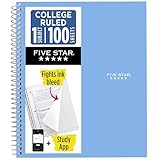
- Scan, study and organize your notes with the Five Star Study App. Create instant flashcards and sync your notes to Google Drive to access them anywhere from any device.
- This 1 subject notebook has 100 double-sided, college ruled sheets that fight ink bleed and are perforated for easy tear out. Sheets measure 8-1/2" x 11" when torn out.
- Tough pockets help prevent tears and hold 8-1/2" x 11" loose sheets. Durable plastic front cover is water-resistant to help protect your notes and our Spiral Lock wire helps prevent snags on clothes and backpacks.
- Made with SFI certified paper. Notebook is recyclable – just remove the reinforcement tape on the pocket and recycle the rest! Available in Blue (Color May Vary)
- LASTS ALL YEAR. GUARANTEED!*
Using only the sources in this notebook, create a two-page outline of the exam topics. Add an inline citation after every major claim and list any topic the sources do not cover.Make a 15-question diagnostic quiz. Mix definitions, calculations, comparisons, and application questions. Do not reveal answers until I respond, and cite the source for each explanation.Turn the concepts I missed into flashcards. Put one testable idea on each card, keep answers under 40 words, and include the citation and the misconception it corrects.Find contradictions between the lecture slides and the assigned reading. Quote the conflicting wording briefly, identify the source for each, and do not decide which is correct without evidence.
Inline citations make checking faster, but they do not make an answer automatically correct. Open the cited passage when a detail affects a formula, definition, date, or graded response.
ChatGPT Study mode: best for interactive tutoring
OpenAI defines Study mode as “a learning experience in ChatGPT that helps you build a deeper understanding of a topic.” Its central difference from a conventional answer request is the interaction: it can ask questions, guide your thinking, explain ideas step by step, and check understanding.
What the tutoring workflow supports
- Socratic-style questions that make you attempt a step before seeing an explanation.
- Layered explanations that begin with a simpler model and add technical detail.
- Knowledge checks during a lesson rather than only at the end.
- Exam preparation using practice questions and feedback.
- Review of uploaded notes, worksheets, textbook excerpts, PDFs, and images when file uploads are available.
- Flashcard-style review in a conversational format.
This makes Study mode useful after a source review has exposed a weak concept. Instead of asking for a complete solution, ask the tutor to diagnose the exact step where your reasoning breaks. You get more value when you commit to an answer first, even if it is wrong.
A one-question-at-a-time tutoring setup
- State the target. Name the course, exam date, topic, and level of difficulty. Mention whether you need conceptual understanding, calculation practice, essay planning, or all three.
- Provide the context. Upload your notes, worksheet, textbook excerpt, PDF, or image when uploads are available. If the instructor uses a particular notation or method, say so.
- Set the interaction rule. Ask for one question at a time, a hint before an answer, and a brief check of your reasoning after each response.
- Attempt every question. Write your own explanation or calculation. If you are stuck, say exactly which step is unclear rather than requesting the final answer immediately.
- Escalate difficulty. After a correct basic response, request a transfer question that changes the numbers, context, or wording.
- Finish with retrieval. Ask for a short mixed quiz on the concepts you missed, without showing the answers until you respond.
A useful opening instruction is:
Act as a patient exam tutor. Ask one question at a time about the uploaded material. Give a small hint before the answer, make me explain my reasoning, and increase difficulty only after I demonstrate the current concept. Flag anything that cannot be verified from my files.
Free-plan limits to plan around
OpenAI says ChatGPT is free to use and that free users can search the web, analyze data, upload images or files, and create images, subject to separate tool limits. Study mode uses the same plan, model, message, and rate-limit rules as ChatGPT outside Study mode; it does not bypass those limits. OpenAI does not publish one universal daily number for every Study mode capability in the cited help information, so do not assume that a long upload-and-quiz session will remain available without interruption.
The Tool Desk
Outbyte Driver Updater FREEFix the driver behind crashes, sound loss and screen glitchesFind Drivers →Outbyte PC Repair FREEClear out junk files and repair common Windows errorsFree Scan →For a time-sensitive exam session, keep a local copy of your notes, save useful explanations, and have a non-AI fallback such as the course text or your own question list. A limit interruption should not erase your study plan.
Rank #3
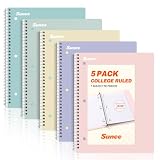
- AWESOME 5-PACK: Ideal for color-coding by subject or child, this 5-pack of 1 Subject Notebooks comes in elegant shades of Pink,Purple, Blue, Green, Yellow, with 70 college ruled pages per notebook.
- COLLEGE RULED: Each 8" x 10-1/2" notebook features 70 double-sided sheets with red margin lines and is 3-hole punched, allowing for easy transfer to your binder.
- CLEAN TEAR-OUT: Micro-perforated pages ensure a neat tear-out, leaving you with 10 1/2" x 7 1/2" sheets. Accommodates double-sided writing and prevents ink bleed-through from your favorite gel pens.
- DURABLE COIL LOCK SPIRAL: The sturdy coil lock spiral keeps pages securely in place and resists snags. The coated cover withstands frequent transfers in and out of backpacks, briefcases, and vehicles.
- 3-HOLE PUNCHED DESIGN: Easily organize and store your notes in a 3-ring binder, reducing clutter in your study or work area.
Gemini Notebook and ChatGPT Study mode compared
The following comparison uses the capabilities documented by Google and OpenAI rather than a claim about which tool produces higher grades.
| Decision factor | Gemini Notebook | ChatGPT Study mode |
|---|---|---|
| Primary role | Source-grounded notebook for research, review, and study-material generation | Conversational learning experience for guided understanding and practice |
| Grounding | Google says it is grounded in information the user provides | Can reference uploaded notes, worksheets, textbook excerpts, PDFs, and images when uploads are available |
| Citations | Inline citations are documented for answers | The cited information documents guided explanations and checks; an equivalent notebook-wide citation workflow is not specified |
| Question style | Useful for querying a prepared source set | Socratic-style questioning and one-question-at-a-time tutoring |
| Study outputs | Study guides, diagnostic quizzes, personalized lessons, progress tracking, flashcards, infographics, and Audio Overviews | Step-by-step explanations, knowledge checks, practice questions, exam preparation, and flashcard-style review |
| Documented free limits | 100 notebooks, 50 sources per notebook, 50 chat queries per day, 3 Audio Overviews per day, and 10 quiz/flashcard uses per day in Google for Education’s 2026 listing | Uses ordinary ChatGPT plan, model, message, and rate-limit rules; exact universal daily figures are not specified in the cited documentation |
| Best handoff | Send missed concepts and cited passages to a tutor | Return to the source notebook when an answer needs verification |
A practical $0 study workflow
Use the tools in an order that follows how learning actually happens: orient to the material, retrieve it, correct mistakes, and retrieve it again.
1. Start with the syllabus and source files
Put the syllabus, lecture notes, slides, and assigned readings in a Gemini Notebook. If the source set is larger than the notebook’s allowance, prioritize the material explicitly named in the exam guide and keep separate notebooks by unit.
2. Produce a cited map before making cards
Ask for the units, learning objectives, essential vocabulary, formulas, examples, and likely connections between topics. Request citations and a list of missing coverage. This prevents flashcards from becoming a pile of disconnected trivia.
3. Diagnose instead of rereading
Take a quiz before studying the answers. Label each response as correct, guessed, partially correct, or wrong. The labels tell you whether the problem is missing knowledge, confusing two ideas, or failing to apply a rule.
4. Tutor the misses
Move the weakest concepts into ChatGPT Study mode. Ask for hints, not immediate solutions, and explain your reasoning aloud or in writing. Request a new example after the explanation so that recognition of the original wording does not masquerade as mastery.
Rank #4

- Sturdy Construction: Our Lined Spiral Journal Notebook is built to last with a sturdy metal twin-wire binding and a tough hardcover. The water-resistant cover shields your notes from damage, while the double-wire design allows for easy folding and flat laying.
- High-Quality Paper: Crafted from 100 GSM thick, ink-friendly paper, our notebook prevents ink bleed-through and ghosting. It accommodates various pens, including ballpoint, gel, and fountain pens. Each page features a day header for effortless date tracking.
- Organized and Functional Design: With 140 lined pages and a 6-page blank table of contents, our notebook offers ample space for note-taking and easy referencing. An inner pocket keeps miscellaneous items secure, and an elastic closure band ensures the notebook stays closed when not in use.
- Versatile Usage: Suitable for office, school, and home environments, our notebook is perfect for journaling, note-taking, drawing, goal setting, Bible, and planning. It's a thoughtful present for friends, family, classmates, and colleagues.
- Medium-Sized Portability: Measuring 5.7 inches x 7.9 inches, our medium notebook strikes the perfect balance between portability and functionality. Its sturdy construction and aesthetic design make it an ideal companion for all your writing endeavors.
5. Build a small, high-value card set
Create cards only for facts and distinctions you repeatedly miss. A strong card asks one question, has one unambiguous answer, and includes enough context to prevent multiple interpretations. Separate “define,” “compare,” “predict,” and “calculate” cards rather than putting four tasks on one card.
6. Retest with mixed order
Mix chapters and question types. If every question from one chapter appears together, you may rely on the chapter label instead of recalling the method. Ask the tutor for transfer questions that change the surface details while preserving the underlying concept.
7. Verify graded details
Check formulas, quotations, dates, required terminology, and instructor-specific methods against the course text or instructor. Both products can make mistakes, and a citation or confident explanation is not a substitute for checking a consequential claim.
Using handwritten index cards with AI-generated cards
Physical ruled index cards are optional, but they are useful when retrieval practice is the bottleneck. Write the prompt on one side and the answer on the other, then attempt the answer before turning the card over. Handwriting the cards also forces you to compress a long explanation into a testable idea.
What belongs on paper
- Formulas you repeatedly forget, with a note describing when each applies.
- Pairs that are easy to confuse, written as a contrast.
- Vocabulary that must be recalled exactly.
- Short procedures, such as the order of steps in a proof or laboratory method.
- Errors identified by a diagnostic quiz, including the correction.
Do not copy every AI-generated card. Keep the physical set small enough to review repeatedly. If a card has a paragraph-long answer, split it into several prompts or rewrite it as a sequence of steps.
Accuracy, privacy, and common failure modes
The tool answers beyond the evidence
Symptom: An answer sounds plausible but cannot be located in your notes. Fix: In Gemini Notebook, require a citation and ask it to say when the source set is silent. In Study mode, identify the uploaded passage or course rule you want used, then verify the result against the original.
Best Value

- 【Leather Hardcover Spiral Notebook】Premium leather combine cardboard constituted a sturdy waterproof cover, prevent coffee、water from wetting the inner pages and against the notebook tabs /pages from bending, while 4 golden metal-corners and thick twin- spiral binding, further protect your important meeting records or work school note well. A kind side pen loop design, which reduce the frequency that losing pens.
- 【5 Adjustable Dividers with 8 Tabs】Our 5 subject notebook include 5 removable plastic dividers, flexible and durable so you can move and organize them as your wish. It can be divided into 5 sections in total, which had enough features to keep organized on different subjects, instead of piles of random spiral notebooks that will slimmed your backpack down a ton! Come with 8 self-adhesive labels that separate information and make it easy to find categories to help organize your notes effectively.
- 【300 Pages Thick Notebook】Large B5 size notebook 8"x10" with 300 pages /150 sheet for long-term storage will reduce the amount of notebooks you buy! Acid-free light Ivory paper that protect your eyes. High-quality 100GSM thick page create smoother writing process and prevent ink bleeding through or ghosting. 7.1mm college ruled spiral notebook and the top of each page are sections for“Weather”,“Week”,“Memo No” and “Date” to meet your daily note writing needs.
- 【Easy Writing at 180°Lay Flat】Thick twin-spiral binding less likely to fall apart and easy to turn the pages to ensures that the notebook lays flat when open,making writing a breeze even for left handed writers. Elastic closure band keep your spiral journal secure when closed and can also be used as a bookmark to keep track where you wrote. An expandable back pocket that is great for storing extra notes, cards, or other important items.
- 【Hardcover Notebooks for Work School】This spiral 5 subject notebooks is an excellent choice for students, professionals, or anyone who like to write things down and needs to keep them organized. A stylish look with gold color stamp font, binding brighten up your dreary desk, also a wonderful gift to work organization, back to school or family records.
The quiz tests trivia instead of understanding
Symptom: You score well on terminology but cannot solve a changed example. Fix: Request application, comparison, prediction, and error-analysis questions. Ask for transfer problems that alter the numbers or context.
The tutor gives answers too quickly
Symptom: The explanation feels clear, but you cannot reproduce the solution alone. Fix: Set the one-question-at-a-time rule, require a hint before the answer, and make the tutor wait for your attempt.
You hit a free quota before the exam
Symptom: New chats, generations, uploads, or audio features are temporarily limited. Fix: Prioritize the diagnostic quiz and weakest concepts, save useful outputs locally, and continue with your notes, textbook, or handwritten cards. Google’s listed notebook and daily allowances and OpenAI’s plan-based limits can change.
Do these 3 things before closing this tab:
1Repair Windows errors before they cause bigger problems2Scan for outdated or missing drivers - takes under a minute3Clear out junk files and repair common Windows errorsYour source set contains sensitive information
Before uploading, remove personal identifiers, private student records, answer keys, or anything your school prohibits sending to an external service. Use the minimum material needed for the task and follow your institution’s academic-integrity and privacy rules. AI assistance should support learning, not replace permitted coursework or an exam response.
How to choose on the day before an exam
- Morning: Use Gemini Notebook to map the syllabus and run a diagnostic quiz from the course sources.
- Midday: Generate a focused study guide and a small flashcard set for the missed concepts. Check citations against the original material.
- Afternoon: Use ChatGPT Study mode for one-question-at-a-time tutoring on the hardest topics. Insist on hints and transfer questions.
- Evening: Review handwritten cards and take a mixed, closed-book recall session. Mark uncertain answers for one final check rather than rereading everything.
- Before leaving: Confirm formulas, definitions, permitted notation, and instructor-specific requirements in the course materials. Save offline notes in case a free quota or connection fails.
This sequence keeps each tool in its strongest role: Gemini Notebook organizes and cites the material you must know, while ChatGPT Study mode makes you retrieve, explain, and apply it. The combination is useful precisely because neither free service removes the need to check sources and do the remembering yourself.
Quick Recap
Product prices and availability are accurate as of the date/time indicated and are subject to change. Any price and availability information displayed on Amazon at the time of purchase will apply.

