
Free tools Windows power users keep installed
One-click scans. No signup required.
The best Drupal hosting services for 2026 depend on your site’s workload and the skills of your team: Acquia suits enterprise and regulated Drupal, Pantheon suits managed WebOps, Hostinger suits small low-traffic sites, Platform.sh suits technical PaaS teams after verification, and a VPS suits experienced administrators who want control.
These services do not solve the same problem. A low-cost shared host can be appropriate for a small brochure site, while a managed Drupal platform may justify its higher price through staging, deployment workflows, backups, Drupal-aware support, security controls, and operational responsibility.
The right rule is simple: choose the least expensive hosting model that meets your Drupal version, PHP and database requirements while providing enough memory, PHP workers, database capacity, backups, caching, deployment access, and support for the way your site actually operates.
Key takeaways
- Acquia Cloud Platform is the strongest fit for enterprise, regulated, and mission-critical Drupal sites, but pricing is quote-based and depends on scope, support, traffic, storage, environments, and compliance requirements.
- Pantheon is a strong managed WebOps choice for agencies and development teams that need Git-based deployments, development environments, automated workflows, CDN delivery, caching, and backups.
- Hostinger’s researched promotional signal was $2.99 per month, but the example required 48 months and showed $479.52 at the regular price, so renewal pricing must be checked before purchase.
- Drupal 11 requires PHP 8.3 or newer, Composer 2.7 or newer, and current database versions including MySQL 8.0, MariaDB 10.6, PostgreSQL 16, or SQLite 3.45 with required JSON support.
- A self-managed VPS can reduce infrastructure cost but transfers Linux administration, security, backups, monitoring, deployment, scaling, and incident response to the customer.
Best Drupal hosts at a glance
The following comparison separates hosting models instead of ranking a $3 promotional shared-hosting plan beside an enterprise Drupal platform as though both provide the same service.
#1 Best Overall
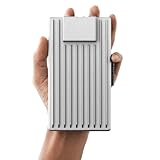
- Server-Class Home Server Built for 24/7 Workloads - Designed as a purpose-built home server rather than general-purpose SBCs, Mini PCs, entry NAS systems, or routing-only devices. As a compact, pocket-sized single board server platform, ZimaBoard 2 1664 combines x86 architecture, quad-core performance up to 3.6GHz, 16GB DDR5 memory, and 64GB eMMC storage for reliable always-on home servers, homelabs, and self-hosted workloads.
- PCIe 3.0 x4 Expansion for Real Server Builds - Built as a server-class platform with native PCIe expansion, ZimaBoard 2 features a full PCIe 3.0 x4 slot for high-speed, low-latency upgrades beyond USB-based limitations. Supports 10GbE NICs, NVMe adapters, GPUs, and AI accelerators to build scalable home servers, homelabs, and advanced self-hosted systems—offering greater expansion flexibility than typical SBCs, Mini PCs, and entry-level NAS devices.
- Native Dual SATA & Dual 2.5GbE Networking - Built with server-class storage and networking I/O, ZimaBoard 2 integrates dual SATA ports for direct HDD/SSD connectivity and dual 2.5GbE Ethernet for high-throughput, low-latency networking. This architecture enables reliable DIY NAS, fast storage, routing, and multi-service home server deployments—while avoiding USB-based performance constraints common in ARM SBCs, Raspberry Pi–based setups, Mini PCs, and entry-level NAS devices.
- ZimaOS Preinstalled + Wide OS Compatibility - Comes preinstalled with ZimaOS for a clean, ad-free private cloud experience—centralized file dashboard, automatic backups, P2P downloads, private photo/video sharing, 500+ plug-ins, and secure on-device AI that keeps your data at home. Also supports TrueNAS, Proxmox, Debian, Ubuntu Server, pfSense, OpenWrt, and Linux containers, making it perfect for Plex media servers, Pi-hole, firewalls, backups, Docker labs, home-cloud services, and multi-service deployments.
- All-in-One NAS, Router, Docker & Homelab Server - Replace multiple devices with one low-power. ZimaBoard 2 can serve as a NAS, router, Docker host, firewall, media server, or homelab node—delivering a flexible, open alternative to ARM SBCs, Mini PCs, and entry-level NAS systems.
| Provider or model | Best for | Hosting model | Drupal 11 position | Workflow and environments | Backups and performance | Price signal | Main drawback |
|---|---|---|---|---|---|---|---|
| Acquia Cloud Platform | Enterprise, regulated, and mission-critical Drupal | Managed Drupal PaaS | Drupal-focused; verify the exact subscription requirements | Git, Composer, Drush, Acquia CLI, CI/CD, and development, staging, and production environments | Varnish, Memcache, PHP-FPM tuning, CDN, and documented daily website file backups for Drupal Cloud subscriptions | Quote-based | Potentially excessive for small sites; contract and scope require careful review |
| Pantheon | Agencies and collaborative development teams | Managed WebOps platform | Drupal-focused; verify the selected plan and current requirements | Git-based workflow, development environments, automated deployment tooling, and dev/staging/production support | Built-in caching, global CDN delivery, and backup-retention options | Published plan signals included $500, $1,925, $3,300, $6,600, and $11,000 per month in the research snapshot | Higher cost and platform constraints for unusual server-side customizations |
| Platform.sh | Technical teams needing flexible cloud application infrastructure | Cloud PaaS | Verify current PHP, database, templates, and Drupal support | Git-driven deployment and configurable application environments; confirm current limits | Verify backups, services, CDN, edge security, and resource scaling | Do not rely on an unverified figure; check the live pricing page | Commercial details and Drupal-specific limits require direct verification |
| Hostinger | Small, personal, and low-traffic business sites | Low-cost shared hosting | Verify the exact plan’s PHP, database, Composer, Drush, SSH, and cron support | One-click installer and beginner-oriented control panel; staging and deployment features require plan-level confirmation | SSL and CDN-related features are marketed; confirm resource and backup limits | Research snapshot: $2.99/month promotional signal; 48-month example $95.52 versus $479.52 regular price | Shared resources and limited CLI, staging, restore, and application-support capabilities may constrain complex sites |
| Self-managed VPS | Experienced technical owners seeking control | Infrastructure VPS | Customer chooses and maintains compatible versions | Full control, but the customer builds the Composer, Git, staging, deployment, and rollback workflow | Customer adds caching, CDN, backups, monitoring, security, and scaling | Provider-specific infrastructure price | The apparent saving excludes administration labor and operational risk |
Provider-specific claims and price signals should be checked against the Acquia Drupal hosting overview, Pantheon pricing page, Hostinger Drupal hosting page, and Platform.sh pricing page before signing a contract. Prices, included features, and regional offers change.
Which Drupal hosting service is best for each use case?
There is no universal best Drupal host in 2026; the best choice changes with operational risk, technical ability, traffic pattern, compliance, and budget.
| Use case | Recommended starting point | Why | What to verify first |
|---|---|---|---|
| Enterprise or mission-critical Drupal | Acquia Cloud Platform | Drupal-specific managed operations, enterprise support, development workflows, caching, CDN, and compliance-oriented options | Contractual SLA, support response, backup retention, restore process, region, included environments, and compliance scope |
| Government or regulated organization | Acquia or a qualified specialist partner | Compliance-oriented hosting and Drupal-aware support may reduce operational burden | Whether the exact product, region, and contract are covered; customer responsibilities remain significant |
| Agency managing several Drupal sites | Pantheon or another managed WebOps platform | Repeatable Git, staging, deployment, and collaboration workflows | Site-count pricing, workspace limits, add-ons, traffic, support, and exportability |
| Developer-led project | Pantheon, Platform.sh, or a VPS | These models can support Git and Composer workflows, with different levels of control and administration | CLI access, build limits, services, environment behavior, database capacity, and rollback |
| Small informational site | Hostinger or comparable shared hosting | Low entry cost and simpler setup can be sufficient for low-risk, low-traffic websites | Renewal price, SSH, Composer, Drush, cron, PHP limits, backup restoration, and upgrade path |
| High-traffic publishing | Acquia, Pantheon, Platform.sh, or a properly engineered cloud deployment | High traffic often requires stronger caching, PHP-worker capacity, database resources, CDN delivery, and operations | Uncached and authenticated performance, database scaling, queues, search, and incident response |
| Drupal Commerce or authenticated portal | Managed Drupal platform or experienced VPS team | Checkout, sessions, editorial activity, and authenticated pages reduce the benefit of full-page caching | PHP workers, database CPU and RAM, object cache, queue workers, cron, sessions, and payment integrations |
| Self-hosting | Hetzner, DigitalOcean, Vultr, Linode/Akamai Cloud, AWS, Google Cloud, or Azure | Infrastructure providers offer control and can fit teams with existing operations expertise | Total cost after administration, backups, monitoring, CDN/WAF, security maintenance, and disaster recovery |
Why does Drupal 11 compatibility matter for hosting?
Drupal 11 hosting requires a provider that can run the current platform baseline rather than merely install an older Drupal release. Drupal’s Drupal 11 release requirements and its current system-requirements documentation state that Drupal 11 needs PHP 8.3 or newer.
Drupal 11 also requires MySQL 8.0 or newer, MariaDB 10.6 or newer, PostgreSQL 16 or newer, or SQLite 3.45 or newer with the required JSON support. Drupal 11 requires Composer 2.7.0 or newer, and supported production web servers include Apache and Nginx; IIS is not supported by Drupal 11. Confirm the exact database engine, PHP extensions, command-line tools, and web-server configuration available on the plan.
According to Drupal’s PHP requirements documentation, the stated PHP memory minimum is 64 MB, but commonly used production configurations often use 128 MB or 256 MB, with media-heavy or module-heavy sites potentially requiring more. The minimum is a compatibility floor, not a sensible capacity target for every production site.
| Requirement | Drupal 11 baseline | What a buyer should ask the host |
|---|---|---|
| PHP | 8.3 or newer | Which PHP versions are available, patched, and selectable per environment? |
| Database | MySQL 8.0+, MariaDB 10.6+, PostgreSQL 16+, or SQLite 3.45+ with required JSON support | Which engine and version are included, and can the database be upgraded without migration? |
| Dependency management | Composer 2.7.0 or newer | Can Composer run through SSH or a documented build pipeline outside the public web root? |
| Web server | Supported Apache or Nginx production environment | Can the team configure rewrites, headers, private files, and required PHP extensions? |
| Memory | 64 MB stated minimum; 128 MB or 256 MB is more common in production configurations | What PHP memory limit, execution time, upload limit, worker limit, and database connection limit apply? |
| Operating environment | Linux or comparable production environment recommended | Is SSH available, and who manages operating-system and runtime updates? |
How should a host prepare a Drupal site for Drupal 12?
Drupal 12 preparation means checking whether the host can support the announced future platform requirements; it does not prove that a provider has already announced complete Drupal 12 support.
The Drupal 12 platform-requirements announcement lists PHP 8.5, MySQL 8.0, MariaDB 10.11, PostgreSQL 18, and SQLite 3.45. The announcement recommends Composer 2.9.3. Drupal 11 is expected to receive long-term support until at least the release of Drupal 13, described by Drupal.org as mid-to-late 2028, while Drupal 10 is scheduled to reach end of life in December 2026 according to current Drupal upgrade guidance.
For a new long-lived project, prefer Drupal 11 when the required contributed modules, themes, and integrations support it. A host that supports Drupal 10 but cannot provide PHP 8.3 or newer, Composer 2.7 or newer, and compatible database versions is not a strong future-ready choice.
What is the difference between shared, VPS, managed Drupal, and cloud PaaS hosting?
Shared hosting, VPS hosting, managed Drupal hosting, and cloud PaaS hosting differ mainly in who controls the infrastructure, who performs maintenance, and how much deployment and scaling capability the platform provides.
Commodity shared hosting
Shared hosting commonly provides shared CPU and memory, a control panel, one-click installation, basic SSL, email hosting, and sometimes CDN-related features. Shared hosting is often adequate for a small informational, personal, or low-traffic site.
The trade-off is limited control and shared-resource contention. PHP settings, Composer, Drush, Git, SSH, staging, database capacity, cron, and backup restoration may be restricted or unclear. A one-click installer may also create an outdated or non-Composer project that is difficult to maintain.
Managed VPS
A managed VPS provides more predictable resources and control than shared hosting, but the word “managed” requires clarification. Some providers manage only infrastructure monitoring and basic server availability; the customer may still own operating-system patches, PHP updates, firewall rules, backups, deployments, and Drupal maintenance.
Drupal-focused managed hosting
Drupal-focused managed hosting typically adds Drupal-aware caching, managed infrastructure, development and staging environments, Git deployment, automated backups, CDN integration, monitoring, migration assistance, security controls, and Drupal-aware support. Acquia and Pantheon are the clearest purpose-built managed Drupal platforms in the researched options.
Cloud PaaS and WebOps platforms
Cloud PaaS and WebOps platforms emphasize Git deployments, environment cloning, automated builds, continuous integration, multidev or ephemeral environments, horizontal scaling, and managed databases or services. Those platforms may impose more restrictions on server access, filesystem behavior, deployment patterns, or supported services than a conventional VPS.
Is Acquia Cloud Platform worth it for Drupal?
Acquia Cloud Platform is worth evaluating when Drupal is business-critical and the organization needs Drupal-specific managed operations, enterprise support, governance, high availability, or compliance-oriented options.
Acquia describes its platform as a Drupal-optimized, fully managed service with automated deployments, security tooling, global CDN support, developer tools, and development, staging, and production environments. Acquia product material advertises up to a 99.99% uptime SLA, but an SLA is a contractual commitment with exclusions, not a guarantee that every application will remain available under every condition.
Quick wins for a faster PC:
Fix the driver behind crashes, sound loss and screen glitchesFind Drivers →Repair Windows errors before they cause bigger problemsFix Now →Acquia promotes Varnish page caching, Memcache object caching, PHP-FPM tuning, Git-based version control, CI/CD tooling, Drush, and Acquia CLI support. Acquia enterprise materials also cite FedRAMP authorization, SOC 2 Type II certification, ISO 27001 certification, and HIPAA eligibility or related compliance positioning. These claims must be checked against the exact product tier, geography, contract, and compliance scope; an Acquia subscription does not automatically satisfy every customer’s regulatory obligation.
Rank #2

- 【Advanced Home Data & Media Hub】For advanced home users who need phone backup, file storage, and centralized data management. Centralize family photos, 4K videos, movies, computer backups, and personal files in one place while running multiple apps for home entertainment and everyday data management. Suitable for households with growing digital libraries and multiple NAS use cases.
- 【Built for Creators, Media Servers & Advanced Apps】Powered by the Intel N100 Quad-Core CPU, 8GB DDR5 RAM, 2.5GbE networking, and dual M.2 NVMe slots, DXP2800 handles large files and heavier workloads with ease. Run Docker, virtual machines, and media server applications compatible with Plex—ideal for content creators, tech enthusiasts, and advanced home users managing 4K videos, RAW photos, personal media libraries, and multiple NAS apps.
- 【Up to 80TB for Growing Digital Libraries】 Supports up to 80TB of storage using two HDD bays and two M.2 NVMe SSD slots for family photos, movies, RAW photos, 4K videos, work files, and device backups. AI photo management supports recognition of people, objects, scenes, and locations, album organization, and duplicate photo detection. HDDs and SSDs are not included.
- 【AI-powered Home Surveillance】Turn DXP2800 into a centralized home surveillance hub by connecting compatible network cameras and storing recordings locally on your NAS. AI-powered features include Face Recognition, People Detection, and Pet Detection, helping advanced home users review important events more efficiently while managing home surveillance and personal data in one place.
- 【One data Center Across Your Devices】Keep files from desktops, laptops, phones, tablets, and other devices together instead of scattered across cloud accounts and external drives. Access, back up, organize, and share data across Windows, macOS, Android, iOS, web browsers, and compatible smart TVs—ideal for creators and advanced home users working across multiple devices.
Acquia documents daily website file backups for Drupal Cloud subscriptions and describes customer access to database backups and restoration through the platform interface. Confirm the exact subscription, retention period, restore procedure, recovery objectives, and whether all required files and databases are covered.
Acquia is a poor fit for a hobby site or small brochure site that needs only simple public pricing. Quote-based cost can vary materially with site count, traffic, storage, support tier, environments, compliance requirements, and deployment scale. Request a written quote that lists included environments, backup retention, support response times, traffic limits, storage, restore services, and add-on charges.
See the Acquia Cloud Platform product page and Acquia’s hosting-environment comparison for current product distinctions.
Windows Errors? Fix Them Before They Spread
Repair common Windows errors and clear accumulated junk for a smoother, more stable PC - no reinstall needed.Free scan · no reinstallOutdated Drivers Are Slowing You Down
One free scan finds every outdated or missing driver and matches the right update for your exact hardware.Free scan · exact hardware matchIs Pantheon a good Drupal host for agencies and developers?
Pantheon is a strong Drupal host for agencies and distributed development teams that prioritize managed WebOps, safe deployments, collaboration, and repeatable development, staging, and production workflows.
Pantheon positions its platform around Drupal and WordPress WebOps with built-in caching, global CDN delivery, automated workflows, and development environments. Those features can reduce the infrastructure work required to operate several sites or coordinate developers, editors, and clients.
Pantheon’s published pricing page showed plan-level signals of $500, $1,925, $3,300, $6,600, and $11,000 per month in the research snapshot, alongside contact-based options. These figures are not universal quotes for every Drupal site. Confirm whether the selected site plan, workspace, features, add-ons, support arrangement, contract, and billing term apply to the project.
Pantheon’s main limitations are cost and platform constraints. A project that requires arbitrary daemon processes, custom server packages, unrestricted root access, or unusual server-side behavior may fit a VPS or another PaaS better. A CDN and page cache also do not create unlimited application capacity: authenticated requests, search, commerce, editorial activity, and uncached traffic still use PHP workers and database resources.
The Tool Desk
Outbyte PC Repair FREEClear out junk files and repair common Windows errorsFree Scan →Outbyte Driver Updater FREEScan for outdated or missing drivers - takes under a minuteDriver Scan →Review Pantheon’s Drupal hosting overview and its published pricing information before comparing a Pantheon plan with shared hosting.
Should you choose Platform.sh for Drupal?
Platform.sh is a candidate for teams that need flexible cloud application infrastructure and Git-driven deployment, but current pricing, Drupal-specific support, and plan limits should be verified directly before Platform.sh receives a definitive “best” award.
Platform.sh may appeal to technical teams deploying Drupal alongside other application components or services. The flexibility can be valuable, but platform configuration, resource sizing, environment limits, build behavior, services, and filesystem rules require more technical understanding than a beginner-oriented control panel.
Before choosing Platform.sh, verify current Drupal templates or starter configurations, supported PHP versions, database and service options, environment limits, backup retention and restoration, build and deployment limits, CDN and edge-security options, support tiers, and the pricing model. Confirm whether the current price is based on resources, environments, users, requests, storage, or a combination.
Do these 3 things before closing this tab:
1Clear out junk files and repair common Windows errors2Scan for outdated or missing drivers - takes under a minute3Repair Windows errors before they cause bigger problemsUse the Platform.sh official site, Platform.sh pricing, and Platform.sh documentation as the verification points. Do not publish or rely on a precise Platform.sh price without checking those live pages.
Is Hostinger good enough for Drupal?
Hostinger can be good enough for a small, low-traffic Drupal site when price and simple setup matter more than managed deployment, specialized support, or predictable high-load performance.
Hostinger’s Drupal page markets a one-click installer, free SSL, CDN availability, current PHP and MariaDB support, and a 30-day money-back guarantee. The researched page showed a promotional starting signal of $2.99 per month and an example of 48 months for $95.52 compared with a listed regular price of $479.52.
The Hostinger price is not a normal long-term cost and should not be compared directly with enterprise PaaS pricing. Confirm the current country, currency, billing term, taxes, renewal price, domain charges, backup policy, staging cost, and included resources at checkout.
Before deploying a serious Drupal project, verify SSH, Composer 2.7 or newer, Drush, Git, cron, PHP-worker limits, database connections, memory, upload and execution limits, staging, backup downloads, restoration, and support scope on the exact plan. A shared plan may become unsuitable under authenticated traffic, large imports, search indexing, Drupal Commerce, or complex editorial workloads.
Hostinger is a reasonable budget starting point for a personal site, simple brochure site, or low-traffic organization. Hostinger is a poor fit for regulated, mission-critical, high-traffic, complex multisite, or Drupal Commerce installations unless testing proves that the chosen plan meets the workload.
Rank #3
- Server-Class Home Server Built for 24/7 Workloads - Designed as a purpose-built home server rather than general-purpose SBCs, Mini PCs, entry NAS systems, or routing-only devices. As a compact, pocket-sized single board server platform, ZimaBoard 2 832 combines x86 architecture, quad-core performance up to 3.6GHz, 8GB DDR5 memory, and 32GB eMMC storage for reliable always-on home servers, homelabs, and self-hosted workloads.
- PCIe 3.0 x4 Expansion for Real Server Builds - Built as a server-class platform with native PCIe expansion, ZimaBoard 2 features a full PCIe 3.0 x4 slot for high-speed, low-latency upgrades beyond USB-based limitations. Supports 10GbE NICs, NVMe adapters, GPUs, and AI accelerators to build scalable home servers, homelabs, and advanced self-hosted systems—offering greater expansion flexibility than typical SBCs, Mini PCs, and entry-level NAS devices.
- Native Dual SATA & Dual 2.5GbE Networking - Built with server-class storage and networking I/O, ZimaBoard 2 integrates dual SATA ports for direct HDD/SSD connectivity and dual 2.5GbE Ethernet for high-throughput, low-latency networking. This architecture enables reliable DIY NAS, fast storage, routing, and multi-service home server deployments—while avoiding USB-based performance constraints common in ARM SBCs, Raspberry Pi–based setups, Mini PCs, and entry-level NAS devices.
- ZimaOS Preinstalled + Wide OS Compatibility - Comes preinstalled with ZimaOS for a clean, ad-free private cloud experience—centralized file dashboard, automatic backups, P2P downloads, private photo/video sharing, 500+ plug-ins, and secure on-device AI that keeps your data at home. Also supports TrueNAS, Proxmox, Debian, Ubuntu Server, pfSense, OpenWrt, and Linux containers, making it perfect for Plex media servers, Pi-hole, firewalls, backups, Docker labs, home-cloud services, and multi-service deployments.
- All-in-One NAS, Router, Docker & Homelab Server - Replace multiple devices with one low-power, fanless system. ZimaBoard 2 can serve as a NAS, router, Docker host, firewall, media server, or homelab node—delivering a flexible, open alternative to ARM SBCs, Mini PCs, and entry-level NAS systems.
Check the Hostinger Drupal hosting page for the current offer instead of assuming that the researched promotional price remains available.
When is a self-managed VPS the better Drupal choice?
A self-managed VPS is the better Drupal choice when a technically capable person or team can reliably operate Linux, PHP, the database, web security, deployment, monitoring, backups, and incident response.
Recommended Free Tools
Potential infrastructure providers include Hetzner, DigitalOcean, Vultr, Linode/Akamai Cloud, AWS, Google Cloud, and Microsoft Azure. These are infrastructure products, not automatically managed Drupal services. Drupal.org’s hosting guidance for small and medium-sized projects distinguishes easier shared hosting from VPS hosting that requires significant Linux and server-administration knowledge.
Operating a Drupal VPS typically includes Linux updates, PHP updates, database upgrades, web-server configuration, TLS certificates, firewall and SSH hardening, malware and intrusion response, off-site backups, monitoring and alerting, deployment automation, scaling, and disaster recovery testing.
A VPS can be excellent for a developer-led project because it provides control over PHP versions, database configuration, caching, search, queues, workers, and deployment. A VPS can also be a bad bargain when nobody has time to patch it, test restores, respond to alerts, or recover from an outage. Choose a VPS only when reliable administration is available or a separate managed service budget exists.
Evaluate infrastructure options through their official product pages, such as Hetzner Cloud, DigitalOcean Droplets, Vultr Cloud Compute, and Linode shared compute. Compare total operating cost rather than server rental alone.
What’s actually slowing this PC down?
Pick the symptom - the matching free tool is one click away.
What Drupal hosting features actually matter?
Composer, Drush, SSH, and Git
A serious Drupal host should support Composer 2.7 or newer for Drupal 11, SSH or an equivalent deployment mechanism, Drush, Git-based deployment, private package repositories where needed, build steps outside the public web root, and Composer-managed dependencies.
A one-click installer is not enough for a maintainable Drupal project. The host should allow the team to update core and contributed packages, run database updates, rebuild caches, synchronize configuration, inspect logs, and recover from failed deployments through a documented command-line or build workflow. Drupal.org’s Composer requirements and small-project hosting guidance explain why Composer and command-line access matter beyond initial installation.
Development, staging, and production
Look for separate development, staging, and production environments; database and file synchronization; Git integration; preview or multidev environments; deployment locks; rollback capability; Drush database updates; configuration synchronization; automated tests or CI/CD integration; and clear handling of persistent files.
A staging environment is not automatically safe. Database merges, uploaded files, search indexes, cron jobs, payment integrations, email, and external APIs can still affect production or send real messages. Confirm which services are disabled, copied, masked, or isolated in non-production environments.
Free tools Windows power users keep installed
One-click scans. No signup required.
Backups and recovery
Ask whether the host backs up both files and databases, how often backups run, how long they are retained, whether copies are stored in a separate failure domain, whether customers can download them, whether restoration is self-service, whether a single database can be restored without overwriting files, whether backups cost extra, and whether restore tests are performed.
A backup that exists but cannot be downloaded, restored, or verified should not receive full credit. Request documented recovery point objectives, recovery time objectives, retention, restore steps, and scope.
Performance and scaling
Assess full-page caching, reverse-proxy or Varnish support, object caching such as Redis or Memcache, CDN and image delivery, PHP-FPM or PHP-worker capacity, database performance, persistent-storage I/O, geographic distribution, and cache invalidation.
A CDN improves cacheable anonymous responses and static assets, but a CDN does not eliminate the need for PHP, database, search, queue, and storage capacity. Test anonymous cached pages, anonymous uncached pages, authenticated pages, editorial operations, search, commerce checkout, API or JSON:API requests, cache rebuilds, and imports separately.
Recommended Free Tools
Security and compliance
Review operating-system and PHP patching, Drupal security-update procedures, web application firewall, DDoS protection, malware scanning, access logs, SSH key management, two-factor authentication, role-based access, secrets management, TLS certificates, security response times, and compliance scope.
A compliance badge does not replace a review of the provider’s responsibility model, contractual commitments, region availability, data-processing terms, custom code, and Drupal configuration. Acquia’s compliance-oriented claims, for example, must be evaluated at the specific product, tier, geography, and contractual scope.
Support
Distinguish generic hosting support, Linux support, PHP support, Drupal-aware support, application support, 24/7 incident response, paid professional services, migration help, and emergency security support. “24/7 support” can mean that tickets are accepted around the clock rather than that a Drupal engineer is continuously available.
Rank #4

- SDI Video Inputs: 1
- SDI Video Outputs: 1 x loop out, 1 x monitor out.
- SDI Rates: 1.5G, 3G, 6G, 12G
- HDMI Video Outputs: 1 x monitor out
- Webcam Output: 1 x Type USB-C
Scalability
Ask whether the provider can scale PHP workers, CPU and RAM, database size and capacity, search infrastructure, queue workers, storage, CDN throughput, concurrent editorial users, and background jobs independently. “Unlimited bandwidth” does not guarantee adequate CPU, memory, PHP-worker capacity, database connections, or storage I/O.
What’s actually slowing this PC down?
Pick the symptom - the matching free tool is one click away.
How should you compare Drupal hosting costs?
Compare total cost over at least 12 and 36 months, not only the introductory monthly number. A complete comparison includes the first-term price, renewal price, billing term, setup fees, domain fees, backup fees, CDN or WAF fees, staging fees, additional site charges, support fees, migration fees, taxes, regional differences, and administration labor.
| Provider or model | Advertised or published signal | Cost warning | Best buyer |
|---|---|---|---|
| Acquia | Quote-based managed enterprise Drupal hosting | Obtain a written quote covering site count, traffic, storage, environments, support, compliance, backups, and restore terms | Enterprise and regulated organizations |
| Pantheon | Research snapshot showed plan signals of $500, $1,925, $3,300, $6,600, and $11,000 per month | Confirm site plan, workspace, add-ons, support, contract, traffic, and billing arrangement | Agencies and development teams |
| Platform.sh | Current pricing not sufficiently exposed in the research snapshot | Verify live pricing, resource model, environments, services, and limits before publication or purchase | Technical teams needing PaaS flexibility |
| Hostinger | Research snapshot showed $2.99/month promotional pricing; 48-month example was $95.52 versus $479.52 regular price | Check renewal price, required term, taxes, currency, resources, backups, and add-ons | Small and price-sensitive sites |
| VPS provider | Provider-specific infrastructure rental price | Add administration, security, backup storage, monitoring, CDN/WAF, migration, and incident-response costs | Experienced technical owners |
What should you check before buying a Drupal host?
- Confirm platform compatibility. Verify Drupal major version, PHP version, database engine and version, Composer, required PHP extensions, web server, memory, and filesystem behavior.
- Test the deployment path. Confirm SSH or equivalent access, Composer builds, Drush, Git, configuration synchronization, private packages, cron, queues, and rollback.
- Measure capacity rather than marketing. Ask for PHP-worker limits, database CPU and RAM, connection limits, storage I/O, upload limits, execution time, cache behavior, and search capacity.
- Read the backup policy. Verify file and database coverage, frequency, retention, off-site copies, downloads, restore scope, restore testing, and recovery objectives.
- Define support responsibility. Ask who handles operating-system patches, PHP updates, Drupal core updates, contributed-module security updates, Composer conflicts, database updates, cache rebuilds, and custom-code incidents.
- Review security and compliance scope. Check WAF, DDoS protection, monitoring, access controls, TLS, incident response, region, data processing, certifications, and contractual responsibility.
- Calculate 12- and 36-month cost. Separate promotion from renewal and include add-ons, taxes, support, administration, migration, backups, and recovery.
- Check portability. Confirm that code, Composer files, database, public files, private files, configuration, search settings, cron definitions, environment variables, and deployment scripts can be exported.
How do you migrate Drupal to a new host?
A safe Drupal migration transfers a Composer-managed codebase, database, files, configuration, runtime settings, and integrations, then validates the result before DNS changes.
- Inventory Drupal core, contributed and custom modules, themes, PHP version, database version, integrations, cron jobs, search, email, forms, redirects, and payment services.
- Create or validate a Composer-managed codebase and document required PHP extensions, environment variables, private packages, and deployment steps.
- Export the database and public and private files, preserving permissions and identifying files that should move to object storage.
- Build a test environment on the destination host and verify PHP, database, Composer, Drush, web-server rules, filesystem behavior, and private-file protection.
- Test redirects, canonical URLs, robots directives, SSL, forms, email, search, cron, queues, cache rebuilds, imports, analytics, external APIs, and payment flows.
- Lower DNS TTL before cutover, subject to the DNS provider’s behavior and the existing TTL.
- Freeze or synchronize content, perform the final database and file transfer, and record the exact cutover time.
- Change DNS, validate the live site, monitor logs and transactions, and confirm that cache invalidation and background jobs work.
- Keep the old host available until rollback criteria are satisfied and the new site has passed the agreed observation period.
Acquia describes migration assistance involving environment setup, code and database transfer, DNS cutover planning, and post-migration validation. That is a provider-specific service claim and should not be assumed to be included by every host. See the Acquia Drupal hosting overview for the current service description.
Which Drupal hosting failure modes should you avoid?
“One-click Drupal” without a modern maintenance workflow
Confirm the installed Drupal major version, PHP version, database version, Composer access, Drush access, upgrade path, project layout, and security-update process. An installer is an onboarding feature, not proof of maintainable hosting.
The Tool Desk
Outbyte Driver Updater FREEFix the driver behind crashes, sound loss and screen glitchesFind Drivers →Outbyte PC Repair FREEClear out junk files and repair common Windows errorsFree Scan →Promotional pricing mistaken for long-term cost
Hostinger’s researched example demonstrates the risk: $95.52 for 48 months at the promotional signal versus $479.52 at the listed regular price. The exact offer is time-sensitive, so check renewal pricing and the selected country, currency, term, taxes, and plan at checkout.
“Managed” mistaken for Drupal-managed
Ask whether managed service includes Drupal core, contributed-module security updates, Composer dependency conflicts, database updates, Drush failures, configuration synchronization, cache rebuilds, custom-code incidents, and emergency response. Infrastructure monitoring alone does not cover those tasks.
An SLA mistaken for application availability
An uptime SLA may exclude customer-caused outages, planned maintenance, application errors, DNS providers, third-party APIs, traffic spikes outside contracted limits, and scheduled deployments. Review the percentage, measurement method, exclusions, remedies, and covered environment before using the SLA in a business case.
Backups that cannot be recovered
Give full backup credit only when the host documents retention, scope, restore method, recovery point objective, recovery time objective, download access, and restore testing. A backup policy without a tested recovery path leaves a major operational gap.
Shared resources that become a performance bottleneck
“Unlimited” storage or bandwidth does not guarantee CPU availability, PHP-worker capacity, database performance, low I/O latency, memory, or concurrent-user capacity. Test the application workload that matters rather than relying on a generic speed claim.
Vendor lock-in
Before signing, confirm that the project can export its Composer files, Git repository, database, public and private files, configuration, search configuration, cron definitions, environment variables, and deployment scripts. Also document proprietary caching, CDN, object storage, and platform services that would need replacement after migration.
How should you make the final Drupal hosting decision?
Reject any host that fails the required Drupal, PHP, database, Composer, or deployment baseline. Score the remaining options by operational fit rather than headline price.
Choose Hostinger or comparable shared hosting for a small, low-risk site after verifying Composer, Drush, SSH, cron, backups, and resource limits. Choose a VPS when someone on the team can operate the complete stack. Choose Pantheon for managed WebOps, collaborative deployment, and agency workflows. Choose Acquia for enterprise, compliance-oriented, and Drupal-specialist operations. Evaluate Platform.sh for broader PaaS flexibility only after checking its live pricing, Drupal support, resource model, and service limits.
Outdated Drivers Are Slowing You Down
One free scan finds every outdated or missing driver and matches the right update for your exact hardware.Free scan · exact hardware matchWindows Errors? Fix Them Before They Spread
Repair common Windows errors and clear accumulated junk for a smoother, more stable PC - no reinstall needed.Free scan · no reinstallFrequently Asked Questions
Is shared hosting good enough for Drupal?
Shared hosting can be good enough for a small, low-traffic informational or personal Drupal site, but shared hosting may be unsuitable for complex modules, authenticated traffic, Drupal Commerce, large imports, search indexing, or high editorial activity. Verify PHP, database, memory, Composer, Drush, SSH, cron, staging, and backup restoration on the exact plan.
Does Drupal need managed hosting?
Drupal does not require managed hosting, but managed hosting can be worthwhile when the site is business-critical or the team lacks time for server patching, security, backups, deployment, monitoring, scaling, and incident response. A self-managed VPS is appropriate only when reliable administration is available.
Can Drupal 11 run on a VPS?
Drupal 11 can run on a VPS when the customer configures a supported production environment, including PHP 8.3 or newer, a compatible database, Composer 2.7 or newer, and a supported web server such as Apache or Nginx. The customer remains responsible for securing, patching, backing up, and operating the VPS.
How much memory does Drupal need?
Drupal’s stated PHP memory minimum is 64 MB, but Drupal documentation notes that commonly used production configurations often use 128 MB or 256 MB, with media-heavy or module-heavy sites potentially requiring more. Actual requirements depend on modules, traffic, imports, search, editorial activity, and caching.
Should a new Drupal project prepare for Drupal 12?
A new Drupal project should choose a host that can move beyond Drupal 11’s PHP 8.3 baseline because announced Drupal 12 platform requirements include PHP 8.5, MySQL 8.0, MariaDB 10.11, PostgreSQL 18, SQLite 3.45, and recommended Composer 2.9.3. Future compatibility should be verified rather than assumed.
The Bottom Line
Bottom line: Hostinger is the practical budget starting point for a small, low-risk site; a VPS offers control to an experienced technical team; Pantheon is the stronger managed WebOps choice for agencies and collaborative Drupal teams; Acquia is the safer enterprise-oriented evaluation for complex, regulated, or mission-critical Drupal; and Platform.sh deserves consideration when PaaS flexibility matters, provided its current pricing and limits are verified first.
Quick Recap
Product prices and availability are accurate as of the date/time indicated and are subject to change. Any price and availability information displayed on Amazon at the time of purchase will apply.

