
The Tool Desk
Outbyte Driver Updater FREEFix the driver behind crashes, sound loss and screen glitchesFind Drivers →Outbyte PC Repair FREEClear out junk files and repair common Windows errorsFree Scan →iTechGuides is reader-supported. When you buy through links on our site, we may earn an affiliate commission. As an Amazon Associate I earn from qualifying purchases. Learn more
There is no single best cell phone plan. The right choice depends on where you use your phone, how much high-speed data and hotspot data you need, how many lines you are buying, whether you travel internationally, and whether you prefer a low monthly bill or a carrier store with device financing.
As of August 9, 2026, the strongest starting points are Mint Mobile for inexpensive light-to-moderate use, Tello for flexible month-to-month service, Visible+ for one-line unlimited service, US Mobile for multi-network flexibility, T-Mobile Experience plans for families seeking postpaid perks, and Google Fi Unlimited Premium for frequent international travelers. Coverage and the fine print can reverse that order, so use the recommendations below as a decision guide rather than a universal ranking.
Quick answer: the best phone plans by use case
The prices below are plan prices available or listed on August 9, 2026. Promotions, taxes, fees, eligibility rules, and renewal prices can change. Device payments, insurance, and accessories are not included unless stated.
Recommended Free Tools
| Best for | Plan | Price | Network or service | Important data and travel details | Price reality and main drawback |
|---|---|---|---|---|---|
| Cheapest straightforward plan | Mint Mobile 6GB annual | $15/month equivalent | T-Mobile network | 6GB high-speed data per month | Annual prepayment; taxes and recovery fees are extra; standard renewal price matters. |
| Cheapest flexible monthly plan | Tello 10GB or 20GB | $15 or $20/month | T-Mobile network | Choose approximately how much data and calling you need | Taxes and surcharges apply; online-focused support; unlimited is not automatically premium unlimited. |
| Best one-line unlimited value | Visible+ | $35/month | Verizon network | Unlimited phone data with premium-data benefits; hotspot and international allowances remain limited. | Taxes and fees included; online-first support and no traditional full-service store experience. |
| Best multi-network and international flexibility | US Mobile Unlimited Premium | $32.50/month or $299 annually, as listed | Can use or switch among Verizon-, T-Mobile-, and AT&T-based networks | Up to 20GB international roaming data, plus 200 minutes and 250 texts per month under the cited plan terms | Priority, hotspot, and roaming terms can differ by network and plan. |
| Best family and postpaid perks | T-Mobile Experience More or Better Value | $140 for two or three lines; $170 for four; before taxes and fees | T-Mobile | Travel, entertainment, device-promotion, and other postpaid benefits vary by tier. | Promotions and eligibility conditions apply. Taxes and fees are extra. |
| Best for frequent international travel | Google Fi Unlimited Premium | $65 for one line; $110 for two | Google Fi service | 50GB of high-speed data abroad in more than 200 destinations, plus international calling benefits | Taxes and government fees are extra; expensive if you rarely leave the United States. |
| Best major-carrier prepaid value | AT&T Prepaid annual unlimited | $240 prepaid annually, or $20/month equivalent | AT&T | Unlimited talk, text, and data; 10GB hotspot; speeds capped at 1.5Mbps after 16GB. | Large upfront payment and a hard speed limit after the high-speed allowance. |
| Best AT&T option for substantial hotspot use | AT&T Extra 2.0 | $70 for one line with AutoPay | AT&T | 100GB high-speed data and 50GB hotspot | Taxes and fees are extra; data may temporarily slow after the premium allotment when the network is busy. |
| Best direct Verizon prepaid alternative | Verizon Prepaid 15GB | $35/month with AutoPay | Verizon | 15GB plan allowance; hotspot and network-management terms differ from postpaid. | AutoPay is required for the quoted price and the plan may lack postpaid perks. |
Our recommendations, explained
Best cheap plan: Mint Mobile 6GB annual
Mint is the simplest recommendation for a light or moderate data user who has reliable T-Mobile coverage and can pay for service in advance. Its standard 12-month pricing is currently $15/month for 6GB, $20/month for 17GB, $25/month for 23GB, and $30/month for unlimited. That makes the 6GB plan $180 for a year before taxes and recovery fees.
Popular on Amazon

- Unlimited talk and text with 24 GB of data
- Annual Plan with no contract
- 5G Coverage on the Network America relies on
- Physical Card for Smartphones Only
- This Service Plan can be used to refill your current Tracfone Service or be used to activate new Tracfone Service
Six gigabytes is usually enough for messaging, email, navigation, social media, music streaming, and occasional video when most heavy activity happens over Wi-Fi. Move up to 17GB or 23GB if you regularly stream video away from Wi-Fi or use your phone as a hotspot.
Do not mistake Mint’s current customer-acquisition promotion for its permanent price. Mint has promoted selected initial terms at $15 per month, but the promotion requires upfront payment and does not establish the renewal price. Check the promotion terms and the standard 12-month pricing before ordering.
Choose Mint when: T-Mobile works well at your home and regular destinations, you want a low predictable base price, and you are comfortable with annual or multi-month prepayment.
Quick wins for a faster PC:
Repair Windows errors before they cause bigger problemsFix Now →Scan for outdated or missing drivers - takes under a minuteDriver Scan →Clear out junk files and repair common Windows errorsFree Scan →Do not choose it solely because of the $15 advertisement if you need extensive international roaming, retail support, premium family-plan features, or a large high-speed hotspot allowance. Mint’s unlimited plan also illustrates why the label is incomplete: after more than 50GB in a month, users may experience reduced speeds for the rest of the cycle in some congested locations; hotspot is capped at 20GB and video streams in standard definition under the cited terms. See the current Mint plan disclosures.
Best month-to-month budget plan: Tello
Tello is a better fit than Mint for people who want a low price without committing to a year. Current examples include 2GB for $10/month, 10GB for $15/month, and 20GB for $20/month. You can customize data and minutes, making it particularly useful for a child, a light user, or someone who knows their typical monthly consumption.
Tello uses the T-Mobile network. Government taxes depend on location, and Tello discloses a cost-recovery charge of up to 30 cents, so the advertised price is not necessarily the final bill. Review the provider’s current details for hotspot, taxes, surcharges, and plan-change rules before comparing it with an all-in price from Visible or US Mobile.
Choose Tello when: you want monthly billing, do not need a large amount of premium data, and prefer to pay for the amount of data you actually use. Its online-focused support and T-Mobile dependence are the main trade-offs.
Best unlimited plan for one line: Visible+
Visible+ is a strong default for a single heavy-data user who gets good Verizon service. At $35 per month with taxes and fees included, it avoids the unpleasant surprise of adding government charges to a low advertised price. The plan includes unlimited phone data with premium-data benefits on Verizon’s fastest network tier, according to Visible’s current plan information.
Visible is especially attractive when a one-line customer compares it with full-price postpaid service. You receive the convenience of an unlimited plan without paying a traditional family-plan minimum. However, unlimited phone data does not mean unlimited full-speed hotspot data, unlimited international roaming, or unlimited high-resolution video. Check the current hotspot speed and allowance, Canada and Mexico roaming, and Global Pass terms before buying.
Choose Visible+ if Verizon is strongest where you live and work, taxes-included billing matters, and you are comfortable getting help through online channels rather than relying on a carrier store. The base Visible plan may be sufficient for a lighter user, while Visible+ is the more appropriate starting point for someone concerned about congestion or premium data.
Best for changing networks: US Mobile Unlimited Premium
US Mobile is unusual because it can give customers access to, or the ability to switch among, Verizon-, T-Mobile-, and AT&T-based networks. That is valuable if you are unsure which network is best at a new home, if family members need different coverage, or if your usual network becomes unreliable. The provider describes its multi-network options in its multi-network documentation.
Free tools Windows power users keep installed
One-click scans. No signup required.
The current Unlimited Premium starting point is listed at $32.50 per month or $299 annually, with taxes and fees included. Under the cited plan terms, international benefits include up to 20GB of roaming data, 200 minutes, and 250 texts per month. The exact experience is not identical across every underlying network: priority data, hotspot allowance, and international features can vary by plan and network. Verify the network-specific details in the current plan documentation.
Choose US Mobile when flexibility is worth more than having a conventional carrier store, and you are willing to compare the details of the network option you select. It is also a good solution for a family whose members do not all perform best on the same network.
Best family plan with postpaid perks: T-Mobile Experience
A family plan can change the ranking entirely. T-Mobile’s current listed pricing illustrates the difference: Essentials is $60 for one line, $90 for two or three, $100 for four, and $125 for five; Experience More or Better Value is $85 for one, $140 for two or three, $170 for four, and $200 for five; and Experience Beyond is $100 for one, $170 for two or three, $215 for four, and $260 for five. These prices are before taxes and fees and may be affected by promotions and eligibility rules. Current plan information is on T-Mobile’s plan page.
For four lines, for example, the advertised service price works out to $25 per line on Essentials, $42.50 per line on Experience More or Better Value, and $53.75 per line on Experience Beyond. Those are not final per-person costs: add taxes, fees, phone installments, insurance, and any lost promotional credits.
Also popular on Amazon
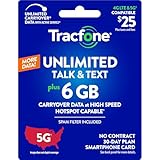
- Includes 6 GB of data, Hotspot capable≈
- Unlimited Carryover of unused data with active service*.
- This plan is compatible with most Tracfone prepaid phones, a lineup of the latest devices including 5G smartphones
- Tracfone has you covered with our reliable nationwide 4G and 5G coverage
- No contract
Experience plans can make sense for families that value device promotions, entertainment, travel benefits, or satellite-related features. T-Mobile says eligible Experience plans have a five-year price guarantee for the price of talk, text, and 5G smartphone data. That guarantee does not automatically cover taxes, fees, promotions, or every possible plan change, so read what is actually protected.
Choose T-Mobile postpaid when you have three or more lines, T-Mobile works well locally, and the perks or phone promotions offset the higher and more complicated bill. Better Value may be promotion- or eligibility-dependent; do not assume every family can select it at the displayed price.
Best for frequent international travel: Google Fi Unlimited Premium
Google Fi Unlimited Premium is expensive for a domestic-only user but can be compelling for someone who frequently travels outside the United States. It is listed at $65 for one line and $110 for two, before taxes and government fees. The plan includes 50GB of high-speed data abroad in more than 200 destinations, international calling benefits, hotspot benefits, and Google One-related perks. Domestically, the cited plan includes 100GB of high-speed data per person before reduced speeds.
Before choosing Fi, check the countries you actually visit and distinguish data roaming from calling. International texting does not necessarily mean unlimited international calling, and coverage in more than 200 destinations does not mean unlimited high-speed service in every country. For a long stay, a local SIM or eSIM may be cheaper; Fi is most valuable when convenience and one number matter more than the absolute lowest cost.
What’s actually slowing this PC down?
Pick the symptom - the matching free tool is one click away.
Choose Google Fi if international data is a routine requirement, you use Google services, and the travel benefits justify paying more every month. For occasional travel, compare Fi with US Mobile, Visible+, a T-Mobile Experience plan, and a local travel eSIM.
Best inexpensive major-carrier prepaid option: AT&T Prepaid annual unlimited
AT&T’s annual prepaid unlimited option costs $240 upfront, or $20 per month when averaged over the year. It includes unlimited talk, text, and data and 10GB of hotspot data. The critical limitation is a hard speed reduction: after 16GB of data in a monthly cycle, speeds are limited to a maximum of 1.5Mbps under the cited plan terms.
This is a good choice for someone who wants AT&T’s network and accepts an annual payment and post-threshold slowdown. It is not the right interpretation of unlimited for someone who expects unlimited high-speed video or frequent high-resolution hotspot use. Review the AT&T Prepaid plan page for current renewal and eligibility terms.
Best AT&T plan for high data and hotspot use: AT&T Extra 2.0
AT&T Extra 2.0 is listed at $70 for one line with AutoPay, before taxes and fees. It includes 100GB of high-speed data and 50GB of hotspot data. After the premium-data allotment, AT&T may temporarily slow service when the network is busy.
For a rural user, hotspot-heavy customer, or person who qualifies for a military, teacher, first-responder, employer, or other discount, AT&T may be worth the higher base price if its signal is materially better at the places that matter. Compare the discounted total with a cheaper MVNO on AT&T’s network; do not assume that the same network means the same priority, roaming, or support.
Best Verizon prepaid alternative: Verizon Prepaid 15GB
Verizon’s 15GB prepaid plan is listed at $35 per month with AutoPay. It offers a direct Verizon prepaid option for users who want Verizon’s network but do not need the full postpaid lineup. The hotspot, data-management, roaming, and customer-support terms differ from Verizon postpaid, so read the exact prepaid disclosure rather than treating it as a cheaper version of every postpaid plan.
How to choose the right plan before looking at price
Use this order: coverage first, data rules second, total cost third, and perks last. A $15 plan that fails inside your home is not a bargain, and a $100 plan is wasteful if you use 3GB a month and never travel.
- Map your actual use. Check the last three months of cellular data usage in your phone settings or current carrier account. Separate phone data from hotspot data.
- List your locations. Include home, work, school, inside large buildings, rural roads, frequent destinations, and travel routes—not just your ZIP code.
- Count lines and users. A single-line plan and a four-line family plan have different economics. Children, parents, and hotspot users may not need the same tier.
- Identify special requirements. Check international roaming, smartwatch support, tablet lines, business features, device financing, retail help, and discounts.
- Normalize the price. Add taxes, fees, annual prepayment, phone installments, insurance, and the cost after promotions end.
Prepaid, postpaid, MVNO, and carrier-owned budget brands
Postpaid
Postpaid service is normally billed after use. It tends to offer stronger device promotions, family discounts, retail support, premium-data tiers, international options, and connected-device support. The advertised price frequently excludes taxes and fees, and the best phone deals may require a particular plan, trade-in, new line, or bill-credit schedule.
PC Slower Than It Used to Be?
A free scan shows the junk files, broken settings and background clutter dragging Windows down - then fixes them in one click.Free scan · Windows 10 & 11Outdated Drivers Are Slowing You Down
One free scan finds every outdated or missing driver and matches the right update for your exact hardware.Free scan · exact hardware matchPrepaid
Prepaid service is paid before use and generally does not require a long-term service contract or traditional credit check for service. It is often cheaper and easier to leave, but device financing, roaming, priority data, support, and phone promotions may be less generous. Annual prepaid plans reduce the monthly equivalent but increase the cost of leaving early.
MVNOs
A mobile virtual network operator, or MVNO, buys or resells access to one or more major networks. It may use the same physical radio network as Verizon, AT&T, or T-Mobile, but that does not guarantee the same priority during congestion, roaming access, hotspot policy, video quality, device selection, or customer support. Provider and network affiliation are only the beginning of the comparison.
Carrier-owned budget brands
Visible and Total are associated with Verizon, Mint is owned by T-Mobile, and Cricket is owned by AT&T. Ownership can make network access and billing relationships more straightforward, but it does not make the budget brand identical to the parent carrier’s postpaid service. Current low-cost comparisons from NerdWallet show why network affiliation and plan terms must be evaluated separately.
Also popular on Amazon

- Tracfone's $29.99 Prepaid Phone Card 90-Day Plan provides 120 minutes for talk, text and web.
- Unlimited Carryover of unused minutes, text, and data with active service.
- This Service Plan can be used to refill your current Tracfone Service or be used to activate a new Tracfone Service.
- This plan is compatible with most TracFone prepaid phones, a lineup of the latest and greatest devices including 5G smartphones.
- Physical Card
What unlimited data really means
“Unlimited” can describe several very different experiences. Ask which of these applies:
- Unlimited talk and text: calls and messages do not have a monthly allowance, but this says nothing about data.
- Unlimited high-speed phone data: data has no stated monthly cap, although it can still be deprioritized or managed during congestion.
- High-speed allowance followed by a throttle: the plan remains technically unlimited, but speed drops after a stated amount.
- Deprioritized data: service may be slower than higher-priority users when a cell site is busy, even if no numerical threshold has been reached.
- Unlimited hotspot: this can mean unlimited data at a slow fixed speed, not unlimited full-speed tethering.
- Video management: video may be limited to standard definition or another stated resolution.
- Domestic-only unlimited: the U.S. allowance may be generous while international roaming is limited to a small amount of data, minutes, or texts.
Here are concrete examples from current plan disclosures:
| Plan | What the word "unlimited" hides |
|---|---|
| Mint Unlimited | After more than 50GB in a month, reduced speeds may occur for the rest of the cycle in some congested locations. Hotspot is capped at 20GB and video streams in SD under the cited terms. See Mint’s plan details. |
| T-Mobile Prepaid Unlimited Monthly | Heavy users above 35GB may receive lower speeds than other users during congestion. Hotspot is unlimited but limited to 3G speeds. See T-Mobile Prepaid. |
| AT&T Prepaid annual unlimited | Speeds are reduced to a maximum of 1.5Mbps after 16GB. See AT&T Prepaid. |
| US Mobile Unlimited Flex | Unlimited data is available, but only 10GB is high-speed under the cited terms. Exact limits and priority vary by network. See US Mobile’s plan documentation. |
| AT&T Extra 2.0 | 100GB is high-speed data; after that, AT&T may temporarily slow service when the network is busy. Hotspot is 50GB. See AT&T’s plan disclosure. |
When reading a plan page, search for the exact phrases premium data, high-speed data, may temporarily slow during congestion, reduced speeds after [number]GB, video streams at [resolution], and hotspot data at [speed]. Those phrases are more useful than the word unlimited.
Coverage and network quality: test your locations, not a slogan
No carrier should be declared the nationwide winner without qualification. Independent studies measure different things. For example, the 2026 J.D. Power U.S. Wireless Network Quality Performance Study found T-Mobile highest in the Southeast and Southwest, Verizon highest in the North Central region, and ties between T-Mobile and Verizon in several other regions. The study included 20,050 wireless customers and was fielded from June through November 2025.
The January 2026 Opensignal report uses a different methodology, measurement period, and set of user-experience categories. RootMetrics, Ookla, J.D. Power, Opensignal, and carrier-submitted maps are not interchangeable. One carrier can lead in speed, another in reliability, another in coverage, and another in customer-perceived quality.
Do these 3 things before closing this tab:
1Clear out junk files and repair common Windows errors2Fix the driver behind crashes, sound loss and screen glitches3Repair Windows errors before they cause bigger problemsA practical coverage test
- Look up your address and regular destinations on the FCC National Broadband Map data.
- Check the prospective carrier’s own map for the exact underlying network used by the plan.
- Ask neighbors, coworkers, and family members who use that network about indoor service, not just outdoor bars.
- Test at home, work, school, inside buildings, and along frequently traveled roads.
- Use an eSIM trial or the provider’s return period when available. Test calls, texts, voicemail, data, and two-factor authentication before ending the old service.
The FCC map is useful for comparing provider-submitted coverage data and propagation modeling, but it cannot guarantee street-level or indoor performance. A metal building, basement, terrain, congestion, and local tower load can matter more than a broad colored area on a map.
Premium data, deprioritization, and throttling
Premium or priority data receives better treatment than lower-priority traffic when a cell site is congested. Deprioritized data is generally still usable but can slow first when the network is busy. A hard throttle is a stated speed ceiling after a stated amount of use. Network management is the broader set of rules covering congestion, video, hotspot use, roaming, and unusual usage.
Using Verizon’s network does not prove that an MVNO receives the same priority as Verizon postpaid. The same applies to AT&T and T-Mobile. Compare the provider, underlying network, high-speed allowance, priority language, hotspot terms, and international roaming together:
Provider → underlying network → high-speed allowance → priority policy → hotspot allowance and speed → international roaming.
One line versus a family plan
Single-line shoppers often get the best value from prepaid or an MVNO. Families may get a lower effective price from postpaid, particularly when device promotions and entertainment benefits are valuable. But “free” lines and family discounts often depend on keeping a specified number of paid lines.
| Plan family | 1 line | 2 or 3 lines | 4 lines | 5 lines | Taxes and fees |
|---|---|---|---|---|---|
| T-Mobile Essentials with AutoPay | $60 | $90 | $100 | $125 | Extra |
| T-Mobile Experience More or Better Value | $85 | $140 | $170 | $200 | Extra |
| T-Mobile Experience Beyond | $100 | $170 | $215 | $260 | Extra |
| AT&T Extra 2.0 with AutoPay | $70 | $120 | $160 | $200 | Extra |
These are illustrative advertised service prices from current comparison coverage, not final bills. See WIRED’s current plan comparison and confirm the carrier’s checkout total. A four-line AT&T Extra 2.0 account, for example, averages $40 per line before taxes and fees; a four-line T-Mobile Experience More or Better Value account averages $42.50. Add phones and insurance before deciding which is cheaper.
Questions to ask about a family account
- What is the total account price, not merely the price per line?
- Are taxes, fees, and regulatory charges included?
- What AutoPay method is required to receive the quoted price?
- Do different family members need different data tiers, and can the provider mix plans?
- Does a free line require a certain number of paid lines?
- What happens to the price if one member leaves?
- Will removing a line cancel another member’s device credits or promotional discount?
- Does the promotion expire, and what is the regular price afterward?
Taxes, fees, and the price you actually pay
Use a separate price reality column in every comparison. A $35 price with taxes included is not directly comparable with a $35 base price that receives another $5 or $10 in charges.
- Visible: advertises taxes and fees included on its $25, $35, and $45 plans. See the current plan page.
- US Mobile: advertises taxes and fees included on its listed plans. See US Mobile’s pricing.
- Mint: lists government taxes and recovery fees separately and discloses plan-specific recovery fees in its terms.
- Tello: lists location-dependent government taxes and discloses a cost-recovery charge of up to 30 cents.
- T-Mobile and AT&T postpaid: the prices quoted above generally exclude taxes and fees.
Calculate the first year and the normal renewal year separately. For an annual plan, use upfront payment + taxes and fees + phone cost + insurance. For monthly plans, use 12 monthly bills + activation or setup charges, if any, + phone cost + insurance. Then calculate the price after the introductory promotion ends.
Annual plans: when the discount is worth it
An annual plan can be excellent for a stable, light-data user, but it is not free flexibility.
Advantages
- Lower effective monthly cost.
- Less exposure to monthly price changes during the paid term.
- No monthly billing management.
- Useful for a child, senior, backup phone, or predictable low-data line.
Disadvantages
- Large upfront payment.
- Refund and cancellation restrictions.
- Harder to leave if coverage is poor.
- The promotion may apply only to the first term.
- Renewal can be more expensive.
- Cheap-plan providers may offer limited phone financing, requiring you to buy an unlocked phone separately.
Mint’s standard 12-month rates are a clear example: $15 for 6GB, $20 for 17GB, $25 for 23GB, and $30 for unlimited per month equivalent. The current $15 promotion does not establish the future renewal price. Read the plan page and terms before paying for a year.
Also popular on Amazon

- Unlimited talk and text with 120 GB of data
- Annual Plan with no contract
- 5G Coverage on the Network America relies on
- Physical Card for Smartphones Only
- This Service Plan can be used to refill your current Tracfone Service or be used to activate new Tracfone Service
International calling and travel
Separate these requirements because they are often confused:
- Calling another country while you are in the United States.
- Roaming in Canada or Mexico.
- Using data on a short overseas trip.
- Frequent international travel across many countries.
- Living abroad long enough that a local SIM or eSIM is more economical.
| Provider | Current travel-related strength | What to verify |
|---|---|---|
| Google Fi Unlimited Premium | 50GB of high-speed data abroad in more than 200 destinations, plus international calling benefits | Exact destination list, calling rules, taxes, reduced-speed policy, and long-term roaming limits |
| US Mobile Unlimited Premium | Up to 20GB international roaming data, 200 minutes, and 250 texts per month under cited terms | Selected underlying network and whether that network supports the desired destination |
| Visible+ | Roaming benefits in Mexico and Canada plus one Global Pass day per month; Visible+ Pro adds broader international calling and texting benefits | Countries, day-pass activation, data speed, and the distinction between calls and texts |
| T-Mobile Experience | Different tiers include different international data and travel benefits; Experience Beyond includes T-Satellite according to current T-Mobile information | Exact tier, destinations, high-speed allowance, satellite limitations, and price after promotions |
“International coverage” is not a complete specification. Confirm the country, high-speed data amount, calling and texting allowances, roaming duration, and what happens after the allowance is used. For occasional trips, a travel eSIM may cost less; for frequent trips, the convenience of keeping one domestic number can justify a premium plan.
Windows Errors? Fix Them Before They Spread
Repair common Windows errors and clear accumulated junk for a smoother, more stable PC - no reinstall needed.Free scan · no reinstallCrashes, No Sound, or Screen Glitches?
Random freezes, missing sound and display glitches usually trace back to one bad driver. Find and replace yours safely.Free scan · under a minutePhone compatibility, eSIM, financing, and unlocking
Before switching, check the phone—not just the plan.
- Buy an unlocked phone directly from the manufacturer when maximum flexibility matters.
- Check the phone’s IMEI with the destination carrier.
- Confirm the required LTE and 5G bands.
- Confirm eSIM support if you want an immediate trial or dual-SIM travel setup.
- Do not assume a phone bought from one carrier supports every feature on another network.
- Check whether a financed phone remains locked until it is paid off.
Important Verizon unlocking uncertainty in 2026
Verizon’s official pages currently conflict. Its consumer support page still says postpaid devices are locked for 60 days and then automatically unlocked. A newer Verizon business-support page says that, beginning January 27, 2026, devices purchased from Verizon remain locked until device-payment or contract terms are fulfilled.
Because these are Verizon’s own inconsistent pages, do not assume that a Verizon phone is unlocked after 60 days or after payoff. Verify the exact unlock terms attached to the purchase date, device, and account before accepting a phone promotion. The safest option for someone planning to change carriers is an unlocked phone purchased elsewhere.
T-Mobile’s current SIM-unlock policy generally requires a postpaid device to have been active on T-Mobile for at least 40 days, to be paid in full if financed, and to have a zero account balance if the account was canceled. Read the current T-Mobile requirements for exceptions and prepaid rules.
Do these 3 things before closing this tab:
1Fix the driver behind crashes, sound loss and screen glitches2Repair Windows errors before they cause bigger problems3Scan for outdated or missing drivers - takes under a minuteSmartwatches, tablets, and connected devices
A cheap phone plan may not support the connected devices that come with a major-carrier account. If you use an Apple Watch or Pixel Watch, check all of the following before switching:
- Whether the provider supports Apple Watch or Pixel Watch activation.
- Whether the watch can operate as a standalone cellular device.
- Number sharing and companion-line requirements.
- International smartwatch roaming.
- Free or discounted watch lines and how long the discount lasts.
- Tablet, hotspot, and other connected-device line pricing.
Postpaid carriers generally provide more options for watches, tablets, device financing, and in-person troubleshooting. An MVNO may still be the better value, but only if it supports the particular device and feature you need.
Special cases
Very light users
Do not pay for unlimited data you will not use. Tello’s 2GB plan at $10 per month and other low-data plans from US Mobile can beat an unlimited plan for a user who mostly relies on Wi-Fi. Check your actual usage first; background photo backup and video autoplay can make a low allowance disappear.
Children and seniors
For a child, prioritize a low total cost, parental controls available through the phone, reliable coverage at school and home, and the ability to limit data. For a senior, simple billing, clear support, a compatible phone, and strong indoor coverage may be more valuable than saving a few dollars. A major-carrier postpaid plan can be worthwhile when in-person assistance is important; a prepaid plan can be better when the user needs only talk, text, and modest data.
Military members, teachers, and first responders
Check employer, military, teacher, first-responder, and other eligibility discounts before choosing. Compare the discounted full bill against a low-cost plan, including taxes, phone installments, insurance, and the end of promotional credits. Do not assume a discount automatically beats a prepaid or MVNO plan, but do not ignore the value of device promotions and priority data either.
Rural users
There is no universally best rural carrier. The best signal can change between two neighboring towns, roads, or buildings. Compare the exact places you visit, ask nearby users, and test before porting. The regional J.D. Power results—Verizon leading the North Central region and T-Mobile leading the Southeast and Southwest—show why national slogans are inadequate.
Heavy hotspot users
Compare hotspot separately from phone data. An unlimited phone plan may provide only 5GB, 10GB, 20GB, or 50GB of high-speed hotspot data, or it may cap hotspot speed from the beginning. If you routinely replace home internet with a phone, look for the hotspot allowance, speed, device limit, and network-management language—not just unlimited smartphone data.
Families with different users
Mix-and-match plans can be more efficient than placing every family member on one tier. A parent may need premium data and hotspot, while a child may need only 2GB. Confirm whether the provider permits different plans on one account and whether moving one member affects a free-line promotion or another person’s device credits.
Quick wins for a faster PC:
Repair Windows errors before they cause bigger problemsFix Now →Fix the driver behind crashes, sound loss and screen glitchesFind Drivers →Phone-deal shoppers
A “free” phone is usually paid for through bill credits and a required service commitment. Compare:
Also popular on Amazon

- Tracfone $54 Unlimited Talk & Text plus 6 GB of Data 90-Day - Prepaid Plan
- 90-Day Plan with no contract
- 5G Coverage on the Network America relies on
- Physical Card for Smartphones Only
- This Service Plan can be used to refill your current Tracfone Service or be used to activate new Tracfone Service
- The service price over the entire installment period.
- The required plan tier.
- Trade-in value and device condition requirements.
- The bill-credit schedule.
- The remaining phone balance if you leave early.
- The device lock period.
- Whether a new line is required.
- Whether existing customers qualify.
Buying an unlocked phone and using a cheaper plan can cost less than accepting a supposedly free phone that requires an expensive service tier for 24 or 36 months.
How to switch carriers and keep your number
Most customers who remain in the same geographic area can keep their phone number. The safest sequence is:
- Check compatibility. Confirm the phone’s IMEI, network bands, eSIM or SIM support, and unlock status.
- Test coverage. Use a trial eSIM when available, or take advantage of the new provider’s return period.
- Collect account information. Obtain the current carrier’s account number, number-transfer or port-out PIN, billing ZIP code, and account-holder details.
- Start the port with the new carrier. Do not cancel the old service first.
- Keep the old line active. Wait for calls, texts, data, voicemail, and two-factor authentication to work on the new service.
- Check the old account. Confirm that the old service has closed or that only intended lines remain. Review final charges, device installments, insurance, and promotional credits.
The FCC’s consumer guidance says customers can generally keep their number when staying in the same geographic area and warns against canceling old service before beginning the port. The FCC also provides number-porting guidance.
Customer service is part of the plan price
Major postpaid carriers generally offer retail stores, phone support, device financing, and more hands-on account assistance. Low-cost online carriers often rely on chat, an app, or web support. That difference matters if you manage a complex family account, need rapid device replacement, support a senior, or cannot troubleshoot an eSIM yourself.
A $10 monthly saving equals $120 per year. It may be worthwhile for a technically confident user with one line; it may not be worthwhile for someone who expects frequent in-person help. Independent reviews such as Tom’s Guide’s current comparison also identify limited in-person technical support as a drawback of some low-cost providers.
A final buying checklist
- Coverage: Did you test home, work, indoor locations, and regular routes?
- Data: How much high-speed phone data do you receive, and what happens afterward?
- Priority: Is data premium, deprioritized, or subject to a hard throttle?
- Hotspot: How many high-speed gigabytes are included, and at what speed?
- Video: Is video limited to SD or another resolution?
- Travel: Which countries, data amounts, minutes, and texts are included?
- Price: Are taxes and fees included? Is AutoPay required?
- Prepayment: What is due today, and what happens if you leave early?
- Renewal: What is the regular price after the promotion?
- Phone: Is the device compatible and unlocked?
- Family: What happens to promotions and device credits if a line leaves?
- Support: Can you get help through the channel you prefer?
- Connected devices: Will your smartwatch, tablet, and hotspot work?
Comparison sites sometimes name one overall winner, but their winners optimize for different users: current coverage from Tom’s Guide favors different choices by category than WIRED. The better approach is to choose the plan that wins for your location, usage, line count, phone, and travel requirements.
Frequently Asked Questions
Is prepaid cheaper than postpaid?
Usually, especially for one light or moderate user, but not always for a large family. Postpaid can become competitive when several lines share an account or when phone promotions, discounts, premium data, roaming, and retail support have real value. Compare the complete bill, not the base price.
Do MVNOs use the same towers as major carriers?
Many MVNOs use one or more of the same underlying networks, but that does not guarantee the same congestion priority, roaming access, hotspot rules, device support, or performance. Confirm the exact provider and plan terms.
What is the cheapest plan with unlimited data?
There is no single answer because unlimited can mean a hard speed limit or deprioritized data. Current low-cost starting points include Visible+ at $35 per month with taxes and fees included, AT&T Prepaid annual unlimited at a $20 monthly equivalent, and other prepaid plans with materially different thresholds and hotspot rules. Read the data disclosure before comparing.
Which plan is best for one person?
For light use, start with Mint’s 6GB annual plan or Tello. For heavy use, start with Visible+ if Verizon works best locally. US Mobile is a strong alternative when you want to select or change the underlying network.
Which plan is best for a family of four?
T-Mobile Experience More or Better Value is a strong starting point for a family seeking postpaid perks, while AT&T Extra 2.0 may be better where AT&T performs best or where hotspot data matters. Compare the total bill, taxes, phone installments, promotions, and what happens if one line leaves.
Free tools Windows power users keep installed
One-click scans. No signup required.
Can I keep my phone number when I switch?
Generally yes if you remain in the same geographic area and the new provider supports the number. Obtain the old account number and transfer PIN, start the port with the new carrier, and do not cancel the old service until the port works.
How can I tell whether my phone is unlocked?
Check the phone’s settings, ask the current carrier, or insert a compatible SIM or eSIM from another provider. Also check the purchase-specific policy. Verizon’s current consumer and business pages present conflicting unlock information, so verify the terms for your exact device and purchase date.
Are taxes and fees included in the advertised price?
It depends on the provider and plan. Visible and US Mobile advertise taxes and fees included on the cited plans. Mint, Tello, T-Mobile postpaid, and AT&T postpaid generally add some taxes, fees, or recovery charges. Check the checkout total.
Can I use a smartwatch with a cheap phone plan?
Sometimes, but do not assume it. Confirm Apple Watch or Pixel Watch support, number sharing, standalone service, international roaming, and companion-line pricing before switching.
Recommended Free Tools
What should I do if coverage is poor after switching?
Use the provider’s trial or return period if available, contact support, and keep the old service active until the new line has been tested. If the phone is unlocked, an eSIM or SIM from a different network may let you move without replacing the device. Annual plans require particular caution because refunds and early cancellation may be restricted.
The Bottom Line
For most buyers, start with the network and your real usage—not the word unlimited. Choose Mint or Tello for inexpensive light-to-moderate use, Visible+ for one-line unlimited service on Verizon, US Mobile when network flexibility matters, T-Mobile Experience for a larger family that values postpaid benefits, and Google Fi Unlimited Premium for frequent international travel. Before you switch, calculate the all-in price, test the network where you actually use your phone, confirm the phone is compatible and unlocked, and port your number before canceling the old account.

