
iTechGuides is reader-supported. When you buy through links on our site, we may earn an affiliate commission. As an Amazon Associate I earn from qualifying purchases. Learn more
The best alternative depends on how your community actually talks. Choose Lemmy for Reddit-style topics, votes, and comments; Mastodon for a public feed on community-run servers; Bluesky for portable identity and interoperable social apps; Discord for live chat, voice, events, and moderator presence; or Discourse for durable, searchable discussions that your organization can own and connect to an existing site.
Smaller communities rarely need to reproduce the reach of Facebook, Reddit, or X. They usually need a manageable place to make decisions, exchange knowledge, welcome members, and enforce rules. The trade-off is that control and focus come with less automatic discovery, more moderation work, or a hosting obligation. Use the decision process below to select a platform that matches your interaction pattern and governance capacity.
Start with the community job, not the brand
Write down the primary job your space must perform before comparing features. A local club arranging weekly activities has different requirements from a specialist group building a searchable technical archive. Decide which of these statements is closest to your goal:
- “Members should publish topics, vote, and build threaded answers.” This is a forum or link-aggregator problem.
- “People should follow a public stream and discover related accounts.” This is a social-feed problem.
- “The group needs an active room for quick questions, voice, and events.” This is a real-time chat problem.
- “We need an owned knowledge base with durable URLs, search, and integrations.” This is a hosted-forum problem.
- “Members must be able to move their identity or data between compatible services.” This is an interoperability and portability problem.
Also decide whether the space is public, member-only, or a mixture. Public spaces can attract useful outsiders but require stronger anti-abuse controls. Member-only spaces can be easier to moderate but reduce discovery. A hybrid model often works when announcements and reference material are public while operations and sensitive discussion stay restricted.
Popular on Amazon
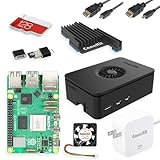
- Includes Raspberry Pi 5 with 2.4Ghz 64-bit quad-core CPU (8GB RAM)
- Includes 128GB Micro SD Card pre-loaded with 64-bit Raspberry Pi OS, USB MicroSD Card Reader
- CanaKit Turbine Black Case for the Raspberry Pi 5
- CanaKit Low Noise Bearing System Fan
- Mega Heat Sink - Black Anodized
At-a-glance comparison
| Need | Best starting point | Main trade-off |
|---|---|---|
| Reddit-like topics, votes, and comments | Lemmy | Federation and server administration add complexity |
| Public social feed with community-run servers | Mastodon | Server choice and moderation quality vary |
| Portable identity and interoperable apps | Bluesky | Less suited to structured, forum-style archives |
| Live chat, voice, events, and community presence | Discord | Fast chat is less durable as a knowledge base |
| Searchable, owned discussions and SSO | Discourse | Requires hosting and community administration |
This is a starting map, not a promise that one service can replace every function of a large network. A community may combine a public feed with a private operational space, but adding platforms also adds moderation queues, account management, and places where important information can be missed.
Lemmy: the closest structural match for a small subreddit-style group
How it works
The Lemmy project repository describes it as “A link aggregator and forum for the fediverse.” Members subscribe to forums, publish links or discussion posts, vote, and comment. Servers federate with one another, so a person can participate in communities hosted elsewhere while each server remains an independently operated site.
That combination makes Lemmy the most direct fit when your mental model is a set of topic communities rather than a chat room or a single chronological feed. Threads and votes provide visible signals about what deserves attention, while comments keep answers attached to the original topic.
Crashes, No Sound, or Screen Glitches?
Random freezes, missing sound and display glitches usually trace back to one bad driver. Find and replace yours safely.Free scan · under a minuteWindows Errors? Fix Them Before They Spread
Repair common Windows errors and clear accumulated junk for a smoother, more stable PC - no reinstall needed.Free scan · no reinstallGovernance and moderation
Lemmy does not create one universal rulebook. Its repository states that each server can set its own moderation policy and appoint site-wide administrators and community moderators. You therefore need to evaluate the server before asking members to join: read its rules, understand how reports are handled, and identify who can act when a federated community becomes abusive or unwanted.
If no existing server fits your rules, anyone can run one. Self-hosting gives the operator control over policies and infrastructure, but it also creates responsibility for updates, backups, storage, uptime, abuse response, and federation settings. The project lists Docker, Ansible, ARM64, and Raspberry Pi support. A Raspberry Pi 5 can therefore be a relevant starting point for a small operator, but hardware suitability must be checked against expected traffic, media storage, federation volume, backup jobs, and the uptime you can actually maintain.
Where Lemmy fits—and where it does not
- Choose it when: members need topic pages, voting, threaded comments, and a Reddit-like browsing habit.
- Plan for: server selection, federation concepts, local and community moderation, and an operator who can maintain the service.
- Do not assume: federation automatically supplies a large audience or eliminates moderation. It expands reach while preserving local governance obligations.
Mastodon: a public feed where server governance is part of the product
How it works
Mastodon is best understood as a public posting and following network organized around community-run servers. The experience is a stream of posts and interactions rather than a hierarchy of durable topic pages. People can follow accounts across the wider Fediverse, but the server they choose still affects rules, moderation, and the quality of local support.
Why governance needs an explicit review
Mastodon’s February 17, 2026 strategy post puts “community ownership, trust & safety features, organic user & server growth, and financial sustainability” at the center of its work. The same strategy discusses governance, server administration, moderation-policy updates, and planned improvements to discovery and usability. Those priorities are useful signals for a small group: server stewardship is not a background detail; it is part of the membership experience.
Before joining or recommending a server, inspect its code of conduct, reporting path, moderation history, data-retention explanation, and process for moving accounts. Mastodon documentation covers network use, moderation, account moves, running servers, ActivityPub, and administration, so an organization that operates its own instance should expect a real administrative role rather than a set-and-forget signup.
Also popular on Amazon

- CanaKit Raspberry Pi 5 Essentials Starter Kit
When Mastodon is the right choice
- Good fit: public announcements, ongoing conversation, following people and organizations, and a community that values local ownership.
- Less suitable: a reference archive where members need to browse years of categorized answers or vote on a canonical solution.
- Operational question: who will moderate reports, explain server rules to newcomers, and handle an account move if the group changes servers?
Mastodon can give a small community a recognizable public presence without putting all governance in one corporate timeline, but the quality of that experience depends heavily on the server’s administration.
Bluesky: portability and an open protocol for public conversation
What its protocol emphasis means
Bluesky’s official FAQ says the service is designed “to not be controlled by a single company” and is built on the open-source AT Protocol. The FAQ describes a standard format for identity, follows, and data so compatible apps can interoperate and users can move across them freely.
For a small community, portability changes the risk calculation. You can experiment with different compatible apps without treating the first interface as a permanent home, and members have a clearer conceptual path for retaining identity and social connections if the community’s preferred app changes. That does not remove the need to read each app’s rules or understand how moderation decisions are made.
Do these 3 things before closing this tab:
1Scan for outdated or missing drivers - takes under a minute2Clear out junk files and repair common Windows errors3Fix the driver behind crashes, sound loss and screen glitchesLimits for structured groups
Bluesky is a public-conversation network, not a direct substitute for a structured forum with durable topic archives. A stream is effective for announcements, reactions, and discovering people with adjacent interests. It is less effective when a new member must find a definitive answer from a long-running project, compare revisions, or follow a decision through many stages.
- Choose it when: portable identity, public conversation, and experimentation across compatible social apps are priorities.
- Add another system when: the community needs organized topics, formal moderation queues, persistent documentation, or single sign-on to an existing site.
Discord: fast community presence, voice, and events
What Discord does well
Discord’s official community portal is organized around servers and includes discovery plus safety, privacy, transparency, developer, and community resources. A server can provide rooms for different subjects, rapid back-and-forth conversation, voice sessions, event coordination, and direct moderator interaction. That makes it a strong operational home for groups that need people to show up at the same time.
The archive cost of speed
Fast-moving chat is easy to join and excellent for urgent coordination, but useful answers can disappear beneath newer messages. Search can retrieve a message, yet a stream of fragments is not the same as a carefully maintained knowledge base. If your community expects members to reuse explanations, publish policies, or preserve project decisions, establish a routine for promoting important material into a durable document or forum topic.
Moderators should define channel purposes, escalation rules, and the point at which a conversation moves from chat to a permanent record. Voice and event features also require clear conduct rules because real-time interaction can make incidents harder to document than text-based discussions.
Quick wins for a faster PC:
Scan for outdated or missing drivers - takes under a minuteDriver Scan →Repair Windows errors before they cause bigger problemsFix Now →Fix the driver behind crashes, sound loss and screen glitchesFind Drivers →When to choose Discord
- Best fit: live discussion, voice, events, volunteer coordination, and a visible sense of community presence.
- Watch for: fragmented information, missed announcements, and moderator fatigue caused by constant real-time activity.
- Practical mitigation: pin recurring guidance, maintain an external or forum-based handbook, and summarize decisions after live meetings.
Discourse: an owned, searchable home for durable discussion
Core capabilities
Discourse’s official feature page describes a modern discussion platform with persistent topic conversations, real-time chat channels, configurable user preferences, mobile layouts, automatic link expansion, and single sign-on. It also documents AI or manual translation and AI integrations for community use and moderation.
Also popular on Amazon

- All-in-One Complete Kit: This SANOOV RPi 5 bundle comes with Raspberry Pi 5 4GB RAM single board, active cooler, durable ABS case and screwdriver. No extra parts needed, ready to use right out of the box for beginners and hobbyists
- Powerful Single Board Computer: Equipped with 4GB RAM and high-performance processor, delivers fast running speed for 4K playback, AI projects, programming and daily computing tasks. SANOOV for raspberry pi 5 4GB is equipped with broadcom 64 quad-core Arm Cortex A76 processor with gigabit ethernet and upgraded with IEEE 802.11ac Wi-Fi, Bluetooth 5.0 dual-band 2.4Ghz and 5Ghz and Power Over Ethernet (POE). Upgrading delivers 2-3 x speed vs Pi 4, redefining the experience
- Efficient Active Cooler: Effectively lowers operating temperature and prevents performance throttling. Runs quietly even under long-time heavy load, ensures stable operation all day long. SANOOV RPi 5 4GB kit offer an active cooler, which combines an aluminium heatsink with a high-performance PWM fan. Active cooler is fully compatible with the Pi OS, which can effectively reduce the temperature of RPi5 and ensure its good performance during long-term high load operation
- Sturdy ABS Protective Case: Well-fitted for Raspberry Pi 5 board, can be secured with 4 screws to effectively protect the Pi 5 motherboard from damage, reserves full access to all ports and buttons. SANOOV uses ABS material to produce the case, which has a softer texture and feel. Meanwhile, SANOOV case adopts a layered design for easy disassembly and installation. (Tip: The Case cannot install M.2 HAT Add on Board and Solid State Drive!)
- Wide Application & Full Compatibility: Seamlessly compatible with official OS and mainstream peripheral accessories for Raspberry Pi 5. Whether you are a beginner, student, electronics hobbyist or professional developer, this all-in-one kit meets your diverse needs. It excels in IoT projects, robotics design, retro gaming devices, home media servers and other DIY creations. Backed by a large global community, you can easily find guides, technical support and shared projects online
The important distinction is persistence. A topic can retain its context, replies, links, and status so that a newcomer can read it later without reconstructing a conversation from hundreds of short messages. Categories, tags, and search can turn recurring questions into a navigable archive, while single sign-on can connect the community to an existing membership or website account system.
Ownership and administration
An owned forum gives an organization more control over its information architecture and member experience than a feed controlled by a general-purpose network. That control is not free: you must arrange hosting, updates, backups, spam protection, moderation, and account support. Decide who is accountable for each task before launch, and document how members can export or retrieve their contributions if the organization changes systems.
When Discourse is the right foundation
- Choose it when: durable archives, search, configurable workflows, mobile access, or single sign-on are central requirements.
- Use chat selectively: real-time channels can handle quick coordination while formal decisions and reusable answers remain in topics.
- Expect administration: ownership increases control and responsibility at the same time.
Compare the platforms on the decisions that matter
Governance and ownership
Lemmy and Mastodon make server governance visible: each server can have its own rules, administrators, and moderation practices. Bluesky’s AT Protocol emphasizes an ecosystem in which identity, follows, and data can interoperate across apps. Discord organizes communities as servers within a hosted service. Discourse is suited to an organization that wants a forum it can configure and connect to its own systems.
The Tool Desk
Outbyte Driver Updater FREEFix the driver behind crashes, sound loss and screen glitchesFind Drivers →Outbyte PC Repair FREEClear out junk files and repair common Windows errorsFree Scan →Conversation shape
Use Lemmy for posts, votes, and comments; Mastodon or Bluesky for public streams and follows; Discord for immediate text and voice; and Discourse for long-lived topics. The choice affects how quickly a newcomer understands the conversation and how much work is required to preserve institutional memory.
Moderation responsibility
Federated services do not remove moderation. A Lemmy or Mastodon operator must set rules, handle reports, and decide how to interact with other servers. A Discord moderator team must monitor live channels and events. A Discourse team must manage categories, flags, spam, and escalation. Bluesky users still need app- and community-level rules even when the underlying protocol is open.
Portability and interoperability
Bluesky’s official FAQ provides the clearest emphasis on portable identity, follows, and data through AT Protocol. Mastodon documents account moves and ActivityPub. Lemmy’s federation lets servers communicate while preserving server-level administration. For Discord and Discourse, plan your own export and migration procedures rather than assuming that another service will reproduce your data structure.
Discovery and network effects
Large mainstream networks have built-in audiences that smaller services may not match. Federation and public protocols can broaden discovery, but they do not guarantee sustained participation. Set success criteria around the members you can serve—response times, answered questions, event attendance, or retained archives—rather than assuming a particular follower count.
Privacy and data control
Control varies by deployment. A self-hosted service can give an operator direct responsibility for storage and access decisions, while a hosted server delegates infrastructure to its administrator. Read each service’s rules and privacy documentation, decide what personal information is necessary, and publish retention and deletion procedures in language members can understand.
Also popular on Amazon

- 【What you Get】You will get 1*Pi 5 8GB Single Board,1*RasTech Case,1*Active Cooler,1*Screwdriver,1*Installation instructions,12-month free warranty, lifetime service, 24-hour prompt and friendly response.
- 【More Connectors】There are two USB 3.0 ports(5Gbps simultaneously) and two USB 2.0 ports, which triple total bandwidth ,support any combination of up to two cameras or displays. Peak SD card performance is doubled through support for the SDR104 high-speed mode. It provides a smooth desktop experience for you. Offer Gigabit Ethernet and a PCIe interface, along with dual-band Wi-Fi and Bluetooth 5.0/BLE wireless capability. The RasTech Pi 5 Kit use the new 27W 5.1V 5A USB-C power connector.
- 【 Support Dual 4Kp60 Display 】Each of the two microHDMI sockets can control a 4K display at 60 Hertz, now support HDR, offering super HD video for media streaming projects. RPi 5 is the first RPi model that comes with a PCI Express port (PCIe 2.0 x1 with 500 MB/s) to attach SSDs (requires separate M.2 HAT).
- 【 Excellent Chips And Applications】Pi 5 is a full-size Pi computer using silicon built in-house at Pi. The RP1 “southbridge” provides the bulk of the I/O capabilities for Pi 5. Pi 5 is more friendly and convenient in the development of Internet of Things, Web development, machine identification, automatic control and other electronic equipment applications and network.
- 【 Faster CPU, Better GPU 】 Pi 5 features a Broadcom BCM2712 64-bit quad-core Arm Cortex-A76 processor running at 2.4GHz, it delivers a 2–3× increase in CPU performance relative to RaspberryPi 4. The 800MHz VideoCore VII GPU is compatible to OpenGL ES 3.1 and Vulkan 1.2, substantial uplift in graphics performance. Pi 5 Offers lightning-fast CPU speed, a PCI Express interface, a Real Time Clock (RTC) and a power button and runs significantly cooler than Pi 4.
Operating cost and technical burden
The available data does not establish comparable current prices across these platforms. Instead, compare labor and responsibility: server administration and backups for self-hosted deployments; moderation and account support for every community; and information management when fast chat needs to be converted into durable records. A platform that appears free can still consume substantial volunteer time.
Independent reader supportYour contribution helps us test, update, and keep practical guides available for everyone.A practical selection process
- Describe the primary interaction. Write one sentence such as “members ask technical questions and preserve tested answers” or “members meet for live events and coordinate volunteers.” If the sentence contains two unrelated jobs, identify which one is primary.
- Set the visibility boundary. Mark each activity as public, member-only, or mixed. Public posting favors Mastodon or Bluesky; member operations may fit Discord or a private forum; a public archive can be built with Lemmy or Discourse.
- Choose the governance owner. Name the people or organization responsible for rules, reports, appeals, account help, backups, and service changes. If nobody can accept those duties, do not self-host.
- Define the archive requirement. Decide whether an answer must remain findable for months or years. If yes, favor Lemmy’s topic structure or Discourse’s persistent discussions, and create a process for turning chat decisions into permanent documentation.
- Test portability. Ask how members can move accounts, retrieve their posts, or leave without losing essential records. Pay particular attention to Mastodon account moves, Bluesky’s portable protocol model, and export procedures you control for hosted forums or chat.
- Pilot with a small group. Invite representative members, run the real workflows, and measure practical outcomes such as unanswered questions, moderation response time, event attendance, and the effort needed to find an old decision.
- Publish rules before opening broadly. Include acceptable behavior, reporting steps, moderator powers, appeals, privacy expectations, and what happens when a server or administrator changes.
- Review after the pilot. Keep the platform only if it reduces friction for members and moderators. Otherwise, migrate while the community and archive are still small.
Self-hosting a small Lemmy deployment
Lemmy’s project lists Docker, Ansible, ARM64, and Raspberry Pi support, which gives a small operator several deployment paths. Support for a platform does not equal a capacity guarantee. Before selecting a Raspberry Pi 5 or another host, estimate:
- expected member count and simultaneous activity;
- image and other media storage, including growth and retention;
- federation volume and the number of remote communities you will follow;
- backup frequency, off-device backup storage, and restore testing;
- network reliability, power protection, monitoring, and the uptime members need;
- time available for updates, security response, moderation, and abuse handling.
Start with a limited pilot, keep registration controlled while rules are tested, and perform a restore drill before inviting a wider audience. If traffic, media, or federation grows beyond the hardware’s comfortable capacity, move to a more capable host rather than treating slow performance as a moderation problem.
What’s actually slowing this PC down?
Pick the symptom - the matching free tool is one click away.
Moderation and continuity checklist
- Rules: publish behavior standards, prohibited content, and examples of borderline cases.
- Roles: separate routine moderators, technical administrators, and appeals or governance owners where possible.
- Escalation: specify response targets and what happens when a report concerns a moderator.
- Onboarding: explain server or community rules before members post, not after the first incident.
- Backups: schedule backups, store them separately from the live service, and test restoration.
- Exports: document how members and administrators can retain important posts, media, and membership records.
- Departure: tell members how to leave, move accounts where supported, and retrieve their own contributions.
- Change control: announce policy, software, server, and ownership changes with enough notice for members to respond.
Common mistakes and how to avoid them
Choosing by popularity alone
A smaller service may not reproduce the audience or network effects of a mainstream network. Judge it by whether the members you actually need can find one another and sustain useful activity.
Putting every kind of conversation in one stream
Announcements, support questions, social chat, and governance decisions have different lifetimes. Separate them into channels, categories, or topics, and create a clear place for permanent records.
Assuming federation means shared moderation
Federation connects servers; it does not create one moderation authority. Read local rules and understand how remote content is handled before opening participation.
Launching without an exit plan
A community can outgrow hardware, lose a volunteer administrator, or reject a policy change. Keep backups, define ownership succession, and tell members how their data can be retrieved or moved.
Recommended Free Tools
Measuring the wrong outcome
Follower totals and message volume can hide unanswered questions and moderator overload. Track useful outcomes: time to first response, percentage of questions resolved, event participation, successful searches, and the number of members who return.
What the available evidence does—and does not—show
Official materials support the functional distinctions above, but they do not establish a comparable, current audience statistic or an independent migration-success benchmark across Lemmy, Mastodon, Bluesky, Discord, and Discourse. GitHub’s live star count for a project is an interest signal, not a user or community-size measurement. Treat platform reach, hosting plans, policies, and partner-program availability as changeable and verify them before making a launch decision.
The durable choice is the one whose governance and conversation model your group can operate consistently. Pick the format first, run a controlled pilot, and make moderation, backups, and member portability part of the design rather than emergency fixes.

