
iTechGuides is reader-supported. When you buy through links on our site, we may earn an affiliate commission. As an Amazon Associate I earn from qualifying purchases. Learn more
Choose Apple Home when your household already uses iPhone, Siri, Apple Watch, HomePod or Apple TV and you want the least configuration. Choose Home Assistant when you need wider device and protocol support, more sophisticated automations or a local system you are prepared to configure and maintain. A hybrid is often the most practical answer: Home Assistant handles integrations and automation, while selected devices appear in Apple Home for family-friendly control and Siri.
“Apple HomeView” is not Apple’s current product name. Apple calls the platform Apple Home and its control software the Home app. The comparison below uses Apple’s official terminology while addressing the platform readers may be searching for.
What Apple Home and Home Assistant actually are
Apple Home is Apple’s coordinated accessory layer
Apple describes HomeKit as a framework that coordinates and controls compatible accessories from multiple vendors. The Home app presents those accessories across Apple devices, supports Matter accessories and provides automations based on time, location and sensor data. Apple’s own description is that “The Home app brings your entire smart home together seamlessly, giving you control across all your Apple devices, compatible third-party accessories…”
Free tools Windows power users keep installed
One-click scans. No signup required.
In practice, Apple Home is the user-facing system. You add compatible accessories, assign them to rooms, create scenes and automations, then control them from the Home app, Siri, Control Center and supported Apple devices. The experience is designed around consistent household use rather than around exposing every technical option.
Popular on Amazon

- Next-Gen TI CC2674P10 – Flagship chip supporting large Zigbee/Thread devices. Built for heavy automation & large mesh networks.
- 20 dBm High Power + 4.5 dBi High Gain Antenna – Providing stronger signal strength and more stable network connection, especially suitable for long-range use and weak signal environments.
- Open Source Multi-Platform – Works with Home Assistant, Zigbee2MQTT, and OpenThread BorderRouter(OTBR). Enables local control for Zigbee or Thread devices.
- Firmware Flexibility – Plug-and-play with pre-installed Zigbee Coordinator firmware. Easily update or flash Zigbee Router or Thread RCP firmware using the SONOFF Dongle Flasher.
- Reliable Build & 2‑Year Warranty – Made of corrosion‑resistant and moisture‑proof aluminum alloy + PC material, rigorously tested for durability, and comes with a 2‑year manufacturer's warranty.
Home Assistant is a configurable automation platform
Home Assistant is a self-hosted home-automation platform. You provide a supported computer or appliance, install Home Assistant and add integrations for the devices and protocols you use. Its Matter support can commission Matter devices directly, and its HomeKit Bridge integration can publish Home Assistant entities to Apple Home and Siri. That bridge can expose devices that do not natively support HomeKit, provided Home Assistant has an integration for them.
This architecture makes Home Assistant a control and integration layer as much as a mobile interface. You decide which radios, integrations, dashboards, automations and network services to run. The flexibility is valuable, but it also creates more decisions and more maintenance than a typical Apple Home installation.
Apple Home vs Home Assistant at a glance
| Decision area | Apple Home | Home Assistant |
|---|---|---|
| Primary strength | Polished, shared experience for Apple-device households | Broad integrations, protocol flexibility and advanced automation |
| Device access | HomeKit-compatible and Matter accessories, subject to Apple’s support requirements | Devices supported by Home Assistant integrations, including Matter and many other protocols |
| Automation style | Scenes and automations built around time, location, sensors and Apple devices | Highly configurable rules, conditions, triggers and actions across integrations |
| Voice control | Siri through Apple devices and Apple Home surfaces | Home Assistant’s own control options, with selected entities bridgeable to Siri |
| Setup effort | Lower for an Apple household with compatible accessories | Higher: host, operating system, integrations, networking, updates and backups |
| Local operation | Depends on the accessory, Apple hub arrangement and current Apple requirements | Designed to run on your own host; individual integrations determine behavior |
| Best fit | Families that value simplicity and a coherent Apple interface | Enthusiasts and households needing breadth, deep automation or unsupported devices |
Compatibility: Matter, Thread and HomeKit
Matter support in Apple Home
Apple documents Matter support in iOS 16.1 and later. Matter accessories added to Apple Home can be controlled in the Home app, with Siri, in Control Center and through third-party HomeKit apps. Compatibility still depends on the device’s Matter features and on Apple’s current hardware and software requirements, so check those requirements for the specific accessory and operating-system version you plan to use.
Matter support in Home Assistant
Home Assistant documents direct Matter commissioning and the ability to share devices between Matter fabrics. A Matter device can therefore be commissioned into a Home Assistant fabric and shared with an Apple fabric, subject to the device and controller capabilities. This is useful when Home Assistant provides the automation logic while Apple Home remains a convenient control surface.
Thread is not the same as Matter
Thread is a low-power mesh networking technology. It does not, by itself, guarantee that a product supports Matter or that it will work with either platform. A product can carry a Thread radio without offering Matter application support. When buying, look for the Matter logo or an explicit manufacturer statement of Matter compatibility; do not treat a Thread logo alone as proof.
| Label or technology | What it tells you | What it does not tell you |
|---|---|---|
| Matter | The product implements the Matter smart-home standard and can be commissioned by compatible controllers | That every device feature is exposed identically in every app |
| Thread | The product can use a Thread low-power mesh network | That the product supports Matter or Apple Home |
| HomeKit compatibility | The accessory is intended to work with Apple’s HomeKit framework | That it supports every Matter or Thread feature |
Setup and hardware requirements
What an Apple Home installation needs
Apple Home is usually the lower-friction option when everyone in the household already uses Apple devices. You need compatible accessories and an iPhone or iPad with a supported operating-system version. Siri control also requires an Apple device that supports Siri. Thread accessories and remote or automated operation may require compatible Apple home-hub hardware, such as HomePod or Apple TV, depending on Apple’s current requirements.
Apple changes device and operating-system support over time. Before buying hardware, confirm the current Home app, Matter, Thread and home-hub requirements for your region and device generation. Do not assume that an older Apple device provides every current function.
The Tool Desk
Outbyte Driver Updater FREEScan for outdated or missing drivers - takes under a minuteDriver Scan →Outbyte PC Repair FREERepair Windows errors before they cause bigger problemsFix Now →Also popular on Amazon
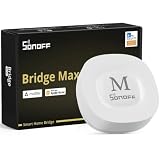
- Matter Bridge for Smart Home Integration: Bridge Zigbee, BTHome, and eWeLink devices to Matter platforms such as Alexa, Google Home, and Apple Home. Connect different smart home ecosystems and enjoy seamless cross-platform device control.
- Local Web Console, No Cloud Required: Access the local Matter Bridge web interface directly from your LAN without downloading an app or relying on cloud services. Configure and manage device bridging while keeping your data private and secure.
- Smart Home Security Protection: Pair with Zigbee sensors to create a local home security system. When intrusion is detected, the built-in 90 dB alarm and instant mobile notifications help keep you informed and your home protected.
- Support Home Assistant: Easily integrate Zigbee devices with Home Assistant through MQTT or bridge Home Assistant devices to Matter-compatible platforms, enabling greater flexibility across your smart home setup.
- Zigbee Hub with Broad Compatibility: Works as a Zigbee Hub and Zigbee Gateway, supporting SONOFF and a wide range of third-party Zigbee devices. Create local automations and build a reliable, connected smart home experience.
What a Home Assistant installation needs
Home Assistant requires a supported host and a hands-on installation. Its Matter documentation recommends running the Matter application on Home Assistant OS. You also need to plan networking, storage, update procedures and backups. The host can be a dedicated appliance or another supported computer, but the exact hardware depends on the number of integrations, radios and services you intend to run.
The official Home Assistant FAQ identifies Home Assistant Connect ZBT-2 as an optional accessory for Zigbee, Thread and Matter. It is relevant when your host needs radio support for those protocols; it is not a substitute for planning the rest of the installation.
A practical first-time setup sequence
- Inventory your devices. Record each accessory’s explicit HomeKit, Matter, Thread, Zigbee or other protocol support. Treat a Thread-only label as insufficient until Matter support is confirmed.
- Choose the control layer. Select Apple Home for a primarily Apple-facing installation, Home Assistant for broader integration and automation, or both for a hybrid design.
- Provide the required infrastructure. For Apple Home, verify the current Apple device and home-hub requirements. For Home Assistant, prepare a supported host, install Home Assistant OS when following the Matter recommendation and add any required radio adapter.
- Commission devices deliberately. Add Matter devices to the intended fabric, or use the documented sharing process when the same device must be available to Apple and Home Assistant.
- Build rooms and naming conventions. Use consistent names such as “Kitchen ceiling” or “Hall motion” so voice commands and automations remain understandable.
- Test locally before expanding. Confirm that each device responds, that sensors report expected values and that automations still work when a cloud service is unavailable if local operation is important to you.
- Document recovery. Record host credentials, network dependencies, radio placement and backup locations before adding a large number of devices.
Automation and everyday control
When Apple Home is the better daily interface
Apple Home is a strong fit when the household wants a common interface that requires little explanation. Family members can use the Home app, Siri, Control Center or supported Apple devices without learning a separate automation system. Apple’s built-in automation model covers common triggers such as time, location and sensor state, and scenes can group several accessory actions into one command.
This simplicity is especially useful when guests, children or less technical household members need dependable controls. The trade-off is that you work within Apple’s supported accessory model and automation options. If a device or condition is not exposed to Apple Home, you cannot simply add an arbitrary integration from inside the Home app.
What’s actually slowing this PC down?
Pick the symptom - the matching free tool is one click away.
When Home Assistant’s depth matters
Home Assistant is the better fit when an automation must combine devices and protocols that Apple Home does not directly support. Its integration model lets you bring those devices into one system, create more detailed conditions and expose only the useful results to other interfaces. You can keep complex logic in Home Assistant while presenting a smaller, understandable set of lights, locks, sensors or scenes in Apple Home.
That power has an operational cost. You are responsible for deciding which integrations to install, how they communicate, how updates are applied and what happens when a host, network service or vendor API changes. Home Assistant is not difficult because every action is complex; it is demanding because the system gives you more choices and therefore more responsibility.
Privacy and local operation
What the published positions say
Apple says its Matter implementation is designed with privacy and security in mind and emphasizes user control. Home Assistant states, “Privacy is one of the founding principles of Home Assistant,” and its Matter documentation describes encrypted communication between the Matter controller and Matter devices.
Also popular on Amazon

- ZBT-1 Compatible Connection: Pre-flashed EZSP 7.4.5 firmware enables pop-up recognition with Home Assistant without requiring manual code input
- Multi-Protocol Flashable Support: Supports openthread and zigbee protocols via official Home Assistant platform for flexible smart home integration
- Wide Device Compatibility: Supports ZigBee 3.0 standard and works with most ZigBee devices regardless of brand, managing smart sensors, switches, bulbs and more
- Extended Range Antenna: Features 3dBi antenna with 250m open-space range that penetrates 2 walls to cover attics and basements throughout your home
- DIY Zigbee USB Coordinator: Requires technical knowledge and configuration via Home Assistant ZHA and Home Assistant Zigbee2MQTT, not a plug-and-play consumer hub
Those statements describe design goals and controls, not a controlled head-to-head privacy measurement. The available material does not establish a percentage advantage, latency advantage or universal rule that one platform is more private in every installation. Actual exposure depends on the accessories, integrations, remote-access settings, account configuration, network design and cloud services you choose.
Outdated Drivers Are Slowing You Down
One free scan finds every outdated or missing driver and matches the right update for your exact hardware.Free scan · exact hardware matchWindows Errors? Fix Them Before They Spread
Repair common Windows errors and clear accumulated junk for a smoother, more stable PC - no reinstall needed.Free scan · no reinstallQuestions to ask before choosing
- Which devices can operate locally, and which require a vendor cloud?
- Does a chosen integration transmit sensor data outside your network?
- How are remote access and user accounts secured?
- Can you restore the system after a host failure or accidental deletion?
- Will an update change the behavior of an automation or integration?
Apple Home reduces the number of infrastructure decisions you must make. Home Assistant gives you more control over the infrastructure, but you must exercise that control through configuration, updates and backups.
Maintenance, reliability and failure recovery
Apple Home maintenance
- Keep iPhones, iPads and any Apple home-hub devices on supported software versions.
- Check accessory firmware and Matter support when a device behaves differently after an update.
- Keep room names and scenes simple enough that another household member can understand them.
- When troubleshooting, identify whether the failure is in the accessory, the local network, the Apple hub arrangement or the vendor service.
Home Assistant maintenance
- Back up Home Assistant configuration and verify that you know how to restore it.
- Track host storage, power and network stability; a self-hosted controller cannot automate a home while its host is offline.
- Review integration and operating-system updates before applying them to a critical installation.
- Document radio adapters, Matter fabrics, credentials and dependencies so a replacement host can be rebuilt.
- Separate experimental automations from essential lighting, heating or security routines.
Home Assistant’s broader compatibility is therefore a trade: it can prevent you from replacing otherwise usable devices, but it asks you to maintain the platform that connects them.
Choosing by household scenario
| If this describes you | Most suitable choice | Reason |
|---|---|---|
| Everyone uses Apple devices and wants shared controls with minimal setup | Apple Home | The Home app and Siri provide a consistent family-facing experience. |
| You are buying only confirmed HomeKit or Matter accessories | Apple Home | The supported accessory path is likely to meet your needs without another host. |
| You own devices from many ecosystems or need protocols Apple Home does not expose | Home Assistant | Integrations and protocol flexibility reduce the need to replace hardware. |
| You want complex cross-device rules and are comfortable maintaining a server | Home Assistant | The platform exposes more configurable automation and integration choices. |
| You want Home Assistant’s logic but Apple’s everyday interface | Hybrid | HomeKit Bridge can expose selected Home Assistant entities to Apple Home and Siri. |
| You do not want to maintain a host, backups or integrations | Apple Home | Home Assistant’s additional infrastructure would work against your priority. |
How a hybrid Apple Home and Home Assistant setup works
A hybrid arrangement does not require every device to be managed identically. Home Assistant can be the integration and automation layer, while Apple Home acts as the room-based dashboard and voice interface. HomeKit Bridge publishes selected Home Assistant entities so they appear in Apple Home and can be controlled with Siri, including devices that lack native HomeKit support.
- Start with Home Assistant. Install it on a supported host and add the integrations for devices Apple Home cannot handle directly.
- Keep naming and areas deliberate. Decide which entities deserve exposure to the family-facing Apple Home interface; do not publish every diagnostic sensor by default.
- Configure HomeKit Bridge. Select the lights, switches, scenes, sensors or other entities that should appear in Apple Home.
- Pair the bridge with Apple Home. Follow the pairing flow shown by Home Assistant and Apple Home, then assign exposed entities to rooms.
- Choose one automation owner per routine. Put a routine in Home Assistant or Apple Home, not both, unless you intentionally want two independent triggers. Duplicate automations are a common source of unexpected actions.
- Test voice commands and recovery. Confirm Siri names, Home Assistant automations and behavior after a host restart or network interruption.
The hybrid model is most useful when Apple Home’s simplicity matters to other household members but your device collection or automation requirements exceed Apple’s native coverage.
Recommended Free Tools
Common buying and setup mistakes
Assuming every Thread product is a Matter product
Check the Matter logo or an explicit compatibility statement. Thread only identifies the networking technology and cannot answer whether the product can be commissioned into Apple Home or Home Assistant.
Buying hardware before checking controller requirements
Confirm the current Apple operating-system and home-hub requirements, and confirm that a Home Assistant host and radio adapter support the protocols you intend to use. A device may be technically compatible but unusable in your planned location or controller arrangement.
Also popular on Amazon
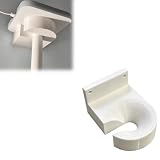
- Optimized for Better Signal Positioning: Compatible with Nabu Casa, this Home Assistant for Wall Mount is designed to support for adapters in an upside down configuration, helping improve antenna placement for more stable smart home connectivity
- Upside Down Mounting Design for Flexibility: Designed for ZBT-2 ZWA-2 Wall Bracket allows flexible upside down installation, enabling improved signal orientation while keeping your smart home hub area organized and free from desk clutter
- Space Saving Wall Mounted Setup: The Upside Down Mount keeps your adapter securely fixed on the wall, helping reduce surface clutter and creating a cleaner, more efficient home automation environment in offices, studios, or server areas
- Reinforced Carbon Fiber Construction: Made using durable 3D printed technology with carbon fiber reinforced material, this wall holder provides strong structural support and long-term stability for continuous indoor use in smart home installations
- Simple Installation and Clean Cable Management: Designed for quick and easy mounting, this bracket supports straightforward installation while helping organize cables neatly. It improves the overall appearance of your setup with a clean, minimal look
Expecting Apple Home to integrate arbitrary devices
Apple Home is not a general-purpose integration engine. If a device lacks HomeKit or Matter support, you need a separate integration layer such as Home Assistant and, for Apple control, HomeKit Bridge.
Treating Home Assistant as maintenance-free
Self-hosting means planning updates, backups, networking and recovery. If those tasks are unacceptable, the platform’s breadth may not compensate for the operational burden.
Quick wins for a faster PC:
Clear out junk files and repair common Windows errorsFree Scan →Fix the driver behind crashes, sound loss and screen glitchesFind Drivers →Repair Windows errors before they cause bigger problemsFix Now →Duplicating automations across platforms
When both systems are present, define where each rule lives. A motion sensor exposed through HomeKit Bridge can otherwise trigger one routine in Home Assistant and a second routine in Apple Home, producing confusing or repeated actions.
Is Home Assistant worth it if you already have HomeKit?
It is worth adding when Apple Home leaves an important device, protocol or automation requirement unmet. Home Assistant can integrate the missing equipment and bridge only the useful entities back to Apple Home, allowing you to preserve the familiar app and Siri controls. It is not automatically worth the additional host, configuration and maintenance if your current HomeKit installation already covers your devices and routines.
Can Matter devices work with both platforms?
They can, when the device and controllers support Matter’s multi-fabric or sharing process. Home Assistant documents commissioning and sharing between Matter fabrics, while Apple supports Matter accessories in Apple Home on iOS 16.1 and later. Verify the specific device’s supported Matter features and follow each controller’s current pairing instructions; Matter compatibility is not a promise that every feature will look identical in both apps.
Do you need a HomePod, Apple TV or a Home Assistant hub?
Apple Home may require compatible Apple home-hub hardware for Thread accessories and certain remote or automated functions, so check Apple’s current requirements before purchasing. Home Assistant requires a supported host, and Matter guidance recommends Home Assistant OS. An optional Home Assistant Connect ZBT-2 can provide Zigbee, Thread and Matter radio capability, but it does not remove the need for a suitable host or a stable network.
Do these 3 things before closing this tab:
1Repair Windows errors before they cause bigger problems2Scan for outdated or missing drivers - takes under a minute3Clear out junk files and repair common Windows errorsQuick Recap
Final decision checklist
- Choose Apple Home for the simplest shared experience in an Apple-device household.
- Choose Home Assistant for broader integrations, protocol flexibility and deeper automation when you accept the maintenance.
- Choose a hybrid when Home Assistant should do the complex work and Apple Home should remain the family-facing control surface.
- Before buying, verify Matter rather than assuming Thread is enough.
- Compare the complete system: accessory compatibility, controller hardware, host and radio needs, setup time, ongoing maintenance, local-operation behavior and recovery plan.
Product prices and availability are accurate as of the date/time indicated and are subject to change. Any price and availability information displayed on Amazon at the time of purchase will apply.

