
Choose HomePod if your home is built around Apple Home; choose an Echo only after checking that exact model’s hub features. HomePod and HomePod mini become Apple Home hubs when set up in the Home app, while Echo capabilities vary by generation. For a clear example, Amazon lists Echo (4th Gen) as supporting Matter, Thread 1.1 border routing and a built-in Zigbee hub. Your accessories’ protocols and your preferred ecosystem matter more than the product family name.
What does a smart home hub do?
A hub connects compatible smart-home accessories to a platform so you can control them, create automations and, where supported, access the home remotely. The label does not guarantee a particular radio or protocol: one device may be an Apple Home hub, while an Echo model may additionally provide Thread border routing or Zigbee connectivity.
Apple says HomePod, HomePod mini or Apple TV set up as a home hub can enable remote access and automations in Apple Home. Amazon’s Alexa documentation describes Matter control through compatible Echo devices, but distinguishes Matter support from Thread border-router and Zigbee hub support. Check the precise model and generation, not just “HomePod” or “Echo.”
How HomePod and Echo compare
| Decision | Apple HomePod and Apple Home | Amazon Echo and Alexa |
|---|---|---|
| Hub role | HomePod and HomePod mini serve as Apple Home hubs when set up in the Home app; Apple TV can also serve as a hub. | Some Echo models provide smart-home hub features. Capabilities differ by model and generation. |
| Matter | Apple Home supports Matter accessories, and Apple requires a home hub to add Matter accessories. | Compatible Echo devices connect to Matter accessories over Wi-Fi or Thread and act as Matter administrators. |
| Thread | Thread-enabled Matter accessories need a Thread-enabled home hub or supported third-party border router. Apple gives HomePod mini as an example. | Thread border routing is model-specific. Amazon lists Echo (4th Gen) with Thread 1.1; certain newer devices are listed with Thread 1.3. |
| Zigbee | The Apple sources cited here do not identify HomePod as a Zigbee hub. | Selected models have a built-in Zigbee hub, including Echo (4th Gen), Echo Hub, Echo Plus (2nd Gen) and various Echo Show models. |
| Remote control and automations | Apple documents remote access through the Home app and automations for configured accessories. | Alexa offers app, voice and compatible screen-based controls; available functions depend on the device and integration. |
Does HomePod work as a smart home hub?
Yes. Apple says HomePod and HomePod mini automatically become home hubs when set up in Apple Home. Apple’s Home hub setup guidance also covers Apple TV and explains the requirements for adding Matter accessories. With a home hub, Apple Home can support remote access and automations for configured accessories.
#1 Best Overall

- Premium, immersive, high-fidelity audio
For Thread-enabled Matter accessories, Apple specifies a Thread-enabled home hub or supported third-party border router. HomePod mini is one of Apple’s listed examples; not every Apple Home hub necessarily supplies Thread. Apple’s HomePod control guidance describes controlling compatible lights, thermostats and window shades by voice at home or remotely through Apple devices, with automations triggered by time, location or another accessory.
Apple’s HomePod (2nd generation) product information lists temperature and humidity sensing and sound recognition. Those are model-specific features, not a reason to assume every HomePod has the same sensors. Apple’s Home app overview describes Matter as an industry standard for compatible accessories across platforms.
Which Echo has a built-in Zigbee hub?
Amazon’s Zigbee support list names Echo (4th Gen), Echo Hub, Echo Plus (2nd Gen) and various Echo Show models among devices with built-in Zigbee hubs. Because the list is model-specific, confirm the exact generation and current regional listing before buying; an Echo-branded speaker or display is not automatically a Zigbee hub.
Rank #2
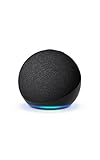
- Your favorite music and content – Play music, audiobooks, and podcasts from Amazon Music, Apple Music, Spotify and others or via Bluetooth throughout your home.
- Alexa is happy to help – Ask Alexa for weather updates and to set hands-free timers, get answers to your questions and even hear jokes. Need a few extra minutes in the morning? Just tap your Echo Dot to snooze your alarm.
- Keep your home comfortable – Control compatible smart home devices with your voice and routines triggered by built-in motion or indoor temperature sensors. Create routines to automatically turn on lights when you walk into a room, or start a fan if the inside temperature goes above your comfort zone.
- Do more with device pairing – Fill your home with music using compatible Echo devices in different rooms, or create a home theatre system with Fire TV.
- Say goodbye to drop-offs and buffering - With eero Built-in, Echo Dot doubles as a mesh wifi extender, adding up to 1,000 sq. ft. of wifi coverage to your existing eero network.
Echo (4th Gen) is a particularly clear example of a multi-protocol hub: Amazon lists it for Matter, Thread border-router support (Thread 1.1) and Zigbee. Other models can have different combinations. Amazon’s Thread support documentation, updated May 1, 2026, lists Thread 1.3 support for Echo Hub, Echo Plus (2nd Gen) and specified Echo Show and Echo Studio releases. Verify the exact device entry rather than inferring support from the product family.
The Tool Desk
Outbyte Driver Updater FREEFix the driver behind crashes, sound loss and screen glitchesFind Drivers →Outbyte PC Repair FREERepair Windows errors before they cause bigger problemsFix Now →Will Matter devices work with HomePod or Echo?
They may, provided the accessory category, model, protocol and required hub or border router are supported by the platform you plan to use. Matter’s cross-platform aim does not mean that every feature of every accessory is available through every controller. Before purchase, check the accessory’s compatibility details and the platform’s support for its category and features.
With Apple Home
Apple requires a home hub to add Matter accessories to Apple Home. Thread-enabled Matter accessories also need a Thread-enabled home hub or supported third-party border router. Apple’s setup requirements explain these conditions.
Rank #3

- Your favorite music and content – Play music, audiobooks, and podcasts from Amazon Music, Apple Music, Spotify and others or via Bluetooth throughout your home.
- Alexa is happy to help – Ask Alexa for weather updates and to set hands-free timers, get answers to your questions and even hear jokes. Need a few extra minutes in the morning? Just tap your Echo Dot to snooze your alarm.
- Keep your home comfortable – Control compatible smart home devices with your voice and routines triggered by built-in motion or indoor temperature sensors. Create routines to automatically turn on lights when you walk into a room, or start a fan if the inside temperature goes above your comfort zone.
- Do more with device pairing – Fill your home with music using compatible Echo devices in different rooms, or create a home theatre system with Fire TV.
- Say goodbye to drop-offs and buffering - With eero Built-in, Echo Dot doubles as a mesh wifi extender, adding up to 1,000 sq. ft. of wifi coverage to your existing eero network.
With Alexa
Amazon says compatible Echo devices connect to Matter accessories over Wi-Fi or Thread. Its Matter connection documentation distinguishes devices with Matter support from those that also provide Thread border routing.
Amazon documents Matter categories including lighting and plugs, sensors, locks and window coverings, thermostats, fans, appliances and robotic vacuums. The implemented feature set depends on the device category and the clusters the accessory supports; see Amazon’s supported Matter device categories and clusters.
Free tools Windows power users keep installed
One-click scans. No signup required.
How to choose for your home
- List your existing platform. If your household already manages accessories in Apple Home, a HomePod or HomePod mini fits that setup. If you use Alexa, evaluate an Echo’s specific hub capabilities.
- Check accessory protocols. Identify whether planned devices use Matter over Wi-Fi, Matter over Thread or Zigbee. Match that to the exact model’s documented support; Thread and Zigbee support are not universal across either product family.
- Confirm category and features. Check that the platform supports the accessory type and the functions you need, not merely that the box says Matter-compatible.
- Decide whether you need remote access or automations. Apple documents these through Apple Home with a home hub. Alexa control options depend on compatible devices and integrations.
- Choose the form factor and verify the current regional listing. Speaker, screen and other model features differ. Product generations, software compatibility and availability can change.
Neither the official materials cited here nor protocol support alone establish a universal winner for voice-assistant quality or ease of use. Choose based on ecosystem fit, exact accessory compatibility, the hub functions you need and the device form factor.
Quick Recap
Sources and model-specific details
- Apple Support: Set up your HomePod, HomePod mini or Apple TV as a home hub
- Apple Support: Control your home and Apple TV 4K using HomePod
- Apple: Home app
- Amazon Alexa Developer: Connect Your Device to Alexa with Matter
- Amazon Alexa Developer: Understand Smart Home Thread Support
- Amazon Alexa Developer: Understand Smart Home Zigbee Support
- Amazon Alexa Developer: Alexa Supported Matter Device Categories and Clusters
- Apple Store: Smart Home Essentials – All Accessories
Product prices and availability are accurate as of the date/time indicated and are subject to change. Any price and availability information displayed on Amazon at the time of purchase will apply.

