
iTechGuides is reader-supported. When you buy through links on our site, we may earn an affiliate commission. As an Amazon Associate I earn from qualifying purchases. Learn more
The AMD Ryzen AI 9 365 is a high-performance mobile processor for premium laptops and compact PCs. It combines 10 Zen 5 and Zen 5c CPU cores, Radeon 880M integrated graphics, and an XDNA 2 NPU rated at up to 50 TOPS. Its standout quality is performance per watt rather than maximum workstation or gaming performance.
The important catch is that the Ryzen AI 9 365 can be configured anywhere from 15W to 54W. A thin 28W laptop and a heavily cooled 50–54W system can therefore deliver noticeably different results despite using the same processor. In 2026, it remains a good buy when the complete system is well priced, but compare it with the newer Ryzen AI 9 465 and the faster Ryzen AI 9 HX 370 before paying a premium.
| # | Preview | Product | Price | |
|---|---|---|---|---|
| 1 |
|
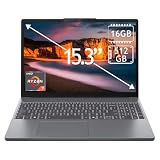
Lenovo IdeaPad Slim 3 15.3" 2K Touchscreen Laptop, AMD Ryzen 7 170 Processor, 16GB DDR5 RAM, 512GB... | $697.98 | Buy on Amazon |
Quick verdict
The Ryzen AI 9 365 is best understood as an efficient, powerful laptop SoC—not as a desktop Ryzen 9 CPU. It is well suited to demanding office work, development, multitasking, photo editing, 1080p video work, moderate content creation, local AI features, and integrated-graphics gaming. The Radeon 880M can handle esports and many older or less demanding games at 1080p, but it does not replace a modern discrete GPU for demanding AAA games, GPU rendering, or large local AI models.
- Buy it when it is in a well-cooled laptop or mini PC, has sufficient memory, and costs meaningfully less than a comparable newer system.
- Choose the Ryzen AI 9 HX 370 when sustained multicore performance or integrated-graphics gaming matters and the price difference is small.
- Compare the Ryzen AI 9 465 carefully because it is from AMD’s newer Ryzen AI 400 family and has very similar headline specifications.
- Choose a discrete-GPU laptop for serious gaming, 3D work, CUDA-dependent applications, or GPU-heavy professional workloads.
What is the AMD Ryzen AI 9 365?
The Ryzen AI 9 365 belongs to AMD’s Ryzen AI 300 series, code-named Strix Point. It is designed primarily for laptops, although the same soldered mobile platform also appears in compact PCs and mini PCs.
Popular on Amazon
- 15.3" 2K Touchscreen Display delivers sharp visuals, vibrant colors, and smooth touch interaction for work and entertainment
- Powered by AMD Ryzen 7 170 processor for fast, responsive performance in multitasking, productivity, and daily computing tasks
- 16GB DDR5 RAM and 512GB PCIe SSD deliver smooth multitasking performance with fast responsiveness, quick boot-up times, rapid file access, and ample storage for documents, media, and applications
- Integrated Wi-Fi 6 and Bluetooth for faster, more stable wireless connectivity and seamless device pairing
- Pre-installed Windows 11 Home for a modern interface, enhanced productivity tools, and smooth user experience
It is not a normal retail desktop processor. The chip uses AMD’s FP8 mobile package and is soldered to the motherboard. A buyer cannot install it in an AM5 motherboard or upgrade it later like a socketed desktop CPU. When a product listing describes a Ryzen AI 9 365 mini PC as a desktop computer, that refers to the finished system’s usage category—not to a replaceable desktop processor.
The name provides a rough positioning guide:
- Ryzen AI identifies a processor family with a dedicated neural-processing unit.
- Ryzen 9 places the chip in AMD’s higher mobile performance tier. It does not make the processor equivalent to a desktop Ryzen 9.
- 365 identifies this model within the Ryzen AI 300 generation. It is not a power rating or an indication of a 365W processor.
When did the Ryzen AI 9 365 launch?
AMD announced the Ryzen AI 300 family on June 2, 2024, and systems began appearing around July 2024. AMD’s current product page displays July 28, 2025 as a launch date, but that conflicts with AMD’s original announcement and contemporaneous product coverage. The safest description is that the chip was announced in June 2024 and reached initial systems in the July 2024 period; the 2025 date appears to be product-page metadata rather than the original market introduction.
That distinction matters in 2026 because the processor is no longer AMD’s newest comparable design. AMD introduced the Ryzen AI 400 family in January 2026, including the Ryzen AI 9 465.
The Tool Desk
Outbyte PC Repair FREERepair Windows errors before they cause bigger problemsFix Now →Outbyte Driver Updater FREEScan for outdated or missing drivers - takes under a minuteDriver Scan →AMD Ryzen AI 9 365 specifications
The following are processor-level specifications from AMD’s product page. They describe what the SoC supports, not necessarily what a particular laptop or mini PC exposes.
| Specification | Ryzen AI 9 365 | What it means in practice |
|---|---|---|
| Family | Ryzen AI 300 series | Mobile Strix Point platform |
| CPU architecture | 4 Zen 5 + 6 Zen 5c | Ten cores using full-size and density-optimized versions of Zen 5 |
| CPU cores / threads | 10 / 20 | SMT is enabled on all cores |
| Maximum boost clock | Up to 5.0 GHz | A short-duration maximum boost, not a guaranteed sustained all-core frequency |
| Base clock | 2.0 GHz | Sustained clocks vary with power, cooling, firmware, and workload |
| Zen 5c maximum clock | Up to 3.3 GHz | The compact cores operate below the full Zen 5 cores |
| L2 cache | 10MB | Approximately 1MB per core equivalent total |
| L3 cache | 24MB | 34MB combined L2 and L3 cache |
| Default TDP | 28W | AMD’s default design target, not a fixed laptop power draw |
| Configurable TDP | 15–54W | One of the largest variables in real-world performance |
| Manufacturing process | TSMC 4nm FinFET | A monolithic mobile die |
| Package | FP8 | Soldered mobile package; not a user-upgradeable socket |
| Maximum temperature | 100°C Tjmax | Thermal behavior depends on the finished system |
| Memory support | DDR5-5600 or LPDDR5X-8000 | OEMs choose the memory type, speed, capacity, and upgrade design |
| Memory channels | 2 | Dual-channel bandwidth is important for Radeon 880M |
| Maximum memory listed | Up to 256GB | A processor limit; consumer laptops normally provide much less |
| ECC | No | Standard consumer-platform limitation |
| PCI Express | PCIe 4.0, up to 16 native lanes | Actual device and lane allocation depends on the OEM |
| USB4 | Up to 2 native ports supported | A laptop or mini PC may expose fewer ports |
| Integrated GPU | Radeon 880M | 12 RDNA 3.5 graphics cores, up to 2.9 GHz |
| Display support | DisplayPort 2.1 and HDMI 2.1 | Actual ports and output modes depend on the system board and firmware |
| Maximum displays | Up to 4 | Theoretical processor capability |
| Video codecs | H.264, H.265/HEVC, VP9, AV1 encode and decode | Useful for streaming and video workflows; VVC is not listed in the independent specification summary |
| NPU | AMD XDNA 2, up to 50 TOPS | Peak NPU throughput, not a universal application-speed score |
| Total AI performance | Up to 73 TOPS | AMD’s combined CPU, GPU, and NPU figure |
| Operating systems listed by AMD | Windows 11 64-bit, RHEL x86-64, Ubuntu x86-64 | OEM firmware, drivers, kernel, and distribution still affect the experience |
Do not read every table entry as a promise about the finished computer. For example, the processor may support 256GB of memory, four displays, two USB4 ports, and LPDDR5X-8000, while a particular laptop may have 32GB of soldered RAM, one USB4 port, two display outputs, and no memory upgrade path.
Zen 5, Zen 5c, Radeon 880M, and XDNA 2 explained
Four Zen 5 cores plus six Zen 5c cores
The Ryzen AI 9 365 has four standard Zen 5 cores and six Zen 5c cores. Zen 5c is a density-optimized version of the same general CPU architecture. AMD uses the smaller cores to fit more CPU resources alongside the GPU and NPU in a mobile chip.
This is similar to Intel’s performance-core and efficiency-core idea at a broad level, but Zen 5c should not be described as an Intel-style E-core. The Zen 5c cores retain the same general instruction-set feature model and SMT capability; their main differences are size, density, and lower maximum clock speed. The full Zen 5 cores can boost to 5.0 GHz, while the Zen 5c cores are listed at up to 3.3 GHz.
Free tools Windows power users keep installed
One-click scans. No signup required.
For lightly threaded work, the faster Zen 5 cores are particularly important. For compiling, rendering, compression, multitasking, and other parallel work, all 10 cores can contribute—but the final result depends heavily on the laptop’s sustained power limit and cooling system.
Radeon 880M integrated graphics
The Radeon 880M is an RDNA 3.5 integrated GPU with 12 graphics cores and a listed maximum frequency of 2.9 GHz. It is considerably more capable than a basic display-oriented integrated GPU and makes the Ryzen AI 9 365 useful for gaming without a discrete graphics card.
Its main limitation is that it uses shared system memory rather than dedicated VRAM. That makes the memory configuration unusually important:
- Two memory channels are preferable to a single-channel configuration.
- Fast LPDDR5X can give the GPU more bandwidth than a slower DDR5 implementation.
- More system power may be allocated to the GPU in a performance mode, but that can reduce CPU headroom or increase heat and fan noise.
- A high-resolution or high-refresh display makes the GPU work harder than a 1920×1080 external or internal display.
The Radeon 880M is a strong integrated solution, not an RTX-class discrete GPU. It is suitable for esports, older AAA games, indie titles, and many modern games at sensible settings. It is not the right expectation for maximum-quality 1440p or 4K AAA gaming.
XDNA 2 NPU
The XDNA 2 NPU is a dedicated neural-processing unit rated at up to 50 TOPS. It can handle supported AI operations more efficiently than relying entirely on the CPU, potentially improving responsiveness and power consumption for tasks such as compatible camera effects, noise reduction, image processing, and local AI features.
AMD also advertises up to 73 total platform TOPS when CPU, GPU, and NPU resources are combined. NPU-only and total-platform figures are not interchangeable. TOPS is a peak arithmetic-throughput measurement, not a direct measure of application speed, large-language-model tokens per second, image-generation time, or video-rendering performance.
Actual AI performance depends on the model, quantization, supported operators, memory, runtime, driver version, and which part of the workload runs on the NPU, GPU, or CPU.
Real-world CPU performance
Independent results show that the Ryzen AI 9 365 is competitive with substantially higher-rated previous-generation mobile processors while using less power. The results also demonstrate why the laptop configuration matters more than the processor name.
Windows Errors? Fix Them Before They Spread
Repair common Windows errors and clear accumulated junk for a smoother, more stable PC - no reinstall needed.Free scan · no reinstallOutdated Drivers Are Slowing You Down
One free scan finds every outdated or missing driver and matches the right update for your exact hardware.Free scan · exact hardware match| Benchmark | Notebookcheck aggregated result | How to interpret it |
|---|---|---|
| Cinebench 2024 single-core | Average 112.1 points | Useful for bursty, lightly threaded work |
| Cinebench 2024 multi-core | Average 907 points | Shows strong parallel performance, but combines different laptop power limits |
| Geekbench 6.7 single-core | Average 2,832 points | Platform and software configuration affect the result |
| Geekbench 6.7 multi-core | Average 14,265 points | Not a guaranteed score for every 365 system |
These are aggregated figures from different machines in Notebookcheck’s Ryzen AI 9 365 database. They are best used as a performance range indicator, not as a promise that every laptop will achieve the same scores.
In controlled Linux testing across more than 130 benchmarks, Phoronix measured average SoC power of 18.8W and peak SoC power of 33.9W. Its Ryzen AI 9 365 system delivered similar overall performance to a Ryzen 7 7840HS system at approximately 52% of that chip’s power consumption. It also measured approximately 31% higher aggregate performance than the tested Core Ultra 7 155H system while using approximately 64% of its power. These are useful efficiency results, but they came from specific test machines and Linux workloads; they should not be generalized to every laptop.
The practical conclusion is that the Ryzen AI 9 365 is particularly attractive in a premium thin laptop where efficiency, quiet operation, and burst performance matter. It can also perform strongly at higher power, but then the laptop needs the cooling system, firmware, and power adapter to sustain that setting.
Why the 15–54W range matters so much
AMD gives the Ryzen AI 9 365 a 28W default TDP and a configurable range of 15W to 54W. TDP is not the same as a fixed wall-power measurement and does not tell you the sustained clock speed of a particular machine.
| Approximate configuration | Typical design goal | Likely trade-off |
|---|---|---|
| 15–28W | Thin-and-light efficiency, lower heat, and quieter operation | Lower sustained multicore and graphics performance |
| 35–45W | Balance between portability and sustained performance | More fan noise, heat, and battery use under load |
| 50–54W | Maximum sustained performance within AMD’s listed range | Requires stronger cooling and usually a larger chassis or power profile |
Examples in independent coverage include ASUS Zenbook S 16 systems around 28W, Lenovo Yoga Pro 7 systems around 54W, and MSI systems around 50W. Those machines should not be expected to perform identically. Before buying, look for an independent review that reports long-run power behavior, temperatures, fan noise, and benchmark results—not just the processor model.
Radeon 880M gaming performance
For the Radeon 880M, 1080p is the sensible baseline. Esports games and older titles may run well at medium or high settings, while demanding modern games generally require low settings and, where appropriate, an upscaling mode such as FSR or Radeon Super Resolution.
Do not use a single universal FPS figure for this GPU. Results can change substantially with:
- LPDDR5X versus DDR5 and the actual memory speed.
- Single-channel versus dual-channel memory.
- The laptop’s CPU/GPU power allocation and thermal limits.
- Driver version and game patches.
- Native resolution and quality preset.
- FSR, RSR, AFMF, or other upscaling and frame-generation features.
- Whether a discrete GPU is present and whether the display is connected through the integrated or discrete graphics path.
AMD’s 2024 comparison material claimed an average 25% gaming advantage for a 28W Ryzen AI 9 365 with Radeon 880M over a 45W Intel Core Ultra 9 185H system using Intel integrated graphics, at 1080p low settings across eight selected games. This is an AMD Performance Labs claim, not a universal independent result. Comparisons are only meaningful when resolution, settings, memory, drivers, power mode, and any upscaling or frame generation are equal.
Quick wins for a faster PC:
Scan for outdated or missing drivers - takes under a minuteDriver Scan →Clear out junk files and repair common Windows errorsFree Scan →Fix the driver behind crashes, sound loss and screen glitchesFind Drivers →A laptop with an RTX 4050, RTX 4060, RTX 5070, or similar discrete GPU will be substantially better for demanding AAA games and GPU-heavy applications. In that situation, the Ryzen AI 9 365 can still be a capable CPU, but the discrete GPU—not the Radeon 880M—will determine most graphics performance.
Video work and everyday productivity
For office applications, browser-heavy multitasking, software development, photo editing, and general productivity, the Ryzen AI 9 365 has more than enough performance for a premium laptop. Its 10 cores and 20 threads are also useful for compilation, virtual machines, compression, and other parallel workloads, provided the system has enough memory and cooling.
It is a good fit for 1080p video editing and can handle moderate 4K work, especially when the laptop has 32GB or more RAM, fast storage, and a suitable discrete GPU. The integrated hardware support for H.264, HEVC, VP9, and AV1 encoding and decoding can help with compatible media applications. Professional editors should still check codec support in their specific application and test the complete laptop.
For sustained 3D rendering, complex 4K production, or GPU-based rendering, a higher-power processor and discrete GPU may be a better choice. The Ryzen AI 9 label should not be treated as a guarantee of workstation-class performance.
What’s actually slowing this PC down?
Pick the symptom - the matching free tool is one click away.
AI features and Copilot+ PC status
Does the Ryzen AI 9 365 qualify for Copilot+?
Microsoft defines Copilot+ PCs around an NPU capable of more than 40 TOPS. The Ryzen AI 9 365’s NPU is rated at up to 50 TOPS, so the processor has sufficient raw NPU capacity for that threshold.
However, a processor specification is not the same as a certified finished PC. Whether a particular laptop is sold or recognized as a Copilot+ PC depends on its firmware, Windows version and edition, OEM configuration, regional availability, Microsoft updates, and supported features. Not every AI feature is available on every system immediately, and compatible applications are still required.
In other words, the accurate description is: the Ryzen AI 9 365 has the NPU capability required by the raw Copilot+ threshold, but the complete laptop must satisfy Microsoft’s system and software requirements. See Microsoft’s NPU device documentation and Copilot+ announcement for the platform requirements.
What about local AI development?
AMD’s Ryzen AI Software documentation lists Strix Point support, including the Ryzen AI 9 365. The documented Ryzen AI Software 1.2 development setup requires Windows 11 build 22621.3527 or newer, Visual Studio 2022, CMake 3.26 or newer, and Anaconda or Miniconda.
Recommended Free Tools
For developers, AMD documents support for quantized ONNX models. Unsupported portions of a model graph can be partitioned to the CPU. That is important: NPU support does not mean that every operation in every model runs entirely on the NPU. Before buying for AI development, check the model’s operator compatibility, quantization requirements, runtime support, and memory needs in the Ryzen AI Software documentation and model compatibility guide.
The NPU is useful for supported, relatively efficient AI features. It is not a replacement for a discrete GPU with substantial VRAM when the goal is to run large local language models, generate images quickly, or perform GPU-heavy AI research.
Ryzen AI 9 365 versus alternatives
Ryzen AI 9 365 versus Ryzen AI 9 HX 370
| Feature | Ryzen AI 9 365 | Ryzen AI 9 HX 370 |
|---|---|---|
| CPU cores / threads | 10 / 20 | 12 / 24 |
| Core layout | 4 Zen 5 + 6 Zen 5c | 4 Zen 5 + 8 Zen 5c |
| Maximum boost | Up to 5.0 GHz | Up to 5.1 GHz |
| L2 / L3 cache | 10MB / 24MB | 12MB / 24MB |
| Integrated GPU | Radeon 880M, 12 graphics cores | Radeon 890M, 16 graphics cores |
| Maximum GPU frequency | Up to 2.9 GHz | Up to 2.9 GHz |
| NPU | Up to 50 TOPS | Up to 50 TOPS |
| Default TDP / cTDP | 28W / 15–54W | 28W / 15–54W |
The HX 370 has two additional Zen 5c cores and four additional Radeon graphics cores. It is the better choice for sustained multicore work and integrated-GPU gaming when the systems have similar cooling and the price gap is modest. The 365 can make more sense in a thinner, cheaper, or more battery-focused design.
Do not confuse the Ryzen AI 9 365 with a confirmed separate Ryzen AI 9 HX 365 SKU. AMD’s launch material identifies the principal models as the Ryzen AI 9 HX 370 and Ryzen AI 9 365. Some product-page image or metadata text may display HX 365, but the official specification heading is Ryzen AI 9 365.
Do these 3 things before closing this tab:
1Clear out junk files and repair common Windows errors2Scan for outdated or missing drivers - takes under a minute3Repair Windows errors before they cause bigger problemsRyzen AI 9 365 versus Ryzen AI 9 465
The Ryzen AI 9 465 is the closest current AMD comparison. AMD lists both chips with:
- 10 cores and 20 threads.
- Four Zen 5 cores and six Zen 5c cores.
- Up to 5.0 GHz boost.
- 34MB combined L2 and L3 cache.
- 28W default TDP and 15–54W configurable TDP.
- Radeon 880M graphics with 12 graphics cores.
- An NPU rated at up to 50 TOPS.
The 465 belongs to AMD’s newer Ryzen AI 400 family and launched on January 5, 2026. Its similar headline specifications mean it is not automatically dramatically faster than every Ryzen AI 9 365 laptop. Nevertheless, a new 465 system may offer newer platform tuning, firmware, availability, or warranty terms. Compare actual reviews, memory, display, cooling, storage, and price rather than assuming that either model wins solely from its name. AMD’s Ryzen AI 9 465 specifications and Ryzen AI 400 announcement are the relevant references.
Ryzen AI 9 365 versus Ryzen 7 8845HS
| Feature | Ryzen AI 9 365 | Ryzen 7 8845HS |
|---|---|---|
| CPU cores / threads | 10 / 20 | 8 / 16 |
| Architecture | Zen 5 and Zen 5c | Zen 4 |
| Maximum boost | Up to 5.0 GHz | Up to 5.1 GHz |
| Combined cache | 34MB | 24MB |
| Default TDP | 28W | 45W |
| Integrated GPU | Radeon 880M | Radeon 780M |
| AI hardware | XDNA 2 NPU, up to 50 TOPS | Lower-rated Ryzen AI NPU |
The 365 is newer and generally more attractive for efficiency, integrated AI features, and CPU resources. The 8845HS can still be excellent value when discounted, particularly in a laptop with strong cooling or a discrete GPU. A cheap, well-cooled 8845HS system may be a better purchase than an overpriced thin 365 laptop.
Ryzen AI 9 365 versus Intel Core Ultra 7 155H
The Core Ultra 7 155H has 16 total cores and 22 threads, a 28W processor base power, and Intel’s Meteor Lake architecture. AMD’s comparison material claims advantages for the 365 in selected productivity and media workloads while using less power. Independent Phoronix Linux testing also favored the 365 in its aggregate comparison.
Those results are platform-dependent. The laptop’s cooling, memory, display, power profile, drivers, and firmware can outweigh the nominal CPU comparison. Use AMD’s claims as useful evidence, not as a guarantee that every Ryzen AI 9 365 laptop will beat every Core Ultra 7 155H laptop. Intel’s official specifications are available on the Core Ultra 7 155H product page.
Independent reader supportYour contribution helps us test, update, and keep practical guides available for everyone.Laptops and mini PCs using the Ryzen AI 9 365
The chip appears in very different system types, including:
- ASUS Zenbook S 16 premium thin laptops.
- ASUS ProArt PX13 creator-focused configurations; see the ASUS product page.
- Lenovo Yoga Pro 7 systems, including configurations documented by Lenovo.
- Lenovo ThinkBook 16 G7+ models.
- MSI Prestige, Summit, Creator, and Stealth configurations; one example is the MSI Stealth A16.
- HP OMEN 16 configurations; see HP’s configuration documentation.
- Compact systems such as the Beelink SER9 Pro and MINIX ER936-AI.
These are not interchangeable merely because they share the processor. A 16-inch OLED laptop, a thin 14-inch creator machine, a gaming laptop with a discrete GPU, and a mini PC can have completely different power limits, battery capacity, memory, cooling, and display behavior.
What to check before buying a Ryzen AI 9 365 system
1. Find the sustained power limit
Look for a review or manufacturer specification that identifies the performance mode and long-term CPU package power. A 20–28W design prioritizes portability and efficiency; a 50–54W design prioritizes sustained performance. Also check fan noise and surface temperature, not just benchmark scores.
Free tools Windows power users keep installed
One-click scans. No signup required.
2. Check RAM capacity and speed
For ordinary productivity, 16GB may be adequate, but 32GB is a better target for development, virtual machines, content creation, and local AI experimentation. Fast dual-channel memory is especially important for the Radeon 880M. Many thin laptops solder the RAM, so choose the capacity you will need for the system’s entire useful life.
3. Verify whether a discrete GPU is included
The processor name does not tell you whether the computer is an ultrabook or a gaming machine. If the laptop includes an RTX 4050, RTX 4060, RTX 5070, or another discrete GPU, check its power rating and cooling. For serious graphics work, the discrete GPU is more important than the Radeon 880M.
4. Check upgradeability
The CPU itself is soldered and cannot be replaced. The RAM may also be soldered. Confirm whether the SSD is replaceable, how many M.2 slots are available, and whether Wi-Fi or other components are serviceable.
5. Evaluate the display and battery together
A large 3.2K OLED panel with a high refresh rate can consume considerably more power than a 14-inch 1920×1200 IPS display. Battery life also depends on brightness, software, battery capacity, refresh rate, workload, firmware, and battery age. Do not compare manufacturer battery claims without checking the test conditions.
6. Check ports and external-display support
AMD’s SoC can support USB4, DisplayPort 2.1, HDMI 2.1, and up to four displays, but the finished computer may expose fewer ports or use different display wiring. Confirm the exact port specification if you need high-resolution monitors, docks, or external graphics hardware.
7. Compare the complete price
In 2026, compare a Ryzen AI 9 365 machine against Ryzen AI 9 465 and HX 370 systems with similar RAM, SSD, display, battery, warranty, and GPU. A newer processor with only marginally different headline specifications may still be the better purchase if the laptop is otherwise better designed. Conversely, a discounted 365 system can be excellent value.
Windows, Linux, and driver support
AMD lists Windows 11 64-bit, RHEL x86-64, and Ubuntu x86-64 support for the processor. Linux users should still verify the exact distribution, kernel, Mesa graphics stack, firmware, suspend behavior, brightness controls, audio, and OEM power-management tools for the laptop model.
Independent testing has found that Radeon 880M performance can differ significantly between Windows and Linux. One Notebookcheck comparison reported Linux results up to 50% higher in some benchmarks, but that does not mean Linux is universally faster; driver versions, game APIs, power profiles, and test conditions matter.
Quick wins for a faster PC:
Scan for outdated or missing drivers - takes under a minuteDriver Scan →Repair Windows errors before they cause bigger problemsFix Now →As of August 10, 2026, AMD’s Ryzen AI 9 365 support page lists Adrenalin 26.7.1 WHQL Recommended, released July 28, 2026. For laptops, AMD still recommends using the OEM-provided driver when possible because the manufacturer validates it for the machine’s BIOS, display, power profiles, sleep behavior, and special features.
If Windows still has a missing, outdated, or incompatible hardware driver after the OEM package is tried, Outbyte Driver Updater is an optional way to check the driver installation.
Recommended driver and performance troubleshooting
- Install the laptop manufacturer’s current BIOS, chipset, graphics, and NPU packages.
- Apply current Windows updates, or use a supported Linux kernel, Mesa stack, and firmware package.
- Test in the laptop’s intended Balanced, Performance, or Silent mode.
- For benchmarks, connect the charger, select the intended power profile, and allow the system to reach normal operating temperature.
- If AMD’s generic Adrenalin driver causes display, sleep, brightness, or power problems, return to the OEM graphics driver.
- For NPU development, verify model compatibility. Unsupported operators may be sent to the CPU instead of running on the NPU.
Who should buy the Ryzen AI 9 365?
Good match
- Productivity users who want substantial performance in a premium thin laptop.
- Developers who compile code, run containers, or use virtual machines and can choose 32GB or more RAM.
- Photo editors and 1080p video creators.
- Users who want integrated-graphics gaming for esports, older games, or lighter modern titles.
- People who want a Copilot+ capable platform, provided the specific laptop meets the system requirements.
- Mini-PC buyers who need a compact, powerful general-purpose computer and do not require a socketed CPU.
- Linux users willing to verify laptop-specific driver and firmware support.
Choose something else when
- You need an upgradeable desktop processor.
- You want maximum AAA gaming performance without a discrete GPU.
- You regularly perform heavy 3D rendering or GPU-based professional work.
- You need to run large local AI models that require substantial GPU memory.
- The Ryzen AI 9 365 system has only 16GB of soldered RAM and no upgrade path for your workload.
- A similarly configured Ryzen AI 9 HX 370 or Ryzen AI 9 465 system costs little more.
- A discounted Ryzen 7 8845HS system offers a stronger chassis, more cooling, or a discrete GPU at a much lower price.
Final verdict
The Ryzen AI 9 365 remains a capable and efficient mobile processor in 2026. Its combination of 10 cores, Radeon 880M graphics, and a 50-TOPS XDNA 2 NPU makes it a strong all-rounder for premium laptops and compact PCs. Its best advantage is the amount of performance it can deliver within a relatively modest power envelope.
But the processor name is not enough to predict the experience. The 15–54W configuration range, memory type, cooling, display, firmware, drivers, and discrete GPU determine how a particular system behaves. Buy the Ryzen AI 9 365 when it is in a well-designed system at a meaningful discount, especially if efficiency and integrated graphics matter. Prefer the Ryzen AI 9 HX 370 for more sustained CPU and integrated-GPU performance, compare the newer Ryzen AI 9 465 closely, and choose a discrete-GPU system for serious gaming or GPU-heavy creation.
Frequently Asked Questions
Is the AMD Ryzen AI 9 365 a desktop processor?
No. It is a soldered FP8 mobile SoC used in laptops and compact PCs. It is not a socketed retail CPU that can be installed in or upgraded on a normal desktop motherboard.
Is the Radeon 880M good for gaming?
It is a strong integrated GPU for esports, older games, indie titles, and many modern games at 1080p with sensible settings. It shares system memory and is not a substitute for a discrete GPU in demanding AAA games, 3D rendering, or GPU-heavy professional applications.
Does every Ryzen AI 9 365 laptop qualify as a Copilot+ PC?
The processor’s 50-TOPS NPU exceeds Microsoft’s more-than-40-TOPS hardware threshold, but Copilot+ status is determined at the complete-system level. Firmware, Windows support, OEM configuration, region, and feature availability also matter.
Is the Ryzen AI 9 365 worth buying in 2026?
Yes, if the complete laptop or mini PC is well cooled, has enough memory, and is priced below comparable newer systems. Compare it with the Ryzen AI 9 465 and HX 370, and choose a discrete-GPU computer instead if gaming or GPU-heavy creation is the priority.
What’s actually slowing this PC down?
Pick the symptom - the matching free tool is one click away.
The Bottom Line
Bottom line: Buy the Ryzen AI 9 365 for efficient high-end laptop performance, capable integrated graphics, and supported local AI features—provided the system has adequate dual-channel memory and cooling. Do not pay for the Ryzen 9 label alone: check the sustained power limit, RAM upgradeability, display, battery, drivers, and current price against Ryzen AI 9 465 and HX 370 alternatives.

