
The Tool Desk
Outbyte Driver Updater FREEScan for outdated or missing drivers - takes under a minuteDriver Scan →Outbyte PC Repair FREERepair Windows errors before they cause bigger problemsFix Now →iTechGuides is reader-supported. When you buy through links on our site, we may earn an affiliate commission. As an Amazon Associate I earn from qualifying purchases. Learn more
A smart washing machine connects to an app; an AI-labeled washer claims to sense laundry and adjust how it washes. The two categories can overlap, and “AI” is not a standard feature set: what matters is what the specific model detects, what it changes, and when that function works. App control alone does not prove a washer adapts its wash cycle. If you are deciding between two machines, compare the documented feature, not the label on the control panel.
Smart connectivity and AI wash functions do different jobs
“Smart” usually describes how you interact with a washer: a compatible app can let you monitor a cycle, receive an alert, start a cycle remotely, run diagnostics, or access downloadable programs. Some connected machines also integrate with a wider home ecosystem or offer energy-management information. Those features are useful, but they do not necessarily change the washer’s treatment of a load.
| # | Preview | Product | Price | |
|---|---|---|---|---|
| 1 |
|
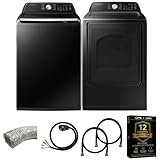
Samsung Smart 4.7 Cu Ft Top Load Washer & 7.4 Cu Ft Electric Dryer, Sensor Stops Overdrying, Low... | $1,598.00 | Buy on Amazon |
An AI-branded wash function, by contrast, is a claim about what happens during or before the wash. The washer may use sensors to estimate characteristics such as load size, fabric type, softness, or soil level, then automatically select or adjust settings, detergent amount, or wash motion. The exact combination is model-specific. One manufacturer’s “AI Wash” may therefore do something materially different from another manufacturer’s similarly named feature.
Free tools Windows power users keep installed
One-click scans. No signup required.
| Question | Standard smart functions | AI-labeled wash function |
|---|---|---|
| What is the main purpose? | Connect the washer to an app or other compatible service for control, monitoring, alerts, diagnostics, or extra cycles. | Use detected information about the laundry to make a wash decision or adjust part of the cycle, according to the manufacturer’s description. |
| Does the label establish that the washer adapts its wash? | No. Connectivity does not itself show that the machine senses fabric or changes wash settings. | Not by itself. Check what the named feature senses and which settings or motions it adjusts. |
| Can one washer have both? | Yes. | Yes. A machine can offer app connectivity and a separate adaptive wash feature. |
| Is there one shared industry definition? | The label generally points to connected functions, but the available app features vary by model. | No uniform capability follows from the word “AI”; manufacturers use it for different functions. |
In short, “smart” answers how the washer connects and can be controlled. An AI wash claim is about a particular sensing or decision-making feature. The labels can describe overlapping parts of the same appliance, not two mutually exclusive types.
#1 Best Overall
- Exclusive Installation Bundle: Includes 3-Prong and 4-Prong Dryer Power Cords, Washer Hose Set, 8-ft Vent Duct, and 1-Year CPS Protection Plan
- Smart Wi-Fi Enabled: Control washer and dryer remotely via SmartThings app
- 4.7 cu ft capacity Washer with Active WaterJet & vibration reduction tech
- Built-in WaterJet faucet lets you pretreat stains inside the tub
- Self Clean keeps the tub fresh without harsh chemicals
A useful way to think about the distinction is “connection versus adaptation.” A connected washer can tell you that a cycle has finished without changing a single wash parameter. An adaptive feature can alter a cycle based on the load even if you never use the app. A model can provide either function, or both, and the marketing name does not tell you which combination you are getting.
What manufacturers mean by AI varies by model
Examples from Samsung and LG show why it is better to inspect the feature name and specifications than to assume all AI washers work alike. These are manufacturers’ descriptions, not proof that every model bearing an AI label has the same sensors or results.
Samsung AI OptiWash
Samsung’s US washer FAQ says AI OptiWash is available on select Bespoke washers. Samsung describes it as detecting fabric type, load size, and soil level, then adjusting wash settings and detergent amount. The same FAQ describes Wi-Fi and the SmartThings app as ways to control and monitor compatible machines. These are distinct capabilities: the app connection does not, on its own, tell you what the wash function senses or changes.
Outdated Drivers Are Slowing You Down
One free scan finds every outdated or missing driver and matches the right update for your exact hardware.Free scan · exact hardware matchPC Slower Than It Used to Be?
A free scan shows the junk files, broken settings and background clutter dragging Windows down - then fixes them in one click.Free scan · Windows 10 & 11For a shopper, the important details are the inputs and outputs. “Fabric type, load size and soil level” identifies what Samsung says the machine evaluates; “wash settings and detergent amount” identifies what it says the machine changes. A different model might detect only weight and adjust time, so its AI claim would not be equivalent even if the product pages use similar language.
LG AI Wash
LG’s UK explanation describes AI Wash as weighing laundry and sensing fabric softness to select wash motions. LG’s product information separately lists connected ThinQ functions such as app control, remote start, notifications, diagnostics, and downloadable cycles. That separation is useful when checking a specification: look for the documented wash adjustment as well as the connected features.
LG’s description also illustrates why the word “sensor” is not enough. Knowing that a machine weighs a load does not tell you whether it changes water level, time, speed, motion, detergent or another setting. Look for the stated result of the sensing rather than assuming that every possible parameter is being optimized.
“AI” does not necessarily mean the machine learns from you
Some shoppers may understand AI to mean a washer that learns from past loads and changes its behavior over time. That should not be assumed. Which?, in its consumer guide “Smart Washing Machines Explained,” cautions that some AI claims describe established functions such as load detection or remembered programs, and says learning that changes performance over time appears in only a handful of the washers it tests. A feature that selects a cycle automatically is not necessarily evidence of ongoing machine learning.
Recommended Free Tools
Ask whether the manufacturer describes a one-time calculation for each load, recommendations based on your previous choices, or genuine changes in performance over time. Those are different claims, and only the exact model’s documentation can tell you which one applies.
Check what the sensors actually do—and when they work
A sensor can be useful without making every decision for you. The practical question is whether the washer’s documented detection applies to your usual laundry and whether it changes something you care about.
- What does it detect? Look for explicit details such as weight, fabric softness, fabric type, or soil level. A general phrase such as “intelligent washing” is less informative than a named input.
- What does it adjust? The documented output might be a wash motion, a setting, or detergent amount. Do not infer that sensing one characteristic automatically means the machine changes every part of the cycle.
- Which cycle and options are eligible? Read the operating notes for the exact model. LG says AI Wash sensing may activate only under certain load conditions and may not operate with some options, including Steam.
- What laundry mix is recommended? LG says AI Wash works best with similar fabric types. If you often wash very different fabrics together, check whether the claimed function is intended for that kind of load.
- Does the load have to meet a minimum or maximum condition? If the documentation describes qualifying load conditions, treat them as part of the feature rather than a footnote. An advertised sensor that is inactive outside those conditions will not guide every cycle.
- Can you override the result? Check whether the selected setting or motion can still be changed manually. The ability to alter a cycle may matter if you regularly wash delicate, heavily soiled or mixed loads.
These limits matter because an advertised feature may not be active for every load or combination of options. If it is unavailable in a cycle you regularly use, it may have less practical value to you than the feature name suggests. A clear limitation is not necessarily a defect; it is information you need when deciding whether the feature fits your routine.
What a standard smart washer can still offer
A washer does not need an AI badge to be useful or highly connected. A standard smart model may provide remote start, cycle status, completion alerts, diagnostics, downloadable cycles and other app controls. Those functions can save trips to the laundry room and help identify an error, even when the machine uses conventional, user-selected cycles.
When comparing connected features, check the practical requirements. The model may need a compatible app, an account, a network connection or membership in a particular home ecosystem, depending on the manufacturer’s implementation. Confirm which functions are available on the local model and whether the app supports the phone or ecosystem you use. A product page that lists “smart” does not establish that every advertised function is included on every regional variant.
Remote control also does not mean every action is unrestricted. The manufacturer’s instructions determine which cycles can be started remotely and what safety or operating conditions apply. Treat app convenience as a separate comparison category from automatic wash adjustment.
Does an AI washer clean better or save money?
The AI label alone does not establish better stain removal, lower bills, or more efficient use of water or detergent. The available evidence here does not establish a broad, independent head-to-head result showing that AI-branded washers clean better or save a fixed amount of energy, water, or detergent compared with standard smart washers.
LG reports one specific fabric-care result: in an Intertek comparison conducted in November 2023, its AI Wash cycle showed a 10% fabric-protection improvement against its Cotton cycle using a 3 kg mixed load of soft fabrics. LG also says results vary by load and other factors. This is a narrowly defined manufacturer-reported test, not a general comparison of AI washers with smart washers, and it does not establish universal cleaning superiority or predictable savings for every household. LG’s product page also refers to reduced energy consumption in that test but does not establish a fixed saving that applies to other loads.
What’s actually slowing this PC down?
Pick the symptom - the matching free tool is one click away.
The comparison is important: it was AI Wash versus that manufacturer’s Cotton cycle under specified conditions, not an industry-wide test of an AI machine against every standard smart washer. It measured fabric protection in a particular mixed load; it was not a universal stain-removal score. Keep the load size, fabric description, date and comparison cycle attached to the percentage whenever you mention it.
For an energy or water comparison that matters to your household, use the published information for the exact local model and compare it on the same basis with the alternative washer. Do not substitute an AI feature claim for the model’s energy and water information, or treat a result from one specified test load as a forecast for your own use. Include the purchase price and any difference in running costs in your comparison, but do not assume that an AI badge will repay a higher price through guaranteed savings.
How to compare two washers before you buy
Compare the actual model numbers, not just the terms “AI” and “smart.” A practical check is to make a short list for each candidate and confirm the details in its local product information or manual.
- Confirm the model and market. Record the full model number and the country or region where it is sold. Similar product names do not guarantee identical feature sets.
- Write down the claimed sensing. Identify what the washer says it detects, such as load size, fabric softness, or soil level. If the product description does not specify the input, do not assume it.
- Record the adjustment and its limits. Note what the feature changes and whether it is restricted by load conditions, fabric mix, cycles, or options such as Steam.
- Separate adaptive washing from connected convenience. List app control, remote start, alerts, diagnostics, and downloadable cycles separately from wash sensing. Check which functions require a compatible app, account, network, or ecosystem according to the model’s documentation.
- Check core fit. Compare capacity, dimensions, available cycles, and the published energy and water information. These determine whether the washer fits your space and laundry needs, regardless of its AI branding.
- Assess the evidence behind performance claims. Distinguish manufacturer descriptions and tests from independent testing. For any reported percentage, retain the test conditions and comparison cycle; do not generalize it beyond the stated setup.
- Compare total cost without assuming a payoff. Look at the purchase price, installation requirements and expected operating information for both models. If the AI feature has no documented benefit for your loads, paying extra for the name alone may not make sense.
- Verify availability and support locally. Confirm the feature is included on the local variant and that the listed app functions and cycles apply in your region.
This process helps expose the difference between a feature that sounds broad and one that is documented clearly enough to evaluate. If two models offer similar sensing, compare the limitations and core washer fit rather than assuming the more prominent AI label represents a more capable machine.
When the AI feature is worth prioritizing
An AI-labeled function is more relevant if its documented input and adjustment solve a real problem for your household. For example, a model that identifies the laundry characteristics you care about and adjusts a wash motion may be useful if you regularly wash those fabrics and use eligible cycles. A feature described as adjusting detergent amount may matter if you want that decision automated—provided the model’s operating notes fit your loads.
It is less compelling if the product page only uses broad AI language without explaining the sensing and adjustment, if the feature’s restrictions conflict with your usual wash settings, or if your main interest is remote control and alerts. In that case, compare the connected functions directly and do not pay more solely because a washer carries an AI label. There is no evidence that AI branding alone makes a washer more reliable or guarantees better stain removal or lower operating costs.
Reliability should be judged from the model’s warranty, service arrangements and independent ownership information where available, not inferred from the presence of software or sensors. Likewise, a smart washer with the cycles, capacity and dimensions you need may be a better purchase than an AI-labeled model whose adaptive feature rarely applies to your laundry.
Independent reader supportYour contribution helps us test, update, and keep practical guides available for everyone.Availability and model names can change by region
Feature names and lineups are not necessarily global. Samsung’s Global Newsroom announced a Bespoke AI washer and dryer lineup on July 14, 2026, describing AI Wash+ and AI Dry+ along with SmartThings energy management. Samsung said the lineup would begin entering select markets in July, with availability varying by region and model. An announcement does not mean every feature is available on every local washer, or that a similarly named model sold elsewhere has the same specification. Check the current local model details before relying on an advertised capability.
Do these 3 things before closing this tab:
1Scan for outdated or missing drivers - takes under a minute2Clear out junk files and repair common Windows errors3Fix the driver behind crashes, sound loss and screen glitchesThe same caution applies when comparing manufacturer examples: the Samsung AI OptiWash description is for select Bespoke washers in its US FAQ, while the cited LG AI Wash explanation and W4X5016TLB product page are UK materials. They illustrate different documented feature descriptions; they are not a like-for-like test of two washers. Confirm the model number, market and included cycles before using either example to guide a purchase.
Common buying pitfalls
- Equating Wi-Fi with adaptive washing. An app, notifications and remote start show connectivity, not necessarily sensor-based changes to a cycle.
- Treating “AI” as a universal standard. Samsung’s and LG’s descriptions involve different detected characteristics and adjustments. Read the named feature for the exact washer.
- Assuming every load is analyzed. Operating conditions, fabric mix and options can limit when sensing works. LG specifically notes restrictions involving certain loads and Steam.
- Generalizing a single percentage. The 10% LG result belongs to a November 2023 Intertek test of a 3 kg mixed load of soft fabrics against a Cotton cycle. It is not a guarantee for another model or household.
- Ignoring the basics. Capacity, dimensions, cycles, energy and water information remain central. A sophisticated label cannot compensate for a washer that does not fit your space or routine.
- Assuming a regional announcement is a local specification. Samsung says availability varies by region and model. Verify the local listing and documentation.
Bottom line
A standard smart washer mainly connects to an app for control, monitoring, alerts, diagnostics and additional cycles. An AI-labeled washer may add model-specific sensing that estimates laundry characteristics and adjusts a setting, detergent amount or wash motion. The categories can overlap, and neither label guarantees a particular result.
Choose by the exact documented inputs, adjustments and limitations, then compare app requirements, capacity, dimensions, cycles, energy and water information, evidence and local availability. If the AI feature applies to the loads you wash and solves a problem you have, it may be worthwhile. If the documentation is vague or your priority is connected convenience, a conventional smart washer may deliver what you need without paying for an unproven promise.
Frequently Asked Questions
Is an AI washing machine the same as a smart washing machine?
No. Smart usually refers to connectivity such as app control, alerts, diagnostics and downloadable cycles. AI is a model-specific claim that sensors and algorithms detect laundry characteristics and adjust part of a wash. One washer can be both smart and AI-labeled.
Does an AI washer automatically learn my laundry habits?
Not necessarily. Which? cautions that some AI claims refer to established load detection or remembered programs, while learning that changes performance over time appears in only a handful of machines it tests. Check the exact manufacturer description.
Will an AI washer remove stains better or cost less to run?
There is no broad independent result proving that AI-branded washers clean better or guarantee lower energy, water or detergent costs. LG reports a narrowly defined 10% fabric-protection improvement in a November 2023 Intertek test, using a 3 kg mixed load of soft fabrics against its Cotton cycle; results vary.
What should I check in an AI wash specification?
Look for the characteristics detected, such as load size, fabric type, softness or soil level; the adjustment made, such as wash motion, settings or detergent amount; and restrictions involving load conditions, fabric mix, cycles or options such as Steam.
Do AI wash features work on every cycle?
Not always. LG says its AI Wash sensing may activate only under certain load conditions and may not operate with some options, including Steam. Read the operating notes for the exact model.
Quick wins for a faster PC:
Repair Windows errors before they cause bigger problemsFix Now →Fix the driver behind crashes, sound loss and screen glitchesFind Drivers →Clear out junk files and repair common Windows errorsFree Scan →Is a standard smart washer enough if I want remote control?
Often, yes. App control, remote start, notifications, diagnostics and downloadable cycles are smart connectivity features and do not require an AI wash claim. Confirm the local model’s app, account, network and ecosystem requirements.
Can I compare Samsung AI OptiWash and LG AI Wash directly?
You can compare their documented inputs and adjustments, but the examples are not a like-for-like performance test. Samsung describes AI OptiWash on select US Bespoke washers as detecting fabric type, load size and soil level and adjusting settings and detergent. LG describes AI Wash in UK materials as weighing laundry and sensing softness to select wash motions.
Does the word AI justify a higher price?
Not by itself. Compare the exact adaptive function, its limitations, core washer fit, connected features, published energy and water information, evidence and total cost. Pay more only if the documented capability is useful for your household.
The Bottom Line
Smart means connected; AI-labeled means the model claims some form of sensor-based wash adjustment. Because the terms are not standardized, verify what the exact washer detects, changes and supports on your local model. Do not treat the AI label as proof of better cleaning, lower bills or learning over time.
Quick Recap
Product prices and availability are accurate as of the date/time indicated and are subject to change. Any price and availability information displayed on Amazon at the time of purchase will apply.

