
Quick wins for a faster PC:
Clear out junk files and repair common Windows errorsFree Scan →Scan for outdated or missing drivers - takes under a minuteDriver Scan →For routine investment management, a robo-adviser may cost less; for decisions that span taxes, retirement, debt, family changes, and other goals, a human planner may offer more useful context and judgment. Neither is automatically the better choice, and “AI financial advisor” can mean very different things: a generative-AI chatbot, an automated investment adviser (robo-adviser), or a human professional using AI tools. Compare the service you will actually receive, its full cost at your balance, and who is responsible for the advice—not just the label.
What “AI financial advisor” means
The phrase can describe three different services. Their capabilities, risks, and regulatory status are not interchangeable.


- Generative-AI chatbot: Produces explanations, summaries, or suggestions from a prompt. Its output may be useful for learning or preparing questions, but using a chatbot alone does not create a personalized investment-advisory relationship or establish that the chatbot is a fiduciary.
- Robo-adviser: An automated investment advisory service that typically asks about goals and risk tolerance, then recommends or manages a portfolio. Robo-advisers are not necessarily generative AI; many rely on rules and investment models.
- Human planner using AI: A professional may use AI for research or administrative work while providing advice. The professional’s role, obligations, and service scope depend on the specific engagement; AI use does not by itself establish them.
When comparing “AI financial advisor vs. human financial planner,” first identify which of these you are considering. The SEC’s Investor.gov guidance on robo-advisers also suggests asking whether a service is built for a particular goal, such as retirement, buying a home, or education, or for broader financial needs.
How the services differ
| What to compare | Generative-AI chatbot | Robo-adviser | Human planner | Hybrid service |
|---|---|---|---|---|
| Advice type and decision authority | Generates responses to prompts; do not assume output is personalized investment advice. | Typically uses account information and an investment process to recommend or manage a portfolio. | A professional provides advice under the scope and terms of the engagement. | Combines automated investing with some human access; terms determine who advises and what is covered. |
| Investment management or broader planning | Can explain concepts or help organize questions; does not by itself manage an investment account. | Commonly focuses on portfolio construction and management; broader planning varies. | May coordinate investments with taxes, retirement, education, estate decisions, cash flow, and life changes; not every engagement includes all of these. | May add planning or consultations to automated investing; verify the actual scope. |
| Cost and what it covers | Depends on the tool and plan; check subscription terms and data use. | Depends on provider, account, and service; include advisory, account, fund, and other charges. | Depends on the planner and engagement; ask whether the fee covers a one-time plan, implementation, monitoring, or ongoing planning. | Depends on the provider and access level; a human component does not necessarily mean comprehensive planning. |
| Inputs and personalization | Depends on the prompt and the tool’s capabilities; may lack verified or complete personal context. | Usually relies on information a user supplies, often through a questionnaire. | Can discuss context and follow-up questions, but the quality of advice still depends on information shared and service scope. | May combine a questionnaire with human conversations; confirm which information is collected and updated. |
| Human access | No person-to-person advice should be assumed. | Some services provide little or no human discussion; others offer limited contact. | Access and meeting frequency depend on the engagement. | Access may be limited by channel, meeting frequency, or account minimum. |
| Registration and disclosures | A chatbot’s presence does not establish that it or its provider is a registered investment adviser. | Check the advisory firm and service disclosures, registration, and disciplinary history. | Check the firm and the professional’s role, credentials, compensation, and capacity for the service. | Check the firm and identify which entity and person provide each service. |
| Conflicts, products, and exit | Review privacy and data-use terms; do not assume investment-product conflicts are relevant or absent without checking the service. | Check for proprietary or affiliated funds, referral compensation, transfer rules, and possible liquidation or tax consequences. | Review compensation and conflicts, as well as what happens to accounts and investments if the engagement ends. | Review both the investment and human-advice terms, including transfer, liquidation, and tax effects. |
These are broad patterns, not guarantees. A robo-adviser can offer human contact, a human planner can provide a narrow one-time engagement, and a hybrid service can limit access. Confirm the provider’s actual terms rather than inferring service from its name.
#1 Best Overall

- Used Book in Good Condition
How much does a robo-adviser or financial planner cost?
Compare annual dollars for the same balance and the same work. The headline advisory rate may omit underlying fund expenses, account charges, subscription fees, or costs incurred when investments are transferred or sold.
| Published figure | What it means—and what it does not |
|---|---|
| Digital-only versus hybrid fees | Vanguard’s October 2025 analysis of more than 26,000 U.S. advice offerings drawn from SEC filings found typical digital-only robo-advice offerings charged 40% less than hybrid offerings that included some human adviser involvement. This is a market-level fee comparison, not evidence that one model produces better investment outcomes or a quote for a particular provider. |
| Hybrid annual costs at $100,000 | In the same October 2025 Vanguard analysis, 80% of hybrid advice offerings charged between $225 and $1,500 annually for an investor with $100,000. The range reflects offerings in that analysis, not a guaranteed price or the full cost of every service. |
| Illustrative asset-based rates | The SEC’s June 6, 2023 subscription-fee bulletin gives 0.25%, 1%, and 2% as examples of annual asset-based advisory fee rates. Applied to $100,000, those rates equal $250, $1,000, and $2,000 per year, respectively, before any other costs. They are examples, not a statement of a typical current human-planner rate. |
| Consumer-market summaries | NerdWallet’s comparison, updated April 22, 2026, describes robo-adviser fees as typically 0.25%–0.50% of assets under management and human-adviser fees as a median around 1% of assets under management. These are secondary-market summaries, not universal quotes; check providers’ current disclosures and calculate your own total. |
| Small-balance subscription example | The SEC’s June 6, 2023 bulletin says a $3 monthly subscription on a $500 account totals $36 a year—more than 7% of that account’s value. A fixed fee’s percentage burden falls as the account grows, so calculate it at your current balance. |
Calculate the cost at your balance
- Convert recurring charges to a year. Multiply a monthly subscription or account charge by 12.
- Calculate asset-based fees in dollars. Multiply your investable balance by the annual rate. For example, 0.25% of $100,000 is $250 per year.
- Add other costs. Check underlying fund expenses, account charges, transaction costs, and any charges tied to transfers or ending the service.
- Compare like with like. A portfolio-only service is not equivalent to a plan that includes implementation, monitoring, or ongoing conversations.
The SEC’s bulletin, “Subscription-based Advisory Fees: Investor Bulletin” (June 6, 2023), recommends checking the agreement and disclosures for services and fees. A low advertised rate may cover less work; a higher fee alone does not establish better advice.
What a human planner may do that automation does not
A human planner may help connect investment decisions to a wider set of circumstances: retirement timing, taxes, debt, cash flow, education costs, estate decisions, workplace benefits, and changes in family or employment. That can be valuable when decisions interact—for example, when changing jobs affects income, retirement savings, and the timing of a major purchase.
But “financial planner” is not a complete service description. One professional may prepare a one-time plan; another may implement investments and monitor them; another may offer ongoing planning. Ask what deliverables you receive, how often the planner follows up, and whether advice covers accounts and assets outside the planner’s management. CFP certification is a credential to verify, not proof by itself of a particular fee, scope, or ongoing service.
Rank #3
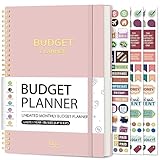
- Effective Budget Planning - Take control of your finances with the budget account book. This comprehensive planner allows you to plan and track your income, expenses, savings, and financial goals in one convenient place. With its intuitive layout and easy-to-use sections, you can stay organized and make informed decisions to achieve financial success.
- User-Friendly Layout - The budget planner features a user-friendly layout designed for easy navigation and organization. Each month, you'll find dedicated budget pages where you can set financial goals, track your income, and plan your expenses. Additional sections include debt trackers, savings goals, bill payment trackers, and more, making it simple to stay on top of your finances.
- Undated Monthly Calendar & Bonus Stickers - Featuring undated calendar each month, you'll have ample space to mark paydays, bills due, appointments, and important dates. Say goodbye to difficult writing spaces. Plus, we've included 3 cute sticker sheets that allow you to personalize your financial organizer and make budgeting more fun. Dates are not pre-printed and are completed by the user.
- Reliable and Convenient Design - Our monthly budget planner is designed for your convenience and built to last. The elastic band keeps everything securely in place, and the dual-sided pocket provides extra storage. Experience a budget planner that combines practicality and durability.
- Master Budgeting with Ease - Our financial planner includes a complete guidebook that provides valuable insights and instructions for optimal usage. From setting financial goals to tracking expenses, this guidebook offers step-by-step guidance and practical tips. Whether you're new to budgeting or an experienced user, this resource will help you make the most of your budget planner, empowering you to achieve financial success.
Automation can be useful when your needs fit a defined process and you are comfortable supplying and updating the inputs. A robo-adviser’s recommendations depend on what its questionnaire asks, what it leaves out, and how it responds when your goals or risk tolerance change. Do not assume a portfolio tool accounts for every debt, cash reserve, property, workplace plan, or outside investment unless the provider says it does.
When to choose a robo-adviser, human planner, hybrid service, or chatbot
A robo-adviser may fit when
- Your primary need is investing toward a defined goal and the provider supports your account type.
- You are comfortable with a questionnaire-driven process and a limited set of portfolio choices.
- You understand whether the service rebalances automatically and what it does during sharp market moves.
- The all-in cost and available human support suit your balance and expectations.
A human planner may fit when
- You need decisions coordinated across investments and other parts of your finances.
- Your situation is changing or complicated enough that follow-up questions and judgment matter.
- You want a defined person to discuss trade-offs with, and the engagement’s scope, compensation, and follow-up terms are clear.
A hybrid service may fit when
- You want automated portfolio management plus some person-to-person help.
- The provider states who you can contact, by which channel, how often, and whether access depends on your account size.
- You have confirmed that the human component covers the planning questions you actually have, rather than assuming it is comprehensive.
A generative-AI chatbot may fit as a learning aid when
- You want plain-language explanations or a starting list of questions to take to a professional.
- You can independently verify important calculations, tax rules, and investment claims.
- You avoid entering credentials or sensitive personal and financial information into an unvetted tool.
Risks and checks before you sign up
- Inputs and updates: Find out what the service asks about debts, cash, property, workplace retirement plans, and outside investments. Ask who updates your profile after a marriage, job change, inheritance, or shift in goals.
- Investment process: Ask how risk tolerance is assessed, what portfolios are available, how allocations and rebalancing are decided, and what happens in sharp market moves. Identify investment-product and underlying fund costs.
- Human access: Confirm whether contact is by phone, email, or video; how frequently you can speak with someone; whether meetings are limited; and whether a minimum balance applies.
- Conflicts and incentives: Check whether the service uses proprietary or affiliated products, receives referral or marketing compensation, or has other incentives. Read the relevant disclosures.
- Portability and taxes: Ask what happens when you cancel. Can holdings transfer in kind, or must investments be sold? Could a sale create tax consequences? Ask how rebalancing or tax-loss harvesting is handled, and consult a tax professional about your circumstances.
- Registration and documents: In the U.S., use the SEC’s Investment Adviser Public Disclosure (IAPD) database to check an adviser’s registration and disciplinary history. Read Form CRS, Form ADV, and the advisory agreement; identify who makes the recommendation and in what capacity.
- AI privacy and accuracy: Do not provide account credentials or sensitive details to an unvetted chatbot. Verify consequential claims with authoritative sources or an appropriately qualified professional. CFP Board’s February 25, 2025 generative-AI ethics guidance addresses accuracy checks, confidentiality, privacy, bias, and professional integrity; it is guidance for CFP professionals, not a consumer guarantee about any chatbot.
For investment advisers in the United States, registration and disclosures help you understand the firm, its services, fees, and conflicts; they do not guarantee a good outcome. Do not assume that every person called a financial adviser acts as a fiduciary for every service. Confirm the role and obligations that apply to the particular recommendation and engagement.
Quick Recap
Best Value

- EFFECTIVELY MANAGE YOUR MONEY - Our budget planner helps you take control of your finances by providing sections for financial goals, savings, debts, daily expenses, monthly budget, monthly budget review. This finance planner is a good finance book and will help you manage your money effectively.
- PREMIUM QUALITY - Our budget planner is made with high-quality 100gsm paper that reduces ink leakage, fraying, and shade issues. The sturdy and flexible cover,, helps protect the pages. The metal lay-flat twin-wire binding ensures durability and longevity.
- ORGANIZED MONTHLY GOALS & BUDGETS - Our 12-month budget planner helps you set monthly goals, budgets, reviews, and develop good monetary habits, strategies, and action plans. Write down monthly financial goals, put reminders of bills and payments on the calendar, plan your monthly budget in each category, track daily expenses, and review the monthly budget at the end of the month.
- FLEXIBLE USAGE - Our undated finance planner allows you to start at any time and place, making it convenient to use. It has a perfect size of 8.6x5.9 inches and fits in every bag, so it's always at hand.
- CREATE FINANCIAL FREEDOM - Our budget planner is your chance to develop monthly habits, monetary strategies, and action plans to start your journey to long-term financial freedom. It allows you to track monetary flow and review each area for improvements. With this 1-Years budget book, you can take the first step towards financial freedom.
Product prices and availability are accurate as of the date/time indicated and are subject to change. Any price and availability information displayed on Amazon at the time of purchase will apply.

