
The Tool Desk
Outbyte Driver Updater FREEScan for outdated or missing drivers - takes under a minuteDriver Scan →Outbyte PC Repair FREEClear out junk files and repair common Windows errorsFree Scan →An AI assistant responds to a person’s requests and keeps the person at the center of the work. An AI agent can take a goal, choose intermediate steps, and use tools to pursue it with some delegated autonomy. Use an assistant for interactive help, an agent for suitable multi-step work, and a deterministic workflow or function when the steps are predictable.
Those labels are not a universal technical standard. To choose well, look past the product name and check what it can do, how much control you retain, and what happens if it gets something wrong.
How AI assistants, agents, and workflows differ
The practical distinction is who directs the work and how the next step is chosen. Google Cloud frames assistants as systems that collaborate directly with users, while agents pursue goals through reasoning, planning, memory, and some autonomy. Google Cloud also describes an assistant as a possible designed form of agent, so the categories can overlap. Microsoft’s guidance likewise distinguishes agents by their ability to plan and use tools, but a product called an agent may still be limited to a bounded task.
Anthropic offers a useful architectural contrast: a workflow uses an AI model and tools along predefined code paths, while an agent dynamically directs its process and tool use. A workflow can still contain decision branches; the key is that its path is explicitly designed rather than chosen on the fly by the model.
#1 Best Overall

- [AI Smart Speaker] You can use tozo pm1 speaker to AI Chat by connect with TOZO APP, you can literally Talk to it like a real person, rather than just typing and reading on a screen. It’s perfect for hands-free assistance, learning, and entertainment.
- [Intelligent Meeting Assistant] Recording + real-time transcription: one-click recording, stopping as you go, AI real-time conversion of voice messages into text recordings, and automatically analyzing the recording/text content, intelligently refining the key points, action items, and conclusions, and also translating into multiple languages with one click.
- [Excellent Sound Quality] Experience studio-grade clarity with our precision-engineered 28mm dynamic driver. Delivering 30% louder output and deeper bass resonance, it captures every nuance—from crisp highs to rich mid-ranges, ensuring vibrant, distortion-free sound whether you’re streaming music, or voice call.
- [Up to 20H Playtime] Bluetooth speaker has a built-in robust rechargeable battery. Up to 20 hours playtime, ensuring continuous, uninterrupted playback, whether you use the speaker for lectures, work conversations, or listening to music while running outdoors, etc.
- [Unleash Your Hands] Clip-On Convenience make it secure the rugged built-in clip to jackets, backpacks, or belts, room-filling music or take calls hands-free, perfect for hiking, cycling, or busy workdays.
| Decision point | Assistant-oriented use | Agent-oriented use | Fixed workflow or function |
|---|---|---|---|
| Who directs the work? | The person prompts, reviews, and decides what to do next. | The person gives a goal; the system may choose intermediate steps. | The developer or operator defines the steps in advance. |
| Typical task | Conversation, information, drafting, recommendations, or bounded help. | Open-ended or multi-step work involving decisions and tool use. | Repeated tasks with stable inputs and predictable steps. |
| Tool use | May use tools, but interaction with the person remains central. | Selects and uses available tools to retrieve information or act toward the goal. | Calls specified functions or services in a defined order. |
| Adapting to the situation | Responds to each new prompt from the user. | Can change its process as task state or findings change. | Follows its explicit path unless programmed branches apply. |
| Oversight | The user reviews suggestions or outputs. | Requires suitable permissions, guardrails, evaluation, and escalation for consequential actions. | Requires testing of the explicit logic and known exceptions. |
For practical product comparisons, ask what the system actually does rather than relying on the label. Google Cloud, Microsoft Learn, and Anthropic all describe distinctions that are useful for design, but none makes “assistant” and “agent” a single universally enforced taxonomy. Google Cloud’s overview of AI agents, Microsoft Learn’s introduction to agents, and Anthropic’s discussion of agent design provide their respective framings.
When to use an AI assistant
Choose an assistant when the task benefits from an exchange with a person who stays in charge. It is a natural fit for explaining a topic, drafting or revising text, finding information, summarizing material, or generating recommendations for you to evaluate.
For example, Microsoft describes Copilot as an assistant built into Microsoft 365 applications, where it can help summarize an email or highlight key points in a meeting. These tasks benefit from convenient help, but a person still determines what to do with the result. Microsoft Learn’s introduction to agents describes this assistant-oriented pattern.
Rank #2
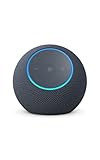
- Meet Echo Dot Max: Experience rich room-filling sound that automatically adapts to your space and fine-tunes playback. Features a built-in smart home hub and Omnisense technology for highly personalized experiences.
- Music to your ears: With nearly 3x the bass versus Echo Dot (2022 release), it fits beautifully in any space, delivering your personal sound stage with deep bass and enhanced clarity. Listen to streaming services, such as Amazon Music, Apple Music, Spotify, and SiriusXM. Encore!
- Do more with device pairing: Connect compatible Echo smart speakers and smart displays in different rooms, or pair with a second Echo Dot Max to enjoy even richer sound. Pair your Echo Dot Max with compatible Fire TV devices to create a home theater system that brings scenes to life.
- Simple smart home control: Set routines, pair and control lights, locks, and thousands of smart home devices that work with Alexa without needing a separate smart home hub. With Omnisense technology, you can activate routines via temperature or presence detection.
- Say goodbye to drop-offs and buffering - With eero Built-in, Echo Dot Max doubles as a mesh wifi extender, adding up to 1,000 sq. ft. of wifi coverage to your existing eero network.
When to consider an AI agent
Consider an agent when a task has a goal but its intermediate steps depend on what the system finds, and the task benefits from using tools. Examples might include gathering information from several sources, interpreting documents, or handling a customer-service case that depends on context rather than a simple rule. OpenAI identifies complex decisions, unwieldy rule sets, and heavy reliance on unstructured data as promising patterns; that makes them candidates to test, not guarantees of success.
Do these 3 things before closing this tab:
1Repair Windows errors before they cause bigger problems2Fix the driver behind crashes, sound loss and screen glitches3Clear out junk files and repair common Windows errorsAn agent’s practical capabilities are limited by its tools and permissions. OpenAI describes three basic components: a model that reasons and makes decisions, tools that connect it to functions or APIs, and instructions that define its behavior and guardrails. Tools might retrieve data from a database or documents, update a record, send a message, or coordinate work. A system cannot take an action for which it has not been given an appropriate tool and access.
OpenAI’s implementation documentation describes different ways to build agentic systems, including a managed Agents API, an Agents SDK that runs in a developer’s application, and the Responses API for direct model use or custom orchestration. These choices differ in runtime and state management, integration effort, and tool execution; they do not imply that all products marketed as agents share one architecture. OpenAI’s practical guide to building agents covers use cases, components, evaluation, and guardrails, while its Agents API documentation outlines implementation options.
Rank #3

- and : Long life, built in 1800mAh lithium ion battery, dual MOS tube , standby time up to 168 hours, play time up to 4‑8 hours.
- Upgrade Chip: Using the new Bluetooth 5.1 chip and HT8371 6W high power decoding chip, highly restored, three tone balanced.
- Intelligent AI Chip: New intelligent AI chip, no need to connect to wifi, AI voice intercom, knowledge encyclopedia, news, radio, navigation, music on demand.
- Intelligent Life Companion: Clock display, alarm setting, snooze mode, secondary wake up, humanized function design to meet various daily needs.
- Fully Compatible: Fully compatible, multi use, support cell phone Bluetooth playback, support desktop computer and laptop sound card mode playback.
When a workflow or function is the better choice
Use a deterministic workflow or function when the steps are well defined and can be handled reliably with explicit logic. If a task is essentially “take this input, apply these rules, then call this service,” an agent may add unnecessary variability. Microsoft Learn states: “If you can write a function to handle the task, do that instead of using an AI agent.” Anthropic similarly recommends starting with the simplest solution that meets the task’s needs. Microsoft Agent Framework overview gives its workflow-versus-agent guidance.
This does not mean every task must be fully deterministic. A workflow may use an AI model for a bounded step, such as classifying a message, while explicit code controls what happens next. The relevant question is whether the model needs to choose the process and tools dynamically, or whether the process can be designed and tested in advance.
Quick wins for a faster PC:
Fix the driver behind crashes, sound loss and screen glitchesFind Drivers →Repair Windows errors before they cause bigger problemsFix Now →Scan for outdated or missing drivers - takes under a minuteDriver Scan →How to decide what fits your task
- Decide whether the steps can be specified in advance. Stable inputs and predictable steps point toward a function or workflow; a goal whose next steps depend on findings may favor an agent.
- Check whether tool choice needs to adapt. If the system must select among tools or decide what to do next as task state changes, agent-like behavior may help. If not, use an assistant or fixed path.
- Set the action boundary. List the information the system may read and actions it may take. Give it only the access needed for the task, and decide which actions require human approval.
- Assess the cost of an error. A wrong draft suggestion is different from a mistaken record change or message sent to a customer. The more consequential the action, the stronger the review, testing, and escalation controls should be.
- Compare against a simpler option. Test whether an assistant, workflow, or function can meet the required quality before adding an agent’s flexibility.
Trade-offs and oversight for agentic systems
Agents can be useful when exceptions are hard to enumerate, but their flexibility is not free: agentic systems may trade greater latency and cost for improved task performance. Anthropic recommends adding complexity only when it is needed. OpenAI recommends establishing an evaluation baseline, checking whether the system meets its accuracy target, and then optimizing cost and latency. The right choice depends on measured performance for the specific task, not the “agent” label.
Rank #4

- Bedside Speaker and Sleep Sound Machine: This compact wireless speaker combines Bluetooth audio, 16 built-in sleep sounds (white noise, brown noise, rain, ocean, and more) and multiple RGB night light modes in one rechargeable device. Stream music while the light pulses in time with your audio, or switch to sleep mode and drift off to the sound you picked. A practical gift for teens and adults upgrading a bedroom setup.
- One Button, Your AI, Instantly: The BRS-180 has a dedicated AI button on top. Press it once and it wakes Google Assistant, Siri, or whichever assistant lives on your paired device. Ask it anything, play music, set a reminder, check the weather, or control your smart home, all from across the room without picking up your phone.
- Pairs in Seconds and Stays Connected: Bluetooth connects to any iOS or Android phone, tablet, or laptop with no app and no account required. Once paired, the 12-hour LED clock display syncs the correct time on its own. Three display settings keep you in control: full brightness, dimmed, or completely off for total darkness. A memory function saves your last volume, sleep sound, and light settings automatically.
- Built for the Nightstand, Night After Night: The soft fabric-wrapped enclosure sits on a nightstand, dresser, or shelf without looking like a gadget. Plug it in over USB-C and it runs continuously, or use the built-in rechargeable battery for up to 6 hours of wireless playback. Either way it is ready when you are. Available in White, Black, and Green.
- 16 Sleep Sounds, Fully Customizable: Choose from 16 built-in sleep sounds that play straight from the speaker with no phone, no app, and no subscription. Set a 15, 30, or 60-minute sleep timer and the sound fades out by itself. Want a different library? Connect it to any PC with the included USB-C cable and swap out every sound stored on the device.
For actions that affect records, send messages, or trigger processes, define guardrails and a route back to a person when execution fails. OpenAI describes handing control back to the user when an agent cannot complete execution. Microsoft places responsibility on developers to test for their use cases and review data flows, permissions, quality, reliability, security, and trustworthiness. These are design responsibilities, not properties automatically supplied by calling a system an agent. OpenAI’s agent guide and Microsoft’s framework overview discuss these controls.
Agent design options depend on the platform
Implementation choices can shift how much orchestration and infrastructure a developer manages. On Microsoft’s platform, a declarative agent customizes Copilot through instructions, data, and actions using Microsoft’s built-in infrastructure. A custom engine agent allows more control over orchestration and models, while requiring additional hosting and security work. This is a Microsoft-specific distinction, but it illustrates the broader trade-off between a managed, bounded experience and a more customizable system. Microsoft Learn’s agent introduction describes these types.
Quick Recap
Product prices and availability are accurate as of the date/time indicated and are subject to change. Any price and availability information displayed on Amazon at the time of purchase will apply.

