
Quick wins for a faster PC:
Clear out junk files and repair common Windows errorsFree Scan →Scan for outdated or missing drivers - takes under a minuteDriver Scan →Repair Windows errors before they cause bigger problemsFix Now →iTechGuides is reader-supported. When you buy through links on our site, we may earn an affiliate commission. As an Amazon Associate I earn from qualifying purchases. Learn more
Headless data architecture separates data ownership, business rules, workflows, and APIs from the user interface that presents them. The pattern lets websites, mobile apps, kiosks, partner integrations, and internal tools consume the same capabilities without sharing a presentation layer, but it also adds responsibility for contracts, security, caching, consistency, and operations.
“Headless data architecture” is a descriptive architecture pattern, not a formal specification or a single product category. A headless CMS may be one component, but a complete implementation can also include commerce, identity, payments, search, inventory, pricing, analytics, workflow, and custom domain services.
Key takeaways
- Headless data architecture decouples data and business capabilities from the applications that render or consume them.
- A headless CMS manages structured editorial content; inventory, orders, payments, permissions, and other transactional data usually belong to domain-specific operational systems.
- REST, GraphQL, a backend-for-frontend, precomputed read models, webhooks, and event streams are alternative building blocks—not requirements that must all be used together.
- Decoupling can support multiple channels and independent releases, but it can also introduce network hops, cache invalidation, eventual consistency, integration work, and provider costs.
- The right first decision is system-of-record ownership for each domain entity, not which vendor has the word “headless” on its product page.
What is headless data architecture?
Headless data architecture separates the “head” from the “body.” The head is the presentation and interaction layer: a website, mobile application, kiosk, voice interface, partner application, or internal tool. The body contains data, storage, validation, workflows, business rules, and APIs.
A headless system does not assume that one particular frontend will render its data. Consumers access capabilities programmatically, commonly over REST or GraphQL. The central architectural idea is frontend independence, not the use of a particular API technology. Contentful’s explanation of headless APIs describes this separation and notes that independent APIs can provide specialized capabilities without knowing what the frontend looks like.
Popular on Amazon

- 【Adjustable & Ergonomic】:The laptop holder elevates your notebook from 2.78” to 6.5” height (7 level height) for a perfect eye level, letting you fix posture and reduce your neck fatigue, back pain and eye strain. Very comfortable for working in home, office and outdoor.
- 【Sturdy & Protective】:The triangle support design make the laptop stand more stable. The large anti-slip silicone pad on the stand can secure your laptop in place and maximum protect your device from scratches and sliding. Moreover, smooth edges will never hurt your hands.
- 【Heat Dissipation】: The forward-tilt angle and open design offers greater ventilation and more airflow to cool your laptop during operation other than it just lays flat on the table.
- 【Portable & Foldable】:This portable laptop stand only weighs 0.53 pounds and can be quickly folded into a small size of 10.5” x 1.96” x 0.68”. Easy to carry anywhere. Ideal for people who travel for business a lot.
- 【Broad Compatibility】:Our laptop mount is compatible with all laptops from 10-15.6 inches, such as Dell XPS, HP, ASUS, Google Pixelbook, Lenovo ThinkPad, Acer, Chromebook and Microsoft Surface, etc.Be your ideal companion in Home, Office & Outdoor.
“API-first” describes the access strategy: important capabilities are available through APIs rather than only through a built-in user interface. “Composable” describes the way multiple specialized services are combined into an application. The terms overlap, but they are not interchangeable. A single CMS with an API and one website can be headless without being a broad composable architecture.
The simplest mental model
Presentation layer       Website / mobile app / kiosk / partner client
                                  |
                         API gateway or BFF
                                  |
       Content API ----- Commerce API ----- Identity API
              |                 |                  |
        CMS and media     Catalog, pricing,    Users and auth
                          inventory, orders
                                  |
                  Databases, search indexes, caches
                                  |
                         Webhooks and events
The presentation layer should own rendering, layout, accessibility, interaction state, and channel-specific behavior. The data and domain layers should own authoritative records, validation, workflows, and business decisions. The API or experience layer connects the two without making the frontend responsible for reconstructing the entire backend.
How is a headless CMS different from headless data architecture?
A headless CMS is a content-management component. Headless data architecture is the broader arrangement of content, operational data, domain services, APIs, storage, events, and consuming applications.
| System or layer | Primary responsibility | Typical examples of data or behavior |
|---|---|---|
| Headless CMS | Structured editorial content | Articles, landing-page sections, authors, localization, workflows, media references |
| Product information system | Product and merchandising data | SKUs, variants, attributes, categories, merchandising relationships |
| Commerce platform | Transactional commerce behavior | Carts, checkout, orders, promotions, payments |
| Operational database | Application state and transactional records | Reservations, account state, workflow state, domain records |
| Search index | Query-optimized discovery | Full-text search, facets, filters, typo tolerance, ranking |
| Identity provider | Authentication and authorization | Users, sessions, roles, tokens, tenant access |
| API gateway or BFF | Experience-specific access | Aggregation, response shaping, policy checks, rate control |
| Event platform | Asynchronous propagation | Content changes, index updates, notifications, integration events |
| Frontend | Presentation and interaction | Rendering, accessibility, input handling, view state, channel adaptation |
Do not put every application record into a CMS simply because the CMS exposes an API. Editorial articles and reusable content blocks have different consistency, workflow, and lifecycle requirements from inventory reservations, order transitions, payment state, and permissions. A content model should not become a general-purpose JSON junk drawer.
What does a reference headless architecture look like?
A practical architecture separates presentation, experience APIs, domain services, storage, and asynchronous integration. The exact deployment can be a modular monolith, managed SaaS products, independently deployed services, or a mixture of those options. Microservices are optional.
+------------------+  +------------------+  +------------------+
| Web application  |  | Native mobile    |  | Kiosk/partner    |
+--------+---------+  +--------+---------+  +--------+---------+
                             |                    /
          +-------------------v-------------------+
          | API gateway / backend-for-frontend    |
          | auth, aggregation, shaping, limits   |
          +---------+---------------+-------------+
                    |               |
          +---------v------+ +------v---------+ +----------------+
          | Content API    | | Commerce APIs  | | User/auth API  |
          | CMS and media  | | catalog/order  | | identity       |
          +--------+--------+ +-------+--------+ +-------+--------+
                   |                  |                 |
             +-----v------------------v-----------------v-----+
             | Canonical stores, read models, caches, search  |
             +-------------------------+---------------------+
                                       |
                         webhooks / queues / event streams
What should the presentation layer own?
The presentation layer should own layout, rendering, accessibility, interaction state, device-specific adaptation, and view-level caching decisions. A Next.js, Nuxt, Astro, or SvelteKit application might render server-side, generate static pages, use hybrid rendering, or render in the browser. Native iOS, Android, React Native, and kiosk applications can consume the same domain capabilities while implementing different interactions.
The frontend should not become the source of truth for prices, permissions, order transitions, inventory, or editorial publication state. A frontend may display those decisions and maintain temporary view state, but authoritative business rules belong behind the API boundary.
When should you use a gateway or BFF?
Use a backend-for-frontend when a channel needs an aggregated response, when several upstream services should not be exposed directly, or when authentication and policy checks should be centralized. A BFF can turn separate content, catalog, pricing, and identity calls into a response shaped for one screen.
Direct client-to-service calls can be reasonable for simple, public, read-only content. Direct access becomes less attractive when it creates request waterfalls, exposes provider-specific schemas, leaks internal relationships, or requires every client to duplicate authorization and orchestration logic. A gateway or BFF should not merely forward every request without adding a clear boundary; unnecessary proxy layers add latency and operational work.
How should domain services be divided?
Divide services by ownership and business responsibility rather than by arbitrary database tables. Potential boundaries include content, catalog, pricing, inventory, orders, customers, search, recommendations, payments, and notifications.
A modular monolith can implement these boundaries inside one deployable application. Multiple services may be justified when teams, release cycles, scaling characteristics, security boundaries, or provider integrations genuinely differ. Splitting a small application into many services before those pressures exist usually creates distributed-system problems without producing useful independence.
What’s actually slowing this PC down?
Pick the symptom - the matching free tool is one click away.
Where should data live?
Every important entity should have one clearly identified canonical write owner. A system can have one authoritative write source and several derived read models; “one source of truth” does not mean every consumer must query the same physical database.
Also popular on Amazon

- 【Adjustable & Ergonomic】:The laptop holder elevates your notebook from 4.34” to 6.59” height (6 level height) for a perfect eye level, letting you fix posture and reduce your neck fatigue, back pain and eye strain. Very comfortable for working in home, office and outdoor.(Please Note: The two support bars must be inserted into the slots at the same level to ensure balance on both sides)
- 【HEAT DISSIPATION】 :The forward-tilt angle and open design offers greater ventilation and more airflow to cool your laptop during operation other than it just lays flat on the table.
- 【STURDY & PROTECTIVE】 :The triangle support design make the laptop stand more stable. The large anti-slip silicone pad on the stand can secure your laptop in place and maximum protect your device from scratches and sliding. Moreover, smooth edges will never hurt your hands.
- 【Portable & Foldable】:This portable laptop stand only weighs 0.49 pounds and can be quickly folded into a small size of 9.96” x 1.98” x 0.68”. Easy to carry anywhere. Ideal for people who travel for business a lot.
- 【Broad Compatibility】:Our laptop holder is compatible with all laptops from 10-15.6 inches, such as MacBook Air/ Pro, Dell XPS, HP, ASUS, Google Pixelbook, Lenovo ThinkPad, Acer, Chromebook and Microsoft Surface, etc. Be your ideal companion in Home, Office & Outdoor.
| Data category | Likely owner | Why |
|---|---|---|
| Editorial article | Headless CMS | Structured fields, editorial workflow, preview, localization, and publication states |
| Product availability | Inventory or commerce system | Reservations and stock changes need domain-specific transactional behavior |
| Order status | Commerce or order service | Order transitions, payment coordination, and auditability require controlled writes |
| User identity | Identity provider | Authentication, sessions, credentials, and authorization policies need specialized controls |
| Search document | Search index | The index is optimized for queries but is normally derived from canonical data |
| Analytics event | Event pipeline or warehouse | Analytics data is optimized for aggregation rather than transactional reads |
| Media binary | Asset or object-storage system | Files need transformation, delivery, metadata, and lifecycle management |
For each entity, document who may write it, which fields are authoritative, which consumers need fresh data, how changes propagate, and how a failed synchronization is repaired. Do not create duplicate writable copies without a synchronization and conflict-resolution plan.
How should you model headless content?
Design content models around meaning and reuse, not around one page’s current visual layout. A content type might contain a stable identifier, title, author reference, topics, body blocks, media references, localization rules, validation, and publication metadata.
{
  "type": "article",
  "title": "How caching works",
  "author": "author_123",
  "topics": ["architecture", "performance"],
  "body": [
    { "type": "paragraph", "text": "..." },
    { "type": "image", "asset": "asset_456" }
  ]
}
A layout-shaped model creates tight coupling between content and one page arrangement:
The Tool Desk
Outbyte Driver Updater FREEScan for outdated or missing drivers - takes under a minuteDriver Scan →Outbyte PC Repair FREEClear out junk files and repair common Windows errorsFree Scan →{
"homepageHeroColumnOneText": "...",
"homepageHeroColumnTwoImage": "...",
"mobileHeroOverride": "...",
"desktopHeroOverride": "..."
}The second design may be expedient for a single page, but it makes reuse, localization, redesign, channel adaptation, and migration harder. Model semantic concepts such as an article, author, product, campaign, or call-to-action, then let each frontend decide how those concepts should appear.
Which content-model features matter?
- Content types and fields: Define meaning, data types, constraints, and ownership.
- References: Link authors, topics, products, assets, and related entries without copying their values.
- Modular blocks: Allow reusable body structures while limiting uncontrolled nesting.
- Validation: Enforce required fields, allowed values, lengths, formats, and valid references.
- Localization: Define locale fallback behavior instead of leaving missing translations to accidental frontend logic.
- Versioning and publication: Distinguish drafts, approved versions, and published content.
- Stable identifiers: Use IDs that survive a frontend redesign; treat slugs as routing fields rather than primary identity.
- Taxonomies: Use controlled topics and categories when filtering, navigation, or search depends on them.
- Media metadata: Store dimensions, alternative text, credits, focal points, and transformation requirements where appropriate.
- Editorial ownership: Make responsibility for each content type visible to the people who create and maintain it.
Contentful’s developer documentation separates content modeling from API delivery and documents references, localization, preview, and programmatic management. DatoCMS’s API overview similarly distinguishes delivery, management, asset, and real-time update operations.
Which API pattern should you choose?
Choose the simplest delivery pattern that gives clients the data shape, security boundary, caching behavior, and operational visibility they need. REST and GraphQL can both support headless systems.
| Pattern | Good fit | Main risks or costs |
|---|---|---|
| Direct REST | Clear resources, public consumers, HTTP caching, straightforward tooling | Multiple requests for related data; clients may duplicate orchestration |
| GraphQL | Variable field selection, related content, typed central schema | Query-cost control, resolver performance, schema governance, harder CDN caching |
| BFF | Channel-specific aggregation, centralized policy, response shaping | Another service to deploy, monitor, secure, and scale |
| Precomputed read model | Fast, stable screens or feeds assembled from many sources | Propagation delay, rebuild logic, storage duplication, repair procedures |
| Webhooks | Change notifications that trigger rebuilds, indexing, or synchronization | Retries, duplicate delivery, signature verification, out-of-order handling |
| Event stream | Durable fan-out, replay, multiple independent consumers | Ordering, schema evolution, observability, consumer failure, operating complexity |
| gRPC | Typed internal service-to-service calls | Less convenient for browsers and public APIs; requires suitable tooling |
When is REST the better choice?
REST is usually the better choice when resources have clear boundaries, endpoint-level authorization and observability matter, HTTP caching is important, and operational simplicity outweighs client-controlled projections.
Design REST APIs with explicit resource URLs, pagination, filtering, sorting, stable error formats, versioning rules, idempotency for retryable writes, rate-limit responses, and conditional requests such as ETags where they provide value. A public API consumed by many unrelated clients often benefits from predictable endpoints more than from maximum query flexibility.
When is GraphQL the better choice?
GraphQL is useful when several channels need different projections of related content and a typed schema is worth the governance cost. GraphQL should have depth and complexity limits, resolver-cost monitoring, authorization rules, persisted or approved queries where appropriate, and protection against N+1 database access.
GraphQL is not automatically superior to REST. Deeply nested queries can be expensive, CDN caching is less straightforward, internal relationships can be exposed accidentally, and schema changes need central governance. Contentful’s API documentation shows REST and GraphQL as separate delivery choices alongside distinct management, preview, and image operations.
Why should management and delivery APIs be separate?
Published delivery and administrative management have different security, traffic, and data-shape requirements. Delivery is normally read-oriented and optimized for consumers; management is privileged and read-write.
Do these 3 things before closing this tab:
1Repair Windows errors before they cause bigger problems2Fix the driver behind crashes, sound loss and screen glitches3Clear out junk files and repair common Windows errorsUse a delivery API for published content, a preview API for drafts, a management API for creating, updating, and publishing content, an image or asset API for media transformations, and webhooks or events to notify downstream systems. Contentful explicitly advises using its Content Delivery API rather than its Content Management API to deliver large amounts of content. DatoCMS documents the same general separation across Content Delivery, Content Management, Asset, and Real-Time Updates APIs.
Also popular on Amazon

- 【SMOOTH 360° ROTATION】:Turn your screen toward a colleague or shift your viewing angle in place, no extra desk space needed. The X-base keeps a low center of gravity so this adjustable laptop stand stays balanced as it swivels, with subtle click feedback at each position — perfect for collaborative work, video calls, and presentations.
- 【ERGONOMIC & TOOL-FREE】: This laptop riser lets you set your preferred height and tilt with a firm push or pull — no tools, no screws, no assembly. Friction-tight aluminum joints hold the angle you choose, raising your screen anywhere from 1.8" to 10.4" to relieve neck and shoulder strain during long work sessions.
- 【FOLDABLE & PORTABLE】: Folds to 11.4" × 1.7" and weighs 840 g (1.85 lb), compact enough for a backpack sleeve or carry-on. The included storage pouch keeps it protected on business trips, commutes, and remote-work days — a foldable, portable laptop stand built to travel light.
- 【BROAD COMPATIBILITY】: Fits most laptops and tablets up to 17 inches: MacBook Pro & Air, Dell, HP, Chromebook, and more. Anti-slip silicone pads grip your device securely and protect its finish from scratches.
- 【OPEN X-FRAME COOLING】: The X-shaped design lets air flow freely around your laptop instead of blocking bottom vents, while the sturdy aluminum body conducts heat away. Built for daily desk use and travel — a laptop holder for the office, the home, and everywhere in between.
How do drafts, previews, publishing, and invalidation work?
A reliable publishing lifecycle turns an editorial mutation into validated, previewable, published, and cache-consistent data.
Editor changes draft
        |
Validation and workflow
        |
Preview API or preview environment
        |
Approval and publish
        |
Webhook or event
        |
CDN invalidation, rebuild, or revalidation
        |
Published delivery API
Preview access should be privileged and isolated from public caches. A preview request may need draft references that are not available to the production delivery API. A published page can also become inconsistent if it references an unpublished or deleted child entry, so publishing rules should account for dependencies.
Webhook handlers should verify signatures before trusting payloads, deduplicate event IDs, enqueue work rather than performing long operations inside the request, and treat the event as a notification to refetch authoritative data unless the event contract explicitly guarantees a complete payload.
PC Slower Than It Used to Be?
A free scan shows the junk files, broken settings and background clutter dragging Windows down - then fixes them in one click.Free scan · Windows 10 & 11Outdated Drivers Are Slowing You Down
One free scan finds every outdated or missing driver and matches the right update for your exact hardware.Free scan · exact hardware matchexport async function handleWebhook(request: Request) {
const event = await request.json();
verifySignature(request, event);
if (await alreadyProcessed(event.id)) {
return new Response("already processed", { status: 200 });
}
await enqueue({
id: event.id,
type: event.type,
entityId: event.entityId,
occurredAt: event.occurredAt,
});
await markReceived(event.id);
return new Response("accepted", { status: 202 });
}The example is a failure-safe pattern, not a universal framework command. The consumer still needs retries, partial-failure handling, event ordering rules, and a dead-letter path. Record event IDs or content versions so a duplicate webhook does not rebuild or mutate state twice.
How should headless systems handle caching and performance?
Headless architecture can enable CDN, edge, and frontend caching, but headless architecture does not automatically make an application faster. Extra API calls, provider latency, request waterfalls, invalidation mistakes, and uncached personalization can make a headless application slower than a coupled one.
Contentful states that its delivery API is read-only, returns JSON and media, and is distributed through a CDN intended to serve responses from locations closer to users. The Content Delivery API overview documents those delivery characteristics. Actual performance still depends on request shape, cache policy, rendering strategy, geography, and provider limits.
- Browser cache: Cache public, versionable assets and responses where safe.
- CDN or edge cache: Cache published, non-personalized content close to users.
- Framework data cache: Reuse server-side fetch results and revalidate them deliberately.
- BFF cache: Cache aggregated responses when authorization and personalization permit it.
- Application cache: Avoid repeatedly reconstructing expensive domain responses.
- Database and search caches: Use read-optimized storage for high-volume queries.
Long time-to-live values improve hit rates but delay freshness. Short values reduce staleness but increase origin traffic. Tag-based revalidation, stale-while-revalidate, incremental regeneration, and on-demand invalidation can balance the trade-off. Personalized or tenant-specific responses need cache keys that include the relevant identity, tenant, locale, region, or segment—or should not be publicly cached.
const response = await fetch(`${API_URL}/articles/${slug}`, {
  next: {
    revalidate: 300,
    tags: [`article:${slug}`],
  },
});
The code is illustrative and framework-specific. The selected framework and hosting platform must determine the actual revalidation and invalidation mechanism. Before launch, define what happens when publishing succeeds but invalidation fails, when a dependent page is not tagged, and when the upstream provider is unavailable. A stale-but-valid response is often safer than a total outage for public editorial content.
What consistency model does a headless architecture need?
Decoupling forces explicit choices about freshness. Payments, inventory reservations, and order transitions generally require strong consistency around the relevant transaction. Search indexes, recommendations, analytics, and many content projections can usually tolerate eventual consistency.
| Requirement | Typical use | Design implication |
|---|---|---|
| Strong consistency | Payment state, inventory reservation, order transition | Perform the authoritative write in the owning domain and do not rely on a delayed projection |
| Eventual consistency | Search, recommendations, analytics, content propagation | Expose freshness expectations and monitor propagation lag |
| Read-your-writes | Editors or users immediately after a mutation | Read from the write owner or route the request to a fresh version |
| Idempotency | Retryable commands and webhook consumers | Use idempotency keys, event IDs, and safe repeat behavior |
| Ordering | Dependent state transitions | Preserve ordering where needed or reject stale versions |
| Dead-letter handling | Repeatedly failing consumers | Store failed messages for inspection, repair, and replay |
Common supporting patterns include a transactional outbox, change-data capture, queue-based fan-out, event replay, exponential backoff, dead-letter queues, schema versioning, and consumer-driven contracts. Event-driven design is not automatically more scalable or maintainable; event systems can make debugging, testing, ordering, and data repair substantially harder.
How does search fit into headless data architecture?
A headless API is not necessarily a search engine. Search should normally be a derived, query-optimized projection populated from canonical data.
Recommended Free Tools
Canonical content or product change
                 |
          Webhook or domain event
                 |
              Indexer
                 |
          Search service/index
                 |
        Frontend query and filters
The search design should specify index freshness, partial updates, deletes, facets, filters, typo tolerance, locale-specific indexes, tenant isolation, full reindexing, and fallback behavior when the search provider is unavailable. A deleted product should disappear from search, and an indexing failure should be visible through lag and error metrics rather than silently accepted.
Also popular on Amazon

- 【Innovative & Ultra Compact】 The SODI Bi-foldable laptop stand weighs only 185g (iPhone 16 Pro weighs 199g) and folds up to 12.7*4.4*2cm, making it ultra light and easy to carry in your backpack or pocket for effortless mobility. Perfect for business trip, daily travel, library, cafes work, etc.
- 【Innovative & Spring-loaded】 Unlike conventional PC stands, the adjustable arm adopts spring design can align screens to eye level for ergonomic comfort in 1 second. It can also be adjusted in 6 different heights to meet different angle needs for desk. The ergonomic design also helps relieve back pain and hunchback for daily work.
- 【Sleek H-Frame Minimalism】 A striking H-shaped design holder combines elegance with durability. Excellent heat dissipation function prevents your laptop from overheating. In addition, the notebook stand body is made of 100% aluminum alloy to keep the laptop cool and improve performance and longevity.
- 【Super Non-Slip, Superior Stability】All areas contact with the stand laptop are made of silicone non-slip pads that not only won't scratch the laptop, but also hold the laptop securely in place without the risk of slipping. The body is made of high quality aluminum alloy, which is sturdy, stable, and will not shake even when typing or gaming.
- 【Wide Compatity】 Compatible with all 10 - 16" devices like Macbook/ Macbook Air/ Macbook Pro Series/ Surface/ Surface Pro Series/ Surface Book/ iPad Pro/ Sony/ HP/ Kindle/ MateBook Seires notebook. Package includes: 1* laptop stand, 1* velvet storage bag, 1* user manual.
How do you secure a headless data architecture?
Headless systems move important boundaries into APIs, so API security and domain authorization are core architecture concerns rather than implementation details.
- Never put management tokens in browser code or public JavaScript bundles.
- Use separate read-only delivery credentials and privileged write credentials.
- Prefer server-side token exchange when a browser does not need direct provider access.
- Apply least privilege to service accounts and enforce authorization at both the API boundary and domain layer.
- Filter fields by user, tenant, locale, and publication state.
- Treat preview mode as privileged and prevent preview responses from entering public caches.
- Rotate secrets, use managed secret storage, and audit administrative operations.
- Validate uploaded files and external URLs.
- Control GraphQL depth, complexity, introspection exposure, and resolver cost where appropriate.
- Verify webhook signatures before parsing a payload as trusted input.
Management operations also need optimistic concurrency and version handling. Contentful’s management API documentation describes authenticated HTTPS access and version handling when updating existing resources. The general principle applies beyond one vendor: administrative writes should be authenticated, authorized, auditable, and protected against overwriting a newer version.
How should you make APIs and content models type-safe?
Compile-time types help prevent mismatches, but runtime validation is still necessary because API responses, CMS entries, migrations, and external providers can change independently.
Free tools Windows power users keep installed
One-click scans. No signup required.
- Generate TypeScript or equivalent types from supported schemas.
- Validate responses at runtime at the boundary where external data enters the application.
- Version breaking API changes and document deprecations.
- Use contract tests for clients, BFFs, webhooks, and downstream consumers.
- Keep representative API examples in continuous integration.
- Treat content-model changes as production migrations.
- Monitor unknown fields, missing required fields, invalid references, and localization gaps.
Contentful documents tooling for generating TypeScript types, which can reduce mismatches between content models and application code. Sanity’s API and SDK documentation covers HTTP APIs, official clients, SDKs, and its JavaScript and TypeScript integration ecosystem. Neither code generation nor an SDK removes the need for runtime checks and migration tests.
How should environments, migrations, and rollback work?
Separate local development, development content, staging, production, and preview deployments. Keep environment variables and secrets out of source control, and make provider endpoints, tokens, locales, and feature flags explicit per environment.
A promotion process should distinguish code promotion, schema promotion, configuration promotion, editorial content promotion, and data migration. A CMS-space copy or database snapshot may not be enough to roll back a production system if external references, search indexes, media assets, events, or already-executed business transactions are involved.
- Write repeatable schema and content migration scripts.
- Test migrations against a production-shaped copy or representative fixture set.
- Make migrations resumable or safely repeatable where possible.
- Back up and export data before destructive changes.
- Record migration versions and affected entities.
- Define how indexes, caches, webhooks, and consumers are repaired after rollback.
- Test data residency, retention, and export requirements before committing to a provider.
What should you monitor?
Observability should cross the frontend, BFF, provider APIs, queues, workers, search index, and deployment system. Add correlation IDs so one user request can be traced across those boundaries.
Do these 3 things before closing this tab:
1Clear out junk files and repair common Windows errors2Scan for outdated or missing drivers - takes under a minute3Repair Windows errors before they cause bigger problems- API latency and error rate by endpoint and provider
- Cache hit ratio and stale-response rate
- Rate-limit responses and retry volume
- GraphQL query depth, complexity, and resolver cost
- Webhook delivery, deduplication, and retry counts
- Search index lag, failed indexing, and reindex duration
- Publish-to-live latency
- Preview, build, and revalidation failures
- Content validation and migration errors
- Cost by API, environment, channel, seats, bandwidth, and media volume
What is a practical implementation sequence?
Implement the architecture in dependency order. Choosing a CMS or API before defining ownership usually creates avoidable coupling.
- List consumers and channels. Include websites, mobile apps, internal tools, partner APIs, search, automation, and possible future consumers.
- Assign system-of-record ownership. Decide which system owns each entity and which systems hold derived projections.
- Separate editorial and operational data. Keep article content in a CMS and inventory, order, payment, and permission state in their domain systems.
- Define stable domain identifiers. Use identifiers that survive frontend redesigns; use slugs for routing, not identity.
- Design read models. Decide whether each use case needs direct REST, GraphQL, a BFF, or a precomputed projection.
- Define publication and invalidation. Document how drafts become live and what happens when a webhook, rebuild, or cache purge fails.
- Implement delivery authentication. Use read-only credentials for suitable public delivery and keep management credentials server-side.
- Add caching deliberately. Establish TTLs, cache keys, invalidation tags, and stale or outage behavior before launch.
- Add contract and migration tests. Test missing fields, references, localization, drafts, deletes, old content, duplicate events, and partial failures.
- Instrument before scaling. Measure API calls, provider limits, cache behavior, indexing lag, publish latency, and cost.
Managed SaaS or self-hosted: which operating model fits?
Choose the operating model before comparing feature checklists. Managed SaaS generally reduces infrastructure operations and can shorten launch time; self-hosting provides more control but transfers deployment, upgrades, backups, security, and availability responsibility to the team.
| Criterion | Managed SaaS | Self-hosted or open source |
|---|---|---|
| Operations | Lower infrastructure burden; provider operates the platform | Team owns deployment, upgrades, backups, monitoring, and recovery |
| Control | Provider controls platform behavior and roadmap | Greater control over runtime, data, and extensions |
| Time to launch | Usually faster to start | More setup and maintenance |
| Customization | Depends on APIs and extension model | Often broader code and infrastructure control |
| Cost | Subscription and usage fees | Infrastructure plus engineering time |
| Reliability | Provider SLA and dependency | Team is responsible for availability and disaster recovery |
| Data portability | Inspect export, migration, and contract terms | Often more direct access to databases and files |
| Compliance | Review regions, subprocessors, and contracts | More control, but also more compliance responsibility |
Open-source licensing is not the same as zero total cost. Infrastructure, upgrades, security patching, backups, plugin compatibility, monitoring, and on-call engineering all contribute to total cost of ownership.
Which platforms should you consider?
Vendor names are useful only after the architectural requirements are clear. A hosted document-oriented content platform, an open-source CMS, and a database-connected API layer solve overlapping but different problems.
| Platform | Architectural fit | Important qualification |
|---|---|---|
| Contentful | Managed structured content, multiple channels, editorial workflows, delivery APIs, and enterprise governance | May be a poor fit when self-hosting, direct database ownership, or a lower-cost high-volume path is required. The pricing page observed August 18, 2026 listed Free at $0 and Lite at $300/month. |
| Sanity | Developer-defined structures, customizable Studio, real-time collaboration, and API-driven applications | Hosted model may not satisfy direct database-control or self-hosting requirements. The pricing page observed August 18, 2026 listed Free at $0 and Growth at $15 per seat per month; exact quotas should be rechecked. |
| Strapi | Self-hostable open-source CMS with REST and GraphQL APIs, custom backend extensions, and a managed cloud option | Self-hosting means owning hosting, upgrades, security, backups, and plugin compatibility. The vendor page observed August 18, 2026 described the Community edition as MIT-licensed and listed Growth at $45/month. |
| Directus | API and admin layer over existing or relational data, with self-hosted and managed options | May be a poor fit for specialized editorial workflows or a purely managed document-content use case. The pricing page observed August 18, 2026 listed Core at $0/month and Team at $499/month or $599 billed monthly. |
| DatoCMS | Managed API-first content, GraphQL reads, asset delivery, frontend integrations, and real-time preview/update workflows | The research pass verified documentation but did not verify a current pricing page. Do not rely on an unstated price; confirm current plans, residency, and export terms separately. |
Vendor plans, prices, quotas, feature availability, and UI labels are volatile. The prices above are qualified as displayed or observed on August 18, 2026, with USD assumed where the dossier supplied dollar amounts. Recheck the official page for geography, seats, API calls, bandwidth, environments, media, quotas, and enterprise terms before purchasing.
Also popular on Amazon
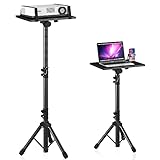
- 【𝑼𝒑𝒈𝒓𝒂𝒅𝒆𝒅 𝑷𝒓𝒐𝒕𝒆𝒄𝒕𝒊𝒐𝒏 𝑫𝒆𝒗𝒊𝒄𝒆】: Projector Stands add a safety latch, which avoids the danger of falling. Laptop tripod is made of thickened aluminum metal to ensure overall stability. Metal top tray prevents warping in the transportation process.
- 【𝑺𝒊𝒎𝒑𝒍𝒆 𝑰𝒏𝒔𝒕𝒂𝒍𝒍𝒂𝒕𝒊𝒐𝒏 & 𝑺𝒕𝒂𝒃𝒍𝒆】: It may take you 5-10 min to install according to attached accessories and instructions manual(No extra tool to set up). Before using the projector tripod, tighten the lock for each connection to ensure more stability.
- 【𝑴𝒖𝒍𝒕𝒊𝒇𝒖𝒏𝒄𝒕𝒊𝒐𝒏𝒂𝒍 𝑺𝒄𝒆𝒏𝒆𝒔】: The enlarged top tray(15" x 11") supports various sized devices, such as projectors, laptops, music players, and DJ equipment. This tripod stand is suitable for home party, conference, speech, report, DJ, office.
- 【𝑾𝒊𝒅𝒆𝒍𝒚 𝑨𝒅𝒋𝒖𝒔𝒕𝒂𝒃𝒍𝒆 𝑯𝒆𝒊𝒈𝒉𝒕 & 𝑻𝒊𝒍𝒕】: The projector tripod stand is easily adjusted from 23 to 46 inches for height to meet personal needs. The top tray can be easily tilted within a range of 180° to provide a comfortable viewing angle. Maximum load capacity is 22 lb.
- 【𝑷𝒐𝒓𝒕𝒂𝒃𝒍𝒆 & 𝑭𝒐𝒍𝒅𝒂𝒃𝒍𝒆】: Detachable design makes the projector holder easier to store and carry out.After disassembled by section, they fit perfectly into the provided bag. Sponge pads and elastic belts enhance the stability of outdoor & indoor use.
How should you score a platform?
Score each candidate against the actual operating model rather than a generic “headless” label:
- Data ownership, exportability, and migration support
- Self-hosting, residency, and compliance requirements
- Content-model flexibility and editorial usability
- Preview, approvals, publishing, and environment promotion
- API quality, SDKs, generated types, and runtime validation options
- GraphQL query controls or REST caching behavior
- Webhooks, events, retries, and integration tooling
- Localization, assets, roles, SSO, and audit logs
- Rate limits, bandwidth pricing, seats, records, and environments
- Search and personalization integrations
- Backup, disaster recovery, and service-outage behavior
- Migration difficulty and the team’s total cost of ownership
When is headless data architecture a strong fit?
Headless data architecture is a strong fit when several channels consume the same structured data, the frontend needs a framework or deployment model unsupported by the existing CMS, or frontend and backend teams need independent release cycles.
The pattern is also useful when content must be reused across websites, apps, kiosks, and partner products; when API-based automation is central; or when editorial workflows need to remain separate from presentation code. The business complexity should justify the additional boundaries.
Quick wins for a faster PC:
Repair Windows errors before they cause bigger problemsFix Now →Fix the driver behind crashes, sound loss and screen glitchesFind Drivers →When should you avoid headless architecture?
A coupled CMS or modular monolith is often the better engineering choice for one simple marketing site, a small team without API and operations expertise, or a project whose existing CMS already meets its requirements.
Question headless architecture when editors need highly visual page building with minimal developer involvement, when the project cannot support preview, migrations, backups, and observability, or when vendor usage pricing will dominate the budget. A headless design that reproduces one monolithic CMS through a more complicated API layer has paid the costs of decoupling without gaining meaningful independence.
Also avoid selecting several specialized SaaS products before defining ownership, consistency, caching, and integration boundaries. The most expensive mistake is not choosing the “wrong” headless CMS; it is creating overlapping systems that all believe they own the same data.
Launch checklist
- Model: Every entity has an owner, stable ID, validation rules, lifecycle, localization behavior, and reference policy.
- API: Delivery, preview, management, asset, and event operations have appropriate boundaries and credentials.
- Security: Management tokens are server-side, authorization is enforced by domain, previews are protected, and webhooks are signed and verified.
- Consistency: Strong versus eventual consistency is documented for each workflow; commands and consumers are idempotent.
- Publishing: Draft, approval, publish, webhook, invalidation, rebuild, and rollback behavior are tested.
- Caching: TTLs, cache keys, invalidation dependencies, personalized-content rules, and outage fallbacks are explicit.
- Search: Deletes, partial updates, locale and tenant isolation, lag monitoring, and full reindexing are implemented.
- Environments: Code, schema, configuration, editorial content, and migrations have separate promotion procedures.
- Testing: Contracts cover missing fields, old entries, deleted references, drafts, locales, duplicate events, and provider failures.
- Operations: Correlation IDs, latency, errors, cache hits, webhook retries, publish latency, index lag, and costs are monitored.
- Recovery: Backups, exports, migration rollback, event replay, cache repair, and provider-outage procedures are documented and exercised.
Frequently Asked Questions
Is a headless CMS the same as headless data architecture?
No. A headless CMS manages structured editorial content, while headless data architecture also includes operational data, domain services, APIs, storage, search, identity, events, and consuming applications. A headless CMS may be only one component.
Windows Errors? Fix Them Before They Spread
Repair common Windows errors and clear accumulated junk for a smoother, more stable PC - no reinstall needed.Free scan · no reinstallOutdated Drivers Are Slowing You Down
One free scan finds every outdated or missing driver and matches the right update for your exact hardware.Free scan · exact hardware matchIs headless data architecture faster than a traditional CMS?
Not automatically. Headless architecture can enable CDN, edge, and frontend caching, but additional API calls, network hops, cache invalidation, provider latency, and client-side waterfalls can reduce performance. The result depends on request shape, rendering, caching, geography, and provider limits.
Should product inventory and orders be stored in a headless CMS?
Usually no. Editorial product descriptions may belong in a CMS, but inventory, reservations, order status, payment state, and other transactional records generally belong in commerce or operational systems with domain-specific consistency and workflow controls.
Should I choose REST or GraphQL for a headless architecture?
Choose REST when clear resources, HTTP caching, predictable authorization, and operational simplicity matter most. Choose GraphQL when multiple clients need different projections of related data and the team can govern query depth, complexity, resolver cost, and schema evolution.
Is self-hosted headless software free?
Self-hosted open-source software may have little or no license cost, but the organization still pays for infrastructure, upgrades, security, backups, monitoring, availability, and engineering time. Total cost of ownership—not license price alone—should drive the decision.
What’s actually slowing this PC down?
Pick the symptom - the matching free tool is one click away.
The Bottom Line
Headless data architecture is a useful pattern when data and business capabilities must serve multiple channels or evolve independently from presentation. It is not a synonym for headless CMS, GraphQL, microservices, or automatic scalability. Start with ownership, consistency, lifecycle, and recovery requirements; then choose the simplest API, deployment model, and platform that satisfy those requirements.
Quick Recap
Product prices and availability are accurate as of the date/time indicated and are subject to change. Any price and availability information displayed on Amazon at the time of purchase will apply.

