
Do these 3 things before closing this tab:
1Repair Windows errors before they cause bigger problems2Scan for outdated or missing drivers - takes under a minute3Clear out junk files and repair common Windows errorsThe best free and open source digital asset management software depends on your assets and technical resources. ResourceSpace is the best overall choice, Phraseanet suits media archives, AtroDAM fits configurable integrations, Pimcore combines DAM with PIM and ecommerce, and DAMopen is the strongest option for Drupal teams. Free self-hosting still has infrastructure costs.
Key takeaways
- ResourceSpace is the best overall dedicated open-source DAM for organizations that want self-hosting, metadata, search, permissions, and workflows.
- Phraseanet is the strongest specialist choice for photography, video, publishing, broadcasting, and large media archives, and its official resource center identifies the software as GNU GPL v3.
- AtroDAM is better suited to developer-led teams that need configurable data models, APIs, and connections between assets and broader business data.
- Pimcore combines DAM with PIM, MDM, ecommerce, and digital-experience capabilities, but its Community Edition has eligibility and production-use restrictions.
- DAMopen is designed for Drupal organizations and adds DAM features to the Drupal Media Library ecosystem rather than operating as a CMS-independent product.
What is the best free and open source digital asset management software?
ResourceSpace is the best overall recommendation for most organizations seeking a genuine free and open-source DAM. Phraseanet is better for media archives and publishing, AtroDAM for configurable API-driven systems, Pimcore for DAM plus PIM or ecommerce, and DAMopen for Drupal. The meaning of “free” differs substantially between these products.
A digital asset management system is more than a shared folder. A DAM stores images, video, audio, PDFs, office files, design files, and brand assets while adding structured metadata, search, permissions, versions, approvals, rights information, sharing, and distribution workflows.
How do free, hosted, open-source, and open-core DAM products differ?
“Free and open source” is not one consistent product category. Before comparing software, identify which of these offers you are actually evaluating:
#1 Best Overall

- [INTEL POWERED CONTENT] - Built with a 8th Generation Hexa-Core Intel i5 and 32GB of DDR4 RAM; Modern, Windows 11 ready, with 4K support, Executive multitasking, media streaming and smooth, multi-tab web browsing; Perfect as an all-purpose multimedia computer; built for content creators; Plenty of RAM and Mass storage for photo and video editing powered by Intel HD 630
- [LATEST WIRELESS TECH] - This Dell Desktop Computer easily connects to the internet through the Built In WiFi / Bluetooth
- [SOLID STATE STORAGE] - This Dell Computer setup comes with an ultra-fast 1TB Solid State Drive (SSD); Setup as the primary boot device; Boot and load programs with lightning speed ; Additional expansion available
- [BUY & OWN WITH CONFIDENCE] - From the world's largest Microsoft Authorized Refurbisher; Quality Guarantee and Free Tech Support; Award-winning Customer Service; | Support Sustainable Business
- [MODERN HI-SPEED PORTS] - USB 3.0 (x4) | USB 2.0 (x4) | DisplayPort (x1) | HDMI Port (x1) | Audio Combo Jack (x1) | Audio Out (x1) | RJ-45 Ethernet (x1) | Internal SATA (x3)
| Term | What it usually means | What you still need to check |
|---|---|---|
| Free self-hosted software | You can download and run the core software without a license fee. | Hosting, storage, backups, security, upgrades, administration, support, and custom development. |
| Free hosted tier | A vendor runs the service and provides a limited plan at no charge. | Storage, users, bandwidth, sharing, AI, export, support, and account limits. |
| Open-core software | A free or open-source core is surrounded by paid editions or modules. | Whether your organization may use the free edition in production and which features require payment. |
| Free to download with paid services | The software is available without a license fee, while the publisher sells hosting, support, implementation, or training. | Whether your team can maintain the system without those services. |
Self-hosted software may have a zero-dollar license cost but still require servers or cloud infrastructure, object storage, database hosting, disaster recovery, monitoring, administration, metadata migration, and user training. Open source can reduce vendor lock-in, but it does not eliminate dependence on hosting providers, integrators, custom code, or proprietary extensions.
How were these five DAM systems selected?
The ranking prioritizes genuine DAM capability rather than generic upload functionality. The important questions are whether a product can organize varied assets, make them findable, control access, manage versions and rights, support approval or sharing, integrate with other systems, and remain practical to deploy and maintain.
- Asset management: images, video, audio, documents, previews, thumbnails, bulk operations, versions, and derivatives.
- Metadata and search: custom fields, full-text search, filters, taxonomies, controlled vocabularies, embedded EXIF/IPTC/XMP data, and saved searches where available.
- Governance: roles, permissions, approval states, review, annotations, auditability, rights, expiry dates, and private or public collections.
- Integration: REST or GraphQL APIs, webhooks, CMS, ecommerce, PIM, ERP, SSO, LDAP, external storage, and import/export options.
- Operations: Docker support, databases and search dependencies, background jobs, upgrades, backups, restore procedures, and commercial support.
- Total cost: not only the software license, but also implementation, storage, backups, maintenance, migration, support, and customization.
Which free and open source DAM should you choose?
| Software | Best for | Self-hosted | Free/open-source qualification | Technical difficulty |
|---|---|---|---|---|
| ResourceSpace | General-purpose organizational DAM | Yes | Open-source self-hosted edition; separate hosted free tier and paid services | Low to medium |
| Phraseanet | Media archives, publishing, photography, and video | Yes | GNU GPL v3; free to download and self-host | Medium |
| AtroDAM | Configurable, API-led DAM and product-data workflows | Yes | Open-source project; verify current releases, deployment documentation, and support | Medium to high |
| Pimcore | DAM combined with PIM, MDM, ecommerce, or digital experience | Yes | Open-core; Community Edition eligibility and usage restrictions apply | High |
| DAMopen | Drupal-based organizations | Yes | Drupal-based open-source DAM distribution | Medium if you already use Drupal |
1. ResourceSpace: best overall open-source DAM
ResourceSpace is the best overall choice for organizations that want a dedicated, mature, self-hosted DAM rather than a PIM, CMS, or generic file-storage system. The vendor states that its open-source software can be downloaded and implemented locally without a software license fee or per-user restriction for the self-hosted installation. See the ResourceSpace download and installation information and ResourceSpace FAQ for the vendor’s current terms.
ResourceSpace is positioned for nonprofits, museums, cultural institutions, media and publishing organizations, public-sector teams, and education providers. That broad fit makes it the safest starting point for a marketing department, agency, university, charity, or public communications team that primarily needs an asset library.
What’s actually slowing this PC down?
Pick the symptom - the matching free tool is one click away.
What does ResourceSpace do well?
- Provides a dedicated DAM architecture rather than a file-upload widget.
- Supports metadata, rights information, search, filtering, permissions, and workflows.
- Can be self-installed, including through Docker; the official installation page also documents a LAMP-style deployment route.
- Works well for image-heavy and media-oriented collections.
- Offers cloud hosting for organizations that do not want to administer their own server.
ResourceSpace also advertises a free hosted service with 10 GB of storage, up to 10 users, and AI tagging, with no credit card requirement. Those limits describe the vendor’s free hosted offer, not every ResourceSpace deployment; confirm the current terms on the ResourceSpace free hosted page before committing.
What are ResourceSpace’s drawbacks?
Self-hosting still requires server administration, storage planning, backups, security updates, upgrades, and user management. The interface may feel more organizational and configurable than consumer cloud storage. Advanced AI, hosting, support, and other services may be paid offerings. A business with complex product catalogs may need a PIM such as Pimcore or AtroPIM alongside ResourceSpace.
Verdict: Choose ResourceSpace when you want the broadest combination of dedicated DAM functionality, open-source self-hosting, and suitability for nonprofits, institutions, marketing teams, and agencies.
2. Phraseanet: best for media archives and publishing
Phraseanet is the best fit for newsrooms, broadcasters, publishers, photographers, museums, and other organizations managing large visual or audiovisual archives. Phraseanet’s official resource center identifies the product as an open-source DAM released under the GNU GPL v3 license and provides a free downloadable release. The resource center currently labels that release version 4.1.20 and lists Docker as the preferred deployment method; verify the version again immediately before publication because release information can change. Consult the Phraseanet resource center and Phraseanet documentation.
Quick wins for a faster PC:
Fix the driver behind crashes, sound loss and screen glitchesFind Drivers →Clear out junk files and repair common Windows errorsFree Scan →Scan for outdated or missing drivers - takes under a minuteDriver Scan →Why is Phraseanet strong for media collections?
- It is designed around media-library use rather than ordinary document synchronization.
- It supports metadata-driven search, cataloging, publishing, and sharing workflows.
- It is appropriate for photographs, video, audio, and other media resources.
- The stated free release provides unlimited users and access to the listed interfaces and features.
- Docker offers a practical deployment route for teams comfortable operating containers.
What are Phraseanet’s drawbacks?
Phraseanet is not a zero-maintenance application. Installation, dependencies, storage, backups, security updates, and media processing require technical ownership. Smaller teams may find Phraseanet more operationally demanding than a simple brand library. Before a production deployment, verify current documentation, security updates, community activity, supported dependencies, and the upgrade path.
Rank #2

- Model: Dell OptiPlex 7050 Small Form Factor (SFF)
- Processor: Intel Core i7-7700 3.60 GHz
- Memory: 32GB DDR4 Ram
- Storage: 1TB Solid State Drive (SSD) Fast Boot + Storage
- Operating System: Windows 11 Pro (64-bit)
Verdict: Choose Phraseanet when the DAM is primarily a media archive or publishing system and powerful cataloging and distribution matter more than a simple setup.
3. AtroDAM: best for configurable, API-first deployments
AtroDAM is the most suitable option here for developers who need configurable data models, APIs, access control, and relationships between assets and wider business data. Its public project presence identifies AtroDAM as an open-source digital asset management system, while the related AtroCore platform supplies file management, configurable models, access control, background jobs, REST API coverage, and extensibility. The AtroDAM repository and AtroCore repository are the appropriate places to verify project details.
The related AtroPIM ecosystem can associate assets with products, categories, catalogs, and other entities and supports cloud or on-premises deployment. That makes the ecosystem attractive to manufacturers, distributors, ecommerce teams, and companies connecting DAM with ERP, PIM, marketplaces, or internal applications. See the AtroPIM product information for the broader platform context.
What are AtroDAM’s strengths?
- Configurable data models and classifications.
- API-oriented architecture and integration potential.
- Fine-grained access control and background processing.
- Custom modules and relationships between assets and product or business records.
- A possible route from standalone DAM functionality into PIM, MDM, and integration workflows.
What should you verify before using AtroDAM?
AtroDAM is more platform-oriented than turnkey. A technical team may be needed to configure data models, modules, integrations, deployment, and upgrades. Some advanced workflows, AI, S3 storage, synchronization, connectors, or other capabilities may belong to paid modules in the broader ecosystem.
The dossier also identifies a diligence point: the public GitHub topic page listed the AtroDAM repository’s latest listed update as May 7, 2025, while related AtroCore activity appeared more recent. That discrepancy is not proof that the project is abandoned, but production buyers should verify release cadence, issue activity, security handling, documentation, support availability, and upgrade procedures before selecting it for mission-critical assets.
Verdict: Choose AtroDAM when flexibility and integration matter more than out-of-the-box simplicity. Do not choose it solely because the source is available; validate project maturity and budget for configuration.
4. Pimcore: best for DAM plus PIM, MDM, and ecommerce
Pimcore is the strongest choice when digital assets must live alongside product information, master data, ecommerce catalogs, CMS content, or digital-experience workflows. Pimcore provides DAM capabilities as part of a broader platform. Its edition documentation describes the Community Edition as free of charge with access to core platform capabilities, including Pimcore Studio, Data Hub, and Data Importer.
Is Pimcore really free and open source?
Pimcore is open-core, not an unrestricted free commercial DAM for every organization. Pimcore’s documentation states that the Community Edition has eligibility and usage restrictions, including conditions for nonprofit and academic users, non-production environments, and commercial entities below the stated annual-revenue threshold. Professional, Enterprise, and Enterprise PaaS editions are available for organizations that need commercial production rights, additional functionality, or managed services. Review the Pimcore Community Edition information and the current edition terms before deployment.
When is Pimcore a good fit?
- Product images, documents, videos, and other assets need to be related to SKUs, products, categories, markets, and sales channels.
- The organization is building or modernizing an ecommerce or headless architecture.
- A flexible data model is more important than a lightweight installation.
- The organization can fund developers or an experienced Pimcore implementation partner.
What are Pimcore’s drawbacks?
Pimcore can be excessive for a small team that only needs a searchable brand library. Its implementation, hosting, customization, integration, and upgrade costs can substantially exceed the apparent software cost. A commercial business must not assume that Community Edition licensing automatically covers its planned production use.
Rank #3

- IMMERSIVE 24 INCH DISPLAY: Experience stunning clarity on a Full HD IPS screen with ultra-thin bezels, offering a 90% screen-to-body ratio that makes everything from spreadsheets to streaming come alive with vibrant colors and crisp details.
- POWERFUL INTEL PROCESSING: Tackle demanding tasks with ease thanks to the Intel processor and 16GB of high-speed memory, delivering smooth performance whether you're multitasking between applications or running productivity software.
- GENEROUS STORAGE: Store all your important files, photos, and programs with blazing-fast solid state drive technology that ensures quick boot times, rapid file access, and plenty of space for your digital life.
- ENHANCED PRIVACY AND COLLABORATION: Work confidently with the pop-up privacy camera that tucks away when not in use, plus dual microphones with noise reduction for crystal-clear video calls that keep you connected professionally.
- ECO-CONSCIOUS DESIGN: Feel good about your purchase with an EPEAT Gold registered and ENERGY STAR certified computer that combines premium performance with responsible environmental manufacturing practices.
Verdict: Choose Pimcore for a DAM-plus-PIM or ecommerce platform, not as the default answer for a simple free media repository.
5. DAMopen: best for Drupal organizations
DAMopen is the specialist choice for teams already operating Drupal or planning a Drupal-based content ecosystem. DAMopen is presented as an open-source, Drupal-based DAM distribution built around Drupal’s Media Library. Its official product page lists browsing and search, categorization, public and private collections, collaboration, sharing, bulk upload, approval workflows, role management, API integration, statistics, external or cloud storage, AI tagging, and asset lifetime management.
Free tools Windows power users keep installed
One-click scans. No signup required.
Why choose a Drupal-native DAM?
Drupal teams can potentially reduce integration friction by managing assets within an ecosystem they already understand. DAMopen is a natural candidate when assets need to connect closely to Drupal pages, users, roles, and publishing workflows.
What are DAMopen’s drawbacks?
DAMopen is not the best choice for an organization that does not use Drupal. Drupal administration becomes part of the DAM’s operational burden, and custom workflows or integrations may require Drupal-specific development. Verify current Drupal-version compatibility, module maintenance, security advisories, and support arrangements. A free demo is not the same as a clearly documented free hosted production plan.
Verdict: Choose DAMopen when Drupal is already central to the organization’s web and content operations. Choose ResourceSpace or Phraseanet when you need a CMS-independent media repository.
Which DAM is best for your specific situation?
| Situation | Recommended option | Reason |
|---|---|---|
| Small nonprofit or institution | ResourceSpace | Dedicated DAM with a self-hosted edition and a vendor-advertised free hosted entry point. |
| Marketing agency or brand team | ResourceSpace | Good general fit for approved creative assets, metadata, permissions, and sharing. |
| Museum, library, newsroom, or media archive | Phraseanet or ResourceSpace | Both are more appropriate for media collections than generic cloud storage; Phraseanet is especially media-archive oriented. |
| Large video library | Phraseanet or ResourceSpace | Both fit media-oriented repositories, but the deployment must account for originals, proxies, transcoding, bandwidth, and backups. |
| Product images tied to catalogs and SKUs | Pimcore or AtroPIM/AtroDAM | Product-data relationships and PIM workflows are more important than standalone asset storage. |
| Developer-led, highly integrated platform | AtroDAM | Configurable models, APIs, access control, and extensibility suit custom integrations. |
| Existing Drupal website | DAMopen | Drupal-native integration can reduce ecosystem friction. |
| Nontechnical team avoiding server administration | ResourceSpace hosted or a managed alternative such as Razuna | A hosted service reduces infrastructure work, but users must check limits, export, pricing, and data-governance terms. |
| Strictly open-source commercial deployment | ResourceSpace or Phraseanet | Their self-hosted licensing story is more straightforward than Pimcore Community Edition’s restrictions. |
What is the difference between a DAM and Google Drive or Dropbox?
Google Drive and Dropbox primarily emphasize file synchronization, storage, and basic sharing, while a DAM emphasizes asset discoverability, governance, rights, workflow, and distribution. A small team handling ordinary office documents may not need a DAM. A marketing or creative team repeatedly searching for logos, product images, campaign videos, approved documents, and licensed photography probably benefits from structured metadata and controlled access.
A DAM should let users answer questions that filenames alone cannot answer: Which logo is approved? Which image is licensed for Germany? Which video is the latest version? Which assets expire next month? Which files are approved for a particular campaign or sales channel? A shared drive can sometimes be configured to help, but a DAM makes those activities central to the system.
What does free DAM software still cost?
Free DAM software still costs money to operate, even when the software license costs nothing. Use this model when comparing self-hosting with a managed service:
Total cost = hosting + storage + backup and disaster recovery + administration + implementation + support + upgrades + integrations + migration.
Rank #4
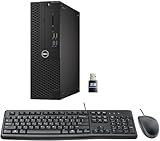
- This Certified Refurbished product is tested and certified to look and work like new. The refurbishing process includes functionality testing, basic cleaning, inspection, and repackaging. The product ships with all relevant accessories, a minimum 90-day warranty, and may arrive in a generic box. Only select sellers who maintain a high-performance bar may offer Certified Refurbished products on Amazon.com.
- Dell Optiplex 3050 SFF Desktop computer PC, Intel Quad Core i5-6500 up to 3.6GHz, 16GB DDR4, 256GB SSD
- Includes: USB Keyboard & Mouse, USB WiFi adapter, Microsoft office 30 days free trail.
- Port: Front: USB 3.0(2), USB 2.0(2); Rear: DP, HDMI, USB 3.0(2), USB 2.0(2), RJ-45.
- Support 4K (3840x2160) Dual display, makes it easy to connect two monitors at the same time, and you can expand working Windows, mirror content, or expand a single window across multiple monitors.
- Hosting: virtual machines, containers, databases, networking, monitoring, and possibly search infrastructure.
- Storage: original assets, thumbnails, previews, video proxies, derivatives, and version history.
- Backups: separate backup storage, retention, restore testing, and disaster recovery.
- Administration: operating-system patches, application updates, user provisioning, permissions, and incident response.
- Implementation: metadata design, taxonomy creation, migration, integrations, and training.
- Media processing: video transcoding, preview generation, OCR, AI tagging, and bandwidth.
- Support: vendor support, consultants, custom development, or internal engineering time.
How much storage do you need?
Estimate storage from current files, expected growth, working copies, versions, derivatives, and backups rather than choosing a plan from the original-file total alone. Use this planning formula:
The Tool Desk
Outbyte PC Repair FREEClear out junk files and repair common Windows errorsFree Scan →Outbyte Driver Updater FREEScan for outdated or missing drivers - takes under a minuteDriver Scan →Required storage = current asset volume + projected new assets + working copies and proxies + version history + backup capacity.
Video makes the estimate more demanding because a single source file may produce a proxy, thumbnail, transcode, review copy, and multiple backup copies. Confirm whether a platform stores derivatives inside the same allocation, whether external object storage is supported, and whether bandwidth or transcoding is charged separately.
How should you test a free DAM before committing?
- Import representative files: include large images, video, audio, PDFs, office documents, design files, and files with embedded metadata.
- Design real metadata: test asset type, campaign, product or SKU, region, language, rights owner, license expiry, approval status, and confidentiality.
- Test search literally: use partial filenames, synonyms, tags, filters, embedded metadata, and likely misspellings.
- Create realistic roles: test administrators, editors, reviewers, internal users, clients, partners, and public visitors.
- Test governance: approve, reject, annotate, version, restrict, expire, and revoke a shared asset.
- Test distribution: download an original and derivative, create a share link, revoke access, and inspect what external users can see.
- Test exports: export original files and metadata, then confirm that the export is usable outside the product.
- Test backup and restore: do not treat a backup as valid until a restore has been completed and checked.
- Test performance: measure upload behavior, thumbnail generation, video proxy creation, search response, and bulk download behavior with realistic data.
- Review dependencies: identify the database, search engine, background workers, PHP or other runtime requirements, object storage, and transcoding tools.
- Review licensing: especially for open-core products, commercial production use, paid modules, and redistribution.
- Test the actual integration: connect the DAM to the CMS, PIM, ERP, ecommerce platform, or portal that will consume the assets.
What metadata should a new DAM include?
Start with metadata that determines whether an asset can be found, approved, legally used, and connected to the right business context. A practical initial schema can include:
- Asset type and format.
- Project, campaign, brand, or department.
- Product, SKU, category, or catalog relationship.
- Region, language, and intended channel.
- Copyright owner, creator, photographer, or supplier.
- License terms, permitted use, and expiration date.
- Approval status and reviewer.
- Confidentiality and access level.
- Version or derivative type.
- Related webpage, product record, or publication.
Metadata design usually matters more than the length of a feature checklist. A simpler DAM with a coherent taxonomy can outperform a feature-rich platform configured as an unstructured file dump.
Windows Errors? Fix Them Before They Spread
Repair common Windows errors and clear accumulated junk for a smoother, more stable PC - no reinstall needed.Free scan · no reinstallOutdated Drivers Are Slowing You Down
One free scan finds every outdated or missing driver and matches the right update for your exact hardware.Free scan · exact hardware matchWhat are the main DAM deployment risks?
- Untested recovery: backups exist but cannot restore a usable repository.
- Unsupported dependencies: the database, runtime, search service, or operating system falls outside the supported versions.
- Upload failures: large files time out because web-server, proxy, PHP, or application limits were not adjusted.
- Broken previews: missing background workers, codecs, or image-processing tools prevent thumbnails and video proxies from being generated.
- Overexposed assets: public links, incorrect roles, or inherited permissions reveal confidential files.
- Poor migration: filenames are moved but rights, relationships, versions, and embedded metadata are lost.
- Storage exhaustion: derivatives, versions, and backups grow faster than the original asset collection.
- AI overconfidence: automatic tags, OCR, face recognition, or natural-language search are treated as authoritative without human review.
Rights management deserves a specific test. Confirm whether expired assets can be hidden from search, whether download permissions are enforced, whether public links can be revoked, whether rights appear during download, whether audit logs record changes, and whether derivatives inherit the original asset’s restrictions.
Are there useful alternatives to these five?
UnoPim DAM
UnoPim DAM is an MIT-licensed DAM package aimed at the UnoPim ecosystem. The repository documents directories, uploads, previews, metadata tagging, collaboration, exports, APIs, sharing, S3 migration, and Laravel installation commands including composer require unopim/dam and php artisan dam-package:install. The repository also documents php artisan unopim:dam:move-asset-to-s3. UnoPim DAM is promising for Laravel/PHP and product-catalog teams, but its close connection to UnoPim makes it a better emerging alternative than a universal standalone-DAM recommendation.
Razuna
Razuna is a managed commercial alternative rather than a straightforward self-hosted open-source choice. Its pricing page dated March 12, 2026 advertises a free hosted plan with 500 GB of storage, five users, two workspaces, basic AI, basic sharing, and standard search. The same page lists paid plans with features such as versioning, renditions, custom fields, API, SSO/SAML, white-labeling, and expanded support. Check the Razuna pricing page for current plan details. Razuna may suit teams that value managed hosting over source-code control.
staticDAM
staticDAM documentation describes a fully open-source project with metadata management and a free self-setup option, alongside paid concierge deployment and support. Its newer or smaller ecosystem makes it more appropriate for technically capable teams willing to evaluate project activity, architecture, security, and long-term maintenance themselves.
Recommended Free Tools
Best Value

- Connectivity: Includes WiFi, Bluetooth, and LAN for wireless and wired connections
- Memory: Features 16GB DDR4 RAM for smooth multitasking and performance
- Storage: Combines 500GB SSD and 1TB HDD for ample storage space
- Graphics: Integrated Intel UHD Graphics 630 for crisp visuals and video playback
- Design: Sleek desktop tower with black color and slim profile for modern look
Islandora and Omeka
Museums, libraries, and archives should also consider institutional-repository platforms such as Islandora or Omeka when digital preservation, collection management, and public access are more important than marketing DAM workflows. They are alternatives to investigate, not automatic additions to this ranking.
Final recommendations
Start with ResourceSpace if you need a general-purpose open-source DAM and want the least risky recommendation for a broad organization. Choose Phraseanet for media archives, publishing, photography, and audiovisual collections. Choose AtroDAM when developers need configurable models and APIs. Choose Pimcore when DAM must be part of a larger PIM, MDM, ecommerce, or digital-experience platform, after checking the Community Edition terms. Choose DAMopen when Drupal is already the organization’s core content platform.
The most important decision is not which product has the longest feature list. It is whether the organization needs a standalone media library, a publishing archive, a product-data platform, or a CMS-native repository—and whether the organization can operate the system reliably after the initial installation.
Frequently Asked Questions
Are free and open-source DAM systems really free?
Free and open-source DAM software may have no license fee, but hosting, storage, backups, administration, security updates, implementation, migration, and support still cost money. A free hosted tier is different from self-hosted open-source software and may impose limits on users, storage, bandwidth, features, or exports.
Which open-source DAM is easiest for a small business?
ResourceSpace is the safest general recommendation for a small business, particularly through its hosted free option if the stated limits are sufficient. Self-hosting requires technical responsibility, so a managed DAM may be a better business choice when the team cannot handle backups, security, upgrades, and user administration.
Which free DAM is best for video?
Phraseanet and ResourceSpace are the strongest choices in this list for video-oriented repositories. Video DAM costs depend on original-file storage, proxy generation, transcoding, previews, bandwidth, and backups, so the software choice alone does not determine the total cost.
Is Pimcore free for commercial use?
Pimcore Community Edition is free of charge but is not an unrestricted free commercial production edition for every organization. Pimcore documents eligibility and usage restrictions, so commercial users must review the current Community Edition terms and consider Professional or Enterprise licensing where required.
What is the best open-source DAM for Drupal?
DAMopen is the best specialist choice for a Drupal organization because it is a Drupal-based DAM distribution built around Drupal Media Library. DAMopen is less suitable for teams that do not already use Drupal because Drupal administration becomes part of the DAM’s operational burden.
The Bottom Line
Bottom line: ResourceSpace is the best overall free and open-source DAM, Phraseanet is the best media-archive choice, AtroDAM is best for configurable integrations, Pimcore is best for DAM plus product data, and DAMopen is best for Drupal. Compare licensing, metadata, export, maintenance, storage, and recovery—not just the download price.
Quick Recap
Product prices and availability are accurate as of the date/time indicated and are subject to change. Any price and availability information displayed on Amazon at the time of purchase will apply.

