
Do these 3 things before closing this tab:
1Clear out junk files and repair common Windows errors2Fix the driver behind crashes, sound loss and screen glitches3Repair Windows errors before they cause bigger problemsIf YouTube Live will not accept a stream from a Hostinger VPS in India, first verify the current RTMPS server URL and stream key in YouTube Live Control Room, then confirm the encoder uses TLS over TCP port 443. Only after those checks should you investigate the VPS’s outbound network path. A timeout by itself does not prove that Hostinger or the India location is blocking the connection.
Identify where publishing fails
Use the exact error and the point at which it occurs to narrow the cause. A local encoder preview can look normal even when YouTube receives no data.



- Connection timeout: The encoder has not established a connection. Check the endpoint, protocol and port before testing outbound reachability from the VPS.
- SSL or certificate error: Verify that the encoder is using the exact RTMPS endpoint, TLS and port 443. A protocol or port mismatch can present as a TLS failure.
- Startup or key error: Refresh and re-copy the stream key, then check that the encoder is current and supports RTMPS.
- Connected but unhealthy or rejected stream: Inspect the full encoder and YouTube error, stream configuration and YouTube’s dashboard diagnostics. Without those details, the cause is not established.
Before changing settings, record the encoder name and version, the UTC time of the failure, the full relevant log lines, whether the key was recently reset, and whether the same configuration works from another network. Redact the stream key from logs and screenshots.
Copy the current YouTube RTMPS details
- Open YouTube Live Control Room and go to Stream settings.
- Copy the current server URL from the RTMPS option. YouTube may show an RTMP URL by default; use the lock control described in its RTMPS setup instructions to reveal the RTMPS URL.
- Copy the stream key separately into the encoder’s stream-key field. Keep the server URL and key in their respective fields; do not combine them or use an old or guessed endpoint.
Never include the real key in a support ticket, public post or unredacted diagnostic capture. If a key may have been exposed, reset it in Live Control Room and update the encoder with the replacement.
What’s actually slowing this PC down?
Pick the symptom - the matching free tool is one click away.
#1 Best Overall
Verify RTMPS, TLS, port and SNI
RTMPS is RTMP carried over TLS. Google’s YouTube RTMPS ingestion guide specifies a connection to port 443 and explains that the ingestion hostname is needed for authentication through SNI.
- Use the exact URL copied from Live Control Room, with the
rtmpsscheme. - Confirm the encoder is configured for RTMPS/TLS and TCP port 443, not cleartext RTMP or a different port.
- If you use a custom client or implement the connection yourself, ensure its TLS handshake sends the ingestion hostname as SNI.
Do not simply change rtmp to rtmps on a URL found elsewhere. Copy the current endpoint from Studio so the protocol and hostname match YouTube’s settings.
Check the encoder and stream key
- Update the encoder to a current version and confirm that it supports RTMPS.
- If YouTube reports a startup error, refresh the stream key in Live Control Room and copy the new key into the encoder. YouTube’s live-stream troubleshooting guidance recommends refreshing the key when a third-party encoder reports a startup error.
- Check the encoder’s output status and logs, its local preview, and CPU or system load. A healthy preview alone does not confirm delivery to YouTube.
- If the configuration and key appear correct but one encoder still fails, try a different encoder as YouTube suggests. This helps distinguish an encoder issue from a VPS network issue.
Test outbound connectivity from the VPS
Run network checks on the Hostinger VPS itself, not only on your laptop. Test DNS resolution and TCP/TLS reachability to the exact current ingestion hostname on port 443 while the encoder is attempting to publish. A successful generic HTTPS request demonstrates basic reachability only; it does not prove that the encoder’s RTMPS handshake, TLS settings and SNI are correct.
- Resolve the hostname copied from Live Control Room and note the result and time.
- Test TCP/TLS connectivity from the VPS to that hostname on port 443. Preserve the output and any error details.
- Check the VPS’s active local firewall rules and any Hostinger VPS firewall controls that apply to the instance.
- If the correctly configured connection times out, send Hostinger the UTC timestamps, destination hostname and port, source VPS IP, test output and relevant encoder logs. Ask it to investigate the instance’s outbound route, egress or firewall policy, or a network event.
Keep the key redacted in all evidence. Testing from another network can help establish whether the failure is specific to the VPS path, but it does not identify which part of that path is responsible.
Rank #3
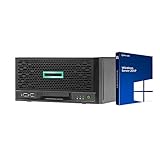
- HP MicroServer Gen10 Plus Tower Server for Business with Microsoft Windows Server 2019 OS!
- Intel Xeon E-2224 Quad-Core 3.4GHz 8MB CPU, Up To 4.6GHz Turbo
- 32GB (2 x 16GB) DDR4 PC4-21300 2666MHz Unbuffered Memory
- 16TB (4 x 4TB) 7.2K 6Gb/s SATA 3.5" HDDs in RAID
- Hard drives and memory upgrades included separately NOT installed, installation required.
Interpret Hostinger’s published port guidance carefully
Hostinger’s general port guidance says outgoing ports on its servers are open except ports 0 and 25. It also says Web and Cloud hosting have fixed port settings, while VPS is the option when users need more port control. That page does not document the active firewall configuration or route for this individual India VPS. It therefore cannot confirm that port 443 is open on your instance—or establish that Hostinger blocks YouTube streaming from India.
Choose the next check by symptom
| Evidence | Next check | Do not conclude |
|---|---|---|
| SSL or certificate error | Confirm the exact Studio RTMPS URL, port 443, TLS and, for custom clients, SNI. | Do not assume the certificate itself is defective before verifying protocol and port. Google’s ingestion guide. |
| Connection timeout | Verify endpoint and encoder RTMPS support, then test outbound reachability from the VPS and inspect applicable firewall/provider policy. | A timeout alone does not identify an India routing issue or a provider block. YouTube RTMPS setup; YouTube troubleshooting. |
| Encoder startup or key error | Refresh and re-copy the key; update the encoder. | Do not expose the key in diagnostics. YouTube troubleshooting. |
| Encoder output looks healthy, but YouTube receives nothing or the stream degrades | Test outbound connectivity from the VPS and inspect encoder logs and system load. | A local preview does not prove successful delivery. YouTube troubleshooting. |
| Connection established, but YouTube rejects the stream or reports it as unhealthy | Check the exact encoder and YouTube error, key and stream configuration; consult dashboard diagnostics. | The cause cannot be determined without the error and logs. |
Or let it run in the cloud
If your goal is to keep uploaded videos looping on YouTube, rather than diagnose a live encoder running on this VPS, StreamNeo is a separate cloud option: upload a recording or build a playlist, add your YouTube stream key, and go live. Nothing has to stay on at home; it streams uploaded video at any quality up to 4K 60fps at one price per slot, with automatic recovery if YouTube drops the stream. The first day is free with no card. Monthly pricing is $9.99 per month.
Quick Recap
Best Value
Rank #4
Start your free StreamNeo day.
Product prices and availability are accurate as of the date/time indicated and are subject to change. Any price and availability information displayed on Amazon at the time of purchase will apply.

