
A connection timeout from a VPS does not prove that YouTube’s ingest port 1935 is blocked. Check the current ingest URL and protocol in YouTube Live Control Room, test outbound connectivity from the VPS to that exact destination and port, and verify the encoder and network configuration. YouTube supports RTMPS and documents port 443 as an option for certain RTMPS SSL errors; the correct endpoint depends on your stream setup.
What a timeout does—and does not—tell you
A timeout means the connection attempt did not complete in time. By itself, it does not identify whether the cause is a wrong or outdated ingest URL, unsupported protocol settings, local firewall rules, a VPS provider’s outbound filtering, or another network issue. YouTube’s guidance for RTMPS timeouts is to verify the URL and confirm encoder support; its live-stream troubleshooting guidance also calls out outbound connectivity.



Do not assume every YouTube ingest endpoint requires port 1935, or that your VPS provider blocks it. The cited YouTube guidance does not establish either as a universal fact. Likewise, opening inbound port 1935 on your VPS is not a fix for an encoder that needs to initiate an outbound connection to YouTube.
Diagnose the outbound path in order
-
Copy the current ingest details
Open YouTube Live Control Room and copy the current stream URL or endpoint and stream key for the stream you are configuring. Do not rely on a URL saved from an older setup. Keep the stream key private; it grants access to your broadcast configuration.
Special offer. See more information about Outbyte and uninstall instructions. Please review EULA and Privacy policy. -
Check the protocol and encoder support
Confirm whether the encoder is configured for RTMP or RTMPS, and that it supports the selected protocol. YouTube states, “You can stream to YouTube Live with RTMPS, a secure extension to the popular RTMP streaming video protocol.” Its encoder settings guidance recommends RTMPS for encryption. See YouTube encoder settings and YouTube’s RTMPS help.
-
Test from the VPS to the exact destination
Check outbound connectivity from the VPS to the server named in the current ingest URL and the port used by that configuration. A test against an unrelated host does not establish that the YouTube path works. An inbound scan of your VPS tests traffic in the opposite direction and does not establish outbound reachability.
Use a TCP connectivity test appropriate to your VPS operating system and available tools, supplying the actual hostname and port from Live Control Room. Interpret failure as evidence that the tested path did not connect—not proof of which network component caused it. The available guidance does not identify a specific VPS provider, endpoint, or universally required port.
-
Check the documented RTMPS port 443 option when relevant
If you are using RTMPS and encounter the SSL error covered by YouTube’s guidance, try the current RTMPS URL with port 443, provided your encoder supports it and the URL matches the endpoint shown in Live Control Room. YouTube’s developer guide describes a TLS connection to port 443 at the server named in the ingestion URL. This is a troubleshooting option for the documented case, not a claim that port 443 fixes every timeout. See YouTube’s RTMPS ingestion guide.
PC Slower Than It Used to Be?
A free scan shows the junk files, broken settings and background clutter dragging Windows down - then fixes them in one click.Free scan · Windows 10 & 11Crashes, No Sound, or Screen Glitches?
Random freezes, missing sound and display glitches usually trace back to one bad driver. Find and replace yours safely.Free scan · under a minuteSpecial offer. See more information about Outbyte and uninstall instructions. Please review EULA and Privacy policy.Rank #3
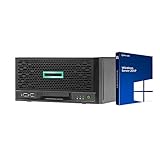 HP MicroServer Gen10 Plus Mini Tower Server, Intel Xeon E-2224 3.4GHz, 32GB RAM, 16TB Storage, RAID, Windows Server 2019
- HP MicroServer Gen10 Plus Tower Server for Business with Microsoft Windows Server 2019 OS!
- Intel Xeon E-2224 Quad-Core 3.4GHz 8MB CPU, Up To 4.6GHz Turbo
- 32GB (2 x 16GB) DDR4 PC4-21300 2666MHz Unbuffered Memory
- 16TB (4 x 4TB) 7.2K 6Gb/s SATA 3.5" HDDs in RAID
- Hard drives and memory upgrades included separately NOT installed, installation required.
-
Ask the VPS provider about outbound filtering
If the exact outbound connection still fails, ask your VPS provider whether outbound TCP to the destination and port in your current ingest URL is filtered or restricted. Also check host firewall rules and any cloud firewall or network policy attached to the VPS. Change only the relevant outbound rule; inbound port-forwarding or opening an inbound port does not resolve an outbound restriction.
-
Test stream health and network capacity
Once the connection succeeds, run a test stream and monitor YouTube’s stream health. YouTube recommends adequate upload bandwidth, a reliable connection, and about 20% upload-bandwidth headroom. That 20% is YouTube guidance, not a guarantee that a stream will be stable. See YouTube’s streaming tips.
Rank #4
When HLS may be an alternative
YouTube also documents HLS ingestion using an HTTPS URL. Consider it only if your encoder supports HLS and the stream is configured for HLS in YouTube Live Control Room. HLS is a separate ingestion configuration, not a guaranteed bypass for every VPS network restriction. See YouTube’s HLS guidance.
Common symptoms and what to check
| Symptom | Checks to make |
|---|---|
| Connection timed out | Verify the current URL and encoder protocol support; test outbound connectivity to the exact endpoint and port; ask the provider about egress filtering if that path fails. |
| RTMPS SSL error | Check the RTMPS URL and encoder support. For the SSL-error case covered by YouTube, try the current RTMPS endpoint with port 443 if the encoder supports it. |
| Inbound port check reports a failure | That check does not test whether the VPS can initiate the required outbound connection. Test outbound connectivity to the ingest destination instead. |
| Connection works but stream health is poor | Check upload capacity, allow the recommended 20% headroom, use a reliable network, and monitor the test stream’s health. |
| Considering HLS | Confirm encoder support and configure HLS in Live Control Room; do not assume a protocol change will override provider network restrictions. |
Or let it run in the cloud
If your goal is to keep a pre-recorded YouTube stream running 24/7 rather than diagnose a VPS encoder, StreamNeo is a cloud option: upload a recording or build a playlist, add your YouTube stream key, and go live. Nothing has to stay on at home; each slot streams uploaded files at their original quality up to 4K 60fps for one flat price per slot, and StreamNeo automatically recovers if YouTube drops the stream. The first day is free with no card required. Monthly pricing is $9.99 per month. Start your free day with StreamNeo.
What’s actually slowing this PC down?
Pick the symptom - the matching free tool is one click away.
Quick Recap
Best Value
Product prices and availability are accurate as of the date/time indicated and are subject to change. Any price and availability information displayed on Amazon at the time of purchase will apply.

