
Outdated Drivers Are Slowing You Down
One free scan finds every outdated or missing driver and matches the right update for your exact hardware.Free scan · exact hardware matchWindows Errors? Fix Them Before They Spread
Repair common Windows errors and clear accumulated junk for a smoother, more stable PC - no reinstall needed.Free scan · no reinstalliTechGuides is reader-supported. When you buy through links on our site, we may earn an affiliate commission. As an Amazon Associate I earn from qualifying purchases. Learn more
An AI meeting assistant can turn speech into text, summarize discussion, and surface action items—but it does not make the work of creating a reliable meeting record disappear. People still decide what may be captured, review the output, choose who receives it, and manage access and retention. The exact division of work depends on how the assistant handles meeting content.
What an AI meeting assistant actually does
“AI note taker” describes several different workflows. Some tools process meeting audio into a transcript and then use that text to generate a summary or action items. Others can produce notes without creating a transcript. That distinction matters: a transcript is one possible record, not an inevitable part of every AI-assisted meeting.
Audio, transcript, and recap
Microsoft describes Teams transcription as converting spoken audio into text. Its intelligent recap uses AI and depends on transcript availability and licensing. Notion Help Center describes another workflow: audio is sent to named subprocessors for real-time transcription and for insights such as summaries and action items. Notion’s current documentation, accessed October 7, 2026, says its feature needs at least 300 transcribed characters—roughly one minute of spoken content—to generate a summary.
Notes without a transcript
Microsoft also documents a Copilot mode that can generate live notes and tasks from meeting audio and contextual signals without creating a transcript. Prompts and responses may still be retained under an organization’s Microsoft Purview retention policies. So “no transcript” does not necessarily mean “no stored meeting-related data.”
#1 Best Overall

- 360° Coverage: 6 microphones arranged in a 360° array pick up voices from all directions to instantly transform any space at home or the office into a meeting room.
- Voice Radar 3.0 Technology: Powered by AI deep learning capabilities to reduce noise, cancel echo, and detect multiple speakers.
- Optimized Clarity and Volume: Your voice is automatically balanced to make up for differences in volume and distance from the Bluetooth speakerphone.
- Perfect For Home Offices: Connect to your phone via Bluetooth or to your computer with a USB-C cable—without needing to install drivers. PowerConf Bluetooth speakerphone is Zoom certified and is compatible with all popular online conferencing platforms.
- 24 Hours of Call Time: A built-in 5,200mAh battery gives you the option to go wireless and hold meetings virtually anywhere. Integrated Anker PowerIQ technology allows you to charge other devices via PowerConf at optimized speeds.
These examples illustrate why it is worth asking what a particular assistant captures and produces, rather than assuming every tool works the same way.
Who still does the work?
The assistant may automate parts of documentation, but the remaining work is distributed among the meeting owner, participants, and the organization.
Rank #2
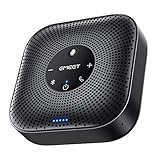
- Enhanced 360° Voice Pickup with 4 AI Mics - The EMEET OfficeCore M0 Plus Bluetooth speakerphone features a four-mic array, which enhances voice pickup from any direction. Powered by EMEET’s VoiceIA algorithm upgraded in 2023, the mic can filters out background noise and eliminates echos of the speaker.
- Crystal-Clear Audio Quality - The 3W high-quality bluetooth conference speaker can spread sound evenly throughout the room, ensuring no details are missed. With full duplex audio support, our conference speaker produces natural and rich sounds, so to feel like you are talking to others in person.
- Expandable for Larger Meetings - Room is too large? Link 2 EMEET’s Bluetooth speakerphones with the Daisy Chain, you will have 2x professional mics and speakers working seamlessly extending the conferencing space, effectively supporting up to 16 attendees. This feature supports multiple models of EMEET products, such as Meeting Capsule, M3, or M0 Plus, making it a flexible solution for setting up your conference room.
- Easy to Set Up and Use - The EMEET Conference Speaker and Microphone M0 Plus offers 2 ways to connect: USB-C & USB-C-to-A Adapter, and Bluetooth 5.0 with single-device or dual-device connection. No drivers or additional software is required, simply plug and play. The speakphone is compatible with most conferencing platforms, such as Zoom, Microsoft Teams, Slack, Webex, and etc. Connect Bluetooth-enabled phones using standard Bluetooth protocols, regardless of brand or model.
- Long Battery Life for Optimal Performance - Equipped with a large capacity battery, the M0 Plus Bluetooth conference speaker with microphone supports long-term calls over 10 hours of talk time on a single charge, making it perfect for all-day meetings. The M0 Plus Bluetooth Conference Speakerphone is optimal for use in the meeting room, home office, or on business trips, ensuring that you always have a professional meeting experience.
- Meeting owners decide the boundaries. They determine whether an assistant belongs in the meeting, what topics are appropriate, and how any resulting record should be shared.
- Participants contribute the substance. The assistant can process what people say; it does not replace their discussion, judgment, or decisions about what they are willing to share.
- People check what the system got wrong. A generated summary is not automatically a verified or official account. Someone must decide whether it accurately reflects the discussion and correct errors or omissions before others rely on it.
- Organizations govern the record. Administrators and records owners set policies for access, retention, deletion, and audit. Those rules may require preserving material even when a user would otherwise delete it.
What happens to the meeting record?
Depending on the tool and its configuration, a meeting record may include audio, a transcript, a summary, action items, or AI prompts and responses. These materials can have different storage locations, access permissions, deletion controls, and retention periods. A promise or setting that applies to one type of content should not be assumed to apply to all the others.
When evaluating an assistant, ask:
- What is captured: audio, transcript, notes, action items, prompts, or some combination?
- Does audio leave the device, and which processors handle it?
- Is a transcript created, even if the final output is only notes?
- Who can access each kind of output?
- What controls govern deletion and retention, including organizational retention rules or legal holds?
- What do participants see, and can they provide or decline consent?
- Can someone correct the output, and is there an audit trail?
A product description alone does not establish how a particular organization has configured the tool. Likewise, local processing by itself is not proof that a workflow is safe; the full handling and governance of the information matter.
Rank #3
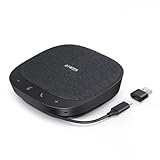
- Smart Voice Enhancement: Eliminate background noise while simultaneously enhancing voices for a professional meeting experience in any environment.
- Plug and Play: Connect via USB-C (includes standard USB adapter) and join meetings in an instant. A wired connection offers a stable and reliable USB speakerphone experience.
- 360° Voice Coverage: A USB speakerphone with 4 high-sensitivity microphones to pick up all voices within 3m in super-high clarity.
- Superior Sound: A 1.75” driver paired with 2 passive bass-radiators adds body and depth to both meeting audio and music.
- What’s In The Box: PowerConf S330 USB Speakerphone, USB-C to USB-A adapter.
Who can start or stop note-taking, and how is consent handled?
Consent behavior is a product feature and an organizational policy choice, not a universal default. Google Meet says participants are notified when notes are being taken and see a pencil icon. Its help documentation also says administrators can require explicit consent for note-taking, recording, or transcription.
Microsoft Teams can be configured to require participant agreement. When that policy is enabled, a participant who declines receives a view-only experience; consent data may be included in reporting or audit logs. These controls describe platform behavior, not a determination that a particular meeting complies with applicable law.
Rank #4

- EXCELLENT SOUND FOR MEETINGS: Enjoy crystal-clear audio that makes every call and meeting sound professional and sharp with this Jabra Speak 510 Wireless Bluetooth Portable Speaker.
- SETUP IN SECONDS: Easy to use and set up, this portable conference speaker gets you started with your meetings in no time, hassle-free.
- CONNECT YOUR WAY: Whether it’s Bluetooth or USB, connect this Jabra speakerphone effortlessly and stay flexible with your laptop or smartphone.
- TAKE IT ANYWHERE: Portable design lets you carry high-quality sound with you, this wireless, Bluetooth speakerphone is perfect for on-the-go meetings.
- WORKS WITH MANY DEVICES – Connect or plug this Jabra conference speakerphone into your desk phone, mobile phone, soft-phone or whatever device you hav. Works with all online meeting platforms for conference calls and streaming music.
Harvard University Information Technology recommends informing participants and proceeding only after consent before recording or transcription begins. Recording and consent laws vary by location and circumstances, so platform notifications should not be treated as a substitute for checking the rules and policies that apply to a meeting.
The Tool Desk
Outbyte PC Repair FREERepair Windows errors before they cause bigger problemsFix Now →Outbyte Driver Updater FREEScan for outdated or missing drivers - takes under a minuteDriver Scan →Can a generated summary be trusted as the official record?
Not without review. Harvard University Information Technology warns that AI-generated summaries may be inaccurate or omit nuance, including sarcasm, irony, and context. A summary can be useful for orientation, but a person should check it before sharing or treating it as a reliable account of what was decided.
Best Value

- Crystal-Clear Conference Calls: The SP92 speakerphone delivers exceptional audio quality with real-time AI noise cancellationthat filters over 1,000 noises (like keyboard taps or AC hum etc.) for accurate speech reproduction.
- 360° Room Coverage: Equipped with an omnidirectional mic and 50mm speaker for clear audio pickup within a 13ft (4m) radius, designed for 4-8 person conference rooms.
- Enhanced Audio Experience: Features built-in full-duplex microphones for natural multi-person simultaneous conversation, Virtual Bass for balanced voice clarity and deep music, and echo cancellation technolog.
- Microsoft Teams Certified: Compatible with Zoom, Google Meet, Cisco Webex, and other UC platforms. Runs seamlessly on Windows, macOS, Android.
- 20-Hour Battery Life: Built-in rechargeable battery supports up to 20 hours of calls or music per charge — enough for all-day meetings. Fully recharges in 2.5 hours with 5V/2A source. Standby time to 20 days.
Review is more than proofreading. Check whether decisions, owners, deadlines, qualifications, and disagreements are represented correctly. If a mistake could affect someone’s work or a consequential decision, verify it against the discussion or another authoritative record rather than letting a polished summary stand in for confirmation.
When should an assistant stay out of the meeting?
Harvard’s guidance advises against using AI assistants for sensitive discussions such as patient information, employment actions, personally identifiable records, sensitive research, donor strategy, or privileged legal advice. The appropriate boundary depends on the information involved and the organization’s rules; convenience is not a reason to ignore those constraints.
Recording can also affect how people participate. Harvard University Information Technology cautions: “Creating and distributing AI-generated transcripts and summaries could stifle open conversation and discourage some meeting attendees from fully participating, akin to the video or audio recording of a meeting.” This is an institutional risk assessment, not evidence that every participant or meeting will respond the same way.
Quick wins for a faster PC:
Scan for outdated or missing drivers - takes under a minuteDriver Scan →Repair Windows errors before they cause bigger problemsFix Now →A practical workflow for responsible AI notes
- Decide whether the meeting is suitable. Check the subject matter and applicable organizational policies before enabling an assistant.
- Explain the capture. Tell participants what the tool will capture and produce, and obtain consent as required by policy and applicable rules.
- Check the configuration. Confirm whether the selected mode creates a transcript, where outputs are available, and what retention settings apply.
- Review before distribution. Correct mistakes and omissions, then share only with people who need the record.
- Apply retention rules. Delete material when it is no longer needed only where policy permits; preserve it when a records schedule or legal hold requires that.
The assistant may do part of the note-taking, but people and organizations remain responsible for deciding what is captured, whether the resulting record is fit to use, and how it is handled.
Quick Recap
Product prices and availability are accurate as of the date/time indicated and are subject to change. Any price and availability information displayed on Amazon at the time of purchase will apply.

