
For a new HTML-to-PDF workflow, choose Puppeteer if the page depends on modern JavaScript, browser behavior, or print CSS. Keep wkhtmltopdf only when an existing workflow needs it and the exact binary, output compatibility, and security boundary have been checked. Neither tool has been shown here to be faster or more faithful in a controlled head-to-head test, so benchmark representative pages in your own deployment environment.
How wkhtmltopdf and Puppeteer differ
| Question | wkhtmltopdf | Puppeteer |
|---|---|---|
| Rendering engine | Uses Qt WebKit. The project says QtWebKit was deprecated in 2015 and removed from Qt in 2016. The downloads page lists 0.12.6 as its stable series, released June 11, 2020. Project status; Downloads and FAQ | Uses a more modern browser engine, according to the wkhtmltopdf project’s status page. Puppeteer exposes browser printing through Page.pdf(). Project status; Page.pdf documentation |
| JavaScript-heavy pages | The project recommends considering Puppeteer or a wrapper for sites using dynamic JavaScript. Project status | Generally the better starting point when required content appears after client-side execution; wait for that content before creating the PDF. |
| Print controls | CLI options include page size, headers and footers, page and cover objects, table of contents, outlines, and a window-status wait condition. Some features require patched Qt. Command-line usage; Downloads and FAQ | Print media is the default; PDF options include paper format, margins, headers and footers, page ranges, backgrounds, scaling, CSS page-size priority, and waiting for fonts. Page.pdf documentation; PDFOptions documentation |
| Build variation | Distro packages may omit patched-Qt features and behave differently from the project’s builds. Test the exact package you will deploy. Downloads and FAQ | Use the Puppeteer version and browser/runtime you intend to deploy; validate output in that environment. |
| Speed, memory, cost | Not established by the available comparative evidence. | Not established by the available comparative evidence. |
Which is better for HTML to PDF?
Puppeteer is the stronger default for new work when current browser rendering, client-side content, or CSS-controlled pagination matters. It is also the more natural fit when you need to explicitly control print versus screen media and PDF settings through an API.
wkhtmltopdf can remain reasonable for a stable legacy pipeline whose documents already render acceptably and whose required CLI features work in the deployed build. A migration should be justified by output, maintenance, security, and operational requirements—not an assumed speed advantage. QFQ’s version 25.6 documentation describes using Puppeteer as a replacement while still describing wkhtmltopdf for website printing and HTML-to-PDF conversion; that is one migration example, not proof that every system should switch. QFQ documentation, release 25.6.0
Does wkhtmltopdf support modern JavaScript?
Do not rely on wkhtmltopdf for pages whose required content is created by modern client-side JavaScript. Its project recommends considering Puppeteer or a wrapper for dynamic JavaScript sites, and its Qt WebKit dependency is old by the project’s own account. If you retain it, verify the actual rendered output on representative pages rather than assuming scripts will execute as they do in a current browser. Project status
#1 Best Overall

- Convert your PDF files into Word, Excel & Co. the easy way
- Convert scanned documents thanks to our new 2022 OCR technology
- Adjustable conversion settings
- No subscription! Lifetime license!
- Compatible with Windows 11, 10, 8.1, 7 - Internet connection required
Puppeteer is the safer starting point for dynamic pages, but it still needs explicit readiness logic. Wait for a selector or other application-specific signal that means the content is ready; a page load event alone may occur before an asynchronous widget or data request has finished.
How to create a PDF with Puppeteer and print CSS
Install Puppeteer in a Node.js project and use page.pdf(). The example below navigates to a URL, waits for a page-specific element, and writes a PDF. Replace the selector with an element that only appears when the content to print is ready.
Rank #2
![DeskFX Free Audio Effects & Audio Enhancer Software [PC Download]](https://m.media-amazon.com/images/I/41fXbDohyuS._SL160_.jpg)
- Transform audio playing via your speakers and headphones
- Improve sound quality by adjusting it with effects
- Take control over the sound playing through audio hardware
import puppeteer from 'puppeteer';

const browser = await puppeteer.launch({ headless: true });
try {
  const page = await browser.newPage();
  await page.goto('https://example.com', { waitUntil: 'networkidle0' });
  await page.waitForSelector('main');
  await page.pdf({
    path: 'page.pdf',
    format: 'A4',
    printBackground: true,
    margin: { top: '16mm', right: '12mm', bottom: '16mm', left: '12mm' }
  });
} finally {
  await browser.close();
}
Install Puppeteer using the package manager and version policy of your project; keep the browser runtime aligned with the version you test in production. Puppeteer’s PDF generation uses print CSS by default. If the page should use screen styles, emulate the screen media type before calling page.pdf(). For brand colors that must print exactly, the documentation points to -webkit-print-color-adjust; browsers may otherwise modify print colors. See Page.pdf and PDFOptions for supported options.
Useful PDF settings
- Paper and orientation: Choose a named format or specify width and height; set landscape when the layout requires it.
- Margins: Set each edge explicitly when pagination or printer-safe spacing matters.
- Backgrounds: Enable background graphics when CSS background colors or images are part of the document.
- Headers, footers, and page ranges: Use the documented templates and range controls for page numbering or partial output.
- CSS page sizing: Choose whether CSS
@pagedimensions take priority over the API’s format settings. - Fonts: Wait for fonts to be ready before printing when typography affects line breaks or page count.
- Pagination: Use print styles and page-break rules in the page itself, then inspect long documents for awkward splits.
Using screen styles instead of print styles
By default, Puppeteer renders the page with print media. To use screen CSS, call page.emulateMediaType('screen') before page.pdf(). This changes which media rules apply; it does not remove the need to check page breaks, backgrounds, and overflow in the resulting PDF.
Free tools Windows power users keep installed
One-click scans. No signup required.
Rank #3
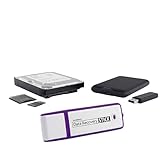
- The Data Recovery Stick requires no technical skills — simply plug it into your Windows computer, click Start, and the software automatically begins scanning and recovering lost files within minutes. Compatible with Windows Vista, 7, 8, 10, & 11, it's designed to be a reliable first step when accidental deletion occurs.
- Recover photos (JPG, BMP, PNG, TIFF), Microsoft Office documents (Word, Excel, PowerPoint, Publisher, Access), Open Office files, MP3 music files, PDFs, RTF documents, AutoCAD files, and HTML web pages. Whether it's personal memories or critical business files, the Data Recovery Stick covers the file types that matter most.
- Works with hard drives, USB drives, SD cards, memory sticks, and other common storage formats that use FAT or NTFS file systems — making it a single solution for hard drive recovery, USB drive recovery, SD card recovery, and more. Note: a media reader is required for micro SD cards and some mass storage devices.
- No Installation Required - The Data Recovery Stick runs entirely from the USB drive with no software installation on your computer — helping prevent new data from overwriting the files you're trying to recover. This also makes it ideal for use across multiple computers or in emergency situations where installation isn't practical.
- Use the Data Recovery Stick on as many computers as often as needed — simply clear the recovered data between uses to free up storage space. Software updates keep the tool compatible with newer systems and devices, backed by 25+ years of data software expertise from Paraben Consumer Software.
How to keep or replace a wkhtmltopdf workflow
Keep the existing CLI when its constraints are acceptable
Inspect the exact binary or package in your deployment. The project’s CLI documentation covers page, cover, and table-of-contents objects, outlines, headers and footers, and options such as --window-status for waiting on a condition. Some capabilities depend on patched Qt, so a distribution package may not match the project’s downloadable build. Command-line usage; Downloads and FAQ
Plan a migration around output and deployment
- Collect representative pages: static content, JavaScript-rendered content, long documents, custom fonts, and pages with complex print CSS.
- Generate PDFs from both implementations on the same host or container image, with the same fonts, input pages, resource limits, and concurrency.
- Compare visual output, page count, pagination, links or document features your workflow depends on, failures, latency, and peak memory.
- Test in the intended operating system and deployment package. Include startup behavior, browser or binary distribution, and process isolation in the decision.
- Switch only after existing consumers accept the new output and operational checks pass.
The sources do not establish a controlled speed or fidelity winner. A benchmark that changes the host, fonts, inputs, or concurrency between tools cannot answer which will perform better for your workload.
Rank #4

- Export or Convert Text, HTML, PNG, JPG, or Camera Pictures to PDFs
- Unlimited use
- No ads
- No personal data taken
- GDPR compliant
Is wkhtmltopdf safe for user-submitted HTML?
No: treat conversion of user-controlled HTML or JavaScript as a security boundary. The wkhtmltopdf downloads page warns: “Do not use wkhtmltopdf with any untrusted HTML – be sure to sanitize any user-supplied HTML/JS, otherwise it can lead to complete takeover of the server on which it is running!” The project also discusses stronger process confinement. wkhtmltopdf downloads and FAQ
Sanitization is not a substitute for containment. Run renderer processes with limited filesystem and network access, isolate them from sensitive services and credentials, and constrain resources. Puppeteer is not automatically safe merely because it uses a modern browser; apply an appropriate isolation boundary to any renderer handling untrusted input.
Do these 3 things before closing this tab:
1Scan for outdated or missing drivers - takes under a minute2Clear out junk files and repair common Windows errors3Fix the driver behind crashes, sound loss and screen glitchesBest Value
![MixPad Multitrack Recording Software for Sound Mixing and Music Production Free [Mac Download]](https://m.media-amazon.com/images/I/51kaO82jYOL._SL160_.jpg)
- Mix an audio, music and voice tracks
- Record single or multiple tracks simultaneously
- Intuitive tools to split, trim, join, and many other editing features
- Loaded with audio effects including EQ, compression, reverb, and more.
- Load an audio file and export to all popular audio formats from studio quality wav to high compression formats
Or skip the browser setup
For a screenshot rather than a paginated PDF, ScreenshotNeo offers a one-request screenshot API and an MCP server for AI agents. This is an alternative to installing and operating a browser renderer, not a replacement for Puppeteer’s PDF pagination controls or wkhtmltopdf’s document features.
curl -G "https://api.screenshotneo.com/v1/shot" -d access_key=YOUR_API_KEY --data-urlencode url=https://stripe.com -o shot.webpSee the ScreenshotNeo API documentation. Before capture, it accepts cookie or consent banners and removes more than 60 known consent platforms, newsletter popups, and chat widgets; each step can be turned off. Bot checks, blank pages, timeouts, failed loads, and cache hits are not billed, and response headers identify the page verdict and billing status. Its MCP server provides take_screenshot, get_page_info, and capture_pdf tools for AI agents. The free plan includes 1,000 shots per month with no card; paid plans start at $5 for 3,000 shots. Sign up for ScreenshotNeo free.
Troubleshooting conversion problems
- PDF misses content rendered by JavaScript: Wait for the specific selector or application-ready signal before printing; do not assume navigation completion means all dynamic content is present.
- Fonts or line breaks differ: Confirm the fonts are available in the runtime and wait for font readiness before generating the PDF.
- Colors or backgrounds are missing: Enable background printing and set print color adjustment where exact CSS colors matter.
- Page size or pagination is unexpected: Check the API paper settings against CSS
@pagerules and page-break styles; Puppeteer exposes an option governing whether CSS page size takes priority. - wkhtmltopdf options behave differently across machines: Verify the build variant. Some features require patched Qt, which may be absent from distro packages.
- Conversion hangs or consumes too many resources: Set application-level timeouts, constrain renderer resources, and investigate blocked requests or scripts. For untrusted content, isolate the process and restrict filesystem and network access.
- It is unclear which tool is faster: Run a local benchmark using identical inputs and environment, recording render time, peak memory, output differences, and failures.
Frequently asked questions
Does Puppeteer support page ranges and headers or footers?
Yes. Its PDF options document page ranges and header/footer templates, alongside other print controls. PDFOptions documentation
Can wkhtmltopdf wait until a page reaches a state?
Its command-line usage documentation describes --window-status, which waits for a specified window status. Confirm that the option is supported by the exact build you deploy. Command-line usage
Quick Recap
Product prices and availability are accurate as of the date/time indicated and are subject to change. Any price and availability information displayed on Amazon at the time of purchase will apply.

