
No: Meta describes its Neural Band as a sensor that reads muscle-related electrical activity at the wrist, not a device that stimulates nerves or takes control of them. The provocative “hijack your nerves” wording overstates what the company’s published descriptions support. The band was announced as part of Meta Ray-Ban Display, which Meta calls display AI glasses—not as a controller bundled with Orion, its separate AR-glasses prototype.
What does “hijack your nerves” mean here?
It is a headline metaphor, not an established technical description. Meta says the Neural Band uses surface electromyography (sEMG) to detect electrical activity associated with muscle movement at the wrist and turn recognized patterns into commands. The sources describing the product do not say it sends electrical stimulation into nerves, controls the nervous system, or reads thoughts.

In a 2021 explanation of wrist-based interaction, Thomas Reardon, then Meta Reality Labs’ director of Neuromotor Interfaces, said the goal was to control a machine using “the output of the peripheral nervous system” that animates hand and finger muscles. That phrasing describes the signals the system uses as input; Meta’s 2025 product description characterizes the band as sensing muscle activity. Neither statement establishes nerve stimulation or involuntary control. Meta’s 2021 explanation of wrist-based interaction provides background on that research.
How does Meta’s EMG wristband control glasses?
1. It senses muscle-related signals
When muscles in the hand and fingers move, associated electrical activity can be detected at the wrist. Meta says the band uses sEMG to pick up these signals. This is not the same as a brain-computer interface: the product description concerns muscle-related activity, not brain signals.
The Tool Desk
Outbyte Driver Updater FREEFix the driver behind crashes, sound loss and screen glitchesFind Drivers →Outbyte PC Repair FREERepair Windows errors before they cause bigger problemsFix Now →#1 Best Overall
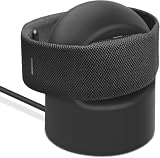
- 【Precision Engineered for a Secure Fit】 Custom-designed exclusively for the Meta Ray-Ban Neural Band, this dock features a perfectly contoured slot that cradles your device securely. It ensures a snug and stable hold, keeping your band in the ideal charging position throughout the process.
- 【Soft, Scratch-Free Silicone Protection】 Crafted from high-quality, flexible silicone, this stand offers superior protection for your valuable device. The soft, non-abrasive material effectively prevents scratches, scuffs, and any other damage, maintaining your Neural Band in pristine condition.
- 【Stable, Non-Slip Base & Compact Design】 The integrated non-slip base keeps the dock firmly anchored to your desk, nightstand, or countertop, preventing any accidental slips or slides. Its compact and lightweight profile saves space and blends seamlessly into any home or office environment without clutter.
- 【Convenient Magnetic Charging】 Features a precise incision that provides seamless access for the band's magnetic charging cable. This allows for easy plug-and-play charging without the need to remove your Neural Band from its protective dock.
- 【Durable & Sleek Modern Aesthetic】 Built to be drop-proof and long-lasting, this stand combines durability with a sleek, modern design. The minimalist look not only protects your device but also adds a touch of stylish organization to your charging setup.
2. It maps detected patterns to commands
The band interprets patterns as input for the glasses. Meta describes subtle finger movements for actions such as scrolling and clicking. It says signal fidelity can register movement before it is visually perceptible; that is a company performance claim, not an independently reported threshold or error-rate result. Meta’s September 2025 product announcement describes the input method and announced capabilities.
3. The glasses respond to the input
In the announced set, the band was paired with Meta Ray-Ban Display. The wristband serves as an input method; it does not itself display information. Meta said handwriting input would arrive “in the near future” in its 2025 announcement. That wording is a plan as of the announcement, not confirmation that handwriting was available to every user at launch or that it is available now.
Which Meta glasses were announced with the band?
Meta’s September 17, 2025 announcement drew a distinction among camera AI glasses, display AI glasses, and augmented-reality glasses. It described Meta Ray-Ban Display as display AI glasses with a full-color display and said the Neural Band came with them. Orion was described separately as an AR-glasses prototype. So the announced consumer bundle is Meta Ray-Ban Display plus Neural Band; calling that product Orion or saying the band was already an Orion controller would blur Meta’s categories.
Rank #2

- Exclusive Compatibility: Designed specifically for Meta Ray-Ban Display smart glasses and Meta Neural Band. Not compatible with other generations of Ray-Ban Meta smart glasses or other brands. Dedicated charging positions provide a secure fit and reliable connection for both devices.
- 75-Min Glasses & 90-Min Band Charging: Fully charges Meta Ray-Ban Display smart glasses in approximately 75 minutes and Meta Neural Band in approximately 90 minutes. The glasses can remain powered on while charging, so they stay ready for syncing and everyday use.
- Intelligent Circuit Protection: Built-in smart circuitry provides overcharge, overcurrent, and overheating protection for stable and reliable charging. The charging dock intelligently manages power delivery to help protect your connected devices during daily charging.
- Clear LED Charging Status: Integrated LED indicators provide easy-to-read charging status at a glance, helping you quickly confirm that your Display glasses and Neural Band are properly positioned and charging.
- Soft Silicone & Anti-Scratch Design: Premium soft silicone contact surfaces help protect your glasses and band from scratches and scuffs while docked. The stable anti-slip base keeps the charging station securely positioned on desks, nightstands, and other flat surfaces.
Meta announced US retail availability beginning September 30, 2025, with a starting set price of $799. It also said expansion to Canada, France, Italy, and the UK was planned for early 2026. Those are historical announcement details, not confirmation of current price, stock, retail channels, or whether the planned expansion occurred. Check Meta’s current product and retailer listings for present availability.
What Meta says about the band’s specifications
Meta lists up to 18 hours of battery life, an IPX7 water rating, and three sizes for the band. These are manufacturer specifications, not independent test results. Meta also says its sEMG research involved nearly 200,000 research participants. That is the company’s 2025 figure for its research behind the technology; it is not a clinical-trial count, independent validation, or accuracy benchmark.
Could the input method help with accessibility?
Potentially, but the published material describes research—not proof of a treatment or a benefit for every user. Meta says wrist muscle signals may enable control for people who cannot make large movements, experience tremors, or have fewer than five fingers on a hand.
In a May 2025 accessibility post, Meta reported collecting data with a clinical research organization to evaluate controls and handwriting for people with hand tremors associated with Parkinson’s disease or essential tremor. It also described an active Carnegie Mellon University collaboration exploring sEMG-based human-computer interaction for people with spinal cord injuries. Meta’s accounts establish that these research activities were underway; they do not establish clinical efficacy or comparative outcomes. Meta’s May 2025 accessibility update describes the work.
Independent reader supportYour contribution helps us test, update, and keep practical guides available for everyone.How is a wristband different from camera hand tracking?
The main distinction is the signal each method uses: an sEMG band senses muscle-related electrical activity at the wrist, while camera-based hand tracking observes hand movement visually. Meta says its wristband can work without keeping the hands in view of a camera and can detect subtle gestures. Those are Meta’s descriptions, not an independent comparison of accuracy or comfort against other controllers.
Recommended Free Tools
When evaluating either input method, useful questions include whether hands must stay visible, how subtle or forceful a gesture must be, which actions and software are supported, and whether the device fits comfortably for extended use. Accessibility evidence, compatibility, battery life, and water resistance also matter; the available Meta material does not provide independent comparative measurements for those factors.
Quick Recap
What the published evidence does—and does not—establish
- Established by Meta’s product description: Neural Band uses sEMG to sense muscle-related activity and translate patterns into input commands.
- Announced capabilities: Meta described subtle scrolling and clicking gestures; it described handwriting as a near-future feature in September 2025.
- Company-reported specifications and research: Meta lists up to 18 hours of battery life, IPX7 water resistance, and three sizes, and reported nearly 200,000 research participants.
- Not established in the reviewed sources: independent accuracy or error-rate benchmarks, nerve stimulation, involuntary control, or clinical outcomes for the accessibility research.
Product prices and availability are accurate as of the date/time indicated and are subject to change. Any price and availability information displayed on Amazon at the time of purchase will apply.

