
Network “Dropped Frames” in OBS do not, by themselves, mean your Indian VPS has run out of RAM. OBS uses that counter when frames cannot be delivered reliably to YouTube at the configured bitrate. Memory pressure can contribute indirectly—for example, through heavy swapping or an out-of-memory (OOM) kill—but you need to match the OBS counter to server evidence from the same period before changing the VPS plan.
First identify which OBS counter is increasing
Open View > Stats in OBS and watch the counters while the problem occurs. The word “dropped” is often used loosely, but the causes differ:



- Network Dropped Frames: OBS cannot reliably deliver data to the streaming service at the configured bitrate. OBS says it may drop video frames to compensate for an unstable connection or one that cannot keep up with that bitrate. This counter is not a RAM measurement. OBS Help
- Frames missed due to rendering lag: OBS is not rendering frames quickly enough. This points toward rendering or system workload, not necessarily the network.
- Skipped frames due to encoding lag: The encoder is not keeping up with the selected output settings. CPU or encoder capacity and workload are relevant suspects.
OBS separates these performance symptoms in its encoding performance guide. Note which counter rises, when it starts, and whether it continues after the stream stabilizes. Save the OBS log covering the failure window; the exact version, encoder, output settings, and timestamps can help distinguish competing causes.
Check whether the VPS is actually under memory pressure
Take measurements during the same interval as the OBS problem. A low-looking “free” memory figure alone is not proof of exhaustion: Linux uses memory for caching, and MemAvailable is a more useful estimate of memory available for new work.
Quick wins for a faster PC:
Fix the driver behind crashes, sound loss and screen glitchesFind Drivers →Repair Windows errors before they cause bigger problemsFix Now →Scan for outdated or missing drivers - takes under a minuteDriver Scan →#1 Best Overall
Inspect memory, swap, and pressure
- Check available memory: Read
/proc/meminfoand noteMemAvailable. The Linux kernel documents this field and other memory information in its /proc documentation. - Check swap: Record swap use and, if available on your system, whether swap activity is increasing during the failure. Heavy swapping can slow work even if the process has not been killed.
- Check memory pressure: If Pressure Stall Information (PSI) is enabled, inspect
/proc/pressure/memory. Pressure data indicates time lost waiting for resources; it is useful alongside memory and swap readings, not a diagnosis on its own. See the kernel’s PSI documentation. - Check the actual service limit: If OBS runs in a container or under a cgroup limit, inspect the limit applying to that process. Host-level free memory can look healthy while the container has reached a smaller cap.
- Look for OOM events: Search the system or provider-visible kernel logs around the failure time for out-of-memory-killer messages. The kernel’s OOM documentation explains relevant behavior.
Memory becomes a stronger suspect when low effective availability, pressure or heavy swap activity, or an OOM event coincides with the stream problem. Without those time-matched signs, a rising network counter does not establish RAM exhaustion.
Check CPU and I/O at the same time
Inspect CPU utilization and load during the same window. If available, /proc/pressure/cpu and /proc/pressure/io can add evidence of CPU or I/O contention. Correlation matters: a high reading outside the failure window may not explain the stream interruption.
Match the evidence to the likely cause
| What you observe | What it points toward | Next check |
|---|---|---|
| Network Dropped Frames rise; memory, CPU, and pressure evidence remain healthy | Connection, egress route, or bitrate may be the issue; this does not point to RAM exhaustion by itself. | Check whether the configured bitrate is sustainable on the VPS’s upload path and investigate route or ingest connection stability. |
| Frames missed from rendering lag rise | Rendering workload or system contention. | Reduce OBS workload and review CPU and other resource evidence. |
| Skipped frames from encoding lag rise | Encoder workload or insufficient processing capacity for the selected settings. | Reduce the encoding workload and assess CPU or encoder capacity. |
| Memory pressure, heavy swapping, or an OOM event coincides with the failure | Effective memory limits or competing workloads may be contributing. | Confirm the process or container limit, then reduce concurrent workload or assess whether more effective memory is needed. |
For network drops, OBS’s stream-connection guidance is the appropriate starting point: OBS connection troubleshooting. OBS explains that the stream connects directly to the destination service; OBS does not relay it. That means the VPS’s route and upload capacity to YouTube matter.
Change settings according to the failure class
If network Dropped Frames rise
Test a bitrate the VPS can sustain reliably, leaving headroom for connection variation rather than setting it at the limit of a best-case speed test. YouTube recommends choosing settings suited to a reliable upload connection, testing with representative video and audio, and monitoring stream health. Its current recommendations vary by codec, resolution, and frame rate, so consult the YouTube Live encoder settings for the exact output combination you use.
Recommended Free Tools
Rank #3
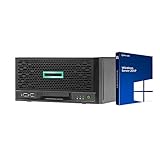
- HP MicroServer Gen10 Plus Tower Server for Business with Microsoft Windows Server 2019 OS!
- Intel Xeon E-2224 Quad-Core 3.4GHz 8MB CPU, Up To 4.6GHz Turbo
- 32GB (2 x 16GB) DDR4 PC4-21300 2666MHz Unbuffered Memory
- 16TB (4 x 4TB) 7.2K 6Gb/s SATA 3.5" HDDs in RAID
- Hard drives and memory upgrades included separately NOT installed, installation required.
OBS dynamic bitrate can respond to congestion by lowering the bitrate, but that trades away quality and does not fix an unstable route or inadequate connection. Use it as a mitigation, not proof that RAM was the cause.
If rendering or encoding lag rises
Reduce the OBS workload and reassess the relevant counter. OBS identifies resolution and frame rate as possible workload levers in its performance troubleshooting guide. If encoding lag persists, assess whether the chosen encoder and VPS CPU capacity can handle the output settings.
Rank #4
If memory pressure or an OOM event is confirmed
Reduce competing processes or concurrent workloads first and verify whether the effective container or service limit is lower than the host’s advertised memory. If failures continue and measurements show the limit is binding, consider a VPS with more effective memory. The available evidence does not establish a universal minimum RAM requirement or a particular Indian VPS plan for this workload.
Independent reader supportYour contribution helps us test, update, and keep practical guides available for everyone.Retest without confusing cause and coincidence
- Record the OBS counter that is increasing and the time it starts.
- Collect memory availability, swap activity, CPU/load, available PSI readings, and relevant OOM logs across that same interval.
- Make one change at a time—such as a lower bitrate for network drops or reduced resolution/frame rate for rendering or encoding lag.
- Test with representative motion and audio, then monitor YouTube stream health as YouTube recommends.
- Compare the new OBS and server measurements with the original failure window. A change that helps does not prove a different suspected cause unless the matching evidence supports it.
Or let it run in the cloud
If your goal is a continuous YouTube stream from uploaded recordings or a playlist, StreamNeo is an alternative to keeping OBS running on your VPS. Upload the video, add your YouTube stream key, and go live. StreamNeo loops uploaded videos from its cloud service, so nothing has to stay on at home. It streams the uploaded quality up to 4K 60fps at one price per slot, automatically recovers if YouTube drops the stream, and the first day is free with no card. Monthly is $9.99 per month. StreamNeo is for YouTube streams from uploaded video, not a live camera feed. See StreamNeo, or start your free first day.
Quick Recap
Best Value
Product prices and availability are accurate as of the date/time indicated and are subject to change. Any price and availability information displayed on Amazon at the time of purchase will apply.

