
What’s actually slowing this PC down?
Pick the symptom - the matching free tool is one click away.
In 2015, Shanghai Industrial Technology Research Institute (SITRI) opened SITRI Innovations, a hardware accelerator in Belmont, California, to help commercialize devices that improve on conventional CMOS scaling rather than simply using smaller transistors. The initiative targeted MEMS, sensors, optoelectronics, RF, bioelectronics and micro-energy, while connecting Silicon Valley startups with Shanghai-backed supply chains, markets and pilot-manufacturing infrastructure.
What “More-than-Moore” means
“More-than-Moore” describes semiconductor and microsystem innovation that adds functions without relying primarily on shrinking CMOS feature sizes. Instead of treating the process node as the main source of progress, it combines different materials, structures and sensing technologies.
- MEMS: miniature mechanical structures such as accelerometers, gyroscopes and microphones.
- Sensors: devices that detect force, chemicals, motion or other physical conditions.
- Optoelectronics: components that generate, detect or control light.
- RF: radio-frequency components including antenna tuners, power-amplifier filters and low-noise-amplifier filters.
- Bio: semiconductor-enabled biological and diagnostic functions.
- Micro-energy: small-scale energy generation, storage or management technologies.
These products often combine a sensor or actuator with electronics, packaging, software and a specialized manufacturing process. That makes their route to market different from the relatively linear model used for a standard digital chip.
Why Shanghai opened a Belmont accelerator
To reach expertise that was still concentrated in Silicon Valley
Peter Himes, general manager of SITRI Innovations and SITRI Ventures, said the Valley continued to produce the kinds of More-than-Moore ideas the market needed. SITRI’s stated aim was to help those startups move beyond an early concept and into a commercial development path.
Quick wins for a faster PC:
Clear out junk files and repair common Windows errorsFree Scan →Scan for outdated or missing drivers - takes under a minuteDriver Scan →#1 Best Overall

- COMPATIBILITY: Development board supporting multiple wireless protocols including Bluetooth
- Thread, Matter, Zigbee, ANT, and NFC at 2.4GHz frequency
- PROCESSOR: Features the advanced nRF54L15 transceiver chip from Nordic Semiconductor for reliable wireless communications
- WIRELESS STANDARDS: Implements IEEE 802.15.4 protocol support for Matter, Thread, and Zigbee networking applications
- DEVELOPMENT PLATFORM: Comprehensive evaluation board designed for testing and prototyping wireless connectivity solutions
Jérémie Bouchaud of IHS described the motivation in ecosystem terms. China had major Internet-of-Things and sensor ambitions, but its domestic MEMS base did not yet connect research organizations, startups and integrated-device manufacturers as effectively as the established clusters outside China. A California presence gave SITRI a way to find technologies and teams that were difficult to develop solely at home.
To connect invention with Shanghai’s industrial base
The Belmont operation was intended as a bridge rather than a standalone incubator. SITRI could offer access to Chinese supply chains and customers, while the startup supplied technology and product concepts. Himes called the broader objective “building a global innovation network” that included Silicon Valley, Taiwan and Europe.
To pursue a two-sided commercial strategy
Yole Développement chief executive Jean-Christophe Eloy characterized the model as a dual strategy: help U.S. companies reach production more quickly and bring business to Chinese semiconductor and electronics companies. For SITRI and its partners, working with young companies also created earlier visibility into promising teams and technologies.
Rank #2

- Powerful ESP-32 Board: Unlock the world of Internet of Things (IoT) and advanced electronics with the heart of this kit: the ESP-32 board. It features a powerful dual-core processor, integrated Wi-Fi and Bluetooth 4.2, making it perfect for building connected, smart devices that communicate with your phone or the cloud. It's fully compatible with the Arduino IDE for easy programming.
- Super Starter Kit: This kit contains over 35 different modules and electronic components, including sensors, displays, motors, and input devices. From LEDs and buttons to an OLED screen, servo motor, and keypad, you have everything needed to explore a vast range of projects in one box.
- Step by Step Online Tutorial: Jump right in with our detailed, beginner-friendly tutorial. Access 30+ projects with complete code, clear circuit diagrams, and step-by-step instructions. Learn the fundamentals of electronics, coding, and how to utilize the ESP-32's unique capabilities without any prior experience.
- Hands-on Learning for All Skill Levels: Perfect for students, makers, engineers, and hobbyists. Start with basic circuits and coding, then progress to intermediate and advanced IoT applications. Build practical projects like weather stations, smart home controllers, remote-controlled devices, and interactive gadgets. The skills you learn are the foundation for real-world innovation.
- Quality & Great Support: Elegoo is committed to quality. We provide a clear, detailed tutorial guide, refined code, and a well-organized component kit. All modules are carefully selected for reliability and ease of use. Our dedicated technical support team and active online community are ready to help you succeed in your learning journey.
What SITRI Innovations was meant to provide
| Capability | How it was supposed to help a startup |
|---|---|
| Hardware acceleration in Belmont | Provide a local base for developing and commercializing More-than-Moore products close to Silicon Valley talent. |
| Shanghai-linked supply chains | Connect companies with component suppliers, manufacturing partners and electronics businesses in China. |
| Market access | Help teams identify Chinese customers and applications instead of treating manufacturing and sales as separate problems. |
| Pilot-production infrastructure | Offer a route from laboratory prototypes toward repeatable wafer-level processes and engineering runs. |
| Mentoring and investor relationships | Provide business guidance and introductions in a sector where conventional software-style venture models often fit poorly. |
| International network | Link activity across Silicon Valley, Shanghai, Taiwan and Europe rather than confining development to one region. |
SITRI was also building a Shanghai pilot-production wafer fab for MEMS and other specialized platforms. The 2015 report named III-V, RF-SOI, piezoelectric, magnetic and III-V-on-silicon technologies among the planned capabilities. The report described this as infrastructure under development, not as proof that every platform was already available for customer production.
Outdated Drivers Are Slowing You Down
One free scan finds every outdated or missing driver and matches the right update for your exact hardware.Free scan · exact hardware matchWindows Errors? Fix Them Before They Spread
Repair common Windows errors and clear accumulated junk for a smoother, more stable PC - no reinstall needed.Free scan · no reinstallWhich devices and platforms were in scope
| Area | Examples identified in the 2015 initiative |
|---|---|
| Motion and sound | Accelerometers, gyroscopes and microphones |
| RF front ends | Antenna tuners, power-amplifier filters and low-noise-amplifier filters |
| Chemical and force sensing | Chemical sensors and force sensors |
| Materials and process platforms | III-V, RF-SOI, piezoelectric, magnetic and III-V-on-silicon technologies |
| Broader target fields | Optoelectronics, bioelectronics and micro-energy devices |
The list shows why SITRI treated More-than-Moore as an ecosystem category, not a single product market. A microphone, an RF filter and a chemical sensor can require entirely different materials, packaging methods, test equipment and customers.
Why MEMS is difficult to scale from prototype to volume
Processes are not standardized
Bouchaud’s central warning was that “processes are not standard in MEMS.” A foundry may advertise a platform, yet still need to tune etching, deposition, release, wafer bonding, packaging or test methods for each customer’s design when it enters volume production.
Rank #3

- DEVELOPMENT KIT: Nordic Semiconductor NRF5340-AUDIO-DK designed for audio application development with nRF5340 dual-core Bluetooth LE SOC
- VERSATILE CONNECTIVITY: Features multiple interface options including I2S, SPI, UART, and USB for comprehensive development capabilities
- POWER SPECIFICATIONS: Operates with flexible power supply range of 1.7V to 5V, suitable for various development scenarios
- TEMPERATURE RANGE: Capable of operating in environments up to +105°C, ensuring reliable performance across diverse conditions
- AI COMPATIBILITY: Supports Edge Impulse platform integration, enabling advanced machine learning and AI development capabilities
Manufacturing is fragmented across device types
MEMS and other More-than-Moore products use a wide range of structures and materials. A process that works for an inertial sensor may be irrelevant to a piezoelectric actuator or a chemical sensor. This diversity prevents the kind of broad, repeatable manufacturing flow that makes high-volume digital IC production efficient.
Volumes are often too small for a conventional IC business case
Low wafer demand can make it difficult for a large IC foundry to justify dedicated equipment, engineering time and qualification work. That raises entry barriers for startups, which may need a customized process before they have enough orders to pay for it.
The Tool Desk
Outbyte Driver Updater FREEScan for outdated or missing drivers - takes under a minuteDriver Scan →Outbyte PC Repair FREERepair Windows errors before they cause bigger problemsFix Now →Eloy illustrated the imbalance with a 2015 comparison: TSMC’s MEMS sales were “just above $50 million” at a company he described as a “$16 billion company.” The figure was a snapshot from that period, but it conveyed how small specialized MEMS revenue could be relative to mainstream chip manufacturing.
Rank #4

- VERSATILE CONNECTIVITY: Supports both Bluetooth
- And IEEE 802.15.4 protocols (Thread, Zigbee) for comprehensive wireless development capabilities
- DEVELOPMENT PLATFORM: Complete development kit for nRF5340 System-on-Chip applications with integrated debugging and programming capabilities
- DUAL-CORE ARCHITECTURE: Features both application and network processing cores for enhanced wireless development flexibility
- WIRELESS PROTOCOLS: Designed for 2.4GHz wireless applications including Bluetooth Low Energy and 802.15.4-based protocols
The real bottleneck is the transition, not only the prototype
A laboratory demonstration can prove that a structure or material works. Commercial production additionally requires yield data, reliability testing, packaging compatibility, supply agreements, test specifications and a customer willing to qualify the part. An accelerator linked to pilot fabrication can address some of those steps, but it cannot remove the technical and commercial risk automatically.
Independent reader supportYour contribution helps us test, update, and keep practical guides available for everyone.Why funding was a central constraint
Himes said venture capital had shifted toward wearables, cloud services and analytics, leaving less new money for semiconductor and longer-horizon hardware innovation. Kurt Petersen said semiconductor-startup funding had “totally stagnated” since the last economic crash and that angel investors had taken on a larger role.
Eloy noted that selected More-than-Moore segments, especially imaging, still attracted financial investors. The broader problem was time to proof: hardware companies generally needed longer to demonstrate manufacturing readiness and customer value than internet businesses. That timing gap can exhaust a startup’s capital before recurring revenue appears.
Best Value
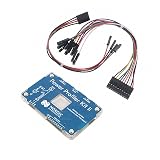
- POWER MONITORING: Professional-grade current monitoring and power management evaluation board for precise power consumption analysis
- COMPATIBILITY: Designed specifically for Nordic Semiconductor development and testing applications
- MEASUREMENT CAPABILITIES: Enables real-time current measurement and power profiling for embedded system development
- DATA ANALYSIS: Features comprehensive power consumption data collection and visualization capabilities
- DEVELOPMENT TOOL: Essential evaluation board for optimizing power efficiency in embedded system projects and prototypes
SITRI’s model therefore addressed financing indirectly as well as technically. A pilot line, industrial partner and potential customer can make a hardware plan more credible to investors, but none substitutes for a fundable business model.
How the intended prototype-to-volume path would work
- Select a defensible device: Define the sensing, RF, optical or other function and identify a market that values it enough to support specialized manufacturing.
- Match the design to a process platform: Determine which materials, wafer type, packaging method and test flow are required, rather than assuming a generic CMOS-compatible process.
- Use pilot fabrication: Run engineering wafers through an appropriate platform, measure yield and reliability, and document the changes needed for repeatability.
- Integrate the supply chain: Secure packaging, assembly, test and component partners, including possible Shanghai-based manufacturers and customers.
- Qualify with a lead customer: Convert laboratory performance into application-specific reliability, certification and field data.
- Scale only after economics are visible: Decide whether projected wafer volume and pricing justify dedicated process work, a foundry relationship or a larger manufacturing commitment.
This sequence describes the gap SITRI was designed to narrow. It is not a guarantee that every company entering an accelerator will reach volume production.
What a MEMS startup should ask before joining a program
- Which exact process modules and materials are available today, and which are still under development?
- Who owns the process recipe, device design and resulting intellectual property?
- Can the program provide engineering wafers, packaging and test, or only introductions?
- What minimum wafer volume and recurring schedule can the manufacturing partner support?
- Which customer or market commitments exist in the target geography?
- How will yield, reliability and qualification data be generated and paid for?
- What happens if the startup’s process cannot be standardized across a broader product line?
- Are financing, mentoring and industrial partnerships part of the program, or must the company arrange them independently?
Is SITRI Innovations still operating today?
The documented account establishes the Belmont opening and the Shanghai pilot-fab plans as of an EE Times report dated 19 October 2015. It does not establish whether the accelerator continued under the same name, changed ownership or program scope, or accepts applications today. Current operating status, application terms and affiliate arrangements should therefore be verified directly before a company relies on them.
What the initiative signaled
Shanghai’s Silicon Valley move recognized that More-than-Moore hardware cannot be commercialized through transistor scaling alone. Startups need specialized process engineering, pilot capacity, packaging, customers and patient capital. SITRI’s proposed answer was to combine Silicon Valley’s ideas with Shanghai’s industrial reach; its success depended on whether that bridge could turn fragmented, low-volume technologies into repeatable businesses.
Quick Recap
Product prices and availability are accurate as of the date/time indicated and are subject to change. Any price and availability information displayed on Amazon at the time of purchase will apply.

