
Recommended Free Tools
Intel ended development of its smartphone and standalone-tablet application processors in 2016, cancelling the Broxton platform and the SoFIA 3GX, SoFIA LTE and SoFIA LTE2 commercial platforms. The decision was part of a broader restructuring that shifted resources toward cloud, data center, IoT, memory and programmable solutions, connectivity, and other businesses Intel expected to deliver higher returns. It did not mean Intel left every mobile-related market at the same time: the company announced a separate exit from the 5G smartphone-modem business in 2019.
What did Intel cancel in 2016?
Intel cancelled its Broxton phone-and-tablet platform and the SoFIA 3GX, SoFIA LTE and SoFIA LTE2 commercial platforms. These were application-processor products for smartphones and tablets, not a blanket withdrawal from every product or connectivity technology used in mobile devices. Intel said the changes took effect immediately and would move resources to products with higher returns and support its strategy. Contemporary reporting also described Cherry Trail as being phased out for standalone tablets.

In practical terms, Intel’s roadmap for developing Atom-based application processors for phones and standalone tablets came to an end as a product-development business. The cancellation did not, by itself, mean that existing devices stopped working or that all customer support ended immediately.
Why did Intel cancel Broxton and SoFIA?
The cancellations were part of Intel’s restructuring announced on April 19, 2016. The company said it would reduce costs and redirect investment toward areas it viewed as stronger opportunities in a more data-centric business.
#1 Best Overall

- Intel Core I5 I5-3210m Dual-core (2 Core) 2.50 Ghz Processor - Socket G2oem Pack - 512 Kb - 3 Mb Cache - 5 Gt/s Dmi - Yes - 22 Nm - Intel Hd Graphics 4000 Graphics - 35 W - 221°f (105°c)
- Planned workforce reduction: up to 12,000 positions, approximately 11% of Intel’s employees.
- Projected savings: $750 million in 2016 and a $1.4 billion annual run rate by mid-2017.
- Strategic focus: cloud and data center, IoT, memory and programmable solutions, connectivity, and more profitable mobile and PC products.
Those figures were Intel’s projections in its 2016 announcement, not a published calculation of the mobile SoC line’s standalone profitability. Intel did not provide a specific Atom mobile-processor profit or market-share figure in the cited announcements. Its stated reason for the platform cancellations was to move resources to products expected to deliver higher returns.
What happened to Intel Atom mobile processors?
Atom continued to be a name associated with Intel’s low-power processors, but the 2016 decision ended Intel’s planned smartphone and standalone-tablet application-processor platforms described above. It should not be read as proof that every Atom product, use case or support commitment ended on the same date. Intel’s announcement addressed the named platforms; it did not publish a universal cutoff for all Atom-branded products.
Rank #2
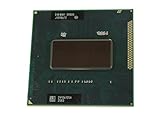
- Intel Core i7-2760QM SR02W PGA 988B G2 Mobile CPU Processor 2.4Ghz Quad Core
That distinction matters for owners of older devices: cancelling future platforms is not the same as disabling hardware already sold. The announcement concerned Intel’s product roadmap and resource allocation, rather than an immediate change to the operation of existing phones or tablets.
Did Intel leave the smartphone-chip market?
Not all at once, and not in the same sense. The 2016 move concerned application processors, which run a device’s operating system and apps. In April 2019, Intel made a separate decision to leave the 5G smartphone-modem business while evaluating modem opportunities for PCs, IoT and other data-centric devices. A modem handles cellular communications; it is distinct from the main application processor.
Free tools Windows power users keep installed
One-click scans. No signup required.
| Decision | Product scope | Timing and outcome |
|---|---|---|
| Mobile application processors | Broxton and SoFIA 3GX, SoFIA LTE and SoFIA LTE2 commercial platforms for phones and tablets; contemporary coverage also reported Cherry Trail’s phase-out for standalone tablets. | Announced as part of Intel’s April 2016 restructuring; the named platforms were cancelled internally. |
| Smartphone modems | Intel’s 5G smartphone-modem business. Intel said it would assess modem opportunities for PCs, IoT and other data-centric devices. | Intel announced its exit on April 16, 2019. On July 25, 2019, Intel and Apple announced a $1 billion transaction for most of Intel’s smartphone-modem business; approximately 2,200 Intel employees were to join Apple. |
The 2019 transaction was not the outcome of the 2016 SoFIA and Broxton cancellations. It concerned most of Intel’s smartphone-modem business, and Apple announced the purchase with Intel as a separate transaction three years later.
Independent reader supportYour contribution helps us test, update, and keep practical guides available for everyone.What Intel’s exit meant—and what it did not
Intel gave up its development roadmap for the named smartphone and standalone-tablet application processors as it redirected resources to businesses it expected to have stronger returns. The later modem decision further narrowed Intel’s role in smartphone hardware, but it was a distinct move with a different product scope and a transaction involving Apple.
Quick Recap
- The 2016 announcement did not establish a specific mobile SoC profit figure or market-share rationale.
- It did not say that every mobile connectivity product ended in 2016.
- The 2019 smartphone-modem announcement did not mean Intel abandoned every modem opportunity; the company said it would assess other data-centric uses.
Product prices and availability are accurate as of the date/time indicated and are subject to change. Any price and availability information displayed on Amazon at the time of purchase will apply.

