
iTechGuides is reader-supported. When you buy through links on our site, we may earn an affiliate commission. As an Amazon Associate I earn from qualifying purchases. Learn more
Data-center optical components take a long time to deliver because demand for high-speed links is growing faster than specialized capacity can be added. The constraint is distributed across indium-phosphide lasers, silicon-photonics wafers, photodiodes, precision optical alignment, packaging, thermal management, and reliability testing. A shortage at any one of those stages can hold up a finished transceiver.
There is no single current lead-time number that applies to every optical component or supplier. A dated TrendForce report said electro-absorption modulated laser (EML) lead times had extended beyond 2027 in a specific capacity-allocation context; its later analysis described tight supply without publishing a sector-wide delivery estimate. Buyers should therefore treat every quoted date as specific to a module design, supplier, region, qualification status, and order volume.
Why demand for optical transceivers is rising so quickly
AI clusters connect thousands of accelerators across high-bandwidth, low-latency networks. Copper links are practical over short distances, but data-center operators increasingly use optical transceivers for connections between servers, switches, racks, and rows. TrendForce’s April 20, 2026 analysis identifies 800G-and-above transceivers as a key component of AI server-cluster interconnects and describes demand as rising sharply as those clusters scale.
TrendForce’s December 8, 2025 forecast estimated 24 million shipments of 800G-and-above optical transceivers in 2025 and nearly 63 million in 2026. Those are forecast figures, not audited final shipment totals. The same publisher projected the AI-focused optical-transceiver market at US$16.5 billion in 2025 and US$26 billion in 2026. These estimates indicate the direction and speed of demand, but they do not mean every supplier or every speed grade is growing at the same rate.
#1 Best Overall

- 【What You Get】: 2pcs Gigabit Multi-Mode Ethernet SFP Slot media converters; 2pcs 1.25Gbps SFP Multi-Mode transceivers; 2pcs AC/DC Power Supply; 1 x User’s Manual. Supports wide power supply voltage (100V-240V), Power Supply: 5V-1A, UL Certified. Perfect for large data transfers in data centers and business networks.
- 【Fiber Optical Port】: 1.25Gbps SFP port, compatible with Multi-Mode LC transceivers up to 550M (2 SFP SX Transceivers included); Fiber Type: MMF, Cable Type: UTP/STP Cat.5e for 100 meters.
- 【RJ45 Port】: 10M/100M/1000M Auto-negotiation, full Duplex or half Duplex, Auto-negotiation, Supports MDI/MDIX auto-crossover, Complies with IEEE 802.3/802.3u/802.3z/802.3ab.
- 【Plug & Play】: Plug and play setup with no software installation required. Simply connect the optical port and RJ45 port for immediate operation. Status LEDs provide easy network status monitoring.
- 【Durable and Reliable】: Operates within a temperature range of 0°C to 60°C, supporting jumbo frame size 9K bytes, making it ideal for industrial and commercial applications.
| Indicator | Figure | How to interpret it |
|---|---|---|
| 800G-and-above transceiver shipments | 24 million in 2025; nearly 63 million in 2026 | TrendForce forecast published December 8, 2025; the 2026 figure is not a verified final count. |
| AI-focused optical-transceiver market | US$16.5 billion in 2025; US$26 billion in 2026 | TrendForce market estimates/projections, not audited realized revenue. |
This demand arrives in bursts. A hyperscale deployment can require a large quantity of identical modules, all with the same reach, connector, firmware, and optical budget. Suppliers cannot simply substitute a slower or differently qualified part without a network redesign and a new validation cycle. That makes a shortage of one narrow specification feel like a shortage of optical components generally.
Which stages are creating the bottleneck
A transceiver is a chain of interdependent parts rather than a single commodity. The constrained stage varies with the architecture and supplier, so adding capacity for one part may leave the finished module delayed elsewhere.
EML laser production
An electro-absorption modulated laser combines the light source and high-speed modulation function on a single chip. TrendForce describes EMLs as complex and difficult to manufacture, with only a few qualified suppliers. Their limited supplier base makes sudden demand increases difficult to absorb, especially when customers allocate output to major programs through long-term agreements.
Recommended Free Tools
An EML shortage can delay a complete transmitter even when the module’s housing, digital signal processor, printed circuit board, and optical fiber are available. EML wafers, epitaxial structures, fabrication equipment, assembly, and test must all be synchronized; a shortfall in any one of them reduces finished output.
Continuous-wave lasers and silicon photonics
Continuous-wave (CW) lasers paired with silicon-photonics chips are an alternative architecture. In that design, the laser supplies continuous light while modulation and routing functions are performed on a silicon-photonics device. It can diversify the supply base, but it is not an instant workaround for an EML shortage.
Rank #2

- 10GBASE-SR SFP+ to LC Optical 10 Gigabit Ethernet Fiber transceiver module, 10GbE Multimode SFP+(compatible with both 62.5um and 50um LC cables; supports OM1/OM2/OM3/OM4 fiber cables), Duplex LC connector, 850nm, DDM, up to 300m.
- [Wide Compatibility] Compatible with Cisco SFP-10G-SR, Meraki MA-SFP-10GB-SR, Ubiquiti UniFi UF-MM-10G, Fortinet, Mikrotik, Netgear, D-Link, Supermicro, TP-Link and Other Open Switches.
- [Easy to Use] Easy installation, plug and play, fully hot-pluggable with ESD protection. Widely used in network switch, server, or NIC with SFP+ to a 10 Gigabit fiber channel network with multimode LC for Network Attached Storage(NAS), Storage Area Network(SAN), and High Performance Computing(HPC) applications.
- [Durable & Low Power Consumption] Adopt high quality alloy, the shell is strong and wear-resistant; Low power consumption(less than 1.05watt) and low EMI emission design. SFP MSA Compliant, IEEE 802.3ae Compliant. Operating Temperature: 0°C to 70°C.
- [What you Get] 2x 100% tested 10GBase-SR modules, 3-Year warranty and lifetime tech support.
TrendForce reports long equipment lead times for this production path and labor-intensive die cutting and aging tests. Silicon-photonics wafers also require specialized process control, packaging, and optical coupling. If a foundry has wafer capacity but lacks enough assembly or test equipment, finished transceiver availability remains constrained.
High-speed photodiodes
The receiver side uses high-speed photodiodes to convert incoming light into an electrical signal. TrendForce notes that these devices use indium-phosphide (InP) epitaxial wafers. InP wafer supply, epitaxy, device fabrication, and testing can therefore become a separate bottleneck from the transmitter laser.
Precision optical alignment and packaging
Lasers, photodiodes, lenses, fibers, and silicon-photonics dies must be aligned with very small positional tolerances. Alignment and coupling are precision manufacturing operations, not simple mechanical insertion. A supplier may have enough bare dies but insufficient active-alignment stations, trained operators, or packaging throughput to turn them into tested modules.
Packaging also has to manage heat and electrical parasitics at high data rates. TrendForce identifies power and thermal-management challenges alongside optical alignment as constraints for AI-oriented modules. A design that meets its optical specification at room temperature may still require additional thermal validation across the operating range.
Reliability, aging, and final test
High-speed optical parts undergo burn-in, aging, environmental checks, and electrical and optical testing before shipment. TrendForce specifically cites labor-intensive die-cutting and aging tests in the CW-laser and silicon-photonics path. These steps consume equipment time and may expose a defect that forces rework or scrap. Increasing wafer output does not automatically increase the number of modules that pass final qualification.
Rank #3

- What You Get: 2pcs Gigabit Multi-Mode Ethernet SFP Slot media converters; 2pcs SFP BiDi LC Dual Multi-Mode transceiver; 2pcs AC/DC Power Supply; 1 x User’s Manual. Support wide power supply voltage (100V-240V), Power Supply: 5V-1A, UL Certified.
- Fiber Optical Port: 1.25Gbps SFP port, connecting the BiDi Multi-Mode LC Dual transceivers up to 550M(2 SFP LX Transceiver included); Fiber Type: MMF, Cable Type: UTP/STP Cat.5e for 100 meters.
- RJ45 Port: 10M/100M/1000M Auto-negotiation, full Duplex or half Duplex, Auto-negotiation, Supports MDI/MDIX auto-crossover, Complies with IEEE 802.3/802.3u/802.3z/802.3ab.
- Plug & Play: Simply plug in optical port and RJ45 port, and it will work immediatelly. Status LED's for TX, FX LINK/ACT, POWER, FDX to easily monitor network status. Supports jumbo frame size 9K bytes; Supports working temperature range from 0°C to 60°C.
- 【100% Money Guarantee】15 years OEM factory competency, Most efficient technical support with superb processing technology.★Our committed to provide the best product and services to every customer.
Why new capacity cannot be added immediately
Optical manufacturing capacity is built in layers. A supplier must secure a site, install specialized tools, qualify materials and process recipes, hire and train technicians, run engineering lots, and pass customer qualification. Each stage can take months or years, and the sequence is difficult to compress because later steps depend on stable results from earlier ones.
Quick wins for a faster PC:
Clear out junk files and repair common Windows errorsFree Scan →Fix the driver behind crashes, sound loss and screen glitchesFind Drivers →InP facilities and laser equipment
On March 26, 2026, Lumentum announced that it had acquired an operational 240,000-square-foot site in Greensboro, North Carolina, and would retrofit it for InP optical products including continuous-wave and ultra-high-power lasers. The company expected production to ramp in mid-2028. That is an announced company plan, not a guaranteed industry-wide availability date. NVIDIA was identified as a customer of the facility.
Lumentum Chief Executive Officer Michael Hurlston said: “Adding this new InP manufacturing facility significantly expands our capacity, deepens our strategic partnerships, and ensures we can deliver the performance, reliability, and scale required for the AI revolution.” The statement describes the purpose of the investment; it does not establish when a particular buyer’s transceiver order will ship.
Silicon-photonics foundry expansion
Tower Semiconductor said on May 13, 2026 that it had signed silicon-photonics contracts representing $1.3 billion in reported 2027 revenue and received $290 million in customer prepayments tied to capacity reservations. It also described a larger wafer commitment for 2028. These are Tower-reported contractual commitments, not proof that all reserved capacity has already become production shipments or that uncommitted buyers will receive the same priority.
On July 14, 2026, Tower announced a Japan expansion. The first track adds 300mm silicon-photonics capacity, with production readiness expected in the fourth quarter of 2027; a second track involves constructing an additional facility. “Expected” dates can move because of construction, equipment delivery, process yield, staffing, or customer qualification.
Rank #4

- 1. High-Speed Connectivity: 4Pack 10GBase-LR 1310nm SFP+ module offers blazing-fast 10 Gigabit Ethernet connectivity, delivering data at 10 Gb/s speed over long distances. Date Rate:10Gb/s, Fiber Type: Duplex Dual LC SingleMode Fiber(SMF,OS2/OS3); Wavelength: 1310nm; up to 20km transmission over LC/UPC Fiber Cable Type.
- 2. Wide Compatibility Compatible with a range of brands including Cisco SFP-10G-LR, Ubiquiti UniFi UF-SM-10G, Meraki MA-SFP-10GB-LR, Mikrotik, Netgear, Fortinet, Supermicro, D-Link, TP-Link and more, this module fits seamlessly into various open equipments with 10Gb SFP+ ports.
- 3. Plug and Play Convenience: With hot-swappable functionality and advanced Digital Diagnostic Monitoring (DDM) for real-time parameter monitoring, installation is hassle-free. It complies with SFP+ MSA and SFF-8431 standards as well as IEEE 802.3ae. Efficient Power Usage: Featuring low power consumption of less than 1.05 watts, this module helps save costs while providing reliable performance. It also boasts low EMI and advanced ESD protection.
- 4. Versatile Usage: The SFP 10GBase-LR module is versatile, catering to various networking needs including data center connectivity, wide area network (WAN) connections, remote monitoring systems, enterprise and campus networks, as well as cloud computing and virtualization environments. It seamlessly integrates with a wide range of devices such as fiber media converters, routers, servers, fiber switches, storage devices, network interface cards (NICs), video surveillance equipment, virtual machines, and cloud computing equipment, ensuring high-speed and reliable data transmission across different network infrastructures.
- 5. Reliable After-Sales Support: We offer 24/7 customer service, a 30-day free return policy, a 5-year free warranty, and lifetime technology support, ensuring peace of mind and long-term satisfaction with your purchase.
Supplier investment across several stages
Coherent’s 2025 SEC-filed presentation described expansion in InP, lasers, assembly, and testing, and said the majority of its InP transceivers use its own EMLs. This is an example of supplier investment and vertical integration. It should not be read as evidence that industry-wide constraints have been eliminated: a vertically integrated producer can still face limits in equipment, materials, labor, or test capacity.
| Announcement | Planned contribution | Timing and certainty |
|---|---|---|
| Lumentum, March 26, 2026 | Retrofit of a 240,000-square-foot Greensboro site for InP products and lasers | Production expected to ramp in mid-2028; forward-looking company plan. |
| Tower Semiconductor, May 13, 2026 | Reported silicon-photonics contracts and customer-funded capacity reservations | $1.3 billion of reported 2027 contracts and $290 million of prepayments; contractual claims, not a universal supply guarantee. |
| Tower Semiconductor, July 14, 2026 | First 300mm silicon-photonics track in Japan, plus a planned second facility | First track expected production-ready in Q4 2027; construction and qualification remain future steps. |
| Coherent, 2025 presentation | Expansion in InP, lasers, assembly, and testing | Company-reported investment; no industry-wide capacity conclusion follows. |
Why a quoted lead time can extend beyond the component itself
A supplier’s date may include several queues that are invisible in a simple part number. The underlying chain can include InP epitaxy, laser or photodiode fabrication, wafer dicing, die attach, optical alignment, active coupling, electrical assembly, firmware loading, burn-in, environmental testing, and customer-specific inspection. A delay at the slowest step sets the effective lead time for the module.
Qualification adds another dependency. A data-center operator may require a particular optical budget, error-rate target, temperature range, connector, management interface, or interoperability test. A nominally similar module from another architecture or supplier may need engineering samples and customer validation before it can replace the allocated part. The available evidence does not establish a standard qualification duration, so buyers should not assume that a substitute can be approved within a fixed number of weeks.
How to read the claim that EML lead times run beyond 2027
TrendForce’s December 8, 2025 report said EML lead times had extended beyond 2027 while describing capacity being allocated to major demand. That is a dated analyst statement about a particular component market and period. It does not mean every optical transceiver, every EML supplier, or every order placed today has a delivery date after 2027.
The Tool Desk
Outbyte Driver Updater FREEScan for outdated or missing drivers - takes under a minuteDriver Scan →Outbyte PC Repair FREERepair Windows errors before they cause bigger problemsFix Now →TrendForce’s April 20, 2026 analysis again described tight supplies of EMLs, CW lasers, precision alignment, and related components, but it did not publish one sector-wide delivery estimate. A buyer should request a current, written commitment for the exact module rather than convert an analyst’s dated observation into a universal promise.
Best Value
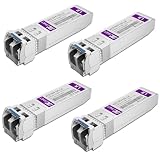
- Data Rate: 10gb/s data transfer rate.
- Duplex LC: Supports OS2/OS3 dual LC single mode fiber cables, SMF, 1310nm, up to 10km.
- Plug and Play: Support Hot-pluggable, no need to shut down the network or device reboot. DDM support.
- DDM: This 10G Single Mode SFP+ LC Module supports digital optical monitoring capability for strong diagnostic capabilities.
- Wide Compatibility: Compatible for Cisco SFP-10G-LR, Ubiquiti UniFi UF-SM-10G, Netgear AXM762, Meraki MA-SFP-10GB-LR, Mikrotik S+31DLC10D, Broadcom, Supermicro, D-Link and Other Open SFP Transceivers/Switches (NOTE: Not compatible for HP/HPE switches).
EML versus CW laser with silicon photonics
The two architectures address the same broad connectivity problem but have different supply-chain exposures. The available sources do not provide a product-level performance ranking, so architecture decisions should be made against the required reach, signal format, power envelope, and qualification record.
| Decision axis | EML-based design | CW laser plus silicon photonics |
|---|---|---|
| Core approach | Laser and electro-absorption modulation integrated in an EML device | Continuous-wave laser paired with a silicon-photonics modulator and routing chip |
| Supply exposure | Complex device with a limited supplier base | Requires silicon-photonics wafer capacity, specialized equipment, alignment, and aging tests |
| Potential constraint | EML fabrication and allocated laser output | Foundry processing, die cutting, packaging, and test throughput |
| Performance comparison | Not established by the cited sources; evaluate the exact module specification and qualification data. | |
Changing architecture can reduce dependence on one constrained part, but it can also introduce a new qualification project. Treat it as a supply-risk decision, not an automatic faster-delivery option.
What procurement teams can do now
Long lead times are managed by making the requirement precise, reserving capacity early, and identifying which stage is actually limiting delivery.
Do these 3 things before closing this tab:
1Fix the driver behind crashes, sound loss and screen glitches2Clear out junk files and repair common Windows errors3Scan for outdated or missing drivers - takes under a minute- Freeze the technical definition. Record lane rate, aggregate speed, reach, fiber type, connector, wavelength, temperature range, power limit, form factor, firmware requirements, and interoperability tests. “800G transceiver” alone is not a sufficiently precise purchasing specification.
- Ask for a staged schedule. Request dates for engineering samples, qualification units, first production, and volume shipments. Ask which dates are committed and which are forecasts, and identify the assumptions about order volume and geography.
- Locate the constraint. Ask whether the quoted date is limited by EML or CW-laser supply, InP wafers, silicon-photonics wafers, photodiodes, alignment, assembly, burn-in, or final test. A different component may not solve a downstream packaging bottleneck.
- Use capacity reservations carefully. Long-term agreements and reserved capacity can improve allocation priority. Tower’s disclosed customer prepayments illustrate how reservations may be funded. Such commitments do not remove technical qualification, yield, or production constraints.
- Validate alternatives before an emergency. Request samples from a second architecture or supplier early enough to complete interoperability and thermal testing. Do not assume a substitute is interchangeable because its headline data rate is the same.
- Review the schedule at every production gate. Reconfirm tool installation, process qualification, yield, and test throughput before treating an announced expansion as available capacity. A facility expected to ramp in mid-2028 or be production-ready in Q4 2027 cannot be counted as current inventory.
Common planning mistakes and their remedies
- Using one industry-wide lead-time number: Replace it with a supplier- and module-specific quotation that states the date, assumptions, and confidence level.
- Counting announced capacity as shipped capacity: Separate operating lines from retrofits, construction, equipment installation, engineering lots, and customer qualification.
- Buying the laser while ignoring test: Confirm alignment, packaging, aging, and final-test slots; those downstream steps can remain the bottleneck.
- Switching architecture at the last minute: Maintain a prequalified alternative and test it under the actual reach, temperature, power, and interoperability requirements.
- Relying on spot purchases for a large deployment: Discuss long-term agreements or capacity reservations early, while recognizing that a reservation is risk management rather than an immediate delivery guarantee.
- Ignoring thermal and power limits: Verify the module in the intended switch or server environment. A part that meets an optical data-rate target may still fail the platform’s thermal envelope or require redesign.
When might added capacity improve availability?
Some announced additions have dates far enough in the future to show why relief is gradual. Tower’s first Japanese silicon-photonics track was expected to be production-ready in Q4 2027, while Lumentum expected its Greensboro InP site to ramp in mid-2028. Even if those plans stay on schedule, output must still pass process, yield, reliability, and customer-qualification gates before it becomes broadly usable.
Relief is therefore likely to arrive unevenly. A new InP line may ease a laser shortage while alignment or test remains tight. A silicon-photonics expansion may help one module family but not an EML-based design. Contracted capacity may be committed to specific customers before it is available on the open market. Buyers should match each expansion announcement to the exact component and stage they need.
The practical takeaway
Data-center optical components have long lead times because they combine scarce semiconductor devices with precision photonics assembly and lengthy reliability testing. AI-driven demand for 800G-and-above links is increasing faster than those specialized processes can be expanded. EMLs, CW lasers, InP photodiodes, silicon-photonics wafers, alignment equipment, packaging, and test capacity can each become the limiting step.
Capacity announcements from Lumentum and Tower show that suppliers are investing, but their expected 2027 and 2028 milestones are plans rather than guaranteed delivery dates. Treat dated analyst claims, including the statement that EML lead times extended beyond 2027, within their stated scope. For an actual deployment, the only useful lead time is a current commitment for the exact module, configuration, qualification state, location, and volume you intend to buy.
What’s actually slowing this PC down?
Pick the symptom - the matching free tool is one click away.
Quick Recap
Product prices and availability are accurate as of the date/time indicated and are subject to change. Any price and availability information displayed on Amazon at the time of purchase will apply.

