
In most cases, a black Automation Anywhere screenshot means the Bot Runner does not have a capturable Windows desktop. The documented Enterprise behavior is especially important: when an unattended bot uses auto-login, the Screen Capture command can return a black image. Secure Recording intentionally disables screenshots. Sleeping, locked, disconnected, or improperly logged-out Windows/RDP sessions, a competing login, and an incorrectly selected capture window are the other common causes.
Use the sequence below to separate an intentional privacy block from a session problem, repair the runner without weakening security unnecessarily, and verify the result with a known-visible window.
| # | Preview | Product | Price | |
|---|---|---|---|---|
| 1 |
|
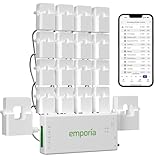
Emporia Vue 3 Home Energy Monitor - Smart Home Automation Module and Real Time Electricity Usage... | $199.99 | Buy on Amazon |
What a black screenshot means
A black file is not proof that the bot failed to reach the application. It usually means the capture engine received no usable desktop surface. There are five materially different explanations:
- Unattended auto-login: Automation Anywhere’s Enterprise v11.3 Screen Capture documentation, updated April 21, 2022, states that a bot running unattended with auto-login enabled captures a black screenshot. This is documented product behavior, not necessarily a broken bot.
- Secure Recording: When Secure Recording Mode is enabled, screenshots are disabled by design to protect sensitive information.
- Unavailable Windows session: A runner can be asleep, locked, disconnected, stuck at a lock screen, or left in a bad RDP state after a disconnect.
- Session replacement: Another user login can take over or interrupt the session assigned to the Bot Runner.
- Wrong capture target: The Screen package’s Capture area action may be pointed at a different window, a minimized application, or a browser window that has not finished rendering.
Behavior can differ with Windows policy, VM or VDI provider, RDP topology, Automation Anywhere version, and whether execution is attended or unattended. Treat the Enterprise v11.3 statement as a documented version-specific behavior, then confirm how your Control Room and runner are configured.
Recommended Free Tools
#1 Best Overall
- SAFETY YOU CAN TRUST WITH UL CERTIFICATION: With Emporia Energy, your home energy monitoring is safe, reliable, and certified. The Emporia Vue is UL Listed, meaning it has met rigorous safety standards for electrical products in the U.S. and Canada. This certification ensures that every component has been thoroughly tested to prevent hazards, such as overheating, short-circuiting, or fire, offering you peace of mind as you manage your home’s energy consumption.
- INSTALLS IN CIRCUIT PANEL of most homes with clamp-on sensors. Supports Single phase, Single-split phase, and 2-wire systems. 3-wire systems; 3-phase, 4-wire Wye systems with earthed (TN or TT) neutral (no-Delta) are supported with an additional 200A sensor (sold separately).
- 24/7 ENERGY MANAGEMENT AND MONITORING: Automate, manage and control your home's real power anywhere, anytime to prevent costly repairs, conserve energy, and save costs. Monitor solar / net metering. PROTECTED BY A 1-YEAR WARRANTY.
- LOWER YOUR ELECTRIC BILL: Configure settings in the Emporia Energy App to automate energy management for time of use, peak demand, excess solar, and rewards programs. You can even see live reporting and invaluable savings opportunities instantly. Gauge real-time spending and get actionable notifications and automated energy management to help you reduce costs.
- REAL-TIME ENERGY DATA: REQUIRES 2.4 GHz WIFI WITH AN INTERNET CONNECTION to monitor energy use with iPhone / Android / Web app. Vue sensors collect energy data and are accurate from ±2%. The Vue is UL and CE Listed for your safety. 1 second data is only available in the app (when actively open) and retained 3 hours. Minute and hour data are retained in the cloud. 1 minute data is retained 7 days, 1 hour data is retained indefinitely. Export cloud data whenever you want in the app.
Run this diagnostic sequence first
- Check Secure Recording. Determine whether Secure Recording Mode is enabled for the bot, device, or environment. If it is, the black result is expected. Disable it only when your organization’s data-protection policy permits screenshots; otherwise use non-visual logging, extracted text, or application-level status checks.
- Capture a known-visible target. Open a simple, clearly visible application or the desktop immediately before the failing action. In the Screen package, use Capture area and select the active application or browser window. If the known-visible capture is also black, investigate the Windows session. If it works while one application remains black, focus on target selection, rendering, permissions, or timing for that application.
- Inspect the runner session. Confirm that the Bot Runner’s Windows session is awake, visible, and past the lock screen. Check whether the VM slept, an RDP connection was dropped, or the session is disconnected rather than active.
- Look for another login. A second interactive login can replace the session the bot is using. Check who is connected to the device and whether an administrator or operator opened a new RDP session while the bot was running.
- Review unattended login and reuse. In Control Room, review the device’s auto-login and session-reuse settings. Automation Anywhere guidance recommends reusing an existing session when unattended runners may be locked or disconnected, including RDP-based deployments. Match the setting to your security policy and the way the device is actually provisioned.
- Clean up stale RDP state. Properly sign out or log off the old session instead of merely closing the RDP window, then start a fresh run. Community troubleshooting reports dated April 28, 2025, and June 3, 2025, specifically associate black captures with RDP sessions that were not logged out correctly.
- Retest immediately. Repeat the known-visible capture, then retry the original application. Record whether every capture is black or only one target; that distinction determines the next branch.
Fixes by execution mode and environment
Attended bots
For an attended run, keep the operator’s session unlocked and visible while the capture action executes. Do not switch users, lock the workstation, or leave the application on a disconnected RDP desktop. If the operator must leave, replace the screenshot step with an application-level export or another diagnostic that does not depend on the visible desktop.
Unattended bots with auto-login
First decide whether screenshots are actually required. The Enterprise documentation says unattended auto-login can produce black Screen Capture output. If visual evidence is mandatory, test a runner configuration that reuses a valid existing Windows session rather than creating an auto-logged-in session that cannot expose a desktop. Coordinate this change with your identity, endpoint, and audit teams; do not store passwords or bypass organizational login controls merely to obtain an image.
Locked, sleeping, or disconnected runners
Keep the runner awake for the bot’s operating window and apply an approved policy that prevents sleep or an automatic lock from removing the interactive desktop. Verify that the VM or VDI platform does not suspend the display when no human is connected. A device that is powered on but sitting at a lock screen can still be unusable for desktop capture.
Single-user and multi-user RDP devices
On a single-user device, log off the abandoned session and reconnect using the same account that Control Room expects. On a multi-user device, prevent two operators from competing with the Bot Runner and keep the display configuration consistent. Automation Anywhere’s unattended-deployment guidance calls for appropriate RDP session timeout handling and a consistent screen resolution. Confirm those settings across the pool rather than repairing one machine at a time.
Applications that render late or differently
If the desktop capture works but one browser or application is black, verify that Capture area selected the intended active window. Wait for the window to appear and finish rendering before capture, and avoid selecting a transient dialog that disappears when focus changes. A stable window target is more reliable than coordinates that change with resolution or user state.
Decision table: choose the least risky remediation
| Observed result | Likely cause | Preferred action | Security or deployment note |
|---|---|---|---|
| Every capture is black in unattended auto-login | Documented auto-login/session behavior | Test session reuse or redesign the step without screenshots | Validate the change with identity and compliance owners |
| Every capture is black and Secure Recording is on | Intentional screenshot suppression | Keep it enabled and use non-visual diagnostics, or disable only under policy | Do not weaken privacy controls just to obtain a debug image |
| Desktop and app captures are black after RDP disconnect | Disconnected, sleeping, locked, or stale session | Log off the old session, reconnect cleanly, and prevent sleep during runs | Check VM/VDI suspend rules and RDP timeouts |
| Desktop capture works; one app is black | Wrong target, timing, or app rendering | Select the active window again, wait for it to render, and retest | Use a stable selector/window identity instead of screen coordinates |
| Problem starts when another person logs in | Bot Runner session replaced or interrupted | End the competing session and reserve the runner account/device | Define an operational ownership rule for shared devices |
Control Room and Windows checks
Control Room checklist
- Identify whether the run is attended or unattended and whether auto-login is enabled.
- Check the device’s session-reuse behavior for locked or disconnected RDP sessions.
- Confirm that the bot is assigned to the intended Bot Runner and device.
- Verify that Secure Recording is not silently inherited from an environment or policy where screenshots are prohibited.
- Review run timestamps against Windows logon, lock, sleep, disconnect, and logoff events.
Windows and RDP checklist
- Is the runner session awake and past the lock screen?
- Was the previous RDP session logged off, rather than only disconnected?
- Did another account connect to the same machine?
- Can the machine maintain the required resolution for all users in a multi-user pool?
- Do sleep, display, VDI suspension, or RDP timeout policies interrupt the bot’s operating window?
Make one change at a time and capture the known-visible window after each change. That gives you an auditable before-and-after record instead of a sequence of unexplained configuration changes.
Common errors and their fixes
“The bot succeeds, but the image is black.”
Success status only proves that the action completed. Check Secure Recording and unattended auto-login first, then test the desktop. A successful command with a black result is consistent with an intentional screenshot restriction or an unavailable session.
“It works attended but fails unattended.”
This pattern points to session creation and visibility, not usually to the application itself. Compare auto-login, session reuse, lock state, and RDP connectivity between the two modes. Run the same bot against a runner with a persistent, visible session to isolate the difference.
The Tool Desk
Outbyte PC Repair FREEClear out junk files and repair common Windows errorsFree Scan →Outbyte Driver Updater FREEScan for outdated or missing drivers - takes under a minuteDriver Scan →“It broke after closing RDP.”
Closing an RDP client can leave a disconnected session. Log off the stale session properly, reconnect using the expected account, and verify that no second session is attached. Then rerun the known-visible capture before testing the full workflow.
“Only the browser window is black.”
Use Capture area to select the active browser window again. Confirm that the browser is in the foreground, the page has rendered, and the bot is not capturing a short-lived tab or dialog. If the desktop image is visible but the browser is not, inspect browser rendering and timing rather than changing global session settings.
“Turning off security controls fixed it.”
That is not automatically an acceptable production fix. Secure Recording exists to prevent screenshots. Document the data classification, obtain approval, and prefer text, API, or application-level diagnostics when a visual image is not essential.
Independent reader supportYour contribution helps us test, update, and keep practical guides available for everyone.Reliability practices for production runners
- Reserve runner ownership: Prevent ad-hoc interactive logins on machines assigned to unattended bots.
- Use a startup verification: Before business steps begin, open a harmless visible window and perform one test capture. Stop the run if the result is black.
- Monitor session events: Correlate bot failures with Windows lock, sleep, disconnect, and logoff events.
- Standardize the pool: Keep RDP resolution, timeout policy, VM power policy, and runner configuration consistent across devices.
- Minimize sensitive images: Capture only the required window or element and retain files according to your organization’s data-retention rules.
- Version your changes: Record Automation Anywhere version, Control Room settings, Windows policy, and RDP topology when diagnosing a regression.
Or skip the browser setup:
If what you need is a clean screenshot of a public or authenticated website rather than the Bot Runner’s Windows desktop, ScreenshotNeo provides a one-request alternative. It is not a repair for a black Automation Anywhere desktop session; it avoids browser-display setup for web-page captures.
Do these 3 things before closing this tab:
1Repair Windows errors before they cause bigger problems2Scan for outdated or missing drivers - takes under a minute3Clear out junk files and repair common Windows errorsScreenshotNeo accepts consent banners before capture and removes more than 60 known consent platforms, newsletter popups, and chat widgets. Bot checks or CAPTCHAs, blank pages, timeouts, failed loads, and cache hits are not billed, and each response identifies the result with X-Page-Verdict and X-Billed headers. Its MCP server exposes take_screenshot, get_page_info, and capture_pdf for Claude, Cursor, and other MCP clients.
See the ScreenshotNeo documentation for authentication and all options. This cURL example captures Stripe as a WebP file:
curl -G "https://api.screenshotneo.com/v1/shot" -d access_key=YOUR_API_KEY --data-urlencode url=https://stripe.com -o shot.webpPython:
import requests
r = requests.get("https://api.screenshotneo.com/v1/shot", params={"access_key": "YOUR_API_KEY", "url": "https://stripe.com"}, timeout=90)
open("shot.webp", "wb").write(r.content)
Node.js:
const q = new URLSearchParams({ access_key: 'YOUR_API_KEY', url: 'https://stripe.com' });
const res = await fetch(`https://api.screenshotneo.com/v1/shot?${q}`);
For a website workflow, you can also request full-page captures with lazy images loaded, CSS-selector element captures, dark mode, device presets or custom viewports, retina scale, PDF paper and margin controls, custom CSS or JavaScript, click-before-capture actions, selector hiding, waits for a selector, delay or network idle, request and resource blocking, custom headers/cookies/user agent/Authorization, timezone and geolocation, transparent backgrounds, resizing, chosen cache TTLs, signed image links, asynchronous jobs with signed webhooks, bulk capture for up to 100 URLs per call, a usage API, and an OpenAPI specification. Common parameter names used by other screenshot APIs are accepted to ease migration.
Every plan includes every feature. The Free plan provides 1,000 screenshots per month without a card; paid plans are Starter $5 for 3,000, Growth $15 for 15,000, Pro $39 for 60,000, Scale $99 for 250,000, and Business $249 for 1,000,000. Yearly billing provides two months free.
Quick wins for a faster PC:
Clear out junk files and repair common Windows errorsFree Scan →Scan for outdated or missing drivers - takes under a minuteDriver Scan →Repair Windows errors before they cause bigger problemsFix Now →Sign up for ScreenshotNeo to get 1,000 screenshots a month free with no card. Cookie banners, popups, and chat widgets are removed before the shot, failed loads and bot checks are not billed, and an MCP server lets AI agents take screenshots.
When to escalate
Escalate to your Automation Anywhere administrator or platform support when the known-visible capture remains black after Secure Recording, session, login, and RDP checks; when only a specific application fails despite a visible desktop; or when the behavior changes after an Automation Anywhere, Windows, VM, or RDP upgrade. Include the bot version, runner type, attended/unattended mode, auto-login and session-reuse settings, Secure Recording state, session event times, and a minimal reproduction. Those details distinguish a documented limitation from an environment-specific defect.
The practical verdict is simple: start with Secure Recording and unattended auto-login, then prove whether the Bot Runner has a visible Windows session. Repair stale or competing RDP sessions, target the correct active window, and retest with a known-visible capture before changing anything else.
Frequently Asked Questions
Does a black image always mean the bot failed?
No. The Screen Capture action can complete while returning black because screenshots are disabled or the runner has no capturable desktop. Check Secure Recording and session visibility before treating it as an application failure.
What’s actually slowing this PC down?
Pick the symptom - the matching free tool is one click away.
Can I solve this by attaching a physical display adapter?
The documented causes are Secure Recording, unattended session behavior, Windows/RDP state, competing logins, and capture targeting. A generic display accessory is not established as a fix for those causes.
Which Automation Anywhere versions are covered by the documented auto-login statement?
The cited Screen Capture documentation is for Enterprise v11.3 and was updated April 21, 2022. Verify behavior against your installed version and current Windows/RDP policies.
What evidence should I collect for support?
Provide the attended or unattended mode, auto-login and session-reuse settings, Secure Recording state, runner and device identity, RDP connection history, Windows lock/sleep/logoff events, and whether a desktop test capture is also black.
Quick Recap
Product prices and availability are accurate as of the date/time indicated and are subject to change. Any price and availability information displayed on Amazon at the time of purchase will apply.

